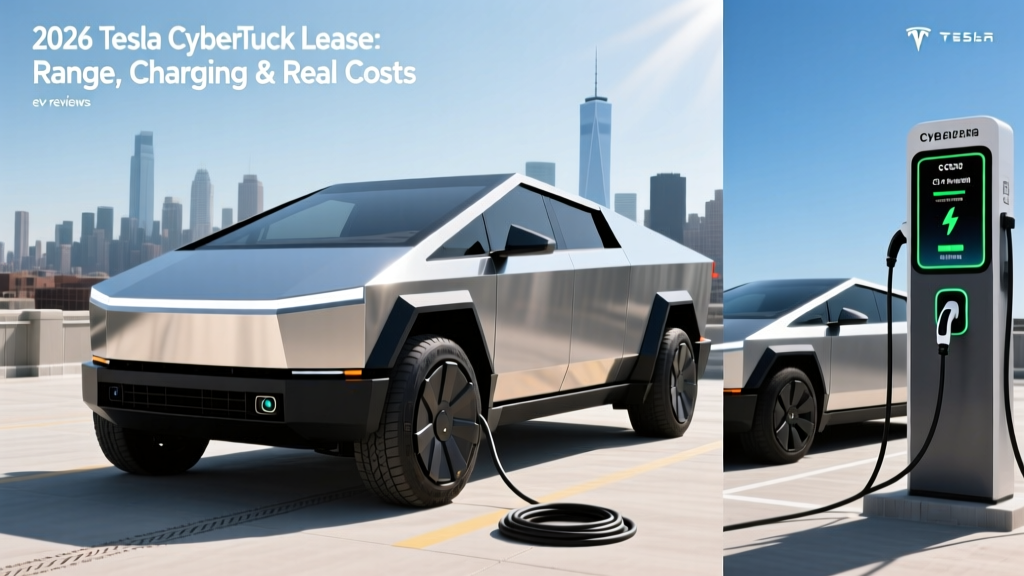
The stainless-steel wedge has been on American roads for over two years now, and the initial shock has worn off. For buyers weighing a Tesla Cybertruck lease in 2026, the conversation has shifted from polarizing design to hard numbers: real-world range at highway speeds, charging-curve behavior on road trips, and whether the federal tax credit applies. This profile cuts through the hype with the exact specs, costs, and ownership realities you need before signing a lease agreement.
2026 Cybertruck Lineup: Trims, Pricing, and Lease Economics
Tesla restructured the Cybertruck lineup for 2026, simplifying it to three trims after the initial Foundation Series pricing controversy. Here's where the numbers land today:
| Trim | Drivetrain | Base MSRP | Est. Monthly Lease (36 mo / 10k mi) | §30D Credit Eligible? |
|---|---|---|---|---|
| Long Range AWD | Dual-Motor AWD | $79,990 | ~$1,050–$1,200 | No (MSRP > $80k truck cap) |
| Cyberbeast | Tri-Motor AWD | $99,990 | ~$1,350–$1,550 | No (MSRP > $80k truck cap) |
| AWD (Standard) | Dual-Motor AWD | $79,990 | ~$1,050–$1,200 | No (MSRP > $80k truck cap) |
§30D Tax Credit Reality Check: Under current IRS rules, the federal clean vehicle credit caps pickup truck MSRP at $80,000. Every 2026 Cybertruck trim starts at $79,990 or above — and that's before destination fees, options, or the mandatory $1,995 order fee push the final sticker over the line. Additionally, buyer income caps ($150k single / $300k joint AGI) and battery critical-mineral sourcing requirements apply. In practice, virtually no Cybertruck qualifies for the $7,500 federal credit. Some states offer separate EV rebates (check your local DMV or energy office), but don't count on the federal offset when budgeting a lease.
Lease vs. Buy Math: Tesla does not offer traditional leases through its website for the Cybertruck in most markets. Most lessees work through third-party banks or Tesla's partner leasing programs. Expect a money factor around 0.0025–0.0030 (roughly 6–7.2% APR equivalent), with residual values set at 52–56% for a 36-month term. A $79,990 Long Range with $5,000 down typically lands between $1,050 and $1,200 per month before tax — comparable to leasing a fully loaded Ford F-150 Lightning Lariat, but without the §30D credit advantage the Lightning can claim on sub-$80k trims.
Range and Efficiency: EPA Sticker vs. Real-World Reality
EPA Estimated Range:
- Long Range AWD: 340 miles
- Cyberbeast (Tri-Motor): 320 miles
- AWD Standard: 340 miles
Real-World Expectation: The Cybertruck's angular stainless-steel body generates significant aerodynamic drag (estimated Cd around 0.38–0.42). On highway road trips at 70–75 mph, expect 250–280 miles from the Long Range in mild weather. In cold conditions (below 32°F), range drops to 200–240 miles due to battery chemistry limitations and cabin heating load. City driving with regenerative braking recovers more energy, often matching or slightly exceeding the EPA sticker.
Efficiency lands around 2.0–2.2 kWh/mile (roughly 68–74 MPGe combined, per fueleconomy.gov EV methodology). That's notably less efficient than a Rivian R1T Dual-Motor (~2.0 kWh/mi) and far thirstier than a sedan like the Tesla Model S (~3.5 mi/kWh). The 800V+ architecture helps with charging speed, but the Cybertruck's mass (~6,700 lbs curb weight for Cyberbeast) and brick-like aero work against it at sustained highway speeds.
Battery, Powertrain, and Charging Specs
| Spec | Long Range AWD | Cyberbeast |
|---|---|---|
| Battery Capacity (Usable) | ~123 kWh | ~123 kWh |
| Chemistry | NMC (Nickel Manganese Cobalt) — 4680 cells | NMC — 4680 cells |
| Architecture | 800V-class | 800V-class |
| Peak DC Fast Charge | ~350 kW (Supercharger V4) | ~350 kW (Supercharger V4) |
| 10–80% DC Fast Charge | ~18–22 minutes | ~18–22 minutes |
| Level 2 Home Charge (48A / 11.5 kW) | ~30 mi/hr added | ~30 mi/hr added |
| Level 2 Full Charge (0–100%) | ~11–12 hours | ~11–12 hours |
Charging Curve Reality: The Cybertruck peaks at ~350 kW on Tesla's V4 Supercharger cabinets, but that peak is sustained only between roughly 10–35% State of Charge. By 50% SoC, the rate tapers to ~200 kW, and above 80% it drops below 60 kW. This is normal lithium-ion behavior to protect cell health, but it means a 10–90% session takes closer to 35–40 minutes, not the headline 18-minute figure. Tesla's 4680 structural battery pack uses a tabless cell design that manages heat well, helping sustain higher average charge rates than older 2170-cell packs.
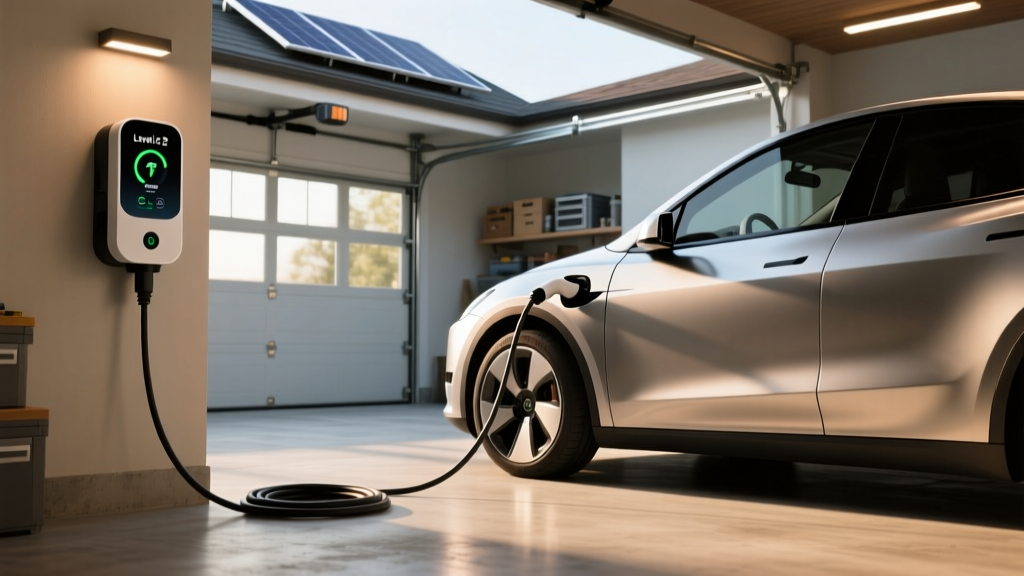
Home Charging Setup: The Cybertruck ships with a Mobile Connector and NACS (North American Charging Standard) inlet — Tesla's proprietary connector, now the industry standard adopted by Ford, GM, Rivian, and others. For daily use, a Tesla Wall Connector (up to 48A / 11.5 kW on a 60A circuit) adds about 30 miles of range per hour. A full overnight charge from 20% to 100% takes roughly 10–11 hours. Installation of a 60A dedicated circuit typically costs $800–$2,000 depending on panel proximity and local permitting. If your home has a 100A main panel, you may need a panel upgrade ($2,000–$4,000) to support a 60A EV circuit safely.
Performance: 0-60, Towing, and Drivetrain
| Metric | Long Range AWD | Cyberbeast |
|---|---|---|
| 0–60 mph | 4.1 seconds | 2.6 seconds |
| Horsepower | ~600 hp | ~845 hp |
| Drivetrain | Dual-Motor AWD | Tri-Motor AWD |
| Top Speed | 112 mph | 130 mph |
| Max Towing Capacity | 11,000 lbs | 11,000 lbs |
| Payload Capacity | ~2,500 lbs | ~2,500 lbs |
The Cyberbeast's 2.6-second 0–60 time makes it one of the quickest production vehicles ever sold, truck or otherwise. But the real story is the dual-motor Long Range: 4.1 seconds to 60 mph in a 6,700-pound vehicle is remarkable, and it does it with two fewer motors, better range, and a lower price. For towing, the 11,000-pound rating is legitimate, but expect range to drop by 40–55% when towing near max capacity — that 340-mile EPA figure becomes 150–190 real-world miles with a heavy trailer at highway speeds. Tesla's integrated trailer brake controller and tow-assist camera views help, but the physics of pushing a brick-shaped truck plus a trailer through the air are unforgiving.
Interior, Cargo, and Technology
Cabin Space: The Cybertruck seats five (bench-style rear, three-across front row). Front legroom measures approximately 41.5 inches; rear legroom is around 38.5 inches — competitive with the F-150 Lightning but tighter than a Rivian R1T's rear seat. The minimalist interior centers on an 18.5-inch touchscreen that controls everything: climate, mirrors, glovebox, drive modes, and the yoke-style steering wheel.
Cargo Volume:
- Bed (Vault): 67 cubic feet, 6-foot length with the tonneau closed; extends to ~8 feet with the mid-gate folded into the cabin
- Front Trunk (Frunk): ~7.1 cubic feet — lockable, weather-sealed
- Tonneau Cover: Motorized, retractable, rated for 300 lbs of distributed load on top
Standout Tech:
- Steer-by-Wire: No physical connection between the yoke and wheels — fully electronic. Enables variable steering ratio (fewer turns lock-to-lock at low speeds, more stability at highway speeds). Takes 1–2 weeks to build muscle memory.
- 48-Volt Architecture: Reduces wiring harness weight and enables higher-power accessories.
- Armor Glass: Laminated composite — more impact-resistant than traditional tempered glass, but costly to replace if cracked.
- Powershare (V2L/V2H): Up to 11.5 kW of bidirectional power — enough to run power tools at a job site or back up essential home circuits during an outage (with Tesla's Power Transfer Switch).
- Autopilot / FSD (Supervised): Standard Autopilot includes adaptive cruise and lane centering. FSD (Supervised) is a $8,000 option or $99/month subscription — this is SAE Level 2 driver assistance, meaning you must keep hands on the yoke and eyes on the road at all times. It does not drive itself.
Notable Drawbacks:
- Visibility: The angular design creates large blind spots over the shoulder; the camera-based mirror system helps but requires adaptation.
- Yoke Steering: Controversial for daily driving — no hand-over-hand capability for low-speed maneuvers like parking. A round steering wheel is available as a retrofit.
- Build Quality: Early Cybertrucks had panel-gap issues, tonneau cover failures, and trim rattles. 2026 models show improvement, but owner forums still report inconsistencies.
- No Apple CarPlay / Android Auto: Tesla's proprietary OS only. Navigation and media are built-in.
- Insurance: Cybertruck insurance premiums run 20–40% higher than comparable F-150 Lightnings due to repair costs for stainless panels and armor glass.
Warranty and Battery Longevity
Tesla provides the following coverage for the 2026 Cybertruck:
- Basic Vehicle Limited Warranty: 4 years / 50,000 miles
- Battery & Drive Unit Warranty: 8 years / 120,000 miles (whichever comes first), with a minimum 70% capacity retention guarantee
- Restraint System: 5 years / 60,000 miles
- Corrosion Perforation: 12 years (unlimited miles)
The 4680 NMC cells in the Cybertruck are expected to degrade approximately 8–12% over the first 100,000 miles based on Tesla's fleet data from Model 3/Y vehicles using similar chemistry. The structural battery pack is integrated into the vehicle's frame, meaning a full pack replacement (if needed out of warranty) would likely cost $18,000–$25,000 at current labor and parts pricing. However, catastrophic pack failures remain rare, and most degradation is gradual capacity loss rather than sudden failure.
Cybertruck vs. Key Competitors: Lease Decision Framework
| Spec | Tesla Cybertruck LR AWD | Ford F-150 Lightning Ext. Range | Rivian R1T Dual-Motor Max |
|---|---|---|---|
| Base MSRP | $79,990 | $72,495 (Lariat) | $83,900 |
| EPA Range | 340 mi | 320 mi | 410 mi |
| Peak DC Charge | ~350 kW | ~150 kW | ~220 kW |
| 10–80% Charge | ~18–22 min | ~41 min | ~28 min |
| Max Tow | 11,000 lbs | 10,000 lbs | 11,000 lbs |
| §30D Credit? | Unlikely (MSRP cap) | Yes (select trims < $80k) | Yes (select trims < $80k) |
Choose the Cybertruck if:
- You prioritize the fastest DC charging speed in a production truck (V4 Supercharger access)
- You want steer-by-wire and 48V architecture as cutting-edge tech
- You need V2H/V2L capability for job-site power or home backup
- You're already in the Tesla ecosystem (Supercharger network, Powerwall, Solar Roof)
Choose the F-150 Lightning if:
- You want a conventional truck layout with familiar controls and dealer service
- Tax credit eligibility matters — select Lariat trims under $80k qualify
- You need BlueCruise hands-free highway driving (SAE Level 2, eyes-off on mapped roads)
Choose the Rivian R1T if:
- Maximum EPA range is your priority (410 mi with Max Pack)
- You want a gear tunnel for secure, weather-sealed cross-bed storage
- Off-road capability and ground clearance matter more than straight-line speed
Pros, Cons, and Verdict
Pros
- Class-leading DC fast-charge speed (~350 kW peak)
- Staggering Cyberbeast performance (2.6s 0–60)
- Full Tesla Supercharger network access (20,000+ stalls in North America)
- Bidirectional power (V2L/V2H) up to 11.5 kW
- Stainless exoskeleton resists dents and corrosion
- 11,000-lb towing rating
Cons
- No federal §30D tax credit at current pricing
- Real-world highway range drops significantly (250–280 mi vs. 340 EPA)
- Steer-by-wire and yoke require adaptation period
- Insurance premiums 20–40% above segment average
- Limited rear-seat comfort vs. full-size crew cabs
- No Apple CarPlay or Android Auto
Verdict: A 2026 Cybertruck lease makes sense for tech-forward buyers who value charging speed, performance, and the Tesla Supercharger ecosystem — and who can absorb higher monthly payments without a federal tax credit offset. For buyers prioritizing tax-credit savings, conventional truck ergonomics, or maximum real-world range, the F-150 Lightning or Rivian R1T offer stronger financial and practical cases. Test-drive the steer-by-wire system before committing; it's the single biggest love-it-or-leave-it feature on the truck.
Frequently Asked Questions
What is the real-world range of the Tesla Cybertruck?
The EPA rates the Long Range AWD at 340 miles and the Cyberbeast at 320 miles. In real-world highway driving at 70–75 mph, expect 250–280 miles in mild weather and 200–240 miles in freezing conditions. City driving with regenerative braking often matches or slightly exceeds the EPA figure.
How fast does the Cybertruck charge at home and on the road?
On a Tesla V4 Supercharger, the Cybertruck peaks at ~350 kW and charges from 10–80% in approximately 18–22 minutes. At home on a Level 2 Wall Connector (48A / 11.5 kW), it adds about 30 miles of range per hour, with a full charge taking 11–12 hours.
Does the Cybertruck qualify for the $7,500 federal EV tax credit?
Almost certainly not. The IRS §30D credit caps pickup truck MSRP at $80,000. Every 2026 Cybertruck trim starts at $79,990 before destination and fees, pushing the final price over the cap. Buyer income limits and battery-sourcing requirements further restrict eligibility. Consult a tax professional and check IRS.gov for current rules.
How much does a Cybertruck lease cost per month?
Expect approximately $1,050–$1,200/month for a Long Range AWD on a 36-month, 10,000-mile-per-year lease with $5,000 down. The Cyberbeast runs $1,350–$1,550/month. Tesla doesn't offer direct leases in most markets — most lessees use third-party banks or partner programs.
Is the Cybertruck worth leasing over buying?
Leasing can make sense if you want to avoid long-term depreciation risk on an unproven platform (stainless body, steer-by-wire, 4680 cells). However, lease payments are higher than equivalent loan payments because you don't capture residual equity. If you plan to keep the truck 5+ years and build equity, buying may be more economical despite the higher upfront cost.
Can I tow a trailer with the Cybertruck?
Yes — the Cybertruck is rated for 11,000 lbs of towing. However, expect range to drop by 40–55% when towing near max capacity at highway speeds. Plan charging stops accordingly on road trips with a trailer.
What connector does the Cybertruck use?
The Cybertruck uses NACS (North American Charging Standard), Tesla's proprietary connector that has been adopted as the industry standard by Ford, GM, Rivian, Volvo, and others starting in 2025. It charges natively at all Tesla Superchargers without an adapter.