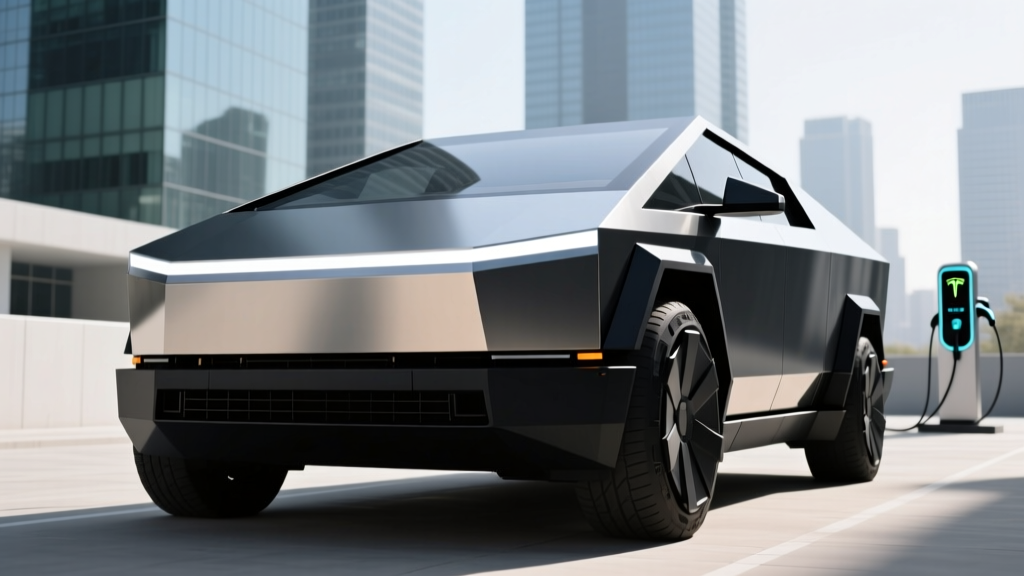
The Tesla Cybertruck's angular, stainless-steel front end remains one of the most polarizing designs on the road. But beyond the origami styling and the controversial wiper placement, the 2026 Cybertruck is a 6,800-pound electric pickup that demands serious evaluation on its engineering merits. With dual- and tri-motor powertrains, an 800-volt architecture, and a starting price near $80,000, buyers need to know exactly what they're getting in range, charging speed, and daily usability — not just headlines about the Cybertruck front fascia.
This review covers the 2026 Tesla Cybertruck lineup — the Dual Motor AWD and the tri-motor Cyberbeast — with exact EPA figures, real-world range reconciliation, 800V DC fast-charging data, and a clear-eyed look at federal tax credit eligibility under current IRS §30D rules.
2026 Cybertruck Lineup: Pricing and Tax Credit Reality
Tesla streamlined the Cybertruck lineup for the 2026 model year. The base Rear-Wheel Drive variant was discontinued, leaving two trims:
| Trim | Base MSRP | Drivetrain | §30D Credit Eligible? | Effective Price* |
|---|---|---|---|---|
| Dual Motor AWD | $79,990 | Dual-Motor AWD | Yes — $7,500 | ~$72,490 |
| Cyberbeast (Tri-Motor) | $99,990 | Tri-Motor AWD | Yes — $7,500 | ~$92,490 |
*Effective price assumes full §30D credit eligibility. As of 2026, the IRS §30D clean vehicle credit provides up to $7,500 via point-of-sale transfer. Eligibility requires: buyer AGI under $150K single / $300K joint; vehicle MSRP under $80,000 (the Cyberbeast at $99,990 exceeds this cap and does NOT qualify); and battery components and critical minerals meeting US-sourcing thresholds. Always verify current-year rules with a tax professional.
Range, Battery, and Efficiency: EPA vs. Real World
| Spec | Dual Motor AWD | Cyberbeast |
|---|---|---|
| Battery Chemistry | NMC (Nickel Manganese Cobalt) | NMC |
| Usable Capacity | ~123 kWh | ~123 kWh |
| EPA Est. Range | 340 miles | 320 miles |
| MPGe (Combined) | 70 MPGe | 65 MPGe |
| Energy Consumption | 48 kWh/100 mi | 52 kWh/100 mi |
The Cybertruck uses an NMC (nickel manganese cobalt) battery pack — not LFP — which trades some cycle-life longevity for higher energy density, critical for a vehicle this heavy. Tesla's thermal management system is among the best in the industry, but the stainless-steel exoskeleton adds substantial mass (curb weight near 6,800 lbs for the Dual Motor), which directly penalizes efficiency. At 48 kWh per 100 miles, the Cybertruck consumes roughly twice the energy per mile of a Tesla Model Y.
Charging Speed: 800V Architecture in Practice
| Charging Level | Rate | Speed / Time |
|---|---|---|
| Level 1 (120V household) | ~1.4 kW | ~3–4 miles per hour |
| Level 2 (240V home, 48A) | 11.5 kW | ~33 miles per hour / full charge ~11 hrs |
| DC Fast Charge (Tesla Supercharger V4) | Peak ~350 kW | 10–80% in ~18 minutes |
| DC Fast Charge (non-Tesla CCS/NACS adapter) | Peak ~250 kW (varies by station) | 10–80% in ~25 minutes |
The Cybertruck's 800-volt battery architecture is its charging advantage. On Tesla's V4 Supercharger stalls — which support the higher voltage — the truck can accept peak rates near 350 kW, though sustained rates taper significantly above 60% state of charge. A realistic 10–80% session takes approximately 18 minutes at a V4 stall, adding roughly 230 miles of range.
On third-party DC fast chargers using the NACS connector (now standard on the Cybertruck), speeds depend on the station's capability. Most Electrify America and EVgo stalls cap at 150–250 kW for NACS-equipped vehicles, pushing the 10–80% session closer to 25 minutes. The charging curve matters: you'll see peak kW only between roughly 10–40% SoC, after which the battery management system tapers current to protect cell health. Don't plan road trips around the peak number — plan around the average sustained rate.
For home charging, a 48-amp Level 2 wall connector on a 60-amp circuit delivers 11.5 kW, replenishing roughly 33 miles of range per hour. A full overnight charge from 10% takes about 11 hours — adequate for daily use but worth noting if you frequently arrive home with a deeply depleted pack.
Performance, Drivetrain, and the Cybertruck Front Architecture
| Spec | Dual Motor AWD | Cyberbeast (Tri-Motor) |
|---|---|---|
| Horsepower | 600 hp | 845 hp |
| 0–60 mph | 3.9 seconds | 2.6 seconds |
| Top Speed | 130 mph | 130 mph |
| Towing Capacity | 11,000 lbs | 11,000 lbs |
| Payload Capacity | 2,500 lbs | 2,500 lbs |
The Cybertruck front end isn't just a styling choice — it reflects the vehicle's structural approach. The cold-rolled stainless steel exoskeleton eliminates traditional crumple-zone engineering in favor of an ultra-rigid passenger cell. The front trunk (frunk) offers approximately 7 cubic feet of lockable storage, useful for charging cables or a small grocery run but not a full suitcase.
The Dual Motor's 3.9-second 0–60 time is genuinely quick for a truck this heavy, and the instant torque delivery makes highway merging effortless. The Cyberbeast's 2.6-second sprint is supercar territory, though its real-world utility is questionable given the range penalty of tri-motor operation.
Steer-by-wire is standard across the lineup — there is no mechanical connection between the yoke-style steering wheel and the front wheels. This enables the Cybertruck's remarkably tight turning radius (approximately 42 feet curb-to-curb, comparable to a midsize sedan) but takes acclimation. Some drivers report fatigue on long highway stints due to the variable-ratio steering feel.
Interior Space, Cargo, and Daily Usability
The Cybertruck seats five across two rows. Front-seat legroom is generous at approximately 41.5 inches, while rear-seat legroom comes in at roughly 38 inches — adequate for adults on shorter trips but not class-leading versus a Rivian R1T or Ford F-150 Lightning. The rear seat cushion sits relatively flat, which some taller passengers find unsupportive on long drives.
Cargo capacity breaks down as follows:
- Bed (6-foot vault): ~68 cubic feet with the tonneau cover closed; can accommodate 4×8 sheets of plywood with the tailgate down
- Frunk: ~7 cubic feet
- Rear under-seat storage: ~5 cubic feet
The motorized retractable tonneau cover is standard and can support approximately 300 pounds of distributed weight. The bed features built-in 120V and 240V outlets, enabling job-site tool use or tailgate cooking — a genuine differentiator for tradespeople.
The 18.5-inch center touchscreen runs Tesla's latest infotainment software, including navigation, media, and vehicle controls. Notably, there are no physical buttons for climate or mirror adjustment — everything routes through the screen or the yoke's scroll wheels. This minimalist approach divides opinion; some owners adapt quickly, others find it distracting while driving.
Driver Assistance: Autopilot and FSD (Supervised)
The Cybertruck's sensor suite includes cameras only — Tesla removed ultrasonic sensors and radar from its production vehicles. This vision-only approach works well in clear conditions but has documented limitations in fog, heavy rain, and direct low-angle sun glare. The Cybertruck front camera array is positioned behind the windshield, and the large wiper blade (a single, oversized unit) has drawn criticism for leaving unwiped zones in the driver's sightline.
Warranty, Battery Longevity, and Ownership Costs
| Component | Coverage |
|---|---|
| Basic Vehicle | 4 years / 50,000 miles |
| Battery & Drive Unit | 8 years / 150,000 miles (min 70% capacity retention) |
| Stainless Steel Body | 5 years / 60,000 miles (corrosion) |
Tesla's battery warranty guarantees at least 70% capacity retention over 8 years or 150,000 miles, whichever comes first. For the NMC chemistry used in the Cybertruck, real-world degradation data from Tesla's fleet suggests approximately 10–12% capacity loss over 100,000 miles with typical charging habits (daily charging to 80%, occasional 100% for trips). A full battery replacement outside warranty currently costs between $15,000 and $20,000 at Tesla service centers — a significant long-term ownership risk.
Insurance costs for the Cybertruck run higher than average for the truck segment. Expect annual premiums in the $2,800–$4,200 range depending on your state, driving record, and coverage level — roughly 20–35% above a comparable Ford F-150 Lightning, driven by repair costs for the stainless-steel body and steer-by-wire components.
Who Should Buy the 2026 Cybertruck?
Consider alternatives if: You need maximum rear-seat comfort for family road trips (Rivian R1T is roomier), you tow heavy loads frequently (the range penalty under load is severe — expect 150–180 miles towing 8,000+ lbs), or you prefer conventional steering feel and physical controls.
Cybertruck vs. Key Competitors
| Spec | Tesla Cybertruck Dual Motor | Ford F-150 Lightning Lariat | Rivian R1T Dual Max |
|---|---|---|---|
| EPA Range | 340 mi | 320 mi | 352 mi |
| Starting MSRP | $79,990 | $69,995 | $87,900 |
| §30D Credit | Yes ($7,500) | Yes ($7,500) | Yes ($7,500) |
| 0–60 mph | 3.9 sec | 4.5 sec | 3.5 sec |
| Towing | 11,000 lbs | 10,000 lbs | 11,000 lbs |
| DC Fast Charge (10–80%) | ~18 min | ~28 min | ~21 min |
The Cybertruck's 800V charging architecture gives it a clear speed advantage on DC fast chargers. The F-150 Lightning offers a more conventional truck experience with better rear-seat space and a lower entry price. The Rivian R1T delivers the most refined ride quality and adventure capability but at a premium price point.
Pros
- Fastest DC charging in the truck segment (800V, ~18 min 10–80%)
- 11,000-lb towing capacity with integrated bed power outlets
- Eligible for $7,500 §30D credit on Dual Motor trim
- Steer-by-wire enables a remarkably tight turning radius
- Stainless steel body resists dents and minor impacts
- Tesla Supercharger network access (most reliable in the US)
Cons
- Real-world highway range falls well short of EPA (270–290 mi)
- Cyberbeast trim exceeds $80K MSRP cap — no tax credit
- Rear seat comfort lags behind Rivian R1T and F-150 Lightning
- Steer-by-wire and yoke steering require significant adaptation
- Single oversized wiper leaves blind spots on the windshield
- High insurance premiums due to repair cost complexity
- Vision-only ADAS struggles in heavy rain and fog
Frequently Asked Questions
What is the real-world range of the 2026 Cybertruck?
The Dual Motor AWD carries a 340-mile EPA estimate, but real-world highway driving at 70–75 mph typically yields 270–290 miles. In cold weather below freezing, expect 220–250 miles. The Cyberbeast's heavier consumption reduces real-world range to approximately 250–270 miles on the highway.
How fast does the Cybertruck charge at home and on the road?
At home on a 240V Level 2 charger (48 amps), the Cybertruck adds about 33 miles of range per hour, fully charging from 10% in roughly 11 hours. On a Tesla V4 Supercharger, DC fast charging peaks near 350 kW, delivering a 10–80% charge in approximately 18 minutes. On third-party NACS chargers, expect 10–80% in about 25 minutes.
Does the Cybertruck qualify for the federal EV tax credit?
The Dual Motor AWD at $79,990 qualifies for the full $7,500 §30D credit if you meet income requirements (AGI under $150K single / $300K joint) and the vehicle's battery sourcing meets current-year thresholds. The Cyberbeast at $99,990 exceeds the $80,000 MSRP cap and is not eligible. Verify current rules at IRS.gov before purchasing.
Is the Cybertruck worth buying over the F-150 Lightning or Rivian R1T?
Choose the Cybertruck if you prioritize the fastest DC charging, the Tesla Supercharger network, and distinctive design. Choose the F-150 Lightning if you want a lower price, more conventional truck ergonomics, and better rear-seat comfort. Choose the Rivian R1T if ride quality, off-road capability, and interior refinement matter most — and you're willing to pay a premium.
How does the Cybertruck front design affect visibility and safety?
The angular front end and steep windshield rake create a commanding outward view, but the large A-pillars and single oversized wiper have drawn criticism for creating blind spots. The NHTSA has not yet published a full 5-star safety rating for the Cybertruck as of early 2026, though Tesla claims the stainless-steel structure exceeds federal crash-test requirements. The vision-only ADAS system (no radar or ultrasonics) can struggle in low-visibility conditions.
What is the Cybertruck's battery warranty and replacement cost?
Tesla covers the battery and drive unit for 8 years or 150,000 miles, guaranteeing at least 70% capacity retention. Real-world NMC degradation data suggests 10–12% loss over 100,000 miles. Out-of-warranty battery replacement currently costs $15,000–$20,000 at Tesla service centers.