Can You Actually Get a Tesla Cybertruck Discount in 2026?
If you've been watching Cybertruck pricing since its late-2023 launch, you already know Tesla rarely plays the traditional dealership discount game. There are no dealer markups to negotiate away, no end-of-quarter lot clearances, and no haggling over floor mats. But that doesn't mean there's no money to be saved. In 2026, Tesla Cybertruck discounts come from a combination of federal tax incentives, Tesla's own inventory pricing adjustments, referral credits, and strategic timing around quarter-end delivery pushes.
This review breaks down exactly what a Cybertruck costs across all three trims, where the real savings live, and whether the math works in your favor versus competitors like the Ford F-150 Lightning and Rivian R1T. We'll also cover the truck's real-world range, charging behavior, and ownership practicality — because a discount means nothing if the vehicle doesn't fit your life.
2026 Tesla Cybertruck Pricing: Every Trim at a Glance
Tesla sells the Cybertruck in three configurations for the 2026 model year. Pricing has stabilized after the initial launch-year adjustments, and Tesla has occasionally offered inventory vehicles at slight reductions — particularly for the AWD trim. Here's the current MSRP breakdown before any incentives:
| Trim | Drivetrain | Base MSRP | As-Tested (Typical Options) |
|---|---|---|---|
| Rear-Wheel Drive (RWD) | Single Motor RWD | $60,990 | $62,490 (w/ paint + mats) |
| All-Wheel Drive (AWD) | Dual Motor AWD | $79,990 | $82,990 (w/ FSD + accessories) |
| Cyberbeast | Tri-Motor AWD | $99,990 | $102,490 (w/ FSD + armor) |
The RWD trim, announced for broader availability in 2025, is the price-leader and the most likely candidate for any inventory discount. Tesla has been known to reduce prices on existing inventory vehicles by $1,000–$3,000 to clear units before quarter-end. Check Tesla's inventory page directly — these price reductions appear without announcement and disappear quickly.
Federal Tax Credit & Incentive Breakdown
This is where the biggest "discount" on a Cybertruck actually lives — and it's also where the most confusion exists. The federal EV tax credit under IRS §30D offers up to $7,500, but eligibility depends on several moving targets that shift with battery sourcing rules and your personal tax situation.
- MSRP Cap: Trucks/vans/SUVs must have an MSRP at or below $80,000. This means the Cybertruck RWD ($60,990) and AWD ($79,990) qualify on price; the Cyberbeast ($99,990) does NOT.
- Buyer Income Cap: Modified adjusted gross income (MAGI) must not exceed $150,000 (single), $225,000 (head of household), or $300,000 (joint filers).
- Battery Sourcing: The $7,500 credit splits into two halves — $3,750 for critical minerals and $3,750 for battery component sourcing. Tesla's supply chain has been evolving; verify current sourcing compliance on the IRS qualified vehicles list before purchasing.
- Point-of-Sale Transfer: As of 2024, you can transfer the credit to the dealer (Tesla) at purchase, reducing your out-of-pocket cost immediately rather than waiting for a tax refund.
- One Credit Per Vehicle: The credit applies once per VIN. You cannot claim it on a used Cybertruck purchase.
For the Cybertruck AWD at $79,990, you're right at the MSRP cap. Adding certain accessories at order time could push the vehicle price above $80,000 and disqualify you. Order carefully and confirm the final vehicle price before signing. See the IRS clean vehicle credit page for the latest sourcing and eligibility rules.
| Trim | MSRP | Max §30D Credit | Effective Price | Credit Eligible? |
|---|---|---|---|---|
| RWD | $60,990 | Up to $7,500 | ~$53,490 | Yes (verify sourcing) |
| AWD | $79,990 | Up to $7,500 | ~$72,490 | Yes (MSRP cap tight) |
| Cyberbeast | $99,990 | $0 | $99,990 | No (exceeds $80K cap) |
Range, Battery & Real-World Efficiency
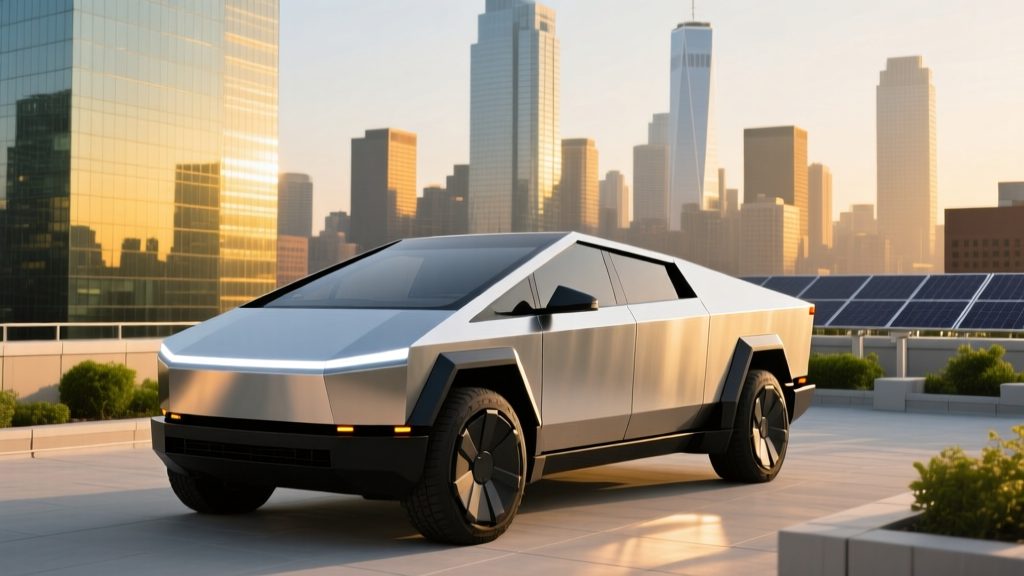
The Cybertruck's stainless steel exoskeleton and angular design create significant aerodynamic drag, and that shows in its efficiency numbers. Here's what the EPA says versus what you'll actually experience on the road.
| Spec | RWD | AWD | Cyberbeast |
|---|---|---|---|
| Battery Capacity (usable) | ~123 kWh (NMC) | ~123 kWh (NMC) | ~123 kWh (NMC) |
| EPA Estimated Range | ~340 mi | 318 mi | 300 mi (w/ range extender: ~340 mi) |
| Efficiency (kWh/100 mi) | ~36 kWh | ~39 kWh | ~41 kWh |
| MPGe (combined) | ~93 MPGe | ~86 MPGe | ~82 MPGe |
The EPA's 318-mile estimate for the AWD trim assumes a mix of city and moderate-speed driving. In our experience and consistent third-party testing, highway driving at 70–75 mph reduces range by roughly 15–20%, putting real-world highway range at approximately 255–270 miles. In cold weather (below 32°F), expect an additional 15–25% reduction due to battery heating demands and cabin climate use — that drops effective winter highway range to roughly 200–230 miles. The Cybertruck's heat pump helps mitigate cabin heating losses, but the large battery still requires significant energy to warm. Plan road trips around 200-mile legs in winter to maintain a comfort buffer.
The Cyberbeast's optional range extender (a bed-mounted battery pack adding ~50 kWh) pushes EPA range closer to 340 miles, but it consumes roughly one-third of the bed and adds significant weight. It's a trade-off: more range, less utility.
Charging Speed: DC Fast Charge & Home Level 2
Charging speed is the Cybertruck's strongest technical advantage, thanks to its 800-volt electrical architecture. But peak numbers don't tell the full story — the charge curve matters just as much.
| Charging Level | Power / Rate | Miles Added per Hour | Notes |
|---|---|---|---|
| Level 1 (120V outlet) | ~1.4 kW | ~3–4 mi/hr | Emergency/trickle only; full charge takes days |
| Level 2 (240V, 48A home charger) | 11.5 kW | ~29–32 mi/hr | Full overnight charge in ~10–12 hours |
| Level 2 (Tesla Wall Connector, 80A) | 19.2 kW | ~48–52 mi/hr | Requires 100A circuit; full charge in ~6–7 hours |
| DC Fast Charge (Tesla Supercharger V4) | Peak ~350 kW | ~200+ mi in 15 min | 10–80% in ~18–22 min; tapers sharply above 80% |
| DC Fast Charge (CCS adapter, EA/Ionity) | Peak ~250 kW | ~150+ mi in 15 min | 10–80% in ~25–30 min; CCS adapter required (sold separately) |
The 800V architecture enables genuinely fast DC charging when paired with Tesla's V4 Superchargers. You'll see the Cybertruck pull 300+ kW in the 10–40% state-of-charge window, but the charge curve tapers progressively — by 70% SoC you're typically seeing 100–130 kW, and above 85% it drops below 50 kW. This is normal lithium-ion charging physics, not a flaw, but it means the last 20% takes nearly as long as the first 60%. For road trips, plan stops at 10–80% rather than topping off to 100%.
At home, the Tesla Wall Connector at 80 amps (19.2 kW) is the gold standard for Cybertruck owners. It requires a dedicated 100-amp circuit, which means most homes will need a panel upgrade or sub-panel installation. Budget $1,500–$3,500 for a professional Level 2 installation depending on your electrical panel's existing capacity and the distance from panel to charger location. A 48-amp charger on a 60-amp circuit is a more common and affordable alternative, delivering a still-respectable ~30 miles of range per hour of charging.
Performance, Cargo & Practicality
| Spec | RWD | AWD | Cyberbeast |
|---|---|---|---|
| 0–60 mph | ~6.5 sec | 3.9 sec | 2.6 sec |
| Horsepower | ~315 hp | ~600 hp | ~845 hp |
| Drivetrain | Single Motor RWD | Dual Motor AWD | Tri-Motor AWD (torque vectoring) |
| Towing Capacity | 7,500 lbs | 11,000 lbs | 11,000 lbs |
| Payload Capacity | 2,500 lbs | 2,500 lbs | 2,500 lbs |
| Bed Length | 6 ft (72 in) | 6 ft (72 in) | 6 ft (72 in) |
| Bed Volume | ~67 cu ft | ~67 cu ft | ~67 cu ft |
| Frunk Volume | ~7 cu ft | ~7 cu ft | ~7 cu ft |
| Seating | 5 passengers (bench front) | 5 passengers | 5 passengers |
| Rear Legroom | ~38 in | ~38 in | ~38 in |
The Cyberbeast's 2.6-second 0–60 time makes it absurdly quick for a 6,800-pound truck, but the more practical story is the AWD trim's combination of 3.9-second acceleration, 11,000-pound towing, and a usable 6-foot bed. The motorized tonneau cover is standard and locks securely, and the bed's 120V and 240V outlets (up to 11.5 kW output via Powershare) make the Cybertruck a legitimate mobile power source for job sites or tailgating.
Interior space is adequate but not class-leading. The rear bench fits three adults for short trips, but the relatively upright seatback and limited under-seat storage mean long-distance rear-passenger comfort trails the F-150 Lightning. The front trunk (frunk) is small at roughly 7 cubic feet — enough for a charging cable bag and a small cooler, not much more.
Warranty, Driver Assistance & Tech
Tesla covers the Cybertruck with a 4-year/50,000-mile basic vehicle warranty and an 8-year/120,000-mile battery and drive unit warranty (whichever comes first). The battery warranty guarantees at least 70% capacity retention over the warranty period — consistent with the rest of Tesla's lineup and competitive with Ford's F-150 Lightning coverage.
Tesla's Autopilot comes standard and includes adaptive cruise control, lane centering, and automatic emergency braking. Full Self-Driving (Supervised) is a $8,000 option or $99/month subscription and adds features like automatic lane changes, navigate-on-autopilot, and traffic light recognition. However, FSD is an SAE Level 2 driver-assistance system — you must keep your hands on the wheel and eyes on the road at all times. Tesla's cabin camera monitors engagement and will issue warnings and eventually disengage the system if you look away. This is not autonomous driving; it is supervised driver assistance.
The 18.5-inch front touchscreen runs Tesla's latest software with integrated navigation, streaming media, and a full vehicle-controls interface (there are virtually no physical buttons). A rear 9.4-inch touchscreen serves back-seat passengers. The steer-by-wire system (no mechanical connection between the yoke and the wheels) is standard on all trims and takes genuine adaptation — plan for a few days of adjustment before you feel natural at parking speeds.
- Steer-by-wire yoke requires adaptation; not all drivers will prefer it over a traditional wheel
- Stainless steel body panels show fingerprints, water spots, and are difficult to repair after dents
- No Apple CarPlay or Android Auto — Tesla's ecosystem only
- Visibility is compromised by the thick A-pillars and angular rear window
- Towing at max capacity (11,000 lbs) reduces range by 40–50% — plan for 150–170 miles between charges when towing heavy
- Insurance premiums are notably higher than comparable trucks — get quotes before ordering
Cybertruck vs. Competitors: Is It Worth Buying?
| Attribute | Cybertruck AWD | F-150 Lightning Lariat | Rivian R1T Dual-Motor |
|---|---|---|---|
| Base MSRP | $79,990 | ~$69,995 | ~$75,900 |
| EPA Range | 318 mi | ~320 mi (ext. range) | ~352 mi (Max Pack) |
| 0–60 mph | 3.9 sec | ~4.0 sec | ~4.5 sec |
| Max DC Charge | ~350 kW | ~150 kW | ~220 kW |
| Towing | 11,000 lbs | 10,000 lbs | 11,000 lbs |
| Bed Length | 6 ft | 5.5 ft | 4.5 ft (+ Gear Tunnel) |
| §30D Credit Eligible | Yes (at MSRP cap) | Yes | Yes |
- You prioritize DC fast-charging speed above all else (350 kW crushes both rivals)
- You want V2L vehicle power output for job sites or off-grid use
- You prefer Tesla's Supercharger network and software ecosystem
- You value distinctive design and don't mind the attention it draws
- You want a lower entry price and a more traditional truck experience
- You need a full-size crew cab with more rear-seat comfort
- You want CarPlay/Android Auto and a conventional steering wheel
- You want the longest available range (Max Pack) and best off-road capability
- You value the Gear Tunnel for secure, weatherproof gear storage
- You prefer a more refined interior with higher material quality
The Best Ways to Save on a Cybertruck in 2026
Here's the practical playbook for maximizing your Cybertruck discount, ranked by dollar impact:
- Claim the full $7,500 federal tax credit — Order the RWD or AWD trim (not Cyberbeast), ensure your income is under the MAGI caps, and verify the vehicle's battery sourcing compliance on the IRS qualified list at time of delivery. Use the point-of-sale transfer to reduce your drive-off price immediately.
- Watch for inventory price reductions — Tesla periodically cuts prices on existing inventory vehicles by $1,000–$3,000, especially near quarter-end (late March, June, September, December). These appear on Tesla.com without announcement.
- Use a Tesla referral code — Tesla's referral program periodically offers $500–$1,000 in credits toward vehicle purchase or Supercharging. Check if the program is active at order time.
- Check state and utility incentives — Many states (California, Colorado, New York, among others) and local utilities offer additional rebates of $1,000–$5,000 for new EV purchases. These stack with the federal credit. Verify current programs in your jurisdiction.
- Skip the Cyberbeast if you want the credit — The $99,990 MSRP puts it $19,990 over the §30D truck cap. You'll pay $7,500 more in lost credits for the privilege of tri-motor performance.
- Consider a demo or loaner vehicle — Tesla occasionally sells low-mileage service loaners and demo vehicles at 5–10% below new MSRP. These still qualify for the federal credit if titled as new.
Frequently Asked Questions
What is the real-world range of the Tesla Cybertruck?
The EPA rates the AWD at 318 miles and the Cyberbeast at 300 miles (340 with the range extender). Real-world highway driving at 70–75 mph yields roughly 255–270 miles for the AWD. In cold weather below freezing, expect 200–230 miles of effective range. The RWD trim targets approximately 340 miles EPA but real-world numbers will follow a similar proportional reduction.
How fast does the Cybertruck charge at home and on the road?
On a Tesla V4 Supercharger, the Cybertruck peaks at roughly 350 kW and charges from 10–80% in approximately 18–22 minutes. At home on a 48-amp Level 2 charger (11.5 kW), you'll add about 30 miles of range per hour, meaning a full charge takes roughly 10–12 hours. An 80-amp Wall Connector (19.2 kW) cuts that to about 6–7 hours but requires a 100-amp dedicated circuit.
How much does a Cybertruck cost after tax credits?
The RWD trim at $60,990 drops to approximately $53,490 after the maximum $7,500 federal credit. The AWD at $79,990 drops to roughly $72,490. The Cyberbeast at $99,990 does not qualify for the federal credit due to the $80,000 MSRP cap for trucks. State and utility incentives may reduce costs further depending on your location.
Does the Cybertruck qualify for the federal EV tax credit?
The RWD and AWD trims qualify on price (both are at or below the $80,000 truck MSRP cap). However, you must also meet the income caps ($150K single / $300K joint), and the vehicle must meet battery critical-mineral and component sourcing requirements as defined by the IRS. Always verify eligibility on the IRS qualified vehicles list at the time of purchase, as sourcing rules are updated periodically.
Is the Cybertruck worth buying versus the F-150 Lightning or Rivian R1T?
It depends on your priorities. The Cybertruck wins on DC fast-charging speed (350 kW), V2L power output, and Tesla's Supercharger network. The F-150 Lightning wins on price, traditional truck ergonomics, and rear-seat comfort. The Rivian R1T wins on maximum range, off-road capability, and interior refinement. If fast charging and Tesla's ecosystem matter most to you, the Cybertruck AWD at ~$72,490 after the federal credit is a compelling package. If you want a more conventional truck experience at a lower price, the Lightning is hard to beat.
What are the biggest pros and cons of the Cybertruck?
Pros: Class-leading 350 kW DC fast charging, 11,000-lb towing, V2L power output up to 11.5 kW, stainless steel body requires no paint, access to Tesla's Supercharger network, strong acceleration across all trims.
Cons: Steer-by-wire yoke requires adaptation, high insurance costs, no Apple CarPlay/Android Auto, visibility compromises, Cyberbeast ineligible for federal tax credit, stainless steel panels difficult to repair, towing cuts range by 40–50%.