The Tesla Cyberquad for Adults: Electric Off-Road Meets the Tesla Ecosystem
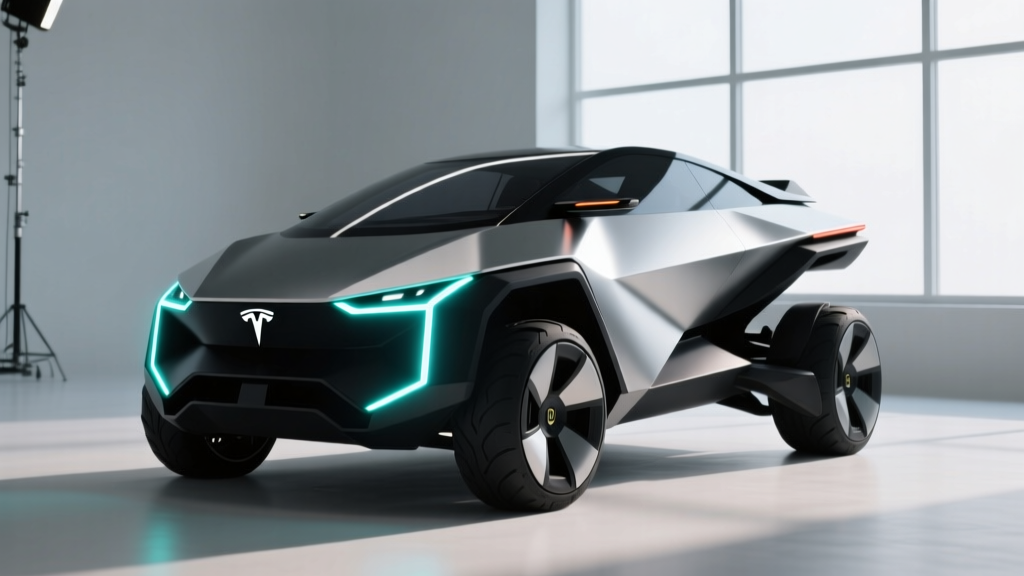
When Tesla first teased the Cyberquad alongside the Cybertruck in 2019, it was little more than a styling exercise. But the concept has evolved into something more concrete: an all-electric ATV aimed squarely at adult riders who want Tesla-ecosystem integration, silent trail operation, and instant electric torque off-road. If you've been searching for a Tesla quad for adults, this is the most detailed breakdown available of what the Cyberquad brings to the table — and where it falls short compared to established electric ATV competitors.
Before we get into the specs, a critical note: as of early 2026, the Tesla Cyberquad for adults is not yet available for retail purchase. Tesla has demonstrated updated prototypes and confirmed production intent, but final EPA-equivalent certifications and consumer pricing remain preliminary. We'll clearly distinguish confirmed specs from estimates throughout this profile.
Range and Battery: What Powers the Tesla Quad
The adult Cyberquad is expected to ship with a lithium-ion battery pack in the 5–7 kWh usable capacity range, based on prototype disclosures and Tesla's engineering trajectory. Tesla has historically favored NMC (nickel manganese cobalt) chemistry in performance-oriented applications, and the Cyberquad is expected to follow suit — prioritizing energy density over the LFP chemistry used in the Model 3 RWD.
Real-World Expectation: On flat, moderate-speed trail riding, expect the upper end (~55–60 mi). Aggressive hill climbs, sand, or towing loads could drop range to 25–35 miles. Cold weather (below 40°F) typically reduces lithium-ion ATV range by 15–25%. Plan rides accordingly.
| Spec | Value (Estimated/Preliminary) |
|---|---|
| Battery Capacity | ~5–7 kWh usable (NMC chemistry) |
| Estimated Range | 40–60 mi (mixed terrain) |
| Top Speed | ~50 mph (electronically limited) |
| 0–30 mph | ~3.5 seconds (est.) |
| Drivetrain | AWD, dual-motor |
| Payload Capacity | ~350 lbs (est.) |
| Towing Capacity | TBD |
| Estimated Base Price | $10,000–$15,000 (preliminary) |
| Availability | Announced — not yet on sale |
Charging the Cyberquad: Home and DC Options
Charging an electric ATV is fundamentally different from charging a passenger EV — the battery is smaller, but the infrastructure expectations are different too. Here's what we know about Cyberquad charging:
| Charging Level | Power (kW) | Estimated Time (0–100%) | Notes |
|---|---|---|---|
| Level 1 (120V outlet) | ~1.0–1.4 kW | 4–6 hours | Standard household outlet; included charger expected |
| Level 2 (240V) | ~3.3 kW (est.) | 1.5–2.5 hours | Requires NEMA 14-50 or hardwired station |
| DC Fast Charge | Not expected | N/A | Battery too small for DCFC; no CCS/NACS port anticipated |
The Cyberquad's small battery means DC fast charging is unnecessary and likely unsupported. Most owners will charge overnight on a standard 120V outlet or use a 240V circuit for faster turnaround between rides. If you already have a 240V NEMA 14-50 outlet installed for a Tesla Wall Connector, the Cyberquad should be able to share that circuit with an appropriate adapter.
Charging cost reality: At an average US electricity rate of $0.16/kWh (per EIA data), a full 6 kWh charge costs roughly $0.96. That's pennies per ride compared to $15–$25 in gasoline for a comparable gas-powered ATV.
Performance: Electric Torque on the Trail
Tesla's dual-motor AWD architecture — scaled down from the Cybertruck and Model Y platform — is expected to give the Cyberquad a significant traction advantage over single-motor electric ATVs. The instant torque delivery that defines Tesla's road cars translates directly to off-road scenarios: no clutch, no gear hunting, just immediate power to the wheels with traction control managed electronically.
Expected performance figures:
- 0–30 mph: ~3.5 seconds (estimated based on power-to-weight ratio)
- Top speed: ~50 mph, electronically governed
- Drivetrain: Dual-motor AWD with torque vectoring
- Ride modes: Expected to include Eco, Trail, Sport, and Tow (mirroring Cybertruck mode philosophy)
For context, the Polaris Ranger XP Kinetic — the closest production electric UTV competitor — produces 110 hp and 140 lb-ft of torque from a 29 kWh battery. The Cyberquad, being a lighter ATV-format vehicle, will have less total power but a more favorable power-to-weight ratio for agility.
Pricing, Tax Credits, and Total Cost of Ownership
Tesla has not announced final pricing for the adult Cyberquad. However, based on the original Cyberquad for Kids pricing ($1,900) and the competitive electric ATV landscape, industry analysts project a base MSRP between $10,000 and $15,000.
| Cost Factor | Estimate |
|---|---|
| Estimated Base MSRP | $10,000–$15,000 |
| Federal Tax Credit (§30D) | Likely not eligible — ATVs do not qualify as "motor vehicles" under IRS §30D definitions |
| Annual Charging Cost (50 rides) | ~$48–$75 |
| Annual Maintenance | Minimal — no oil, filters, spark plugs, or transmission fluid |
| Estimated 5-Year Operating Cost | ~$350–$500 (electricity + basic maintenance) |
Tech Features and the Tesla Ecosystem Advantage
This is where a Tesla quad for adults could genuinely differentiate itself from competitors like the Polaris Ranger XP Kinetic or the Instant Motion EV ATV lineup:
- Tesla App integration: Remote state-of-charge monitoring, geo-fencing, speed limiting, and location tracking — the same infrastructure that manages your Model Y can manage your Cyberquad.
- Over-the-air updates: Tesla's OTA capability means new ride modes, performance tweaks, and bug fixes delivered wirelessly — something no traditional ATV manufacturer offers.
- Cybertruck bed integration: The Cyberquad was originally designed to fit in the Cybertruck bed with a ramp system. If executed, this creates a seamless "base camp + explore" workflow that no competitor can match.
- Sentry Mode / GPS tracking: Theft is a major concern for ATV owners. Tesla's camera and GPS infrastructure could offer built-in security and recovery features.
- Expected display: A ruggedized touchscreen (likely 7–10 inches) running a simplified Tesla OS variant, with trail maps, telemetry, and ride statistics.
Notable drawbacks: The Cyberquad is expected to lack the towing capacity and payload of a full-size UTV. It's an ATV-format vehicle — single rider (or possibly rider + passenger), not a work platform. If you need to haul 1,000 lbs of feed or tow a trailer, the Polaris Ranger XP Kinetic (1,250 lb payload, 2,500 lb towing) is the more practical tool.
Cyberquad vs. Competitors: Which Electric Off-Roader Wins?
| Feature | Tesla Cyberquad (Est.) | Polaris Ranger XP Kinetic | Gas ATV (Honda Foreman) |
|---|---|---|---|
| Format | ATV (1 rider) | UTV (2–3 riders) | ATV (1 rider) |
| Battery / Fuel | ~5–7 kWh | 29 kWh | 4.2 gal gas |
| Range | 40–60 mi | ~45 mi | ~100+ mi |
| Price | $10,000–$15,000 | ~$29,999 | ~$9,000–$11,000 |
| Noise | Near-silent | Near-silent | Loud |
| OTA Updates | Yes | No | No |
| App Integration | Full Tesla app | Limited | None |
| Towing | TBD (likely minimal) | 2,500 lbs | ~1,300 lbs |
Who Should Buy the Tesla Cyberquad for Adults?
- You already own a Tesla vehicle and want ecosystem integration
- You prioritize silent trail riding for hunting, wildlife observation, or noise-restricted areas
- You want OTA updates and app-based vehicle management
- You own a Cybertruck and want bed-integrated ATV transport
- Your rides are typically under 40 miles round-trip
Look elsewhere if:
- You need to tow heavy loads or carry multiple passengers
- You ride in remote areas with no charging access and need 100+ mile range
- You want a proven, currently-available product with dealer support
- You need a work-capable UTV for ranch or farm operations
Warranty and Long-Term Ownership
Tesla has not published warranty terms for the Cyberquad. However, based on Tesla's EV battery warranty standards, a reasonable expectation would be:
- Battery: 4 years / 50,000 miles (or ~70% capacity retention threshold) — scaled from Tesla's passenger EV warranty structure
- Powertrain (motors, controller): 4 years / 50,000 miles
- Vehicle limited warranty: 2 years / 25,000 miles
LFP batteries are known for superior cycle life (3,000+ cycles before significant degradation) compared to NMC (~1,000–2,000 cycles). If Tesla opts for NMC in the Cyberquad for energy-density reasons, expect a somewhat shorter total lifespan but still many years of typical recreational use. Most ATV owners put on 500–2,000 miles per year — even at 1,000 cycles, that's decades of riding.
Frequently Asked Questions
What is the real-world range of the Tesla Cyberquad for adults?
Tesla targets 40–60 miles of mixed-terrain range. In real-world conditions — moderate trails, some hills, ambient temperatures above 50°F — expect approximately 45–55 miles. Aggressive riding, deep sand, or cold weather will reduce this to 25–35 miles. Always plan rides with a 20–30% range buffer.
How fast does the Cyberquad charge at home?
On a standard 120V household outlet (Level 1), a full charge takes approximately 4–6 hours. On a 240V Level 2 circuit (~3.3 kW), expect 1.5–2.5 hours for a full charge. DC fast charging is not expected to be supported due to the small battery size.
Does the Tesla Cyberquad qualify for the federal EV tax credit?
Almost certainly no. The IRS §30D Clean Vehicle Credit applies to on-road motor vehicles. Off-road ATVs do not meet the statutory definition. Consult a tax professional and review IRS §30D guidance for definitive answers.
When can I buy the Tesla Cyberquad for adults?
Tesla has not announced a firm retail launch date. The vehicle remains in the announced/prototype stage as of early 2026. Monitor Tesla's official channels for production and ordering updates.
Is the Tesla Cyberquad worth buying vs. a gas ATV?
It depends on your use case. If you value silent operation, near-zero maintenance, app integration, and your rides stay within the range envelope, the Cyberquad could be compelling. If you need maximum range, towing capacity, or established dealer service networks, a gas ATV or the currently-available Polaris Ranger XP Kinetic may be better choices today.
Can the Cyberquad fit in a Cybertruck bed?
Yes — that was a core design intent. Tesla has shown the Cyberquad loading into a Cybertruck bed via an integrated ramp system. Final dimensions and weight will determine how practical this is with additional cargo, but the concept is confirmed.