What Does "Taycan" Mean?
If you've searched taycan meaning, you're not alone. The name "Taycan" (pronounced roughly "tai-kahn") derives from two terms of Turkic origin that together translate to "lively young horse" or "soul of a spirited young horse." Porsche selected the name in 2018 to evoke the leaping horse in the Stuttgart coat of arms that has appeared on every Porsche crest since 1952. It was a deliberate break from the company's alphanumeric naming convention and a signal that the Taycan would be an entirely new kind of Porsche — its first all-electric production vehicle.
For the 2026 model year, the Taycan lineup has been significantly refreshed with larger batteries, faster charging, and updated powertrains that push the sedan deeper into both performance and daily-driver territory. Here's everything you need to know about owning one.
Range, Efficiency & Real-World Expectations
The 2026 Taycan lineup offers a wide spread of EPA-estimated range depending on trim, battery, and wheel configuration. The most efficient variant, the rear-wheel-drive Taycan equipped with the larger Performance Battery Plus, achieves an EPA-estimated 318 miles. The all-wheel-drive Taycan 4S with the same battery lands at approximately 277 miles, while the high-performance Turbo GT variants dip to around 269 miles.
EPA figures assume mixed driving. In real-world highway testing at 75 mph, expect the RWD Taycan to deliver roughly 270–290 miles before needing a charge. In cold weather (below 32°F / 0°C), range can drop 20–30%, bringing effective highway range closer to 200–230 miles for the larger battery. The Taycan's heat pump (standard on most trims) mitigates some of this loss compared to EVs without active thermal management. City driving with regenerative braking recovers more energy, often matching or slightly exceeding EPA estimates in stop-and-go traffic.
Efficiency varies by trim. The RWD model achieves approximately 87 MPGe combined (roughly 38–40 kWh/100 mi), while the Turbo GT, with its dual-motor setup and performance-oriented tuning, drops to roughly 73 MPGe (about 46 kWh/100 mi). These figures place the Taycan mid-pack among luxury EVs — less efficient than a Tesla Model S or Lucid Air, but competitive with the Audi e-tron GT (its platform sibling).
| Spec | Taycan RWD | Taycan 4S | Taycan Turbo GT |
|---|---|---|---|
| EPA Range | 318 mi | 277 mi | 269 mi |
| Usable Battery | 97.0 kWh (NMC) | 97.0 kWh (NMC) | 97.0 kWh (NMC) |
| Horsepower | 402 hp | 590 hp (Launch Control) | 1,019 hp (Launch Control) |
| 0–60 mph | 4.6 sec | 3.5 sec | 2.1 sec |
| Drivetrain | RWD | AWD (dual-motor) | AWD (dual-motor) |
| Efficiency | 87 MPGe | 80 MPGe | 73 MPGe |
| Base MSRP | $90,900 | $107,400 | $233,000 |
Battery Chemistry & Architecture
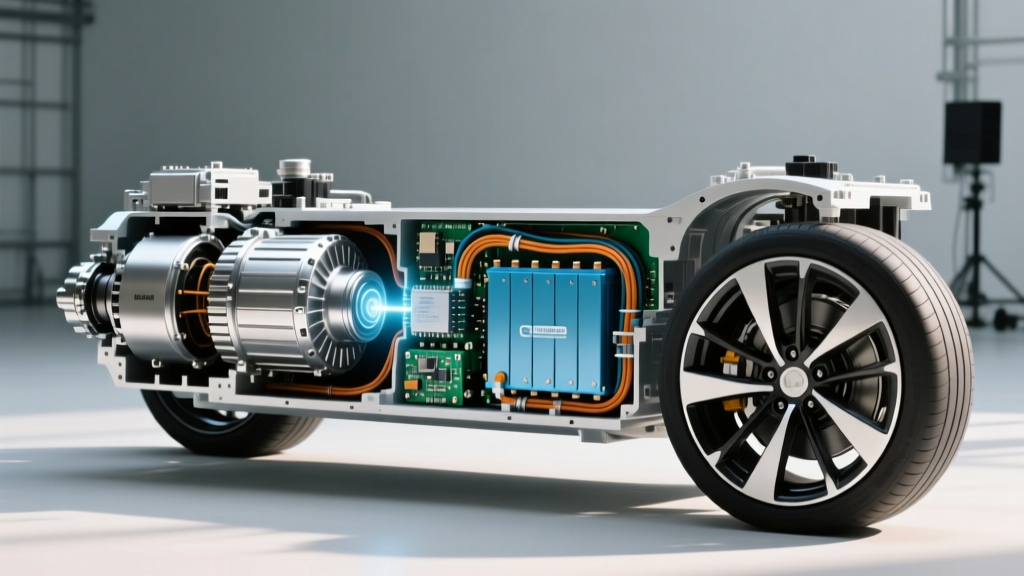
All 2026 Taycan models use an NMC (nickel manganese cobalt) lithium-ion battery. The updated Performance Battery Plus offers approximately 97.0 kWh of usable capacity (105 kWh gross). Porsche continues with NMC over LFP because the chemistry delivers higher energy density — critical for fitting meaningful range into a low-slung sedan platform without compromising handling or ground clearance.
The Taycan's battery pack is integrated into the vehicle floor with liquid thermal management, keeping cells within an optimal temperature window for both longevity and charge acceptance. A standard 8-year/100,000-mile battery warranty guarantees at least 70% state of health (capacity retention) over the coverage period. Independent long-term tests of first-generation Taycans have shown degradation of approximately 5–8% over the first 60,000 miles, suggesting the pack is conservatively managed.
Charging Speeds: DC Fast, Level 2 & Home Setup
The 2026 Taycan's 800-volt electrical architecture remains one of its strongest practical advantages. While most competitors operate on 400V systems, the Taycan's higher voltage enables faster charging with lower current, reducing heat and cable weight.
| Charge Level | Power (kW) | Speed | Notes |
|---|---|---|---|
| Level 1 (120V) | ~1.4 kW | ~4–5 mi/hr | Emergency/trickle only |
| Level 2 (240V, 48A) | 11.5 kW | ~33 mi/hr | Full charge overnight (~10 hrs) |
| Level 2 (240V, 80A) | 19.2 kW | ~55 mi/hr | Requires optional onboard charger |
| DC Fast (peak) | 320 kW | 10–80% in ~18 min | At capable 350+ kW stations |
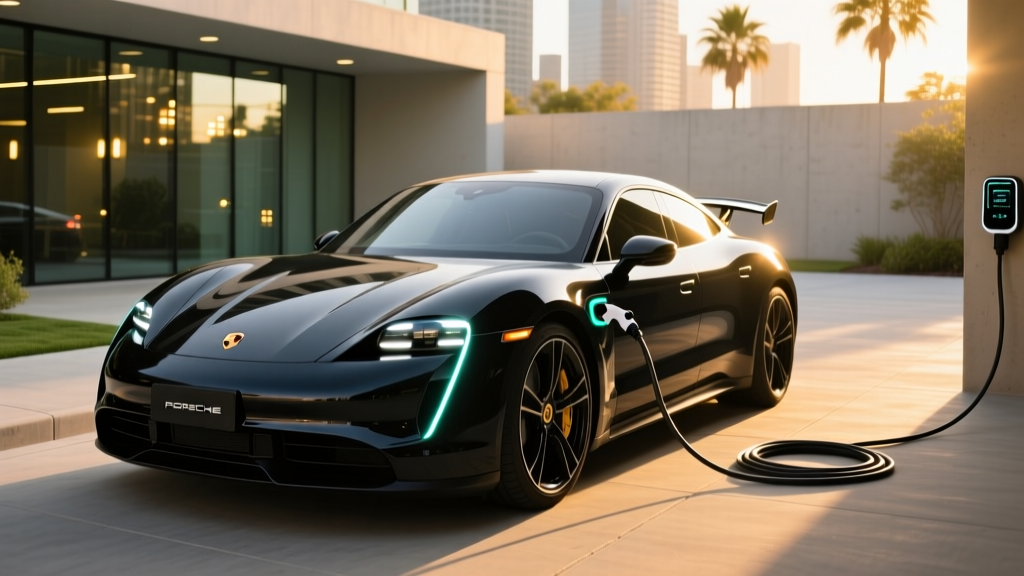
The headline figure is the 320 kW peak DC fast-charge rate on models equipped with the Performance Battery Plus. On a 350 kW-capable charger (such as Electrify America's newest stalls or Tesla Superchargers with a NACS adapter), the Taycan can add roughly 190 miles of range in 10 minutes under ideal conditions.
However, peak rate is not sustained rate. The Taycan's charge curve holds above 250 kW from roughly 10% to 45% state of charge, then tapers progressively. The 10–80% time of approximately 18 minutes is genuinely achievable at a compatible station — one of the fastest in the luxury EV segment. Above 80%, charging slows considerably to protect cell health, so plan to unplug and move on rather than wait for a full charge at a public station.
For home charging, the standard 11.5 kW onboard charger adds about 33 miles of range per hour. With the optional 19.2 kW onboard charger (available on select trims), that jumps to roughly 55 miles per hour — enough to fully replenish the battery in about 5.5 hours on a properly wired 80-amp circuit. Expect a Level 2 home installation to cost $1,200–$3,500 depending on panel capacity and run length; consult a licensed electrician to confirm your home's 240V capacity.
Performance, Handling & Drivetrain
The Taycan was engineered as a driver's car first and an EV second. Every variant uses a two-speed transmission on the rear axle — a rarity among EVs — with a short first gear for explosive launches and a tall second gear for highway efficiency. Front-axle motors on AWD models use a single-speed reduction gear.
The base RWD Taycan delivers 402 horsepower and a 4.6-second 0–60 mph time — brisk but not supercar territory. The 4S jumps to 590 hp with Launch Control engaged, dropping the sprint to 3.5 seconds. At the top, the Turbo GT with the Weissach Package produces a staggering 1,019 hp and hits 60 mph in 2.1 seconds, making it one of the quickest production sedans ever built.
Adaptive air suspension is standard on most trims, with rear-axle steering available to tighten the turning radius at low speeds and improve stability at highway speeds. Regenerative braking recovers up to 290 kW — among the highest in the industry — enabling genuine one-pedal driving in most scenarios, though Porsche does not offer a full stop-hold mode like some competitors.
Pricing, Tax Credits & Ownership Costs
The 2026 Taycan lineup starts at $90,900 for the RWD base model and climbs to over $233,000 for the Turbo GT with Weissach Package. Options add quickly — metallic paint, larger wheels, the Performance Battery Plus, Premium packages, and adaptive cruise control can push a mid-tier 4S past $130,000 as-tested.
| Trim | Base MSRP | §30D Credit Eligible? | Effective Price (est.) |
|---|---|---|---|
| Taycan RWD | $90,900 | No (exceeds sedan MSRP cap) | $90,900 |
| Taycan 4S | $107,400 | No (exceeds sedan MSRP cap) | $107,400 |
| Taycan Turbo | $162,800 | No (exceeds sedan MSRP cap) | $162,800 |
| Taycan Turbo GT | $233,000 | No (exceeds sedan MSRP cap) | $233,000 |
| Taycan 4 Cross Turismo | $101,900 | No (SUV cap applies; verify) | $101,900 |
Under current IRS §30D rules, the federal EV tax credit caps eligible sedans at an MSRP of $55,000 and SUVs/pickups at $80,000. No Taycan sedan variant qualifies for the $7,500 federal credit — every trim exceeds the cap. The Cross Turismo wagon body style may qualify under the higher SUV MSRP cap if classified as such by the IRS, but buyers should verify current classification on the IRS eligible vehicle list before relying on this. Additionally, buyer income caps ($150,000 single / $300,000 joint modified AGI) and critical-mineral/battery-sourcing requirements apply to any credit claimed.
For ownership costs beyond purchase price, expect insurance premiums of $3,500–$5,500 annually depending on trim and driving record. Electricity costs vary by region, but charging at home at $0.15/kWh yields roughly $0.055 per mile for the RWD model — about one-third the per-mile fuel cost of a comparable BMW M5.
Interior, Cargo & Daily Usability
The Taycan's cabin blends Porsche tradition with digital-forward design. A curved 16.8-inch digital instrument cluster faces the driver, flanked by a 12.3-inch central touchscreen and an optional 10.9-inch passenger display. Physical controls are minimal but not absent — a small toggle selector replaces a traditional gear lever.
Practicality is where the Taycan concedes ground to rivals. The sedan's rear trunk holds 14.3 cubic feet, supplemented by a front trunk (frunk) of approximately 2.9 cubic feet — enough for a charging cable and a small bag. Total cargo space is tight for a vehicle in this price class; the Tesla Model S offers 28 cu ft behind its rear seats, and the Lucid Air provides 32 cu ft. Rear legroom measures 32.7 inches, adequate for adults on shorter trips but snug for taller passengers on long drives.
The Cross Turismo wagon variant significantly improves cargo utility with a larger rear hatch and up to 42.8 cubic feet with the rear seats folded, making it the more practical choice for buyers who need versatility without stepping to a full SUV.
Driver Assistance & Standout Tech
Porsche equips the Taycan with its InnoDrive adaptive cruise system, which uses navigation data and road-sign recognition to proactively adjust speed for curves, speed limits, and roundabouts. It's one of the smoother Level 2 systems available, though it requires continuous driver supervision — this is not a hands-off or self-driving system. Lane-keeping assist, automatic emergency braking, and surround-view cameras are standard or available across the lineup.
- Class-leading 800V charging architecture (320 kW peak, 18-min 10–80%)
- Exceptional handling and ride quality with adaptive air suspension
- Repeatable performance — minimal power fade on consecutive launches
- Build quality and materials befitting the Porsche badge
- Strong real-world range on the updated 97 kWh battery
- No federal tax credit eligibility (all trims exceed MSRP cap)
- Rear seat and cargo space lag behind Tesla Model S and Lucid Air
- High starting price; options push cost significantly higher
- Infotainment learning curve; touch-heavy climate controls
- No hands-free highway driving system like GM Super Cruise
Who Should Buy the Porsche Taycan?
The Taycan is best suited for driving enthusiasts who want EV performance without sacrificing chassis dynamics. If your priority is the engagement of a sports sedan — steering feel, brake modulation, cornering composure — the Taycan delivers in a way few electric vehicles match. It's an excellent daily driver for commuters with home charging access and a strong choice for road trippers willing to plan around its 270–300 mile real-world highway range.
It is not the right choice if cargo space and rear-seat room are top priorities (look at the Lucid Air or Tesla Model S), if you need hands-free highway driving (GM's Super Cruise or Ford's BlueCruise cover more miles hands-off), or if tax-credit eligibility factors heavily into your purchase math.
Is the Taycan Worth It vs. Key Competitors?
Against the Tesla Model S Plaid, the Taycan trades raw acceleration and Supercharger network convenience for superior build quality, more engaging steering, and faster peak charging (320 kW vs. ~250 kW). The Model S offers more interior space and access to Tesla's proprietary Supercharger network, though the Taycan can now access Superchargers via a NACS adapter.
The Audi e-tron GT shares the Taycan's J1 platform and 800V architecture but delivers slightly less range and a softer, less sporty tune. The Lucid Air Grand Touring dominates on range (up to 512 miles EPA) and interior volume but cannot match the Taycan's chassis engagement or charge speed.
The Taycan wins if you value driving dynamics, build quality, and rapid DC charging above all else. It loses on space, value, and range-per-dollar to its American competitors.
What is the real-world range of the 2026 Porsche Taycan?
The EPA rates the RWD Taycan at 318 miles. In real-world highway driving at 75 mph, expect 270–290 miles. Cold weather (below freezing) can reduce range by 20–30%, yielding roughly 200–230 highway miles in winter conditions.
How fast does the Taycan charge?
At a 350 kW-capable DC fast charger, the Taycan with the Performance Battery Plus peaks at 320 kW and charges from 10–80% in approximately 18 minutes. At home on a Level 2 (240V) charger, it adds about 33 miles of range per hour at the standard 11.5 kW rate, or up to 55 mi/hr with the optional 19.2 kW onboard charger.
Does the Porsche Taycan qualify for the federal EV tax credit?
No. Under current IRS §30D rules, sedans must have an MSRP at or below $55,000 to qualify. Every Taycan sedan trim starts well above that threshold. Some buyers may find state or local incentives available — check your state's energy office for details.
How much does a 2026 Taycan cost?
The base RWD Taycan starts at $90,900. The 4S begins at $107,400, the Turbo at $162,800, and the Turbo GT at $233,000. Options and packages can add $15,000–$40,000 depending on configuration.
What does the name Taycan mean?
"Taycan" derives from terms of Turkic origin meaning roughly "lively young horse" or "soul of a spirited young horse." Porsche chose the name to reference the horse on the Stuttgart coat of arms featured in the Porsche crest, marking a departure from its traditional alphanumeric naming convention.
Is the Taycan a reliable EV?
The Taycan carries Porsche's standard 4-year/50,000-mile limited warranty and an 8-year/100,000-mile battery warranty (70% capacity retention threshold). J.D. Power and owner surveys have placed Porsche mid-pack in EV reliability, with most reported issues relating to software and infotainment rather than powertrain or battery. According to fueleconomy.gov, the Taycan's efficiency and range figures have remained consistent across model years with the 2025+ refresh improving both.