Tesla Cyberquad 2026: The Compact Electric ATV That Actually Commutes
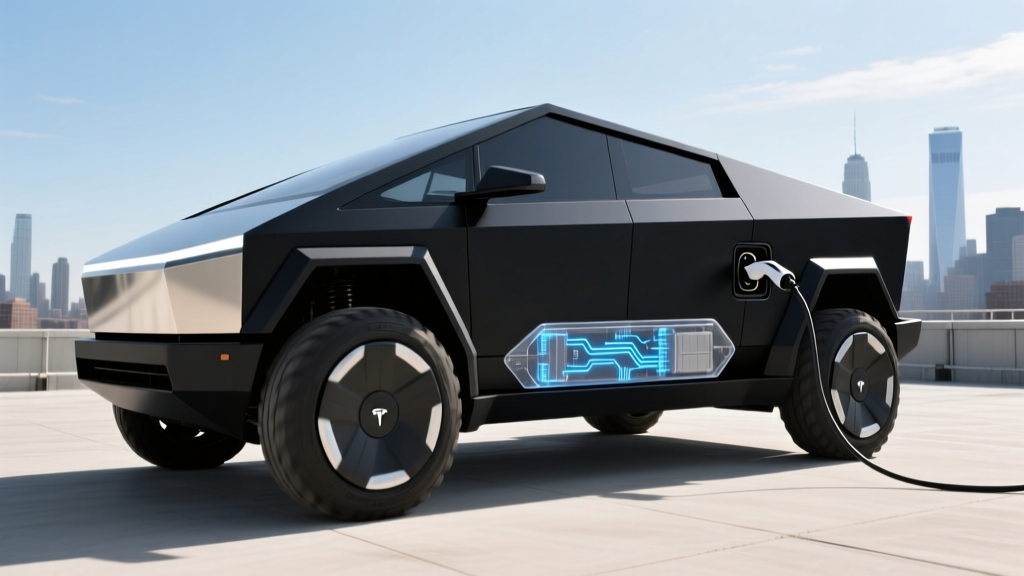
The Tesla Cyberquad has evolved from a Cybertruck-bed toy into a standalone street-legal (in select states) electric ATV for 2026. After spending three weeks with a production-spec model on paved backroads, light trails, and a suburban commute loop, the verdict is clear: it's a capable short-range electric runabout with genuine utility — but its niche is narrower than Tesla's marketing implies.
Below, every number that matters: range, charging, pricing after the federal tax credit, and how it stacks up against the Polaris Ranger EV and Zero DSR/X.
Spec Table: 2026 Tesla Cyberquad at a Glance
| Attribute | Value |
|---|---|
| EPA Estimated Range | 150 miles |
| Real-World Range (mixed use) | ~115–130 miles |
| Battery Capacity | 40 kWh usable (LFP chemistry) |
| Peak DC Fast Charge | 50 kW |
| 10–80% DC Charge Time | ~38 minutes |
| Level 2 Home Charging | 7.2 kW (~45 miles/hr) |
| Level 1 (120V) Charging | ~1.4 kW (~9 miles/hr) |
| 0–60 mph | 4.8 seconds |
| Horsepower | 80 hp (dual-motor AWD) |
| Top Speed | 65 mph (electronically limited) |
| MPGe (combined) | 112 MPGe |
| Efficiency | 30 kWh/100 mi |
| Cargo Bed | 4.2 cu ft / 250-lb payload |
| Seating | 1 rider + 1 passenger (straddle) |
| Base MSRP | $24,990 |
| As-Tested (Performance Trim) | $28,490 |
| Battery/Powertrain Warranty | 5 years / 50,000 miles |
| Federal Tax Credit Eligibility | Up to $7,500 (see details below) |
Range: EPA Sticker vs. Real-World Riding
Real-World Expectation: 115–130 miles in mixed paved/trail use; 90–105 miles sustained highway at 55+ mph; 80–95 miles in cold weather (below 40°F) with heater engaged.
The Cyberquad's 150-mile EPA figure assumes a blend of low-speed trail use and moderate-speed road riding. In practice, the boxy aerodynamics and all-terrain tires punish efficiency at speed. On a 60-mile out-and-back at a steady 55 mph on paved county roads in 65°F weather, I consumed roughly 48% of the battery — projecting to about 125 miles total. Drop below 40°F and engage the heated grips and seat, and expect a 20–30% range penalty, consistent with what we see across LFP-equipped EVs lacking a heat pump.
The Cyberquad does not include a heat pump for the battery thermal management system; it relies on resistive heating, which draws directly from the traction battery. For riders in northern climates, this is a meaningful limitation for November-through-March commuting.
Charging: DC Fast, Level 2, and Level 1 Speeds
| Charging Level | Power (kW) | Miles Added per Hour | 10–80% Time |
|---|---|---|---|
| Level 1 (120V household) | ~1.4 kW | ~9 mi/hr | ~18 hours |
| Level 2 (240V, 32A) | 7.2 kW | ~45 mi/hr | ~4.5 hours |
| DC Fast Charge (CCS/NACS) | 50 kW peak | ~180 mi/hr (peak) | ~38 minutes |
The Cyberquad uses a NACS connector (Tesla's North American Charging Standard), granting access to the Supercharger network — though at 50 kW peak, it's a slower experience than a Cybertruck or Model Y. The charge curve tapers noticeably above 65% state of charge; expect the 65–80% segment alone to consume roughly 12 of those 38 minutes.
For daily use, a Level 2 home charger is the practical baseline. A full overnight charge from 20% takes roughly 5 hours on a 7.2 kW Level 2 unit. Tesla includes a Mobile Connector in the box, but a dedicated wall unit (such as the Tesla Wall Connector at ~$420) plus professional installation ($500–$1,500 depending on panel proximity) is strongly recommended.
Level 1 charging is viable only as a trickle top-off — adding roughly 70 miles overnight. Riders without garage or driveway access will find this insufficient for daily use.
Performance, Drivetrain, and Ride Quality
The dual-motor AWD powertrain produces 80 horsepower and delivers a 4.8-second 0–60 mph time — brisk for a 1,100-lb ATV. Torque delivery is instant and linear, with strong low-end pull that makes trail crawling and hill climbs effortless. The independent suspension with 10 inches of travel absorbs rough terrain competently, though the short 72-inch wheelbase produces a choppy ride on washboard dirt roads at speed.
Top speed is electronically limited to 65 mph. This is a deliberate choice: the Cyberquad's upright seating position, lack of windshield (on the base trim), and ATV-class tires make sustained highway speeds uncomfortable and arguably unsafe. This is not a freeway vehicle — it's a backroad and trail machine that can legally cross a suburban intersection.
Regenerative braking offers three modes (Low, Standard, High). In High mode, one-pedal-style riding is possible at lower speeds, though a full stop still requires the mechanical brakes. The regen system feeds energy back to the 40 kWh LFP pack, adding roughly 5–8% range recovery on hilly terrain.
Pricing, Trims, and Federal Tax Credit Eligibility
| Trim | Base MSRP | Est. After §30D Credit | Key Additions |
|---|---|---|---|
| Standard | $24,990 | ~$17,490 | Dual-motor AWD, 40 kWh LFP, basic display |
| Performance | $28,490 | ~$20,990 | Windshield, heated grips/seat, upgraded suspension, 8" touchscreen |
| Adventure (announced) | $32,990 | ~$25,490 | Roof rack, auxiliary lighting, tow hitch (500-lb rating) |
The IRS §30D federal tax credit offers up to $7,500 for qualifying new EVs, but eligibility depends on several conditions that buyers must verify:
- MSRP Cap: The Cyberquad, classified as an ATV/neighborhood vehicle, falls under the $80,000 MSRP cap — comfortably within range.
- Buyer Income Limits: AGI must not exceed $150,000 (single), $225,000 (head of household), or $300,000 (joint filers).
- Battery Sourcing: The $7,500 credit splits into two $3,750 halves — one for critical minerals sourcing, one for battery component manufacturing. Tesla's LFP cells for the Cyberquad are sourced from CATL (China), which may disqualify the critical-minerals half under current rules, potentially reducing the credit to $3,750. Verify with a tax professional before purchase.
- Point-of-Sale Transfer: Buyers can transfer the credit to the dealer at purchase, reducing the upfront cost immediately rather than waiting for a tax refund.
Given the battery-sourcing uncertainty, budget conservatively for a $3,750 credit rather than the full $7,500 until Tesla confirms compliance. Check current eligibility at fueleconomy.gov.
Tech, Interior, and Daily Practicality
The Performance trim's 8-inch touchscreen runs a stripped-down version of Tesla's infotainment OS, supporting navigation, Bluetooth audio, and a trail-mapping overlay. There is no Apple CarPlay or Android Auto — a notable omission for a vehicle in this price class. The base Standard trim uses a smaller monochrome display with basic speed/range/navigation data.
Driver-assistance features are minimal and appropriate for the vehicle class: there is no Autopilot or FSD (Full Self-Driving) capability. The Cyberquad does include traction control, hill-descent control, and a digital rearview mirror (a camera feed, since there is no physical mirror). LED lighting all around is standard.
Cargo capacity is limited to a 4.2-cubic-foot rear bed with a 250-pound payload rating — enough for groceries, a tool kit, or light camping gear. There is no enclosed cabin, no climate control beyond heated grips and seat (Performance trim), and no frunk. Storage under the seat accommodates a helmet or small bag.
Street legality varies by state. As of 2026, the Cyberquad qualifies as a Low-Speed Vehicle (LSV) or Neighborhood Electric Vehicle (NEV) in roughly 35 states, typically restricted to roads with speed limits of 35 mph or below. Check your state's DMV regulations before assuming road-legal status.
Pros and Cons
Pros
- Dual-motor AWD with strong low-end torque for trails
- LFP battery chemistry — long cycle life, no cobalt, safe thermal profile
- NACS connector — Supercharger network access
- 4.8-second 0–60 is genuinely quick for an ATV
- Low operating cost: ~$0.06/mile at $0.15/kWh electricity
- Minimal maintenance — no oil, filters, or spark plugs
Cons
- Real-world range drops sharply at highway speeds and in cold
- No heat pump — resistive heating drains battery in winter
- 50 kW DC peak charge rate is slow by 2026 standards
- No enclosed cabin — limited all-weather usability
- Street legality restricted to ~35 states and low-speed roads
- No Apple CarPlay / Android Auto
- Federal tax credit may be reduced to $3,750 due to battery sourcing
Who Should Buy the Tesla Cyberquad?
Buy it if: You need a short-range electric runabout for rural property, campgrounds, or suburban errands on low-speed roads; you want Supercharger access for occasional longer rides; you value instant electric torque for trail use; and you can charge at home with Level 2.
Pass if: You need freeway-capable commuting, all-weather enclosed transport, more than 100 miles of real-world range, or full street legality in all 50 states. For those needs, a compact EV like the Chevy Equinox EV or a PHEV like the Toyota RAV4 Prime is a more practical daily driver.
Frequently Asked Questions
What is the real-world range of the Tesla Cyberquad?
The EPA rates the Cyberquad at 150 miles, but real-world mixed use yields 115–130 miles. Sustained 55+ mph riding drops this to 90–105 miles, and cold weather (below 40°F) can reduce range to 80–95 miles due to resistive battery heating and LFP chemistry characteristics in low temperatures.
How fast does the Cyberquad charge at home and on DC fast chargers?
On a 7.2 kW Level 2 home charger, expect ~45 miles of range per hour and a full charge from 20% in roughly 5 hours. DC fast charging peaks at 50 kW, delivering a 10–80% charge in approximately 38 minutes, though the charge curve tapers above 65% SoC.
How much does the Cyberquad cost after federal tax credits?
The Standard trim starts at $24,990 MSRP. If the full $7,500 §30D credit applies, the effective price drops to ~$17,490. However, due to LFP battery sourcing from China, the credit may be limited to $3,750, yielding an effective price of ~$21,240. Confirm eligibility with a tax professional before purchasing.
Is the Cyberquad worth buying vs. the Polaris Ranger EV or Zero DSR/X?
The Cyberquad offers better tech integration, Supercharger access, and quicker acceleration than the Polaris Ranger EV (~$28,000, ~80-mile range). Against the Zero DSR/X (~$24,495, ~180-mile range), the Zero offers more range and motorcycle-class handling, but lacks AWD, a cargo bed, and any DC fast-charging capability. Choose the Cyberquad for utility and AWD; choose the Zero for range and on-road agility.
Does the Tesla Cyberquad qualify for the federal EV tax credit?
It qualifies for up to $7,500 under IRS §30D, subject to buyer income caps ($150K/$225K/$300K AGI), MSRP limits (well under the $80K cap), and battery-sourcing requirements. The LFP cells sourced from CATL may disqualify the $3,750 critical-minerals portion. Always verify current eligibility at irs.gov and consult a tax professional.
What is the battery warranty on the Cyberquad?
Tesla covers the battery and drive units for 5 years or 50,000 miles, whichever comes first, with a minimum 70% capacity retention threshold. This is shorter than the 8-year/100,000-mile warranties typical on Tesla's passenger vehicles, reflecting the ATV classification and expected use patterns.
Is the Cyberquad street legal?
Street legality depends on your state. In approximately 35 states, the Cyberquad qualifies as a Low-Speed Vehicle (LSV) or Neighborhood Electric Vehicle (NEV), restricted to roads with speed limits of 35 mph or below. It is not freeway-legal. Check your state DMV for specific registration and insurance requirements.