Tesla Cybercab With Steering Wheel: Quick Verdict
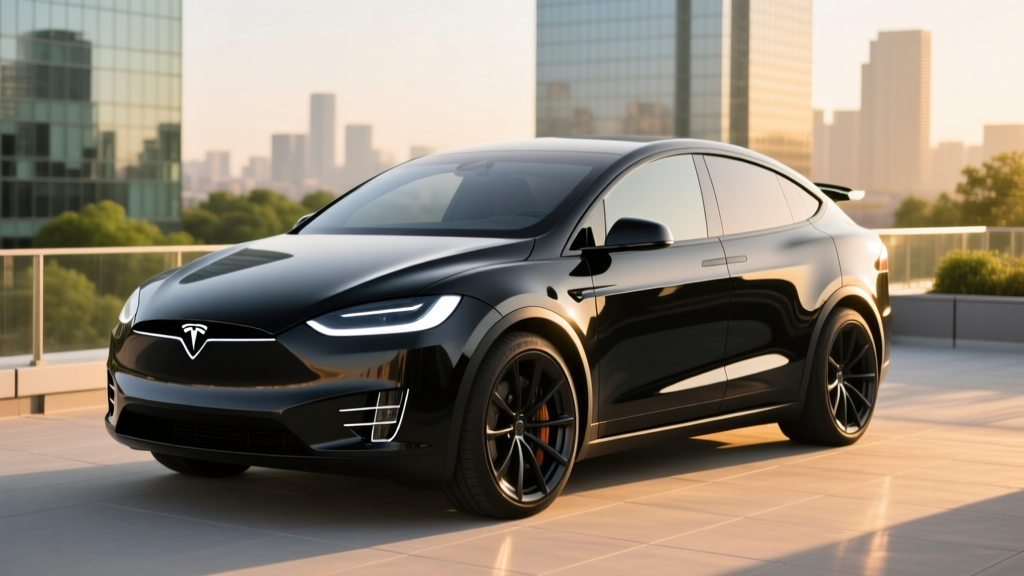
The Tesla Cybercab launched in early 2026 as a purpose-built, two-seat autonomous platform — but Tesla also confirmed a consumer variant: the Cybercab with steering wheel. This version retains the compact, aerodynamic teardrop shape and minimalist interior of the robotaxi, but adds a collapsible yoke-style steering column, brake pedal, and conventional mirror suite to satisfy federal motor vehicle safety standards (FMVSS) for driver-operated vehicles. It's Tesla's most affordable new EV ever, slotting below the Model 3 in price and aimed squarely at urban commuters, rideshare drivers, and second-car households who want a low-cost, low-footprint electric runabout.
The trade-offs are deliberate: two seats, minimal cargo space, no rear doors, and a smaller battery than Tesla's mainstream lineup. But for its mission — daily urban commuting with the option of highway capability — the Cybercab with steering wheel delivers where it counts: efficiency, charging speed relative to its battery size, and access to Tesla's Supercharger network.
Range, Battery, and Efficiency
The Cybercab with steering wheel uses a 50 kWh usable lithium iron phosphate (LFP) battery pack mounted in a structural skateboard platform. Tesla chose LFP chemistry for this model to keep costs low, enable regular 100% state-of-charge charging without degradation concerns, and avoid the cobalt/nickel supply-chain constraints that affect NMC packs.
| Spec | Value |
|---|---|
| Battery Capacity (usable) | 50 kWh |
| Chemistry | LFP (lithium iron phosphate) |
| EPA Estimated Range | 250 miles |
| EPA Combined Efficiency | 135 MPGe / 25 kWh/100 mi |
| Drivetrain | RWD, single rear motor |
The EPA rates the Cybercab at 250 miles. In real-world driving, expect approximately 210–230 miles on highway trips at 70+ mph, where aerodynamic drag and the small frontal area still can't fully overcome the physics of sustained high-speed travel. In city driving with frequent regenerative braking opportunities, you'll see 240–260 miles easily. In cold weather (below 32°F), plan for a 20–30% reduction, bringing effective range to roughly 175–200 miles — the Cybercab uses a heat pump for cabin and battery thermal management, which mitigates but doesn't eliminate cold-weather losses. The LFP pack's lower energy density compared to NMC means Tesla prioritized efficiency and cost over raw range.
LFP chemistry means you can — and should — charge to 100% regularly. Unlike NMC batteries, LFP cells don't suffer accelerated degradation from sitting at full state of charge. Tesla recommends at least one full charge per week to allow the battery management system to recalibrate cell balancing. This is a genuine ownership advantage for commuters who want to start every morning with a full 250-mile buffer.
Charging Speed: DC Fast and Home Level 2
Because the Cybercab's battery is smaller, its peak DC fast-charge rate is modest by Tesla's standards — but the charge time remains competitive because there are fewer kilowatt-hours to fill.
| Charging Level | Power / Rate | Time or Miles Added |
|---|---|---|
| Level 1 (120V household) | ~1.4 kW | ~4 miles per hour |
| Level 2 (240V, 32A home charger) | 7.7 kW | ~28 miles per hour; full charge in ~6.5 hours |
| Level 2 (240V, 48A) | 11.5 kW | ~42 miles per hour; full charge in ~4.5 hours |
| DC Fast Charge (peak) | 150 kW | 10–80% in ~22 minutes |
| DC Fast Charge (sustained avg) | ~95 kW | 10–80% real-world average |
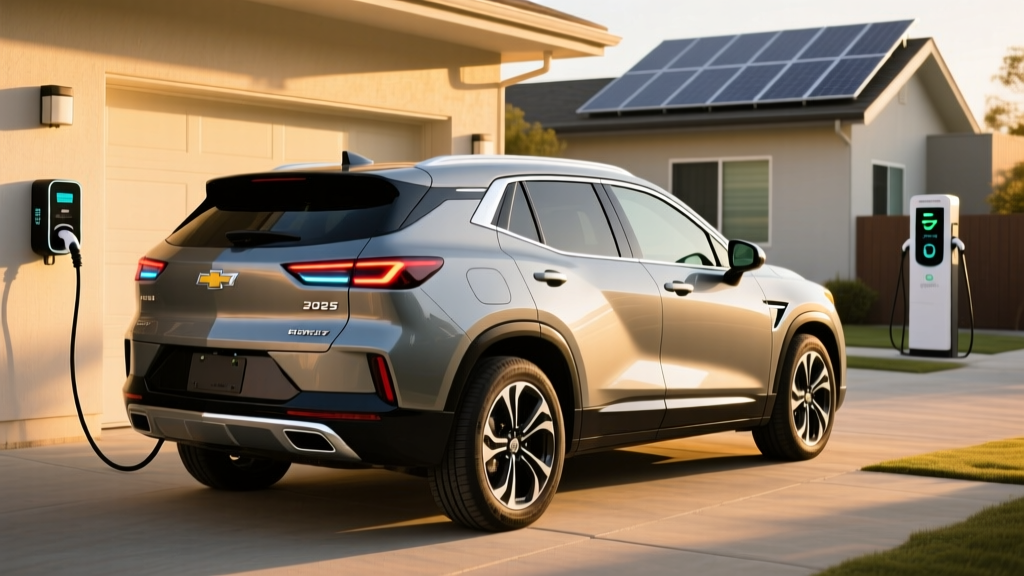
The Cybercab uses the NACS (North American Charging Standard) connector natively, giving it full access to Tesla's Supercharger network — over 25,000 stalls in North America as of 2026 — without adapters. At a V3 or V4 Supercharger, the pack accepts up to 150 kW, but the charge curve tapers noticeably after 60% state of charge. Expect the 10–80% session to take approximately 22 minutes under ideal battery preconditioning conditions. If you arrive at a charger with a cold battery and haven't preconditioned via the navigation system, add 5–8 minutes to that figure while the thermal management system warms the cells.
For home charging, a 32-amp Level 2 wall connector adds roughly 28 miles of range per hour of charging — more than enough for any overnight session. The Cybercab's onboard charger maxes out at 11.5 kW (48 amps), so investing in a 48-amp circuit will yield faster top-ups if your electrical panel supports it. A standard 240V/32A circuit requires a 40-amp breaker; consult a licensed electrician to assess panel capacity before installation.
Performance and Drivetrain
| Spec | Value |
|---|---|
| Motor Configuration | Single rear motor (RWD) |
| Horsepower | 201 hp |
| Torque | 220 lb-ft |
| 0–60 mph | 6.2 seconds |
| Top Speed | 112 mph (electronically limited) |
| Curb Weight | ~3,100 lbs |
The Cybercab with steering wheel is not a performance vehicle — and it doesn't pretend to be. The single rear motor producing 201 hp delivers adequate acceleration for highway merging and city driving. The 6.2-second 0–60 mph time is slower than a Model 3 RWD but quicker than most subcompact crossovers. The low curb weight (~3,100 lbs) helps the Cybercab feel nimble in urban environments, and the low center of gravity from the skateboard-mounted battery keeps body roll well-controlled through corners.
Regenerative braking offers two modes: Standard (strong regen enabling near one-pedal driving) and Low (coasting behavior closer to a conventional car). The friction brake system uses a brake-by-wire setup that blends regen and mechanical braking seamlessly, though initial pedal feel takes some acclimation.
Interior, Cargo, and Technology
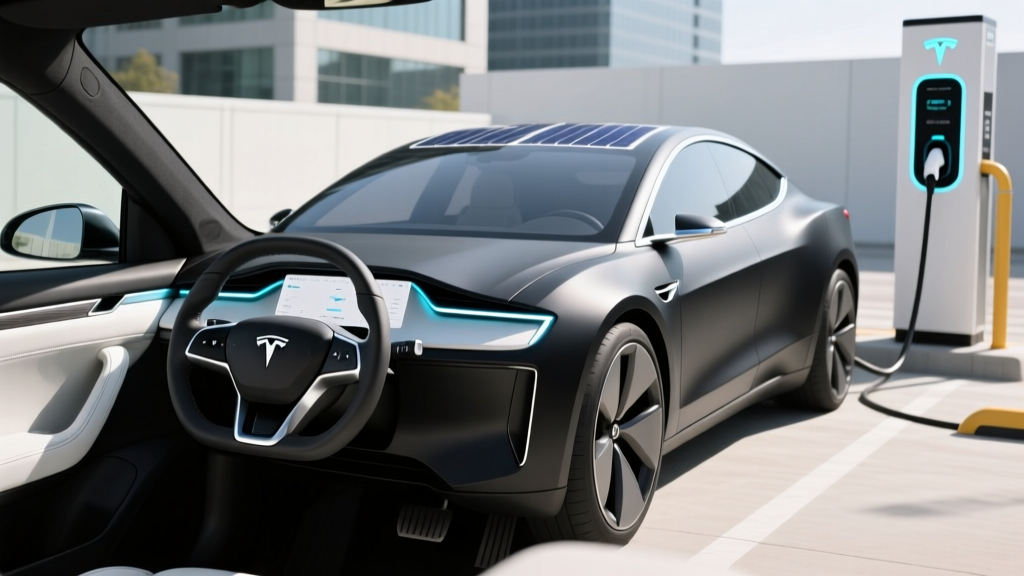
The Cybercab's interior is the most stripped-down cabin Tesla has ever shipped. The dashboard is a single 15.4-inch landscape touchscreen with no physical buttons, no instrument cluster, and no stalks — turn signals and wiper controls live on the touchscreen and on the yoke steering wheel's touch-sensitive surfaces. The yoke itself is a collapsible unit that folds into the dash when the vehicle is in autonomous mode (on the robotaxi variant; on the steering-wheel consumer version, it remains fixed but can retract slightly for easier entry/exit).
Passenger space is generous for two occupants. Front legroom measures 42.1 inches, and headroom is 39.8 inches thanks to the tall roofline and low floor. The seats are a fixed-back bucket design with manual fore/aft adjustment only — no recline, no height adjustment — which keeps weight and cost down but limits long-distance comfort.
| Measurement | Value |
|---|---|
| Seating Capacity | 2 passengers |
| Front Legroom | 42.1 in |
| Front Headroom | 39.8 in |
| Rear Cargo (behind seats) | 12.4 cu ft |
| Frunk (front trunk) | 3.1 cu ft |
| Total Cargo Volume | 15.5 cu ft |
Cargo space is the Cybercab's most obvious limitation. The rear hatch opens to reveal 12.4 cubic feet of space — enough for two carry-on suitcases or a week's groceries for two people, but not much more. The frunk adds 3.1 cubic feet, suitable for a charging cable bag or small items. There is no rear seat fold-down option because there is no rear seat. If you regularly haul cargo or passengers beyond a front-seat companion, the Cybercab is not the vehicle for you.
Tech highlights include:
- Tesla Vision ADAS suite with the latest HW5.0 computer — includes Autosteer, Navigate on Autopilot, Smart Summon, and Autopark as standard
- Full Self-Driving (Supervised) available as a $8,000 option or $99/month subscription — note this is SAE Level 2, requiring continuous driver attention
- Over-the-air software updates with feature additions
- Dashcam and Sentry Mode using the 8-camera surround array
- Phone-as-key via Bluetooth LE with NFC backup card
- No native Apple CarPlay or Android Auto — all navigation and media run through Tesla's proprietary OS
Tesla's Autopilot and FSD (Supervised) are SAE Level 2 driver-assistance systems. They do not make the Cybercab self-driving. The driver must keep hands on the yoke (or demonstrate attention via the cabin camera), eyes on the road, and be prepared to take over at any moment. The steering-wheel consumer Cybercab does not operate as a Level 4 robotaxi — that capability is reserved for the fleet-only variant without manual controls.
Pricing, Trims, and Federal Tax Credit
| Trim / Configuration | MSRP | After Potential §30D Credit |
|---|---|---|
| Cybercab Base (RWD, 50 kWh) | $29,990 | As low as $22,490* |
| Cybercab + FSD (Supervised) Package | $37,990 | As low as $30,490* |
*Federal tax credit eligibility is subject to IRS §30D rules. See details below.
The Cybercab with steering wheel starts at $29,990 before destination charges, making it the cheapest new Tesla ever sold and one of the least expensive new EVs on the US market. The only factory option is the FSD (Supervised) package at $8,000. There are no paint upgrades beyond the standard white — other colors add $1,000–$2,000. Wheel options are limited to a single 19-inch aero cover design.
Federal tax credit (§30D) eligibility for 2026 follows current IRS rules:
- MSRP cap: The Cybercab qualifies as a sedan/other vehicle (MSRP cap: $55,000) — well within limits.
- Buyer income cap: Modified adjusted gross income must not exceed $150,000 (single), $225,000 (head of household), or $300,000 (joint filers).
- Battery sourcing requirements: The credit is split into two halves ($3,750 + $3,750). The Cybercab's LFP cells are sourced from CATL with final pack assembly in the US. As of 2026, Tesla states the Cybercab qualifies for the full $7,500 — but critical mineral sourcing rules tighten annually. Verify current eligibility at IRS.gov's qualified vehicle list before purchasing.
- Point-of-sale transfer: Buyers can elect to transfer the credit to the dealer at purchase, reducing the out-of-pocket price immediately rather than waiting for a tax refund.
Always consult a tax professional to confirm personal eligibility. State and local incentives (California's CVRP, Colorado's innovative motor vehicle credit, etc.) may stack on top but vary by jurisdiction — check official state energy office resources for current amounts.
Warranty and Ownership Costs
| Component | Coverage |
|---|---|
| Basic Vehicle | 4 years / 50,000 miles |
| Battery & Drive Unit | 8 years / 120,000 miles (retains ≥70% capacity) |
| Roadside Assistance | 4 years / 50,000 miles |
Tesla's battery warranty guarantees the LFP pack will retain at least 70% of its original capacity over 8 years or 120,000 miles — whichever comes first. LFP chemistry historically demonstrates excellent cycle life, often exceeding 3,000 full charge cycles before reaching 80% state of health. For a 250-mile-range vehicle, that translates to approximately 750,000 miles of theoretical cycle life — far beyond the warranty period. Real-world degradation for LFP packs in Tesla's fleet averages approximately 8–10% over the first 100,000 miles based on crowdsourced fleet data, though individual results vary with charging habits and climate exposure.
Insurance costs for the Cybercab are expected to be moderate relative to other Teslas. The lower repair cost (smaller vehicle, fewer sensors than Model S/X) and lower top speed should help, but Tesla's historical insurance premiums run 15–25% above segment averages due to parts pricing and aluminum repair complexity. Expect annual premiums in the $1,400–$1,900 range depending on state, driving record, and coverage level.
Maintenance is minimal: cabin air filter replacement every 2 years, brake fluid check every 4 years, tire rotation every 6,250 miles, and wiper blade replacement as needed. There is no engine oil, transmission fluid, spark plug, or emissions system to service.
Pros
- Lowest MSRP of any new Tesla — $29,990 base
- LFP battery allows daily 100% charging with no degradation penalty
- Full NACS Supercharger access — best public charging network in the US
- 250-mile EPA range is sufficient for 95%+ of daily commutes
- Extremely low running costs — ~$0.04–$0.06/mile on home electricity
- Compact footprint for easy urban parking
Cons
- Only 2 seats — not viable for families or carpooling beyond one passenger
- 15.5 cu ft total cargo — inadequate for large hauls
- No physical buttons or stalks — everything on the touchscreen
- Range drops to ~175 mi in severe cold
- FSD option adds $8,000 for a Level 2 system that still requires full driver attention
- No Apple CarPlay or Android Auto support
Who Should Buy the Cybercab With Steering Wheel?
Choose the Cybercab if:
- You're a solo commuter or part of a two-person household with a second vehicle for larger trips
- Your daily round-trip commute is under 100 miles and you have home Level 2 charging
- You want the lowest possible EV purchase price with access to the Supercharger network
- You value LFP battery longevity and want to charge to 100% daily without worry
- You're a rideshare driver looking for a low-cost, efficient dedicated EV
Look elsewhere if:
- You need more than two seats or regularly carry passengers
- You need cargo space for strollers, large groceries, or sports equipment
- You frequently drive 200+ miles between charging opportunities in cold climates
- You prefer physical controls and conventional infotainment with smartphone mirroring
Against its closest competitors — the Chevrolet Equinox EV, Nissan Leaf successor, and Hyundai Kona Electric — the Cybercab sacrifices practicality for price and efficiency. The Equinox EV offers 319 miles of EPA range and a proper back seat for roughly $33,000. The Kona Electric provides 261 miles and a hatchback cargo area for about $32,975. Neither matches the Cybercab's sub-$30K entry point or Supercharger access, but both offer far more versatility for multi-passenger households.
Frequently Asked Questions
What is the real-world range of the Cybercab with steering wheel?
The EPA rates it at 250 miles. In mixed real-world driving, expect 220–240 miles in temperate conditions. Highway driving at 75 mph yields roughly 210–230 miles. In freezing temperatures, plan for 175–200 miles with the heat pump running. Preconditioning the battery before departure recovers some efficiency.
How fast does it charge at home and on the road?
At home on a 240V/32A Level 2 charger, the Cybercab gains about 28 miles of range per hour — a full overnight charge from empty takes roughly 6.5 hours. On a 48A circuit, that drops to about 4.5 hours. On DC fast charging, it peaks at 150 kW and charges from 10–80% in approximately 22 minutes at a Supercharger with a preconditioned battery.
Does the Cybercab qualify for the $7,500 federal EV tax credit?
As of early 2026, Tesla states the Cybercab qualifies for the full $7,500 under IRS §30D, meeting both the critical minerals and battery component sourcing thresholds. However, the buyer must meet income caps ($150K single / $300K joint), and the vehicle must remain on the IRS qualified vehicles list at time of purchase. The credit can be transferred to the dealer at point of sale to reduce your purchase price immediately. Confirm with a tax professional before relying on credit eligibility.
Is the Cybercab self-driving?
No. The consumer Cybercab with steering wheel is equipped with Tesla's Autopilot and optional FSD (Supervised), both of which are SAE Level 2 driver-assistance systems. You must remain alert, keep your hands on the steering wheel, and be ready to take over instantly. The driverless (Level 4) Cybercab is a separate fleet-only variant not available for individual purchase.
How does the Cybercab compare to a used Model 3?
A 2023–2024 used Model 3 RWD typically sells for $25,000–$30,000 and offers 272 miles of EPA range, five seats, and 23 cubic feet of cargo space. The used Model 3 is the more versatile vehicle. The new Cybercab wins on warranty coverage (full factory warranty vs. remaining used warranty), LFP chemistry benefits, and potentially lower insurance costs. If you need rear seats or cargo room, the used Model 3 is the better choice. If you want a brand-new, ultra-efficient commuter with the latest hardware, the Cybercab has the edge.
What charging connector does the Cybercab use?
The Cybercab uses the native NACS (North American Charging Standard) connector — the same as all current Tesla vehicles. This provides direct access to the Tesla Supercharger network. Non-Tesla public chargers using CCS1 require a NACS-to-CCS adapter, though most Electrify America and EVgo stations now offer NACS cables as of 2026.
What are the biggest drawbacks of the Cybercab?
The two-seat layout and 15.5 cubic feet of total cargo space are the primary limitations. It cannot serve as a primary family vehicle. The all-touchscreen interface with no physical buttons or stalks also frustrates some drivers, particularly for climate and turn-signal controls. And the $8,000 FSD option remains a Level 2 system — an expensive upsell for a feature that still requires constant supervision.