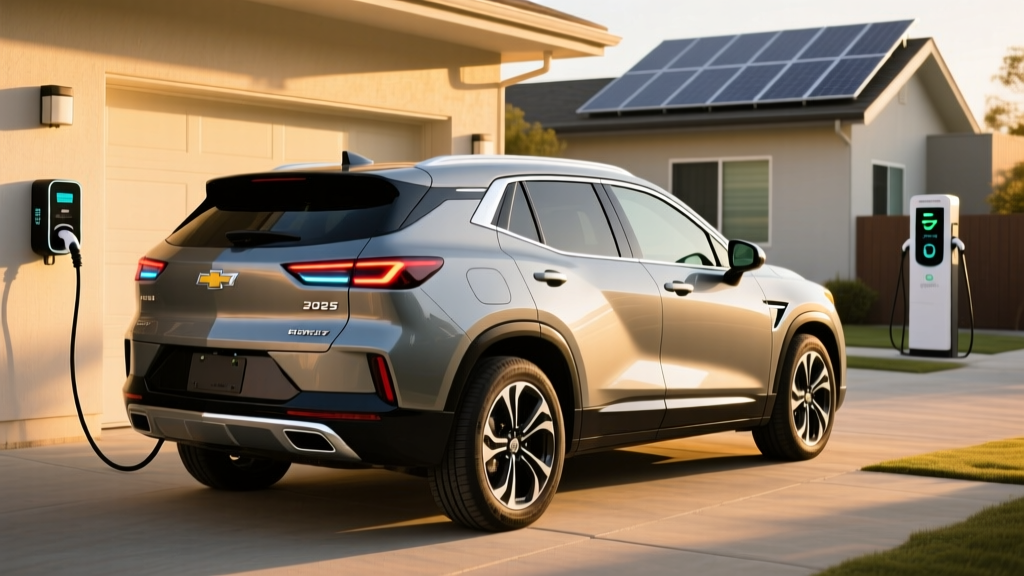
The 2025 Chevrolet Blazer EV arrives as a midsize electric crossover built on GM's Ultium platform, slotting between the compact Equinox EV and the three-row Silverado EV in Chevy's lineup. After spending time with the specs, charging data, and real-world driving impressions, the Blazer EV emerges as a capable daily driver with competitive range, though it faces stiff competition from the Hyundai Ioniq 5, Ford Mustang Mach-E, and Tesla Model Y. Here's what buyers need to know before signing the paperwork.
Quick Verdict: Who the 2025 Blazer EV Is For
The 2025 Blazer EV is best suited for buyers who want a spacious two-row electric crossover with strong range, comfortable highway manners, and access to the expanding Tesla Supercharger network via NACS. It works well as a commuter vehicle and light road-tripper for families who don't need a third row. However, shoppers prioritizing the fastest DC charging speeds or the lowest starting price in the segment will find stronger alternatives elsewhere.
Range, Battery, and Efficiency Breakdown
| Spec | 2LT (FWD) | 2LT (AWD) | RS (AWD) | SS (AWD) |
|---|---|---|---|---|
| EPA Range | ~279 mi | ~279 mi | ~324 mi | ~294 mi |
| Battery (usable) | 85 kWh | 102 kWh | 102 kWh | 102 kWh |
| Chemistry | NMC | NMC | NMC | NMC |
| Horsepower | 220 hp | 293 hp | 293 hp | 557 hp |
| 0–60 mph | ~8.0 sec | ~7.0 sec | ~7.0 sec | ~4.0 sec (WOW mode) |
| MPGe (combined) | ~94 MPGe | ~87 MPGe | ~89 MPGe | ~83 MPGe |
| Drivetrain | FWD | AWD (dual-motor) | AWD (dual-motor) | AWD (dual-motor) |
Real-World Range vs. EPA Sticker
EPA Estimate: Up to 324 miles (RS AWD with 102 kWh battery)
Real-World Expectation: Expect roughly 260–290 miles in mixed driving at highway speeds (70–80 mph). In cold weather (below 32°F), range can drop 20–30%, putting the RS trim closer to 225–260 miles per charge. City driving with regenerative braking can push efficiency closer to or slightly above the EPA figure. The Blazer EV's heat pump (standard on most trims) helps mitigate cold-weather losses compared to EVs without active thermal management.
The Blazer EV uses GM's Ultium battery architecture with NMC (nickel manganese cobalt) chemistry across all trims. NMC offers higher energy density than LFP, which is why Chevy can pack over 100 kWh into the larger battery pack while keeping the vehicle's footprint reasonable. The trade-off is that NMC cells are more sensitive to sustained high state-of-charge storage — GM recommends daily charging to 80–90% and saving 100% for road trips to maximize long-term battery health.
Charging Speed: DC Fast Charging and Home Level 2
| Charging Level | Max Rate | Speed / Time | Connector |
|---|---|---|---|
| Level 1 (120V) | 1.4 kW | ~3–4 miles per hour | J1772 / NACS |
| Level 2 (240V, 48A) | 11.5 kW | ~30 miles per hour | J1772 / NACS |
| DC Fast Charge | 190 kW peak | 10–80% in ~30–35 min | NACS (native 2025+) |
The 2025 Blazer EV peaks at 190 kW on DC fast charging, which is competitive but trails the Hyundai Ioniq 5's 800V architecture (which can sustain 235 kW). In practice, the Blazer EV's charge curve tapers noticeably above 60% state of charge. You'll see the full 190 kW only in the 10–40% window; from 40–80%, expect sustained rates closer to 100–130 kW. This means the 10–80% session takes roughly 30–35 minutes at a capable 350 kW station (the vehicle will only draw what it can accept).
For home Level 2 charging, the onboard charger accepts up to 11.5 kW (48 amps at 240V). That translates to roughly 30 miles of range per hour of charging, meaning a full 0–100% session takes about 10–11 hours on the 102 kWh pack. Most owners will plug in overnight and wake up fully charged. A dedicated 60-amp circuit with a hardwired Level 2 EVSE (like the ChargePoint Home Flex or Emporia Level 2) is recommended for this rate — budget $800–$2,000 for professional installation depending on your electrical panel's proximity to the garage.
A significant advantage for 2025: the Blazer EV now ships with a native NACS charge port, giving it direct access to Tesla's Supercharger network (over 25,000 stalls in North America) without an adapter. This is a major practical upgrade over the CCS port on 2024 models and dramatically improves road-trip charging reliability.
Performance and Driving Dynamics
The base 2LT FWD model delivers 220 horsepower — adequate for commuting but not thrilling. The dual-motor AWD variants (2LT AWD and RS) bump output to 293 hp, providing confident highway merging and passing. The range-topping Blazer EV SS is the performance flagship: 557 hp and GM's WOW (Wide Open Watt) mode enables a 0–60 mph time of roughly 4.0 seconds, putting it in sports-sedan territory despite its crossover proportions.
Ride quality leans comfortable rather than sporty. The Blazer EV absorbs highway imperfections well, and cabin noise is minimal thanks to the lack of an internal combustion engine and active noise cancellation on higher trims. Steering feel is light and numb — acceptable for a family hauler but not engaging on back roads. Regenerative braking offers multiple levels via steering-wheel paddles, and one-pedal driving mode is available for those who prefer it.
Interior Space, Tech, and Cargo
The Blazer EV offers a roomy cabin with generous rear-seat legroom — approximately 38.4 inches in the rear, which comfortably fits adults on longer trips. Front legroom comes in at 42.2 inches. The flat floor (thanks to the dedicated EV platform) improves foot space for the middle rear passenger.
Cargo volume: 27.7 cubic feet behind the rear seats, expanding to approximately 55.1 cubic feet with the rear seats folded. There is no front trunk (frunk) — the space under the hood is occupied by HVAC and power electronics components, which is a missed opportunity compared to the Mustang Mach-E and Ioniq 5.
The centerpiece of the interior is a 17.7-inch diagonal infotainment touchscreen running Google Built-in (Google Maps, Google Assistant, Play Store). Wireless Apple CarPlay and Android Auto are standard. A 11-inch digital instrument cluster sits behind the steering wheel. Physical climate controls are notably absent — HVAC adjustments are handled through the touchscreen, which some drivers find distracting.
Driver assistance: Chevy's Super Cruise (SAE Level 2) is available on the RS trim and optional on 2LT. Super Cruise enables hands-free driving on over 750,000 miles of mapped highways in North America. The system uses a driver-attention camera to ensure eyes remain on the road. This is not self-driving — the driver must remain alert and ready to take over at all times. Super Cruise is one of the best Level 2 systems available, rivaling Ford's BlueCruise in real-world highway performance.
Pricing, Trims, and Federal Tax Credit
| Trim | Base MSRP | Est. After $7,500 Credit* | Key Features |
|---|---|---|---|
| 2LT FWD | $44,600 | $37,100 | 85 kWh, 220 hp, 279 mi range |
| 2LT AWD | $47,600 | $40,100 | 102 kWh, 293 hp, AWD |
| RS AWD | $52,400 | $44,900 | 102 kWh, 324 mi range, Super Cruise avail. |
| SS AWD | $61,400 | $53,900 | 557 hp, WOW mode, performance-tuned |
*Federal tax credit eligibility depends on multiple factors. See checklist below.
- MSRP Cap: SUVs/crossovers must have an MSRP at or below $80,000 — all Blazer EV trims qualify.
- Buyer Income Cap: Modified AGI must not exceed $150,000 (single), $225,000 (head of household), or $300,000 (joint filers) per IRS §30D rules.
- Battery Sourcing: The full $7,500 credit requires meeting both critical-minerals and battery-component requirements. GM has been actively re-shoring battery supply chains; check the latest fueleconomy.gov listing for the specific Blazer EV trim's current credit amount, as sourcing rules tighten annually.
- Point-of-Sale Transfer: Buyers can transfer the credit to the dealer at purchase, reducing the purchase price upfront rather than waiting for a tax refund.
- Assembly: Must be assembled in North America — the Blazer EV is built in Ramos Arizpe, Mexico, which meets the USMCA requirement for North American final assembly.
Important: Tax credit rules change frequently. Always verify current eligibility on irs.gov or consult a tax professional before purchasing. The credit amount shown above assumes full $7,500 eligibility, which may not apply to every buyer or every trim depending on battery-sourcing compliance at the time of purchase.
Warranty and Long-Term Ownership
Chevrolet backs the 2025 Blazer EV with a competitive warranty package:
- Battery & Propulsion: 8 years / 100,000 miles (whichever comes first), covering capacity loss below 60% of original capacity.
- Bumper-to-Bumper: 3 years / 36,000 miles
- Powertrain (non-battery): 5 years / 60,000 miles
- Roadside Assistance: 5 years / 60,000 miles
The 60% capacity-retention threshold is standard for the industry, though some competitors (like Hyundai) guarantee 70%. In practice, modern NMC batteries with active thermal management typically lose only 8–12% capacity over the first 100,000 miles when properly maintained — meaning most owners will never approach the warranty claim threshold.
Insurance costs for the Blazer EV tend to run 15–25% higher than a comparable gas-powered Blazer, primarily due to higher repair costs after collisions and the vehicle's higher MSRP. Get insurance quotes before purchasing to factor this into your total cost of ownership.
Pros, Cons, and the Competition
Pros
- Up to 324 miles EPA range (RS AWD) — among the best in the segment
- Native NACS port — direct Tesla Supercharger access
- Spacious rear seat and comfortable highway ride
- Super Cruise hands-free driving (Level 2) available
- Google Built-in infotainment with large 17.7" screen
- Competitive pricing after potential tax credit
Cons
- 190 kW peak DC charging trails Ioniq 5's 235 kW
- No front trunk (frunk) — cargo space is rear only
- Touchscreen-only climate controls are distracting
- SS trim is expensive and sacrifices range for power
- Base FWD trim's 220 hp feels underwhelming for the price
- Real-world cold-weather range loss of 20–30%
Blazer EV vs. the competition: The Hyundai Ioniq 5 charges faster (235 kW peak, 10–80% in ~18 minutes) and offers a frunk, but its maximum range tops out around 303 miles and it still uses CCS in many configurations. The Ford Mustang Mach-E offers sportier handling and a frunk but trails on maximum range. The Tesla Model Y remains the efficiency and charging-network benchmark but has a firmer ride and a more spartan interior. If Supercharger access and highway comfort are your priorities, the Blazer EV's NACS port and Super Cruise make a compelling case.
Frequently Asked Questions
What is the real-world range of the 2025 Blazer EV?
The RS AWD trim carries a 324-mile EPA estimate, but expect 260–290 miles in real-world mixed highway driving. Cold weather (below freezing) can reduce range by 20–30%, bringing it to approximately 225–260 miles. City driving with regenerative braking can approach or slightly exceed the EPA number.
How fast does the Blazer EV charge at home and on the road?
At home on a Level 2 (240V, 48A) charger, the Blazer EV adds roughly 30 miles of range per hour, fully charging overnight in about 10–11 hours. On DC fast chargers, it peaks at 190 kW and charges from 10–80% in approximately 30–35 minutes, though the charge curve tapers significantly above 60% SoC.
Does the 2025 Blazer EV qualify for the $7,500 federal tax credit?
It can, but eligibility depends on the buyer's income (AGI caps apply), the vehicle's MSRP (all trims fall under the $80,000 SUV cap), and battery-sourcing compliance. Verify current credit eligibility on fueleconomy.gov and irs.gov before purchasing, as sourcing requirements tighten each year. The credit can be transferred to the dealer at point of sale.
Is the Blazer EV worth buying over a Tesla Model Y or Ioniq 5?
Choose the Blazer EV if you prioritize highway comfort, native Supercharger access, available Super Cruise, and a roomy cabin. Choose the Ioniq 5 if DC charging speed is paramount. Choose the Model Y if you want the best efficiency and the lowest operating costs. Each has distinct strengths — test-drive all three before deciding.
Does the Blazer EV have Super Cruise, and is it self-driving?
Super Cruise is available on the RS trim and optional on 2LT. It is an SAE Level 2 driver-assistance system that enables hands-free driving on mapped divided highways. It is not self-driving — the driver must remain attentive, eyes on the road, and ready to take control at any time. A driver-monitoring camera enforces this requirement.
What is the towing capacity?
When properly equipped with the available towing package, the Blazer EV AWD can tow up to 1,500 pounds. This is light-duty only — suitable for a small utility trailer or a pair of dirt bikes, but not a boat or camper. Towing will significantly reduce range, potentially by 30–50% depending on trailer weight and aerodynamics.