What the Latest Tesla Cybercab Prototype Photos Tell Us
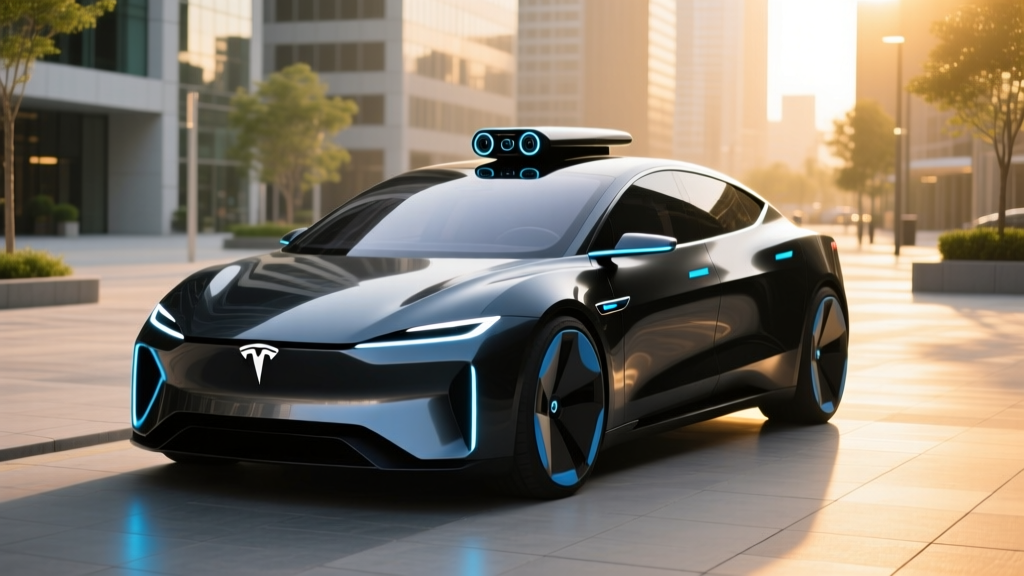
Fresh Tesla Cybercab prototype photos have circulated across EV forums and social media in early 2026, offering the clearest look yet at the production-intent two-door robotaxi Elon Musk first unveiled at the October 2024 "We, Robot" event. The images — captured near Gigafactory Texas and on public roads around Austin — show a compact, butterfly-door coupe with no steering wheel, no pedals, and a heavily sensor-dependent vision-only autonomy stack.
For EV shoppers and investors trying to separate signal from noise, these prototype sightings matter. They confirm that Tesla is still targeting a 2026 production start (likely late-2026 limited volumes) and that the vehicle's physical dimensions, panel gaps, and sensor suite are converging toward something manufacturable. But crucial details — EPA range certification, final battery chemistry, insurance homologation, and state-by-state driverless deployment approval — remain unresolved.
Below, we break down everything the prototype photos reveal, cross-referenced with Tesla's published claims and independent EV engineering analysis, so you know exactly what this vehicle is, what it isn't, and whether it deserves a spot on your radar.
Estimated Specs: What the Cybercab Prototype Suggests
The prototype photos reveal a vehicle roughly the size of a Tesla Model 3 but with a shorter wheelbase, a fastback roofline, and a two-seat cabin optimized for ride-hailing rather than personal ownership. Based on visible underbody battery tray dimensions, Tesla's recent shift toward LFP (lithium iron phosphate) cells for cost-sensitive models, and the company's stated $0.20/mile operating cost target, here is our best engineering estimate of the production Cybercab's specifications:
| Specification | Estimated / Preliminary |
|---|---|
| EPA Range (est.) | ~200–250 miles |
| Battery Capacity | ~50–60 kWh usable (LFP chemistry likely) |
| Drivetrain | Single-motor RWD |
| Horsepower | ~200–250 HP (estimated) |
| 0–60 mph | ~6.0–7.0 seconds (est.) |
| Max DC Fast Charge | ~170–200 kW peak (est.) |
| 10–80% DC Charge Time | ~25–30 minutes (est.) |
| Level 2 Home Charge Rate | ~7.7 kW / ~25–30 mi/hr |
| Efficiency (est.) | ~130 MPGe / ~25 kWh/100 mi |
| Seating | 2 passengers |
| Cargo Volume (est.) | ~10–12 cu ft (rear trunk area) |
| Steering / Pedals | None (SAE Level 4 targeted) |
| Estimated Base MSRP | ~$25,000–$30,000 (if sold to consumers) |
| Battery/Powertrain Warranty | Expected 8 yr / 100,000 mi (Tesla standard) |
Note: These are analyst estimates based on prototype analysis and Tesla's public statements. Final EPA and manufacturer specs may differ at production launch.
Range Reality: EPA Sticker vs. Real-World Expectations
EPA Estimated Range: ~200–250 miles (preliminary)
Real-World Highway (70 mph): Expect ~160–200 miles due to aerodynamic drag at sustained speed
Cold-Weather (below 32°F): Expect ~140–175 miles — LFP chemistry suffers greater cold-weather capacity loss than NMC, potentially 25–35% reduction
Urban Stop-and-Go (robotaxi duty cycle): ~190–230 miles — regenerative braking recovers energy efficiently in city driving
The Cybercab's relatively small battery pack (~50–60 kWh) is a deliberate cost and weight decision. Tesla's stated goal is to minimize per-vehicle cost so the robotaxi fleet can operate profitably at $0.20/mile. For a city-based ride-hailing vehicle that returns to a depot for charging, 200 miles of range is adequate — most Uber/Lyft drivers cover 100–150 miles per shift before needing a break.
However, the prototype photos confirm there is no visible charge port on the driver's side rear quarter panel, leading to speculation that Tesla may rely exclusively on wireless inductive charging at fleet depots. If true, this would eliminate the need for plug-in charging infrastructure but would limit the Cybercab to Tesla-operated hubs. A conventional CCS/NACS port may still be present on the prototype's passenger side — obscured in current photos.
The real question for potential fleet operators isn't peak range but charge-cycle durability. LFP cells tolerate daily 100% charging far better than NMC — Tesla's own data suggests LFP packs retain 90%+ capacity after 2,000 full cycles. For a robotaxi charging once daily, that's roughly 5.5 years of service before hitting the 80% degradation threshold typical of battery warranties.
Charging Speed: DC Fast, Level 2, and the Wireless Question
| Charging Method | Power (kW) | Speed / Time | Notes |
|---|---|---|---|
| DC Fast Charge (est.) | ~170–200 kW peak | 10–80% in ~25–30 min | LFP charge curve tapers less aggressively than NMC above 80% |
| Level 2 (240V, 32A) | ~7.7 kW | ~25–30 miles of range per hour | Full charge in ~7–8 hours |
| Level 1 (120V) | ~1.4 kW | ~4–5 miles per hour | Impractical for fleet use; emergency only |
| Wireless Inductive (rumored) | ~11–19 kW (est.) | ~40–60 mi/hr equivalent | Depot-only; not confirmed by Tesla |
Tesla's smaller battery pack means that even moderate DC fast-charge rates yield reasonable 10–80% times. A 50–60 kWh pack charging at 170 kW peak (roughly a 3C rate) can absorb 30 kWh — enough to go from 10% to 80% — in approximately 25 minutes. The LFP chemistry's flatter charge curve actually helps here: where NMC packs taper sharply above 80% SoC, LFP maintains a more consistent charge rate, making the 80–100% top-up faster than on comparable NMC packs.
For fleet operators, the more relevant metric is charge turns per day. A 25-minute DC session during a driver shift change or meal break is operationally viable. But Tesla's long-term vision appears to be depot-based wireless charging: the Cybercab pulls into a designated spot, and inductive pads embedded in the pavement handle charging autonomously — no human needed to plug in. This would be a significant operational advantage but requires substantial depot infrastructure investment.
Autonomy Stack: SAE Level 4 Ambitions and the Vision-Only Bet
The Tesla Cybercab is designed for SAE Level 4 operation — meaning it intends to drive itself without any human intervention, but only within a defined Operational Design Domain (ODD), such as a geofenced city area in fair weather conditions. This is fundamentally different from Tesla's current consumer vehicles, which use SAE Level 2 driver-assist systems (Autopilot and FSD Supervised) that require the driver to remain engaged and supervising at all times. Level 4 deployment requires regulatory approval from state and federal authorities — which Tesla has not yet obtained for the Cybercab.
The prototype photos show a sensor suite consistent with Tesla's vision-only philosophy: multiple cameras (appears to be 8–10 external cameras in the latest prototype iteration), but no visible LiDAR dome or radar modules. This is a stark contrast to Waymo's 6th-generation driver, which uses a combination of LiDAR, radar, and cameras for redundant perception.
The Cybercab's prototype photos also reveal what appears to be a new, higher-resolution camera array mounted in a slimmer housing than the current Tesla HW4 suite. Industry analysts speculate Tesla may be using next-generation image sensors with improved low-light performance — critical for a vehicle that must operate safely at night without LiDAR's active illumination.
The core risk: Tesla's FSD (Supervised) system has accumulated billions of real-world miles on consumer vehicles, but it still operates at Level 2 with human oversight. Transitioning to Level 4 — where there is no steering wheel and no human to take over — requires a dramatically lower failure rate. Tesla must demonstrate to NHTSA and state regulators (particularly California's DMV and CPUC) that its vision-only system can handle edge cases that currently require human intervention. As of early 2026, Tesla has not published disengagement data or safety-case documentation sufficient for Level 4 certification in any U.S. jurisdiction.
- It is not legal for public road use in any U.S. state without a human driver present
- It has not received Level 4 certification from NHTSA or any state DMV
- It cannot be purchased by consumers — Tesla plans to own and operate its own fleet
- Vision-only autonomy has not been proven at scale for driverless deployment in rain, snow, or construction zones
Pricing, Tax Credits, and the Ownership Question
Tesla CEO Elon Musk has repeatedly stated that the Cybercab will cost approximately $25,000–$30,000 to manufacture, with an operating cost under $0.20 per mile. However, Tesla has also made clear that the Cybercab is not intended for individual consumer purchase — at least not initially. The plan is for Tesla to own and operate a fleet of Cybercabs, generating revenue through a ride-hailing service that undercuts Uber/Lyft on price.
| Scenario | Estimated Cost | Federal Tax Credit (§30D) |
|---|---|---|
| Tesla Fleet Vehicle (not for sale) | ~$25,000–$30,000 per unit (manufacturing cost) | N/A — fleet-owned vehicles not eligible for consumer §30D credit |
| Consumer Purchase (if offered later) | ~$30,000–$35,000 MSRP (estimated) | Potentially up to $7,500, subject to income caps, battery sourcing rules, and MSRP caps per IRS §30D |
| Ride Cost to Passenger (projected) | ~$0.20–$0.30 per mile | N/A |
If Tesla ever opens Cybercab sales to individual consumers, federal tax credit eligibility under IRS §30D would depend on several factors current for 2026:
- MSRP Cap: The vehicle must have an MSRP below $55,000 (sedans/coupes) — the Cybercab's estimated $30,000 price would clear this easily
- Buyer Income Cap: Adjusted gross income must not exceed $150,000 (single) / $300,000 (joint) — check your specific situation with a tax professional
- Battery Sourcing: Critical minerals and battery components must meet escalating domestic-content thresholds — Tesla's use of LFP cells (often sourced from CATL in China) could complicate eligibility depending on 2026 supply chain composition
- Point-of-Sale Transfer: Eligible buyers can transfer the credit to the dealer for an immediate price reduction at purchase
Tax credit rules change frequently. Always verify current eligibility on IRS.gov and consult a tax professional before making purchase decisions based on incentive assumptions.
Cybercab vs. Waymo: The Robotaxi Landscape in 2026
The Cybercab doesn't enter an empty market. Waymo has been operating commercial Level 4 robotaxi service in Phoenix, San Francisco, Los Angeles, and Austin since 2023–2024, completing millions of paid rides with a strong safety record. Here's how Tesla's prototype stacks up against the current benchmark:
| Attribute | Tesla Cybercab (Est.) | Waymo 6th-Gen (Jaguar I-PACE) |
|---|---|---|
| SAE Level | Targeting Level 4 (not certified) | Level 4 (certified, operational) |
| Sensor Suite | Vision-only (cameras) | LiDAR + radar + cameras |
| Current Cities | None (testing only) | Phoenix, SF, LA, Austin |
| Vehicle Cost | ~$25K–$30K (est.) | ~$100K+ (estimated with sensor suite) |
| Rides Completed | 0 (commercial) | Millions |
| Steering Wheel | No | No (removed in 6th-gen) |
| Passenger Capacity | 2 | 3–4 |
The strategic difference is stark: Waymo spends heavily on per-vehicle sensor cost (LiDAR alone costs thousands per unit) but has proven its system works safely at Level 4 in multiple cities. Tesla is betting that its vision-only approach, trained on billions of miles of fleet data from consumer Teslas, can achieve comparable safety at a fraction of the hardware cost. If Tesla's bet pays off, the Cybercab's low unit cost could enable massive fleet scaling. If it doesn't, the entire platform may need a sensor rethink.
Who Should Pay Attention to the Cybercab?
- Monitor closely if: You're a rideshare driver in a major metro area — Tesla's robotaxi fleet could disrupt Uber/Lyft economics within 2–3 years of launch
- Monitor closely if: You're an investor evaluating Tesla's revenue diversification beyond vehicle sales — Cybercab fleet revenue could be transformative if Level 4 certification is achieved
- Wait and see if: You're a consumer hoping to buy a Cybercab for personal use — this is not Tesla's stated plan, and a steering-wheel-less vehicle can't be legally driven by a human on public roads
- Look elsewhere if: You need an EV to buy and drive today — the Cybercab is not available, not certified, and won't be for at least 12–18 months even in the most optimistic timeline
For consumers shopping for an EV they can actually buy and drive in 2026, Tesla's existing lineup — the refreshed Model 3, Model Y, and upcoming more affordable models — remain the relevant options. The Cybercab is a fleet/robotaxi play, not a consumer car.
Pros, Cons, and the Bottom Line
- Extremely low manufacturing cost (~$25K–$30K) could enable affordable ride-hailing
- LFP battery chemistry offers excellent cycle life for daily fleet charging
- Vision-only approach, if proven, scales cheaper than LiDAR-dependent systems
- Tesla's massive real-world driving data advantage for AI training
- Compact 2-seat design ideal for the majority of rideshare trips (1–2 passengers)
- Projected $0.20/mile operating cost could undercut Uber/Lyft by 50%+
- Not available for purchase — fleet-only model limits consumer relevance
- No steering wheel or pedals — cannot be driven manually in any situation
- Level 4 certification not obtained; vision-only Level 4 is unproven at scale
- 2-passenger capacity limits utility for group rides and airport runs with luggage
- LFP battery's cold-weather range loss could limit deployment in northern climates
- Regulatory approval timeline uncertain — could face years of state-by-state battles
- No confirmed production date beyond "2026" — Tesla timelines frequently slip
Frequently Asked Questions
What is the real-world range of the Tesla Cybercab?
Based on preliminary estimates, the Cybercab's EPA range is expected to be approximately 200–250 miles. In real-world robotaxi duty cycles (city driving with frequent regenerative braking), expect ~190–230 usable miles. Highway driving at 70 mph would reduce this to ~160–200 miles, and cold-weather operation below freezing could drop range to ~140–175 miles due to LFP chemistry's sensitivity to low temperatures. For a fleet vehicle that charges at a depot between shifts, this range is operationally sufficient.
How fast does the Cybercab charge?
Estimated DC fast-charging peaks at ~170–200 kW, enabling a 10–80% charge in approximately 25–30 minutes. Level 2 charging at 7.7 kW adds roughly 25–30 miles of range per hour. Tesla has also hinted at wireless inductive charging for depot use, though this hasn't been confirmed. The LFP battery's flatter charge curve means less time lost to taper above 80% SoC compared to NMC packs.
Can I buy a Tesla Cybercab?
No. As of early 2026, the Cybercab is not available for consumer purchase. Tesla's stated plan is to own and operate its own robotaxi fleet. There is no confirmed timeline or commitment to sell Cybercabs to individual buyers. If consumer sales are eventually offered, estimated pricing would be around $30,000–$35,000 MSRP.
Does the Cybercab qualify for the federal EV tax credit?
Since Tesla plans to own and operate the Cybercab fleet rather than sell it to consumers, the IRS §30D new clean vehicle tax credit would not apply to fleet vehicles. If Tesla ever offers consumer sales, the vehicle's estimated ~$30,000 MSRP would fall well under the $55,000 sedan/coupe cap. However, eligibility would still depend on buyer income limits ($150K single / $300K joint), battery component and critical mineral sourcing requirements, and the rules in effect at time of purchase. Always verify on IRS.gov.
Is the Cybercab self-driving? What SAE level is it?
Tesla is targeting SAE Level 4 for the Cybercab — meaning fully autonomous within a defined geographic area and conditions, with no human driver needed. However, Level 4 certification has not been granted by any U.S. regulator. Tesla's current consumer vehicles with Autopilot and FSD (Supervised) operate at SAE Level 2, which requires the driver to remain attentive and in control at all times. The Cybercab's Level 4 ambitions represent a fundamentally different regulatory and technical threshold that Tesla must still cross.
How is the Cybercab different from Waymo's robotaxi?
The key differences are sensor approach and cost. Waymo uses LiDAR, radar, and cameras — a redundant but expensive sensor suite estimated to add $20,000–$50,000+ per vehicle. Tesla relies solely on cameras (vision-only), targeting a much lower per-unit cost (~$25K–$30K). Waymo is already operating commercially in four U.S. cities with millions of completed rides; Tesla has not yet received regulatory approval for any driverless deployment. Waymo's vehicles seat 3–4 passengers; the Cybercab seats only 2.
When will the Tesla Cybercab launch?
Tesla has stated production will begin in 2026, likely at Gigafactory Texas. However, Tesla has a history of timeline delays (the Roadster 2.0, Semi, and original Cybertruck all launched years behind schedule). Even after production begins, commercial deployment will require Level 4 regulatory approval in each target city/state — a process that could add months or years. A realistic estimate for the first paid Cybercab rides is 2027–2028 in the most optimistic scenario.
Sources: Tesla investor presentations and earnings calls; NHTSA autonomous vehicle safety regulations; IRS §30D Clean Vehicle Credit guidelines; Waymo safety reports. All Cybercab specifications cited are preliminary estimates and subject to change.