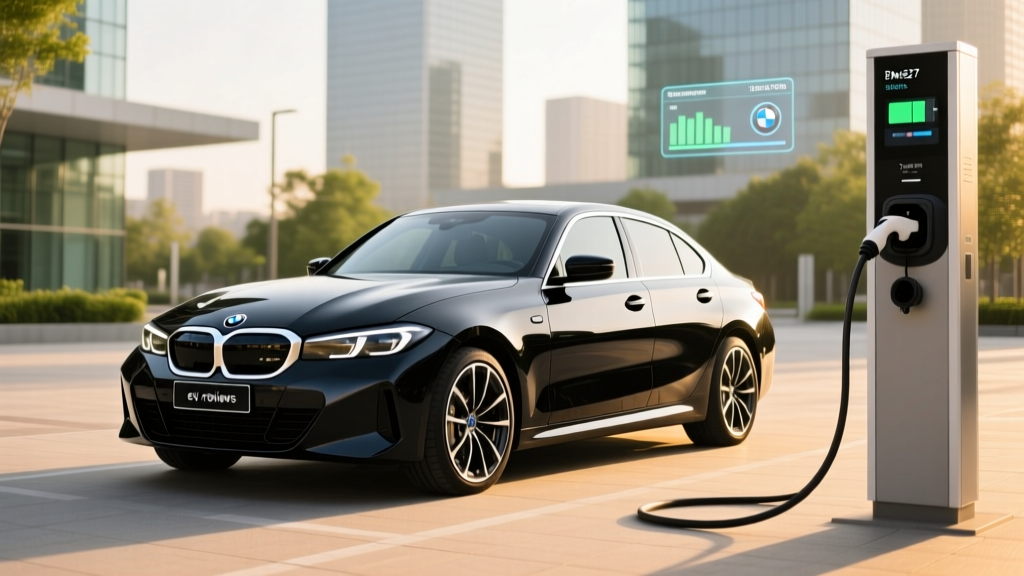
The BMW i3 nameplate is staging a comeback — but forget the quirky carbon-fiber hatchback that defined BMW's first electric era. The 2027 BMW i3 sedan, announced by BMW as part of its Neue Klasse rollout, is an entirely different animal: a compact luxury electric sedan built on BMW's dedicated 800V-capable EV architecture, targeting the Tesla Model 3, Hyundai Ioniq 6, and upcoming Mercedes CLA EV.
As of early 2026, BMW has confirmed the i3 sedan's production timeline and shared preliminary specifications, though final EPA certification and pricing remain subject to change before deliveries begin. Here's everything we know — and where the gaps are.
2027 BMW i3 Sedan: Preliminary Specifications
| Specification | 2027 BMW i3 Sedan (Preliminary) |
|---|---|
| EPA Range (est.) | ~280 miles (eDrive35 RWD) |
| Battery (usable) | ~75 kWh, NMC (6th-gen cylindrical cells) |
| Drivetrain | RWD (eDrive35) / AWD (xDrive40) |
| Horsepower | ~282 hp (eDrive35) / ~402 hp (xDrive40) |
| 0-60 mph | ~5.8s (eDrive35) / ~4.5s (xDrive40) |
| Max DC Fast Charge | Up to 200 kW |
| 10-80% DC Charge Time | ~22 minutes (est.) |
| Level 2 AC Charge Rate | 11 kW (~37 mi/hr) |
| Efficiency (est.) | ~125 MPGe / ~27 kWh/100 mi |
| Base MSRP (est.) | ~$48,000 (eDrive35) |
| Battery Warranty | 8 years / 100,000 miles |
Note: Specs above reflect BMW's announced preliminary figures as of early 2026. Final EPA-certified numbers will be published closer to the on-sale date. Source: BMW Group Press Club.
Range and Efficiency: What to Expect in the Real World
EPA Estimated Range: ~280 miles (eDrive35 RWD, est.)
Real-World Expectation: Plan for approximately 230-250 miles on sustained highway driving at 70+ mph. In cold weather (below 32°F), expect a 15-25% reduction, dropping effective range to roughly 200-220 miles without preconditioning. BMW's 6th-gen eDrive system includes a standard heat pump, which mitigates some winter losses compared to resistive heating systems.
BMW is using new round cylindrical cells — a departure from the prismatic cells in the current i4 and iX — with roughly 20% higher energy density than the previous generation. These NMC (nickel manganese cobalt) cells are manufactured in partnership with CATL and EVE Energy. The chemistry choice favors energy density and fast-charge capability over the longer cycle life of LFP, meaning BMW is targeting buyers who prioritize range and charging speed over a 300,000-mile battery lifespan.
Efficiency should land around 125 MPGe combined (roughly 27 kWh per 100 miles), which would place the i3 sedan in the middle of the luxury compact EV pack — behind the Tesla Model 3 Rear-Wheel Drive at 132 MPGe but competitive with the Hyundai Ioniq 6 SE at 140 MPGe in its Long Range trim. The 800V architecture enables more efficient power delivery and reduced heat loss during fast charging.
Charging Speed: DC Fast Charging and Home Setup
| Charging Level | Power | Speed / Time | Connector |
|---|---|---|---|
| Level 1 (120V) | 1.4 kW | ~5 mi/hr | J1772 / NACS |
| Level 2 (240V, 48A) | 11 kW | ~37 mi/hr (full charge ~8 hrs) | J1772 / NACS |
| DC Fast Charge | Peak 200 kW | 10-80% in ~22 min | NACS (2027 model year) |
The 200 kW peak DC charge rate is respectable but not class-leading. The Hyundai Ioniq 6 peaks at 240 kW on 800V architecture, and the Tesla Model 3 Highland can sustain up to 250 kW at V4 Superchargers. Where BMW's system should perform well is in the charge curve taper: the 6th-gen cylindrical cells are designed to sustain higher charge rates above 50% State of Charge (SoC) compared to older prismatic designs. In practice, this means the 10-80% time of ~22 minutes should hold relatively consistently rather than dropping off sharply after 60%.
For the 2027 model year, BMW has confirmed the i3 sedan will ship with the NACS (North American Charging Standard) connector in the U.S. market, granting access to Tesla's Supercharger network — currently the most reliable DC fast-charging infrastructure in North America. This is a significant advantage over CCS-only vehicles, which rely on Electrify America, EVgo, and ChargePoint networks with more variable uptime.
At home, the 11 kW onboard charger means you'll need a 48-amp Level 2 circuit (hardwired, 60-amp breaker) to achieve the full ~37 miles of range per hour of charging. A typical overnight session from 20% to 80% takes roughly 5-6 hours. Installation costs for a dedicated 240V/60A circuit range from $800 to $2,500 depending on your electrical panel's capacity and the distance from panel to charger location — factor in a potential $1,500-$3,000 panel upgrade if you're running a 100-amp service.
Performance and Driving Dynamics
The eDrive35 single-motor RWD variant produces an estimated 282 horsepower, delivering a 0-60 mph time around 5.8 seconds. For the daily commute and highway merging, that's more than adequate — and BMW's rear-drive bias should preserve the brand's driving engagement reputation even in an EV.
The xDrive40 dual-motor AWD variant bumps output to approximately 402 horsepower with a 0-60 time near 4.5 seconds. Both variants use BMW's 6th-gen eDrive motors, which are now externally excited synchronous motors (no permanent rare-earth magnets), reducing supply chain dependencies and maintaining consistent power output at higher speeds compared to induction motors.
Regenerative braking is fully adjustable through BMW's iDrive 9 system, with a one-pedal driving mode and an adaptive mode that uses navigation and sensor data to modulate regen based on traffic ahead. The Neue Klasse platform also introduces BMW's new "Heart of Joy" vehicle computer, which integrates powertrain, chassis, and energy management into a single processing unit — reducing latency in throttle response and regen transitions.
Pricing, Trims, and Federal Tax Credit Eligibility
| Trim | Est. Base MSRP | Federal Credit Potential | Effective Price (est.) |
|---|---|---|---|
| eDrive35 (RWD) | $48,000 | Up to $7,500 (§30D) | ~$40,500 |
| xDrive40 (AWD) | $56,000 | Up to $7,500 (§30D) | ~$48,500 |
| M Sport Package (add-on) | +$4,500 | No change | Varies |
Federal tax credit eligibility under IRS §30D hinges on several factors that buyers must verify before counting on the full $7,500:
- MSRP Cap: Sedans must have an MSRP at or below $55,000. The eDrive35 should qualify; the xDrive40 at ~$56,000 may exceed the cap depending on final pricing and how options are structured.
- Buyer Income Cap: Modified adjusted gross income must not exceed $150,000 (single), $225,000 (head of household), or $300,000 (joint filing).
- Battery Sourcing: Critical minerals and battery components must meet escalating domestic-content thresholds. For 2027, 80% of critical minerals must be sourced from the U.S. or FTA partners, and 100% of battery components must be manufactured or assembled in North America. BMW's new U.S. battery cell production partnerships are designed to meet these requirements, but final IRS certification per trim is not guaranteed.
- Point-of-Sale Transfer: Buyers can transfer the credit to the dealer at purchase, reducing the sale price directly rather than waiting for a tax refund.
Consult a tax professional before relying on credit eligibility. Rules for the 2027 tax year may differ from current guidance. BMW's U.S. battery assembly in Spartanburg, South Carolina, is underway, but specific cell-sourcing compliance for the i3 sedan has not been independently verified by the IRS as of this writing.
Interior, Cargo, and Technology
The Neue Klasse platform enables a flat floor and shorter overhangs, translating to interior volume that BMW says will rival the current 3 Series despite the i3 sedan's compact footprint. Expect approximately:
- Rear legroom: ~35.5 inches
- Cargo volume (trunk): ~15 cu ft
- Front trunk (frunk): Not confirmed — Neue Klasse architecture may omit a frunk in favor of a larger cabin
The centerpiece is BMW's Panoramic Vision display — a full-width head-up projection across the base of the windshield, replacing the traditional instrument cluster. This is paired with a 17.9-inch central touchscreen running iDrive 9, wireless Apple CarPlay and Android Auto, and BMW's latest Digital Key Plus (UWB-based phone-as-key).
Driver assistance includes BMW Driving Assistant Professional, which provides SAE Level 2 highway assist with lane centering, adaptive cruise, and automatic lane changes on divided highways. This is not autonomous driving — the driver must keep hands on or near the wheel and eyes on the road at all times. A new Highway Assistant feature allows hands-off driving up to 85 mph under specific conditions (eyes-on, divided highway), which BMW is introducing in the U.S. market pending NHTSA review.
Pros, Cons, and the Competition
Pros
- NACS connector standard — full Supercharger network access
- 800V architecture with strong sustained charge curve
- Heat pump standard for cold-climate efficiency
- Panoramic Vision HUD is a genuine tech differentiator
- BMW driving dynamics in a dedicated EV platform
Cons
- 200 kW peak charge rate trails Ioniq 6 and Model 3
- NMC chemistry — less cycle longevity than LFP alternatives
- AWD trim likely exceeds $55K MSRP cap for tax credit
- No confirmed frunk
- Final EPA range and pricing not yet certified
Key competitors to cross-shop:
- Tesla Model 3 Long Range: 341 mi EPA, 250 kW peak charge, ~$47,740 — the efficiency and range benchmark, but spartan interior
- Hyundai Ioniq 6 SE Long Range: 361 mi EPA, 240 kW peak charge, ~$46,500 — class-leading range and charge speed, polarizing design
- Mercedes-Benz CLA EV (upcoming): Preliminary 400+ mi range (WLTP), 250 kW charge — direct luxury rival, also unreleased
Who Should Buy the 2027 BMW i3 Sedan?
Choose the 2027 BMW i3 sedan if: You want a compact luxury EV sedan with BMW driving dynamics, NACS Supercharger access, and a premium interior — and you're willing to trade a few miles of EPA range versus the Tesla Model 3 or Ioniq 6 for build quality and brand prestige. Best for daily commuters and frequent road-trippers who value charging-network reliability.
Look elsewhere if: Maximum EPA range is your top priority (Ioniq 6 or Model 3 LR win), you need AWD under the $55K tax-credit cap, or you prefer LFP battery chemistry for 20+ year longevity (base Tesla Model 3 RWD).
Frequently Asked Questions
What is the real-world range of the 2027 BMW i3 sedan?
BMW estimates approximately 280 miles EPA for the eDrive35 RWD variant. In real-world highway driving at 70+ mph, expect 230-250 miles. Cold weather (below freezing) can reduce range by 15-25% without preconditioning, so budget 200-220 miles in winter conditions. The standard heat pump helps but cannot fully eliminate cold-weather losses.
How fast does the 2027 BMW i3 sedan charge?
On a DC fast charger, the i3 sedan peaks at 200 kW, with an estimated 10-80% charge time of ~22 minutes. At home on a Level 2 charger (240V, 48A), it charges at 11 kW, adding about 37 miles of range per hour. A full Level 1 (120V) charge adds roughly 5 miles per hour — only practical for overnight top-ups.
How much does the 2027 BMW i3 sedan cost after tax credits?
The eDrive35 RWD is estimated at ~$48,000 MSRP. If the full $7,500 federal tax credit applies (and you meet income, MSRP, and sourcing requirements), the effective price drops to roughly $40,500. The xDrive40 AWD at ~$56,000 may exceed the $55,000 sedan MSRP cap, potentially disqualifying it from the credit entirely.
Does the 2027 BMW i3 sedan qualify for the federal EV tax credit?
Likely for the eDrive35 trim, assuming BMW's U.S. battery sourcing meets 2027 critical-mineral and component thresholds under IRS §30D. The xDrive40's higher MSRP may push it above the $55,000 sedan cap. Buyers must also fall under income limits ($150K single / $300K joint). Verify eligibility at purchase — rules change annually.
Is the 2027 BMW i3 sedan worth buying vs. the Tesla Model 3 or Hyundai Ioniq 6?
If interior quality, BMW brand cachet, and NACS Supercharger access matter to you, the i3 sedan is compelling. However, both the Model 3 Long Range and Ioniq 6 offer more EPA range (341 and 361 miles respectively) and faster peak charge rates (250 kW and 240 kW) at similar or lower prices. The i3 sedan's advantage lies in driving refinement and cabin technology — not raw efficiency numbers.
When will the 2027 BMW i3 sedan be available?
BMW has indicated production of the Neue Klasse-based i3 sedan will begin in late 2026, with U.S. deliveries expected in early-to-mid 2027. Reservations and configurator access are not yet open. Final EPA certification, pricing, and tax-credit eligibility will be confirmed closer to launch.