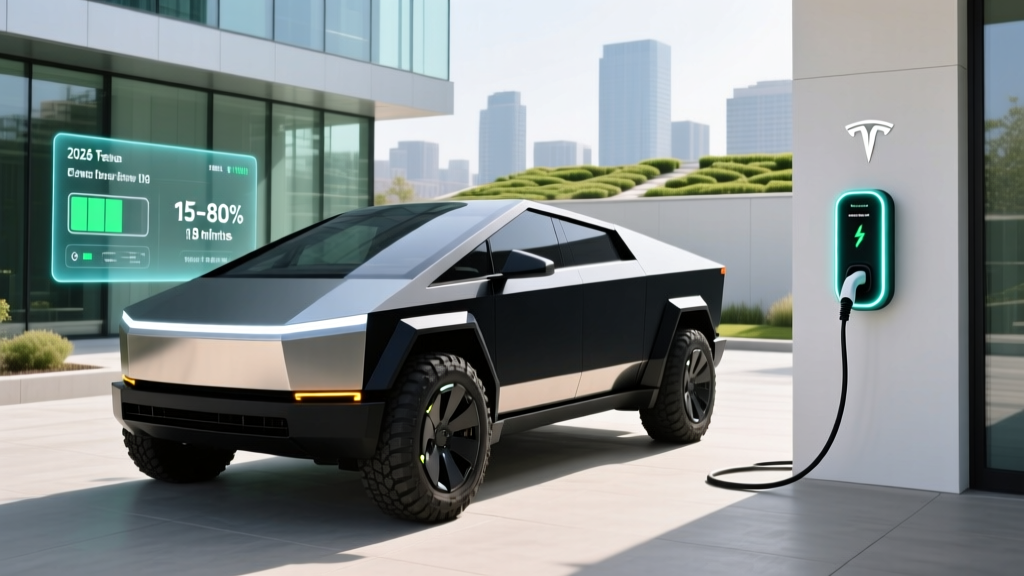
The Tesla Cyberbeast occupies a strange corner of the electric-truck market. It is simultaneously the quickest production pickup ever built and a polarizing design that draws reactions at every charging stop. Beneath the stainless-steel exoskeleton and angular geometry, Tesla has packed a 845-horsepower tri-motor powertrain, an EPA-rated 320 miles of range, and DC fast-charging that peaks at 350 kW. But does the Cyberbeast actually work as a daily truck, a tow rig, or a road-trip companion? We break down every spec that matters to a real buyer.
Quick Verdict: Who Should Buy the Tesla Cyberbeast?
Choose the Cyberbeast if: You want supercar-level acceleration in a truck bed, you tow under 11,000 lbs occasionally, and you live in an area with reliable Supercharger access.
Look elsewhere if: You need a traditional work truck with a conventional bed, you tow heavy fifth-wheel trailers regularly, or you prioritize rear-seat comfort over performance thrills.
The Cyberbeast is a performance truck first and a utility vehicle second. Its tri-motor all-wheel-drive system delivers brutal acceleration, and the 48-volt electrical architecture reduces wiring harness weight. But the angular bed, limited rear visibility, and firm ride mean buyers cross-shopping the Ford F-150 Lightning or Rivian R1T Quad-Motor should weigh trade-offs carefully.
Range, Battery, and Real-World Efficiency
| Spec | Cyberbeast (AWD Tri-Motor) |
|---|---|
| EPA Estimated Range | 320 miles |
| Battery Capacity (Usable) | ~123 kWh (NMC chemistry) |
| Battery Chemistry | NMC (Nickel Manganese Cobalt) |
| MPGe (Combined) | 69 MPGe |
| Energy Consumption | 48 kWh/100 mi |
| Drivetrain | Tri-Motor AWD |
EPA Range: 320 miles
Real-World Expectation: Plan for 260–285 miles on highway road trips at 70+ mph. In freezing temperatures (below 30°F), expect a 20–30% reduction, dropping effective range to roughly 220–250 miles. The Cyberbeast's angular shape and heavy curb weight (~6,800 lbs) hurt highway efficiency compared to more aerodynamic EVs.
Tesla uses an NMC (nickel manganese cobalt) battery pack in the Cyberbeast, prioritizing energy density over the cycle-life longevity of LFP chemistry. The ~123 kWh usable pack is among the largest in any production EV, which partially offsets the truck's poor aerodynamic efficiency. According to fueleconomy.gov, the combined 69 MPGe trails the Ford F-150 Lightning Extended Range (70 MPGe) and the Rivian R1T Dual-Motor Large (73 MPGe), but the Cyberbeast's tri-motor output dwarfs both competitors.
For daily commuting under 60 mph, you can realistically approach or even exceed the EPA sticker thanks to regenerative braking and lower aerodynamic drag at city speeds. But this is a truck that punishes lead-footed highway driving with steep efficiency penalties.
Charging Speed: DC Fast Charging and Home Level 2
| Charging Level | Power / Rate | Time or Miles Added |
|---|---|---|
| DC Fast Charge (Peak) | 350 kW | 10–80% in ~15 minutes (preconditioned) |
| DC Fast Charge (Sustained Avg) | ~200–250 kW | 10–80% realistic: ~20 minutes |
| Level 2 Home (48A / 11.5 kW) | 11.5 kW | ~30 miles of range per hour |
| Level 2 Home (80A / 19.2 kW) | 19.2 kW | ~52 miles of range per hour |
| Level 1 (120V / 12A) | 1.4 kW | ~3 miles per hour |
The Cyberbeast's 800-volt-class architecture enables a peak DC fast-charge rate of 350 kW at Tesla V4 Superchargers. In controlled testing with a preconditioned battery, Tesla claims a 10–80% charge in approximately 15 minutes. In practice, the charge curve tapers significantly above 60% state of charge, so real-world sessions average closer to 20 minutes for the same 10–80% window. Peak kW is not sustained kW — a critical distinction many first-time EV buyers miss.
At home, the Cyberbeast accepts up to 19.2 kW on a high-amperage Level 2 circuit (80 amps / 100-amp breaker). Most buyers will install a 48-amp Wall Connector on a 60-amp circuit, delivering 11.5 kW and adding roughly 30 miles of range per hour — sufficient to fully replenish the pack overnight. A full Level 2 installation with a panel upgrade can run $1,500–$3,000 depending on your home's electrical service. Consult a licensed electrician for a site-specific quote.
The Cyberbeast uses the NACS (North American Charging Standard) connector natively, giving it access to the entire Tesla Supercharger network — the most reliable DC fast-charging infrastructure in the U.S. as of 2026. Third-party networks like Electrify America and EVgo also support NACS, though adapter availability and reliability vary by station.
Performance: Tri-Motor Power and Acceleration
| Performance Spec | Cyberbeast |
|---|---|
| Horsepower | 845 hp |
| Torque | 740 lb-ft |
| 0–60 mph | 2.6 seconds |
| Top Speed | 130 mph (electronically limited) |
| Drivetrain | Tri-Motor AWD |
| Towing Capacity | 11,000 lbs |
| Payload Capacity | 2,500 lbs |
The 2.6-second 0–60 mph time makes the Cyberbeast quicker than a Porsche 911 Turbo S, which is absurd in a vehicle with a 6-foot bed and a trailer hitch. The tri-motor layout uses one motor on the front axle and two on the rear, enabling torque vectoring that helps rotate the heavy truck through corners. The 48-volt steer-by-wire system eliminates the mechanical steering column, reducing weight and allowing variable steering ratios — though some drivers report an adjustment period to the artificial feel.
Towing capacity peaks at 11,000 lbs, competitive with the F-150 Lightning (10,000 lbs) but below heavy-duty diesel trucks. Expect range to drop by 40–50% when towing near maximum capacity at highway speeds — a universal EV truck reality, not unique to Tesla. The Cyberbeast's air suspension self-levels under load and offers up to 16 inches of ground clearance in Extract Mode for off-road use.
Pricing, Trims, and Federal Tax Credit Eligibility
| Trim | Base MSRP | Federal §30D Credit | Effective Price |
|---|---|---|---|
| Cyberbeast (Tri-Motor AWD) | $99,990 | Ineligible (over MSRP cap) | $99,990 |
| Cybertruck Long Range (Dual-Motor) | $79,990 | Ineligible (over MSRP cap) | $79,990 |
| Cybertruck RWD (announced, late 2026) | ~$60,990 (est.) | Potentially eligible | ~$53,490 (est.) |
Here is the hard truth for Cyberbeast buyers: it does not qualify for the $7,500 federal EV tax credit under IRS §30D rules. The credit caps eligible trucks and SUVs at an $80,000 MSRP, and the Cyberbeast's $99,990 sticker blows past that threshold. The dual-motor Long Range trim at $79,990 also misses the cap by a slim margin when destination fees are included.
Even the upcoming RWD Cybertruck (announced for late 2026 delivery) faces additional §30D hurdles: buyer income caps ($300,000 joint / $150,000 single), critical-mineral and battery-component sourcing requirements that shift annually, and the point-of-sale transfer option. Always verify current eligibility on IRS.gov and consult a tax professional before counting on the credit in your purchase budget.
State-level incentives may partially offset the Cyberbeast's price — California's CVRP rebate, Colorado's innovative motor vehicle credit, and various utility-company charging incentives can stack in some jurisdictions. Check your state's energy office for current programs.
Interior, Cargo Space, and Technology
The Cyberbeast's interior is minimalist even by Tesla standards. A single 18.5-inch touchscreen dominates the dash, controlling everything from climate to glove-box release. A rear 9.4-inch screen serves passengers in the second row. The steer-by-wire yoke is standard, though Tesla has offered a round-wheel option for buyers who find the yoke impractical for low-speed maneuvering.
| Dimension | Measurement |
|---|---|
| Front Headroom | 40.9 in |
| Rear Legroom | 34.2 in |
| Bed Length | 72 in (6 ft) |
| Bed Cargo Volume | 34.2 cu ft (bed locked with tonneau) |
| Frunk Volume | 7.1 cu ft |
| Total Cargo (bed + frunk + cabin) | ~68 cu ft |
The powered tonneau cover is a standout feature — it locks automatically, supports up to 300 lbs of distributed weight, and can be controlled via the app. The 6-foot bed is shorter than a traditional full-size truck bed, which limits sheet-good and lumber hauling. The frunk adds useful lockable storage for charging cables and small gear.
Tech features include Tesla's latest infotainment (gaming-capable while parked, streaming, dashcam with four cameras), over-the-air updates, and the optional Full Self-Driving (Supervised) package. FSD remains an SAE Level 2 driver-assistance system — the driver must remain fully engaged and hands-on at all times. It is not autonomous driving.
Warranty, Battery Longevity, and Ownership Costs
| Warranty | Coverage |
|---|---|
| Basic Vehicle | 4 years / 50,000 miles |
| Battery & Drive Unit | 8 years / 150,000 miles (70% minimum capacity retention) |
| Roadside Assistance | 4 years / 50,000 miles |
Tesla's 8-year/150,000-mile battery warranty guarantees at least 70% capacity retention — meaning the pack could degrade to ~86 kWh usable before a warranty claim triggers. Real-world data from high-mileage Tesla owners suggests NMC packs typically lose 10–15% capacity over the first 100,000 miles, with degradation slowing significantly thereafter. Full battery replacement outside warranty currently costs $15,000–$25,000 depending on pack size and labor, though prices continue to decline as cell manufacturing scales.
Insurance premiums for the Cyberbeast run higher than average — expect $3,500–$5,500 annually depending on your driving record and location, driven by the truck's repair costs (stainless-steel body panels, specialized glass, sensor calibration). Get quotes before purchasing. Tesla's own insurance product is available in select states and may offer competitive rates for low-mileage drivers.
Pros
- 2.6-second 0–60 mph — quickest production truck ever
- 350 kW peak DC charging on V4 Superchargers
- Access to Tesla Supercharger network (most reliable in U.S.)
- Powered locking tonneau cover with 300-lb load rating
- 11,000-lb towing capacity with air suspension self-leveling
- Stainless-steel exoskeleton resists dents and corrosion
Cons
- No federal tax credit (exceeds §30D MSRP cap)
- 48 kWh/100 mi — poor highway efficiency vs. rivals
- 6-foot bed shorter than traditional full-size trucks
- Steer-by-wire and yoke require adjustment period
- Rear visibility limited despite camera assist
- High insurance premiums ($3,500–$5,500/yr typical)
- Build-quality variability reported by early owners
Cyberbeast vs. Key Competitors
| Spec | Tesla Cyberbeast | Rivian R1T Quad-Motor | Ford F-150 Lightning Platinum |
|---|---|---|---|
| EPA Range | 320 mi | 328 mi (Max Pack) | 300 mi (Ext. Range) |
| 0–60 mph | 2.6 sec | 3.0 sec | 3.8 sec |
| Horsepower | 845 hp | 1,025 hp | 580 hp |
| DC Fast Charge (Peak) | 350 kW | 200 kW | 150 kW |
| Bed Length | 72 in | 54 in | 66 in (5.5 ft) |
| Towing Capacity | 11,000 lbs | 11,000 lbs | 10,000 lbs |
| Base MSRP | $99,990 | $99,900 | $96,995 |
| Federal Tax Credit | No | No (over MSRP cap) | No (over MSRP cap) |
The Rivian R1T Quad-Motor matches the Cyberbeast on towing and beats it on horsepower, but charges slower and has a shorter 54-inch bed. The F-150 Lightning Platinum offers a more conventional truck experience with better dealer service infrastructure, but trails significantly in acceleration and charging speed. None of these top-trim electric trucks qualify for the federal credit at their current MSRPs — a reality that pushes many value-minded buyers toward mid-tier trims.
Frequently Asked Questions
What is the real-world range of the Tesla Cyberbeast?
The EPA rates the Cyberbeast at 320 miles, but real-world highway driving at 70+ mph typically yields 260–285 miles. In freezing weather, expect 220–250 miles due to battery resistance and cabin heating demands. City driving with regenerative braking can approach or exceed the EPA number.
How fast does the Cyberbeast charge at home and on the road?
On a V4 Supercharger, it peaks at 350 kW and can add ~200 miles in roughly 10 minutes when preconditioned. At home on a 48-amp Level 2 circuit, it adds about 30 miles per hour, fully recharging overnight. An 80-amp circuit (19.2 kW) cuts that time nearly in half.
Does the Cyberbeast qualify for the $7,500 federal EV tax credit?
No. The Cyberbeast's $99,990 MSRP exceeds the $80,000 MSRP cap for trucks and SUVs under IRS §30D rules. Even the dual-motor Long Range trim misses the cap with destination charges. The upcoming RWD model may qualify, subject to income limits and battery-sourcing requirements. Verify at IRS.gov.
Is the Cyberbeast worth buying over the Rivian R1T or F-150 Lightning?
If acceleration, Supercharger network access, and charging speed are your top priorities, yes. If you need a longer bed, conventional dealer service, or proven build quality, the F-150 Lightning or Rivian R1T are stronger choices. Test-drive all three before committing.
How much does insurance cost for the Cyberbeast?
Expect $3,500–$5,500 per year depending on your profile. The stainless-steel body, specialized glass, and sensor suite drive repair costs higher than conventional trucks. Tesla Insurance may offer lower rates in eligible states.
Can the Cyberbeast tow a camper or boat?
Yes, up to 11,000 lbs. But range drops 40–50% when towing near maximum at highway speeds, so plan charging stops accordingly. The air suspension self-levels under tongue weight, and the integrated trailer-brake controller simplifies setup.