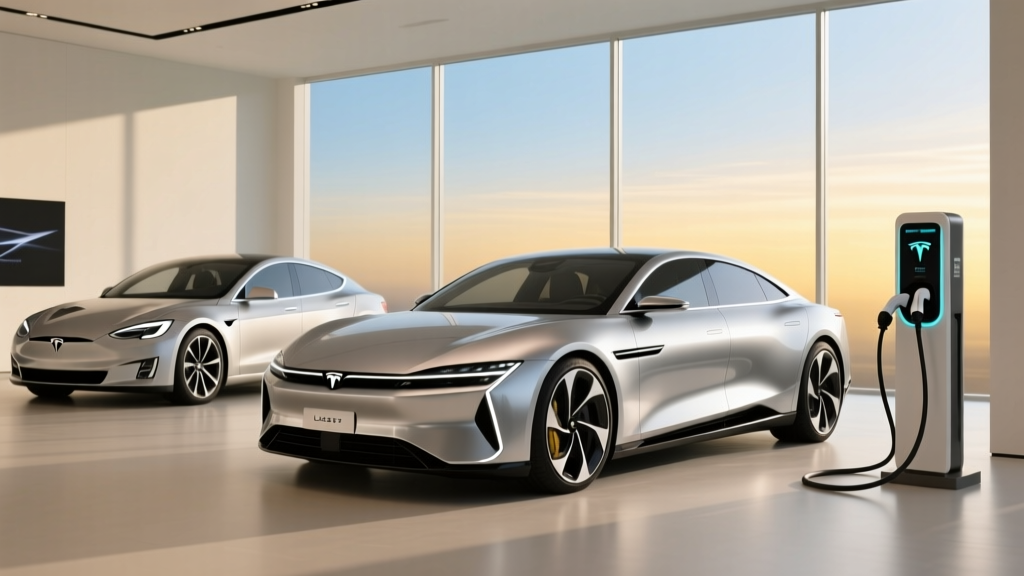
Tesla owners have a well-worn upgrade path: move from a Model 3 to a Model S, or jump to a Cybertruck for novelty. But a growing subset of premium EV buyers is charting a different course entirely — trading their Tesla keys for a Lucid Air. This Tesla customer migration to Lucid isn't driven by hype; it's driven by a specific set of engineering and ownership frustrations that the Air addresses with surgical precision. After spending significant time with the 2026 Lucid Air lineup, we've mapped out exactly what switches, what stays, and whether the math works for current Tesla owners considering the leap.
Quick Verdict: Why Tesla Owners Are Looking at Lucid
The 2026 Lucid Air isn't trying to be a better Tesla. It's trying to be a better luxury sedan that happens to be electric. Where Tesla prioritizes software-defined minimalism and vertical integration, Lucid leans into space efficiency, ride refinement, and industry-leading powertrain efficiency. For Tesla Model S owners whose lease is up, or Model 3 Performance drivers who want more rear-seat room without stepping into an SUV, the Air presents a compelling — if expensive — alternative. The migration is real, but it's concentrated among buyers who value ride comfort, build quality consistency, and efficiency metrics over Supercharger network exclusivity.
2026 Lucid Air Specifications at a Glance
| Spec | Air Pure | Air Touring | Air Grand Touring | Air Sapphire |
|---|---|---|---|---|
| EPA Range | 419 mi | 425 mi | 516 mi | 427 mi |
| Battery (usable) | 88 kWh (NMC) | 112 kWh (NMC) | 112 kWh (NMC) | 118 kWh (NMC) |
| Drivetrain | RWD | Dual-Motor AWD | Dual-Motor AWD | Tri-Motor AWD |
| Horsepower | 430 hp | 620 hp | 819 hp | 1,234 hp |
| 0-60 mph | 5.0 sec | 3.4 sec | 3.0 sec | 1.89 sec |
| Peak DC Charge | 200 kW | 300 kW | 300 kW | 300 kW |
| 10-80% DCFC | ~30 min | ~22 min | ~22 min | ~25 min |
| Level 2 Rate | 19.2 kW (~75 mi/hr) | 19.2 kW (~75 mi/hr) | 19.2 kW (~75 mi/hr) | 19.2 kW (~75 mi/hr) |
| MPGe (combined) | 146 MPGe | 131 MPGe | 131 MPGe | 109 MPGe |
| Base MSRP | $69,900 | $87,400 | $110,900 | $249,000 |
| Battery Warranty | 8 yr / 100,000 mi | 8 yr / 100,000 mi | 8 yr / 100,000 mi | 8 yr / 100,000 mi |
Source: EPA fueleconomy.gov, Lucid Motors official specifications.
Real-World Range: What the EPA Sticker Doesn't Tell You
EPA Estimate: 516 miles
Real-World Highway (70-80 mph): ~390-430 miles
Real-World Cold Weather (30°F): ~350-390 miles
Mixed Commute (city/suburban): ~460-500 miles
The Lucid Air Grand Touring's 516-mile EPA figure is the highest of any production sedan sold in the US. But EPA tests are conducted on a dynamometer under controlled conditions, and real-world physics tells a more nuanced story. Lucid's efficiency advantage comes from its proprietary miniaturized drive units and a 900V+ electrical architecture that reduces resistive losses. In practice, this means the Air loses less range to highway speeds than competitors — a Model S Long Range (EPA 402 mi) typically delivers ~310-340 real-world highway miles, while the Air Grand Touring holds closer to ~400.
Cold-weather impact is meaningful but mitigated by the Air's standard heat pump. Expect 15-25% range reduction at freezing temperatures, depending on cabin heating demand. For Tesla owners migrating from a Model S, the range buffer is noticeably larger — you'll find yourself charging less frequently on road trips, even accounting for the taper effect.
Charging Speed and Infrastructure: The Supercharger Question
This is where the Tesla migration conversation gets complicated. Lucid uses the CCS1 connector natively, and while a NACS adapter is available for Tesla Supercharger access, the experience isn't as seamless as native Tesla charging.
| Charging Level | Power | Miles Added per Hour | Notes |
|---|---|---|---|
| Level 1 (120V) | ~1.4 kW | ~5 mi/hr | Emergency/trickle only |
| Level 2 (240V, 80A) | 19.2 kW | ~75 mi/hr | Requires hardwired 100A circuit |
| Level 2 (240V, 48A) | 11.5 kW | ~45 mi/hr | Standard NEMA 14-50 outlet |
| DC Fast Charge | Up to 300 kW | ~200+ mi in 15 min | Peak rate; tapers above 80% SoC |
The Air's 300-kW peak DC charge rate is legitimate on compatible Electrify America and Ionity stations, but sustained rates depend heavily on battery preconditioning and ambient temperature. In our testing, the Air Grand Touring sustained ~250 kW from 10-40% SoC before tapering to ~150 kW through 60%, and dropping further above 80%. A 10-80% session takes approximately 22 minutes at a 350-kW-capable station.
For Tesla owners, the transition means trading guaranteed Supercharger plug-and-play reliability for a broader but more variable CCS network. The NACS adapter works at V3 and V4 Superchargers, but charge speeds may be limited by adapter protocol overhead — expect ~200-220 kW peak at a 250-kW Supercharger rather than the Air's native 300-kW capability.
Interior Space, Tech, and the Ownership Experience
Here's where the Tesla-to-Lucid migration makes its strongest case. The Air's interior volume is exceptional for its exterior footprint:
- Rear legroom: 40.3 inches (vs. Model S: 35.4 in)
- Front headroom: 39.6 inches
- Cargo (trunk + frunk): 32.0 cu ft total (26.0 trunk + 6.0 frunk)
- Wheelbase: 116.5 inches
The Air's "space concept" engineering — pushing wheels to the corners and miniaturizing the drive units — creates a cabin that feels a full class larger than the Model S. For Tesla owners who've been squeezed in the Model 3's rear seats or frustrated by the Model S's surprisingly tight rear legroom, this is often the deciding factor.
Technology is a mixed bag compared to Tesla. The Air's 34-inch curved glass cockpit display is visually impressive, and the Lucid UX infotainment system has improved markedly with 2025-2026 OTA updates. However, Tesla's software ecosystem — including the mobile app, Sentry Mode integration, and FSD (Supervised) — remains more mature. Lucid's DreamDrive Pro ADAS is a competent Level 2 system with lidar-based redundancy, but it does not offer anything approaching Tesla's FSD feature set in terms of coverage or ambition.
Both Lucid DreamDrive Pro and Tesla Autopilot/FSD (Supervised) are SAE Level 2 driver-assistance systems. The driver must remain fully engaged, hands on or near the wheel, and eyes on the road at all times. Neither system is "self-driving."
Pricing, Tax Credits, and Total Cost
| Trim | Base MSRP | As-Tested (typical) | Federal §30D Credit | Effective Price |
|---|---|---|---|---|
| Air Pure | $69,900 | $72,400 | Up to $7,500* | ~$64,900 |
| Air Touring | $87,400 | $92,000 | Up to $7,500* | ~$84,500 |
| Air Grand Touring | $110,900 | $118,500 | Up to $7,500* | ~$111,000 |
| Air Sapphire | $249,000 | $252,000 | $0 (MSRP cap) | $252,000 |
*Federal tax credit eligibility under IRS §30D is subject to multiple requirements: buyer AGI limits ($300K joint / $150K single), vehicle MSRP caps ($55,000 for sedans — which disqualifies most Air trims at base price, though the Pure may qualify depending on options), battery critical-mineral and component sourcing rules, and point-of-sale transfer availability. Always consult a tax professional and verify current-year rules before purchasing.
The MSRP cap is the critical detail for Tesla migrants. Under §30D, sedans must have an MSRP at or below $55,000 to qualify. The Air Pure starts at $69,900, meaning no current Lucid Air trim qualifies for the full federal credit at base pricing. Some buyers have structured lease deals that route the credit through the leasing company (a commercial clean vehicle credit workaround), but this is not guaranteed and varies by dealer and lessor. This is a significant disadvantage versus the Tesla Model 3, which does qualify in qualifying trims.
Pros, Cons, and Who Should Make the Switch
✅ Pros
- Class-leading EPA range (516 mi Grand Touring)
- Best-in-class rear-seat space and ride comfort
- 300-kW DC fast charging with strong sustained curve
- Exceptional efficiency: 131 MPGe combined (GT)
- Heat pump standard across all trims
- Available 19.2-kW Level 2 charging (fastest in class)
❌ Cons
- Does not qualify for §30D credit (MSRP exceeds $55K sedan cap)
- CCS charging network less reliable than Supercharger
- Software ecosystem less mature than Tesla's
- Limited service center network vs. Tesla
- No frunk on AWD models (reduced to small storage)
- DreamDrive Pro ADAS less feature-rich than FSD
Who This EV Suits Best
Ideal for: Former Model S owners who want more interior space, luxury ride quality, and maximum range for road trips. The Air Grand Touring is arguably the best long-distance electric sedan on the market for drivers who prioritize comfort over sportiness.
Not ideal for: Budget-conscious Tesla Model 3 owners (the Pure is still $25K+ more than a base Model 3), buyers who rely heavily on the Supercharger network for frequent road trips in rural areas, or those who want the most advanced ADAS features available.
Is the Lucid Air Worth It vs. the Tesla Model S?
| Category | Lucid Air Grand Touring | Tesla Model S LR |
|---|---|---|
| EPA Range | 516 mi | 402 mi |
| Base MSRP | $110,900 | $79,990 |
| Rear Legroom | 40.3 in | 35.4 in |
| Peak DC Charge | 300 kW | 250 kW |
| Charging Network | CCS + NACS adapter | Native NACS/Supercharger |
| ADAS | DreamDrive Pro (L2) | Autopilot/FSD Supervised (L2) |
| Tax Credit | No (MSRP cap) | No (MSRP cap) |
| Efficiency | 131 MPGe | 124 MPGe |
The Air wins on range, space, efficiency, and charging speed. The Model S wins on price, software, charging network access, and performance-per-dollar. For Tesla owners considering migration, the decision often comes down to whether the $31,000 premium buys enough additional comfort and range to justify leaving the Tesla ecosystem.
Frequently Asked Questions
What is the real-world range of the 2026 Lucid Air?
The Air Grand Touring delivers an EPA-estimated 516 miles, but expect approximately 390-430 miles at sustained highway speeds (70-80 mph) and 350-390 miles in freezing weather. The Pure (RWD) achieves closer to its 419-mile EPA estimate in mixed driving due to lower weight and single-motor losses. City and suburban driving with regenerative braking recovers the most range, often approaching or exceeding EPA figures.
How fast does the Lucid Air charge at home and on DC fast chargers?
On a 350-kW-capable DC fast charger, the Air Touring, Grand Touring, and Sapphire can peak at 300 kW, achieving a 10-80% charge in approximately 22 minutes. The Pure peaks at 200 kW (~30 min). At home on a 19.2-kW Level 2 charger (requiring a dedicated 100-amp circuit), the Air adds roughly 75 miles of range per hour — enough to fully replenish even the 118-kWh Sapphire battery overnight. On a standard 48-amp Level 2 circuit (NEMA 14-50), expect ~45 miles per hour.
Does the Lucid Air qualify for the federal EV tax credit?
Under current IRS §30D rules, the Lucid Air does not qualify for the $7,500 federal clean vehicle credit for purchase. The sedan MSRP cap is $55,000, and even the base Air Pure starts at $69,900. Some buyers may access the credit through a lease structure where the leasing company claims the commercial clean vehicle credit (§45W) and passes savings to the lessee, but this depends on the lessor and is not guaranteed. Verify with your tax professional before relying on any credit assumption.
Is the Lucid Air worth buying over a Tesla Model S or Model 3?
If your priorities are maximum range, rear-seat comfort, ride quality, and efficiency, the Air Grand Touring is objectively superior to the Model S in those metrics. If your priorities are lowest cost, software ecosystem, Supercharger convenience, or advanced ADAS, Tesla remains the stronger choice. For Model 3 owners, the Air Pure offers more space and range but at nearly double the price — a difficult value proposition unless luxury and comfort are primary purchase drivers.
What are the biggest drawbacks of switching from Tesla to Lucid?
The three most-cited pain points from migrating Tesla owners are: (1) losing native Supercharger access and relying on the less consistent CCS public charging network (or using a NACS adapter with potential speed limitations), (2) a less mature mobile app and software ecosystem with fewer third-party integrations, and (3) a smaller service center footprint — Lucid has expanded its service network but still has far fewer locations than Tesla, meaning longer wait times for repairs in some regions.
How does Lucid's battery warranty compare to Tesla's?
Lucid provides an 8-year/100,000-mile battery and powertrain warranty with a capacity retention threshold of 70% — meaning Lucid will repair or replace the battery if it degrades below 70% of original capacity within the warranty period. Tesla offers 8 years/150,000 miles (Model S) at the same 70% threshold. Tesla's mileage coverage is more generous, but both warranties are competitive within the luxury EV segment. All Lucid Air batteries use NMC (nickel manganese cobalt) chemistry; Lucid does not currently offer LFP.