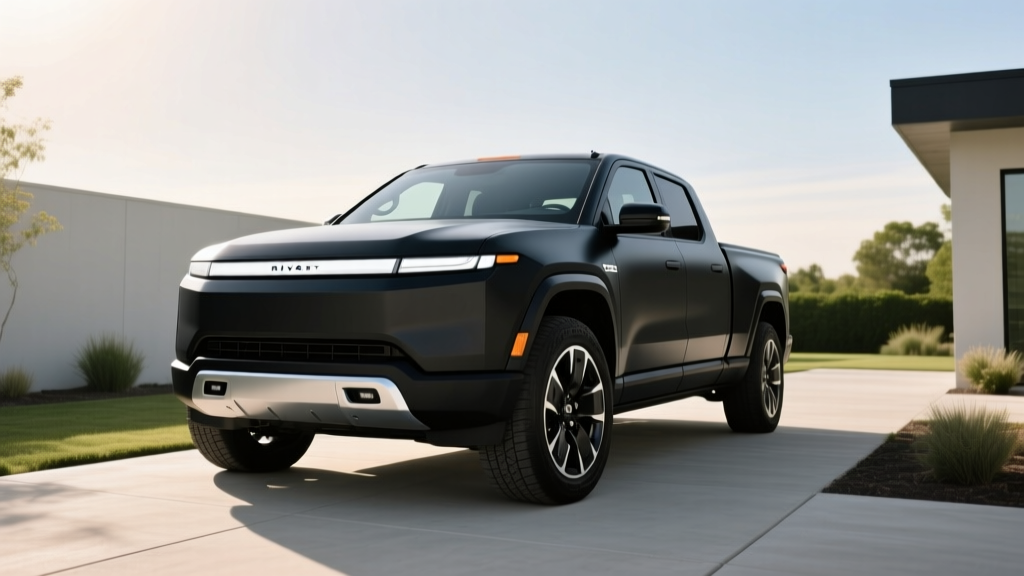
The Rivian R1T remains one of the few electric pickups that balances genuine off-road capability with daily-driver refinement. But at over 7,000 pounds in some configurations, the R1T's mass is a defining characteristic that shapes everything from energy consumption to tire wear. For buyers researching the Rivian R1T weight and what it means for ownership, this review connects the curb-weight numbers to the real-world metrics that actually matter: range, efficiency, charging speed, towing, and total cost.
For 2026, Rivian continues to offer the R1T with the Standard, Large, and Max battery packs across Dual-Motor, Performance Dual-Motor, Tri-Motor, and Quad-Motor powertrains. The second-generation architecture introduced in late 2024 brought a new electrical system, improved thermal management, and revised motor tuning — all of which subtly affect how the truck's weight translates into miles per kWh.
Rivian R1T Weight by Configuration: The Numbers
Not all R1Ts weigh the same. Battery size and motor count create a spread of roughly 700 pounds across the lineup, and that gap has real consequences for efficiency and payload. Here is the curb weight breakdown by the most common 2026 configurations:
| Configuration | Battery Pack | Approx. Curb Weight (lbs) | Usable Battery (kWh) | Chemistry |
|---|---|---|---|---|
| Dual-Motor AWD | Standard | ~6,850 | ~95 | LFP |
| Dual-Motor AWD | Large | ~7,100 | ~128 | NMC |
| Performance Dual-Motor | Large | ~7,150 | ~128 | NMC |
| Tri-Motor AWD | Max | ~7,400 | ~141 | NMC |
| Quad-Motor AWD | Max | ~7,550 | ~141 | NMC |
The Standard pack uses lithium iron phosphate (LFP) cells, which are heavier per kWh of energy density than the nickel manganese cobalt (NMC) cells in the Large and Max packs. Paradoxically, the Standard-battery Dual-Motor is the lightest R1T because it carries fewer total cells. LFP also tolerates regular 100% charging without degradation concerns — a meaningful ownership advantage for daily drivers who want maximum available range each morning.
Range and Efficiency: What 7,000+ Pounds Costs You
Mass is the enemy of efficiency, and the R1T's weight shows up in its MPGe and kWh/100mi figures compared to lighter electric SUVs. EPA estimates vary by configuration, but the physics are consistent: pushing 7,000–7,500 pounds requires more energy per mile, especially at highway speeds where aerodynamic drag compounds the penalty.
The Dual-Motor Large Pack carries an EPA-estimated 352 miles of range. In real-world highway driving at 70–75 mph, expect approximately 280–310 miles before needing to charge. In cold weather (below 30°F), range can drop an additional 15–25%, bringing effective highway range to roughly 230–265 miles. The Standard Pack (EPA ~270 mi) realistically delivers 215–245 miles on the highway, while the Max Pack (EPA ~420 mi) yields around 340–380 miles in mixed real-world driving.
| Configuration | EPA Range (mi) | Real-World Highway (mi) | Cold-Weather Highway (mi) | Efficiency (kWh/100mi) |
|---|---|---|---|---|
| Dual-Motor / Standard | ~270 | 215–245 | 180–210 | ~42 |
| Dual-Motor / Large | ~352 | 280–310 | 230–265 | ~40 |
| Performance Dual / Large | ~330 | 265–295 | 215–250 | ~43 |
| Tri-Motor / Max | ~420 | 340–380 | 280–320 | ~38 |
| Quad-Motor / Max | ~390 | 310–350 | 255–295 | ~41 |
The R1T's efficiency of roughly 38–43 kWh/100 miles is typical for a full-size electric pickup. For comparison, the Ford F-150 Lightning Extended Range sits around 41 kWh/100mi, while the lighter Tesla Cybertruck AWD achieves approximately 37 kWh/100mi. According to fueleconomy.gov, the R1T Dual-Motor Large Pack achieves a combined MPGe of approximately 82 MPGe.
Charging Speed: DC Fast Charging and Home Level 2
A heavy truck with a large battery needs robust charging to keep road trips practical. Rivian upgraded the R1T's charging architecture with the second-generation platform, and the results are competitive with the best in the pickup segment.
| Charging Level | Power / Rate | Speed (Miles Added) | Notes |
|---|---|---|---|
| Level 1 (120V household) | ~1.4 kW | ~3–4 mi/hr | Emergency/trickle only |
| Level 2 (240V / 48A home) | ~11.5 kW | ~25–30 mi/hr | Full charge overnight (~10–14 hrs) |
| DC Fast Charge (peak) | Up to 220 kW | ~140 mi in 15 min | 10–80% in ~25–30 min (Large Pack) |
The R1T charges via the NACS (North American Charging Standard) connector, giving it native access to Tesla Supercharger stalls — currently the most reliable and widespread DC fast-charging network in the U.S. The Max Pack can accept peak rates up to 220 kW, though sustained charging tapers significantly above 80% State of Charge. This is standard lithium-ion behavior: the battery management system reduces current to protect cell longevity. Plan your road-trip stops around the 10–80% window, where the charge curve is steepest.
At home, a 48-amp Level 2 wall connector on a 60-amp circuit delivers roughly 25–30 miles of range per hour of charging. For a Dual-Motor Large Pack owner driving 40 miles round-trip daily, an overnight charge from 60% to 90% takes about 3.5 hours — well within a typical overnight window. Rivian's Rivian Waypoint home charger integrates directly with the vehicle's app for scheduled and preconditioned charging sessions.
Performance: Powertrain, Acceleration, and Towing
The R1T's weight doesn't hold it back in a straight line. Rivian's electric motors deliver instant torque, and even the base Dual-Motor configuration outpaces most gas-powered midsize pickups off the line.
| Powertrain | Horsepower | Torque (lb-ft) | 0–60 mph (sec) | Max Tow Capacity (lbs) |
|---|---|---|---|---|
| Dual-Motor AWD | 533 | 610 | 4.5 | 11,000 |
| Performance Dual-Motor | 665 | 829 | 3.4 | 11,000 |
| Tri-Motor AWD | 850 | 1,103 | 2.9 | 11,000 |
| Quad-Motor AWD | 1,025 | 1,198 | 2.5 | 11,000 |
Towing is where weight becomes a double-edged sword. The R1T's 11,000-pound max tow rating is competitive, and the truck's mass actually helps with stability — a heavier tow vehicle resists trailer sway more effectively. However, towing a 7,000-pound trailer can cut range by 40–50%, bringing a Large Pack R1T down to roughly 150–180 miles between charges. This is physics, not a Rivian flaw: the Ford F-150 Lightning and Chevrolet Silverado EV experience similar towing range reductions. Plan towing routes around charger availability and expect 20–30 minute DC fast-charge stops every 120–150 miles under heavy load.
Payload capacity ranges from approximately 1,760 pounds (Quad-Motor) to 1,800+ pounds (Dual-Motor Standard), which is adequate for most truck tasks but trails some heavy-duty gas pickups. The 4.5-foot bed (expandable with the midgate to over 8 feet) and the 11-cubic-foot front trunk (frunk) add practical cargo flexibility that gas trucks can't match.
Pricing, Trims, and Federal Tax Credit Eligibility
The R1T positions itself as a premium electric truck, and pricing reflects that. Here is the 2026 MSRP breakdown by key configuration:
| Trim / Configuration | Base MSRP | As-Tested (Typical Options) | Federal Tax Credit Eligible? |
|---|---|---|---|
| Dual-Motor / Standard Pack | $69,900 | $72,000–$75,000 | Yes (up to $7,500) |
| Dual-Motor / Large Pack | $75,900 | $79,000–$83,000 | Yes (up to $7,500) |
| Performance Dual / Large | $79,900 | $84,000–$88,000 | Yes (up to $7,500) |
| Tri-Motor / Max Pack | $89,900 | $94,000–$99,000 | Yes (up to $7,500) |
| Quad-Motor / Max Pack | $99,900 | $103,000–$110,000 | Yes (up to $7,500) |
Under IRS §30D rules, the R1T qualifies as a clean vehicle with a base MSRP under the $80,000 cap for trucks (note: higher-trim configurations that exceed $80,000 after options may still qualify if the base MSRP of that specific variant is under the cap, but confirm with a tax professional). Buyers must also meet income thresholds: modified adjusted gross income (MAGI) cannot exceed $150,000 (single), $225,000 (head of household), or $300,000 (joint). Additionally, the vehicle must meet critical-mineral and battery-component sourcing requirements that shift annually. The credit can now be transferred to the dealer at the point of sale, effectively reducing your purchase price upfront — but verify current-year eligibility with your tax advisor and the IRS before relying on it.
Interior, Technology, and Driver Assistance
The R1T cabin seats five with generous dimensions: 41.5 inches of front legroom and 38.2 inches of rear legroom, making the back seat viable for adults on longer trips. Cargo volume behind the rear seats is approximately 32 cubic feet inside the cabin, supplemented by the bed and the waterproof, drainable frunk.
Rivian's in-house infotainment runs on a 15.6-inch center touchscreen with a clean, responsive interface. Wireless Apple CarPlay and Android Auto are not offered — Rivian's native system handles navigation, media, and vehicle settings, with over-the-air (OTA) updates continually adding features. The built-in navigation integrates real-time charger availability across the Rivian Adventure Network and partner networks.
The R1T comes standard with Rivian Driver+, a Level 2 driver-assistance suite (per SAE automation levels) that includes adaptive cruise control, lane-centering steering, blind-spot monitoring, and automatic emergency braking. This system requires continuous driver engagement — it is not autonomous driving. Available features like hands-free highway assist expand capability on divided highways, but the driver must remain alert and ready to take over at all times.
Rivian Driver+ is an SAE Level 2 system. The driver must keep hands on or near the wheel and eyes on the road. It does not make the R1T self-driving. Hands-free modes are geofenced to compatible divided highways and still require active supervision.
Standout tech features include the Gear Tunnel (a lockable, pass-through storage compartment between the cab and bed on certain configurations), the Camp Kitchen accessory that slides out of the tunnel, four-zone air suspension with up to 14.9 inches of ground clearance, and a built-in air compressor. The R1T also supports V2L (vehicle-to-load) capability, allowing you to power tools, camping equipment, or appliances from the truck's battery via bed-mounted outlets.
Warranty and Long-Term Ownership
Rivian backs the R1T with a comprehensive warranty package that addresses the two biggest concerns for EV buyers: battery degradation and powertrain reliability.
- Battery warranty: 8 years / 175,000 miles (retains ≥70% capacity)
- Powertrain warranty: 8 years / 175,000 miles
- Bumper-to-bumper: 5 years / 60,000 miles
- Roadside assistance: 5 years / unlimited miles
The 70% capacity retention threshold is industry-standard, matching Tesla and Ford. Real-world degradation data from early R1T owners (2022–2024 models) suggests NMC packs lose roughly 5–8% capacity in the first 50,000 miles before leveling off. LFP packs in the Standard configuration may show slightly different degradation curves but are generally expected to retain capacity well given LFP's inherent cycle-life advantages. Rivian's OTA updates have historically improved battery management algorithms, which can positively influence long-term State of Health (SoH).
Rivian R1T vs. Key Competitors
How does the R1T stack up against the other full-size electric pickups on the market? Here is a focused comparison:
| Spec | Rivian R1T (Dual / Large) | Ford F-150 Lightning (Ext. Range) | Chevrolet Silverado EV (4WT) |
|---|---|---|---|
| EPA Range | ~352 mi | ~320 mi | ~380 mi |
| Curb Weight | ~7,100 lbs | ~6,500 lbs | ~8,800 lbs |
| 0–60 mph | 4.5 sec | 3.8 sec | 5.5 sec |
| Max Tow | 11,000 lbs | 10,000 lbs | 10,000 lbs |
| Base MSRP | $75,900 | $73,995 | $74,800 |
| Bed Length | 4.5 ft (8+ ft w/ midgate) | 5.5 ft | 5.11 ft |
The F-150 Lightning is lighter and slightly cheaper, with a more traditional truck bed. The Silverado EV offers the longest range but carries significantly more weight. The R1T differentiates with its midgate, Gear Tunnel, superior ground clearance on air suspension, and the Adventure Network charging ecosystem. If off-road capability and lifestyle features matter, the R1T leads; if you prioritize lowest curb weight and fleet-style utility, the Lightning has an edge.
Pros and Cons
- Class-leading ground clearance (14.9 in) and off-road capability
- Midgate extends bed to 8+ feet for long cargo
- NACS connector = native Tesla Supercharger access
- Frunk + Gear Tunnel add storage no gas truck offers
- V2L capability for worksite and camping power
- OTA updates continuously improve the vehicle
- LFP option (Standard Pack) for daily 100% charging
- Heavy curb weight (7,100–7,550 lbs) reduces efficiency
- Towing cuts range by 40–50%
- No Apple CarPlay or Android Auto
- Premium pricing; higher trims exceed $100K
- 4.5-ft bed is short without the midgate deployed
- Service center network still expanding in rural areas
- Tire wear accelerates due to vehicle mass and torque
Who the Rivian R1T Is For
The R1T is ideal for buyers who need a pickup that doubles as an adventure vehicle and a comfortable daily driver. If you commute 30–60 miles daily, tow a boat or camper on weekends, and value off-road trail capability, no other electric truck covers all three use cases as effectively. The Max Pack configurations suit road-trippers who want 350+ real-world miles between stops, while the Standard Pack with LFP chemistry is a smart pick for cost-conscious buyers who charge at home nightly and rarely exceed 200 miles in a day.
If your primary use case is fleet work, heavy payload, or maximum bed length without a midgate, the F-150 Lightning or Silverado EV may serve you better. But for the buyer who asked "how much does the Rivian R1T weigh and does it matter?" — the answer is that the weight is a tradeoff you accept in exchange for capability, and Rivian has engineered around it effectively.
Frequently Asked Questions
What is the real-world range of the Rivian R1T?
The EPA-estimated range is 270–420 miles depending on battery and powertrain. Real-world highway driving yields 215–380 miles depending on configuration. Cold weather and towing reduce these figures significantly — plan for 40–50% range loss when towing near max capacity.
How fast does the Rivian R1T charge?
On DC fast charging, the R1T peaks at up to 220 kW, adding roughly 140 miles in 15 minutes and reaching 10–80% in approximately 25–30 minutes. At home on a 48-amp Level 2 charger, expect 25–30 miles of range per hour, or a full overnight charge in 10–14 hours.
Does the Rivian R1T qualify for the federal EV tax credit?
Yes, under current IRS §30D rules, the R1T can qualify for up to $7,500 in federal tax credits, provided the buyer meets income caps ($150K single / $300K joint) and the vehicle meets battery-sourcing and critical-mineral requirements. The credit can be transferred to the dealer at point of sale. Always confirm eligibility with a tax professional and the IRS before purchasing.
Is the Rivian R1T worth buying over the F-150 Lightning?
It depends on priorities. The R1T offers superior off-road capability, the Gear Tunnel, midgate flexibility, and native Supercharger access. The Lightning is lighter, slightly cheaper, and has a longer conventional bed. For adventure-oriented use, the R1T wins; for traditional truck work and fleet use, the Lightning is compelling.
How does the R1T's weight affect tire wear and maintenance?
At 7,000+ pounds with instant electric torque, the R1T accelerates tire wear compared to lighter vehicles. Budget for tire replacement every 25,000–35,000 miles depending on driving style. Rivian recommends specific high-load-rated tires, and rotating them every 5,000–7,500 miles is essential to maximize tire life.