Buyers researching Tesla credits face a shifting landscape in 2026. Federal tax credit eligibility under IRS §30D depends on a web of requirements — vehicle MSRP caps, buyer income limits, battery-component sourcing, and critical-mineral supply chains — and Tesla's lineup doesn't qualify uniformly. This guide cuts through the confusion with exact pricing, real-world range data, charging specs, and a clear verdict on which Tesla models actually put the $7,500 credit in your pocket.
Federal EV Tax Credit Rules: What Determines Tesla Eligibility in 2026?
Before evaluating individual models, you need to understand the IRS §30D clean vehicle credit framework. The federal credit is worth up to $7,500, split into two halves:
- $3,750 for meeting battery-component sourcing requirements (manufactured in North America)
- $3,750 for meeting critical-mineral sourcing requirements (extracted or processed in the U.S. or a free-trade-agreement country)
Additional eligibility guardrails apply:
- MSRP cap: Sedans and wagons must have an MSRP at or below $55,000; SUVs, trucks, and vans at or below $80,000
- Buyer income cap (modified AGI): $150,000 single / $225,000 head of household / $300,000 married filing jointly
- Point-of-sale transfer: Eligible buyers can apply the credit as an upfront discount at the dealer rather than waiting for a tax refund
- Final assembly: Vehicle must be assembled in North America
- FEOC restriction: No battery components from a foreign entity of concern (primarily targeting Chinese supply chains)
All current Tesla vehicles are assembled at the Fremont, California, or Austin, Texas factories, satisfying the final-assembly requirement. The variable is whether each model's battery sourcing and MSRP keep it within the credit window.
Model 3: The Credit-Qualifying Sedan
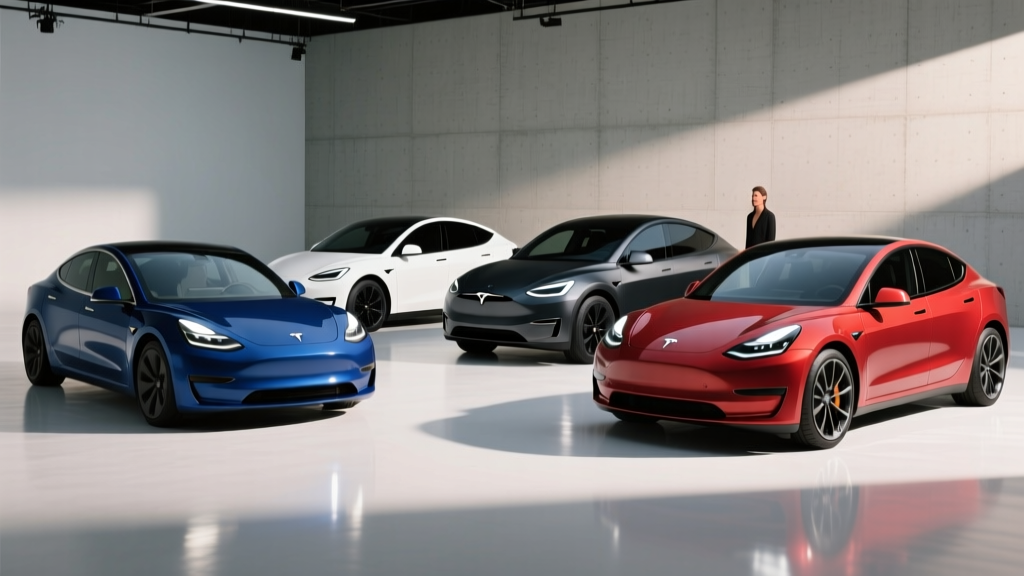
The Tesla Model 3 remains the brand's most accessible vehicle and the strongest candidate for the full $7,500 federal credit. The 2026 Model 3 lineup includes the Rear-Wheel Drive (RWD), Long Range AWD, and Performance trims.
| Trim | EPA Range | Battery (kWh usable) | Chemistry | 0-60 mph | HP | Drivetrain | MSRP |
|---|---|---|---|---|---|---|---|
| RWD | 272 mi | ~60 kWh | LFP | 5.8 sec | 271 | RWD | $38,990 |
| Long Range AWD | 363 mi | ~82 kWh | NMC | 4.2 sec | 346 | Dual-Motor AWD | $44,990 |
| Performance | 315 mi | ~82 kWh | NMC | 2.9 sec | 510 | Dual-Motor AWD | $52,990 |
All three Model 3 trims sit comfortably under the $55,000 sedan MSRP cap. The RWD trim uses a lithium iron phosphate (LFP) battery, which offers longer cycle life and less degradation over time, though at the cost of lower energy density (hence the shorter range). The Long Range and Performance use nickel-manganese-cobalt (NMC) chemistry for higher energy density.
Charging Speed
| Level | Power | Speed |
|---|---|---|
| Level 1 (120V) | ~1.4 kW | ~3–5 mi/hr |
| Level 2 (240V, 48A) | 11.5 kW | ~38–44 mi/hr |
| DC Fast Charge (peak) | 170 kW (RWD) / 250 kW (LR/Perf) | 10–80% in ~25 min (RWD) / ~18 min (LR) |
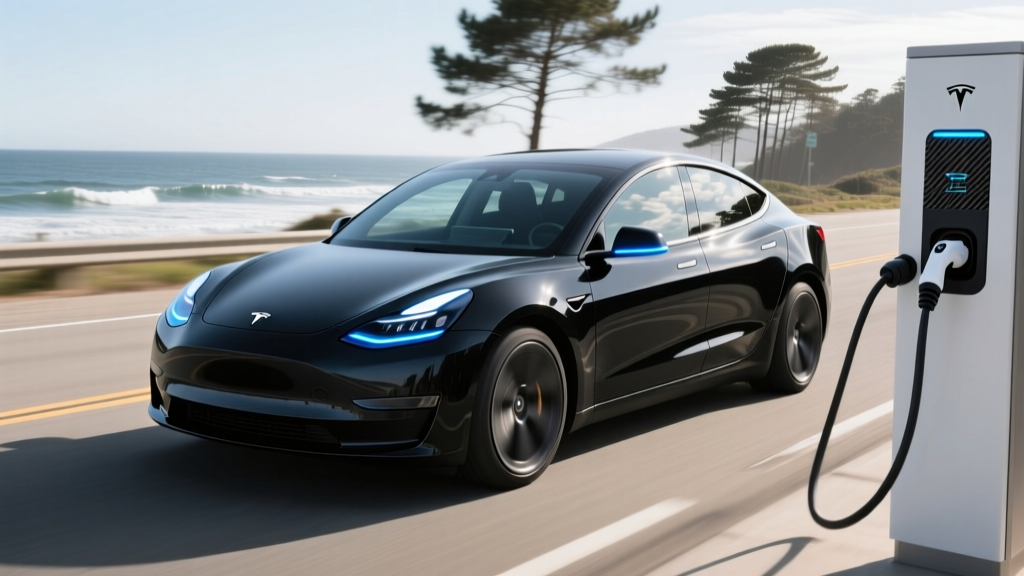
Tesla's Supercharger network remains a key ownership advantage, with reliable plug-and-charge functionality. Note that the LFP RWD Model 3 charges slower on DC — peaking at ~170 kW versus 250 kW on NMC trims. Tesla recommends charging LFP batteries to 100% regularly to maintain cell balancing, unlike NMC where daily charging to 80% is preferred for longevity.
Efficiency and Interior
The Model 3 Long Range achieves approximately 132 MPGe combined (25 kWh/100 mi), making it one of the most efficient EVs in its class. Interior space is adequate for four adults: 42.2 inches of front legroom and 35.2 inches rear, with 23 cu ft of trunk volume (including the rear sub-trunk). The frunk adds another 3.1 cu ft.
Model Y: The SUV That Still Fits the Credit Window
The Model Y is Tesla's volume leader and, because it's classified as an SUV, benefits from the higher $80,000 MSRP cap. This gives Tesla more pricing headroom while still qualifying buyers for the full credit.
| Trim | EPA Range | Battery (kWh usable) | Chemistry | 0-60 mph | HP | Drivetrain | MSRP |
|---|---|---|---|---|---|---|---|
| RWD | 295 mi | ~60 kWh | LFP | 6.6 sec | 295 | RWD | $41,990 |
| Long Range AWD | 337 mi | ~82 kWh | NMC | 4.8 sec | 384 | Dual-Motor AWD | $46,990 |
| Performance | 303 mi | ~82 kWh | NMC | 3.5 sec | 456 | Dual-Motor AWD | $51,490 |
All Model Y trims come in well under $80,000. The Long Range AWD at $46,990 is the sweet spot — before the credit, it's a competitive luxury crossover; after $7,500, it effectively costs $39,490, undercutting most gas-powered competitors in the segment.
Cargo space is where the Model Y shines: 30.2 cu ft behind the second row, expanding to 72.1 cu ft with seats folded. The optional third row (for small children) reduces behind-row-three cargo to 12.8 cu ft. Front legroom is 41.8 inches; second-row legroom is 39.5 inches — generous for the class.
Charging Speed
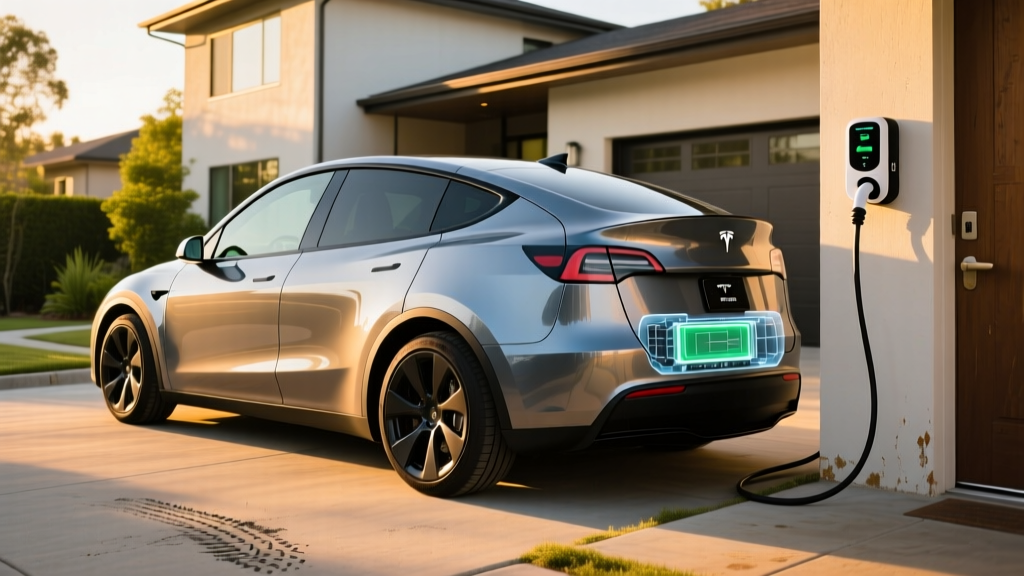
DC fast charging peaks at 250 kW for the Long Range and Performance, achieving 10–80% in approximately 20 minutes. The RWD LFP variant peaks at ~170 kW (10–80% in ~28 minutes). Level 2 home charging at 11.5 kW (48A, 240V) adds roughly 36–42 miles per hour — a full overnight charge is easily achievable.
Model S and Model X: Premium Pricing, Partial or No Credit
Here's where Tesla credit eligibility gets complicated. The Model S sedan and Model X SUV are both premium vehicles with MSRPs that approach or exceed the §30D caps.
| Model | EPA Range | Battery (kWh usable) | Chemistry | 0-60 mph | HP | MSRP | Credit Eligible? |
|---|---|---|---|---|---|---|---|
| Model S Long Range | 402 mi | ~100 kWh | NMC | 3.1 sec | 670 | $74,990 | No (exceeds $55K sedan cap) |
| Model S Plaid | 396 mi | ~100 kWh | NMC | 1.99 sec | 1,020 | $89,990 | No |
| Model X Long Range | 348 mi | ~100 kWh | NMC | 3.8 sec | 670 | $79,990 | Borderline — at cap |
| Model X Plaid | 333 mi | ~100 kWh | NMC | 2.5 sec | 1,020 | $94,990 | No |
The Model S, classified as a sedan, faces the $55,000 MSRP cap — and no current trim qualifies. The Model X, as an SUV, falls under the $80,000 cap. The Long Range trim at $79,990 technically sits at the threshold, but adding any options (paint, wheels, FSD) pushes the MSRP above $80,000 and eliminates credit eligibility. Buyers wanting the Model X credit must order a base-config vehicle and resist options.
Real Pricing: What You Actually Pay After Tesla Credits
The following table shows effective pricing for credit-eligible models, assuming the buyer meets income requirements and qualifies for the full $7,500.
| Model/Trim | MSRP | Federal Credit | Effective Price | Estimated Destination | Out-the-Door (before state incentives) |
|---|---|---|---|---|---|
| Model 3 RWD | $38,990 | -$7,500 | $31,490 | $1,390 | ~$32,880 |
| Model 3 Long Range AWD | $44,990 | -$7,500 | $37,490 | $1,390 | ~$38,880 |
| Model Y RWD | $41,990 | -$7,500 | $34,490 | $1,390 | ~$35,880 |
| Model Y Long Range AWD | $46,990 | -$7,500 | $39,490 | $1,390 | ~$40,880 |
Note that destination fees, state registration, and taxes apply on top. Some states offer additional rebates (California's CVRP, Colorado's state credit, etc.), but these vary by jurisdiction — check your state's energy office for current programs. The IRS §30D page is the authoritative source for federal credit rules.
Warranty, Tech, and Driver Assistance
Battery and Powertrain Warranty
Tesla covers the battery and drive unit for 8 years or 100,000 miles on the Model 3 RWD, and 8 years or 120,000 miles on the Model 3 Long Range/Performance and all Model Y trims. The warranty guarantees at least 70% battery capacity retention over the coverage period. Tesla's limited vehicle warranty is 4 years / 50,000 miles.
Standout Tech
Every 2026 Tesla includes a 15.4-inch center touchscreen (Model 3/Y) or 17-inch (Model S/X), over-the-air updates, and Tesla's infotainment system with streaming, gaming, and navigation. The Tesla mobile app provides remote preconditioning, charge monitoring, and vehicle location.
Driver assistance comes in three tiers:
- Basic Autopilot (included): Lane centering and adaptive cruise control — SAE Level 2, requires active driver supervision
- Enhanced Autopilot ($6,000): Adds auto lane change, autosteer on highways, smart summon, and auto park
- Full Self-Driving (Supervised) ($8,000): Adds traffic light/stop sign recognition and city street autosteer — still SAE Level 2, not autonomous
Pros and Cons: Tesla Ownership in 2026
Pros
- Supercharger network: 50,000+ global fast chargers with reliable plug-and-charge billing
- Class-leading efficiency: Model 3 LR at 132 MPGe reduces electricity cost per mile
- OTA updates continuously add features and improve performance
- Strong resale value relative to EV market average
- LFP battery option (RWD trims) offers superior cycle life and 100% daily charging
- Point-of-sale credit transfer available — no waiting for tax refund
Cons
- Minimalist interior lacks physical controls — turn signals on steering wheel buttons draw criticism
- Panel gaps and paint quality remain inconsistent across Fremont-built vehicles
- FSD (Supervised) at $8,000 adds cost without delivering true autonomy
- No Apple CarPlay or Android Auto
- Insurance premiums tend to run 15–30% higher than comparable gas vehicles
- Model S/X largely excluded from federal credit due to MSRP caps
Is a Tesla Worth It vs. Key Competitors?
Choose the Model 3 if: You want the most affordable entry into Tesla credits, prioritize efficiency (132 MPGe), and don't need SUV cargo space. The $31,490 effective price (RWD after credit) is difficult to beat for a tech-forward EV sedan.
Choose the Model Y if: You need family-friendly cargo room (30+ cu ft), prefer a higher driving position, and want dual-motor AWD for under $40K after the credit. The Model Y Long Range is arguably the best value in Tesla's lineup.
Look at competitors if: You want physical buttons and Apple CarPlay (Hyundai Ioniq 5, Kia EV6), prefer traditional dealer service (Ford Mustang Mach-E), or need 800V ultra-fast charging (Hyundai/Kia E-GMP platform charges 10–80% in ~18 min on 350 kW chargers).
Frequently Asked Questions
Does every Tesla qualify for the $7,500 federal tax credit?
No. The Model 3 and Model Y trims currently qualify for the full $7,500 credit, assuming the buyer meets income requirements (up to $300,000 MFJ). The Model S exceeds the $55,000 sedan MSRP cap entirely. The Model X Long Range sits at the $80,000 SUV cap edge and only qualifies in base configuration without options.
Can I get the Tesla credit as a point-of-sale discount?
Yes. Under current IRS rules, eligible buyers can transfer the credit to Tesla at the point of sale, reducing the purchase price by up to $7,500 upfront rather than claiming it on their tax return. You must meet the same income and eligibility requirements.
What is the real-world range of the Tesla Model 3 Long Range?
The EPA rates the Model 3 Long Range at 363 miles. In real-world highway driving at 70 mph, expect 300–320 miles. In cold weather below 30°F, plan for 250–275 miles. Preconditioning the battery before driving can recover some of this loss.
How fast does the Tesla Model Y charge at home?
On a Level 2 home charger at 240V/48A (11.5 kW), the Model Y gains approximately 36–42 miles of range per hour. A full charge from 10% to 100% takes roughly 7–8 hours, making overnight charging practical for most daily needs.
Is the Tesla Model 3 RWD's LFP battery better or worse?
It depends on your priorities. LFP (lithium iron phosphate) offers longer cycle life, less degradation, and can be charged to 100% daily without harm — ideal for commuters. The trade-off is lower energy density (272 EPA miles vs. 363 for the NMC Long Range) and slower DC fast charging (~170 kW peak vs. 250 kW).
What warranty covers Tesla's battery?
Tesla warrants the battery and drive unit for 8 years / 100,000 miles (RWD) or 8 years / 120,000 miles (Long Range/Performance), guaranteeing at least 70% capacity retention. The vehicle limited warranty is 4 years / 50,000 miles.
Source data: EPA fuel economy figures from fueleconomy.gov; IRS credit rules from irs.gov; vehicle specifications from Tesla's official product pages. Tax credit eligibility is subject to change — consult a tax professional for your specific situation.