Tesla's Safety Record: What the Crash Ratings Actually Show
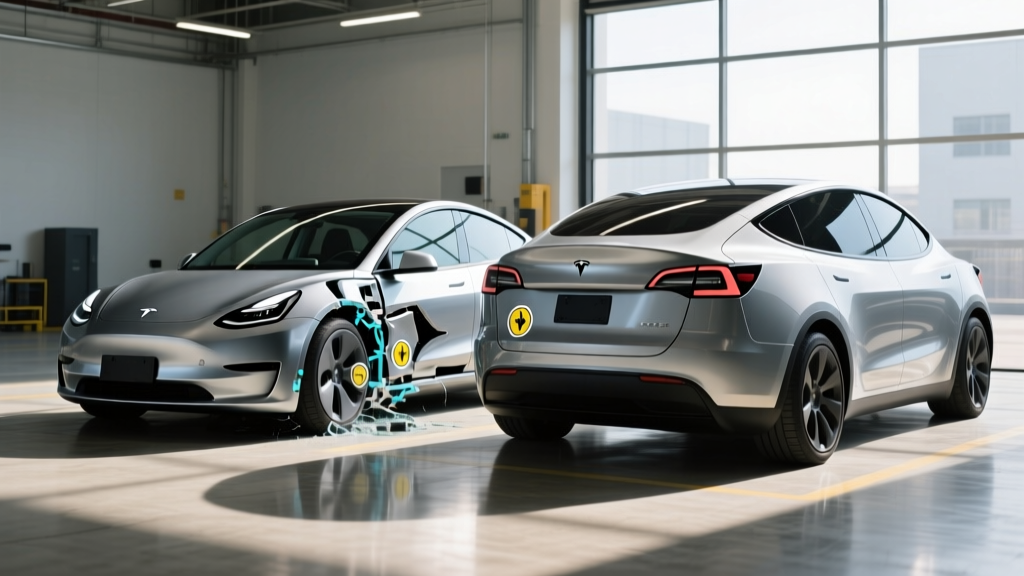
When shoppers search for crash rating Tesla data, they're usually weighing two things: whether a Tesla is genuinely safe in a collision, and whether the active-safety tech holds up in the real world. The short answer is that both the 2026 Tesla Model 3 and 2026 Tesla Model Y rank among the safest vehicles ever tested by U.S. agencies — but the details matter. NHTSA has awarded both models its maximum 5-star overall safety rating, while the IIHS has named the Model 3 a Top Safety Pick+ under its updated, stricter criteria. The Model Y has also performed exceptionally well, though IIHS testing schedules mean the latest variant results should be confirmed directly on iihs.org.
This review goes beyond the headline stars. We'll break down the specific crash-test sub-scores, the structural and battery engineering behind those results, and then cover everything else you need to decide: real-world range, charging speeds, pricing after tax credits, and how these cars compare to key rivals like the Hyundai Ioniq 6 and Ford Mustang Mach-E.
Crash Rating Tesla: NHTSA and IIHS Scores Explained
| Test Category | Model 3 (NHTSA) | Model Y (NHTSA) | IIHS Notes |
|---|---|---|---|
| Overall Rating | ★★★★★ (5/5) | ★★★★★ (5/5) | Model 3: Top Safety Pick+ |
| Frontal Crash | 5 stars | 5 stars | Good (all sub-tests) |
| Side Crash | 5 stars | 5 stars | Good |
| Rollover Risk | 5 stars (5.6% risk) | 5 stars (7.9% risk) | N/A |
| Front Crash Prevention | Superior | Superior | Superior (vehicle-to-vehicle & pedestrian) |
| Headlights | — | — | Good (acceptable on some trims) |
The Model 3's rollover risk of just 5.6% is among the lowest ever recorded by NHTSA, thanks to the skateboard battery platform that places the heaviest components inches from the ground. The Model Y, being taller, has a slightly higher 7.9% rollover risk — still exceptional for a crossover SUV. In side-impact tests, both models benefit from the absence of a transmission tunnel and the rigid battery enclosure, which acts as a structural member distributing crash forces across the full vehicle width.
Beyond Safety: Range, Battery, and Efficiency
Safety gets buyers to the showroom, but daily livability closes the deal. Here's how the 2026 lineup delivers on the metrics that matter every day.
Real-World Range Expectations
| Trim | EPA Range | Real-World Highway | Cold Weather (20°F) |
|---|---|---|---|
| Model 3 RWD | 272 mi | ~235–250 mi | ~190–215 mi |
| Model 3 Long Range AWD | 341 mi | ~290–310 mi | ~240–265 mi |
| Model 3 Performance | 315 mi | ~265–285 mi | ~220–245 mi |
| Model Y Long Range AWD | 320 mi | ~270–290 mi | ~225–250 mi |
| Model Y Performance | 293 mi | ~250–270 mi | ~205–230 mi |
Highway figures assume 70–75 mph cruising. Cold-weather estimates include heat pump benefit (standard on all 2026 models). Actual results vary with terrain, HVAC load, and driving style.
| Spec | Model 3 Long Range | Model Y Long Range |
|---|---|---|
| Battery Capacity | ~79 kWh usable (NMC) | ~79 kWh usable (NMC) |
| Model 3 RWD Battery | ~60 kWh usable (LFP) — heavier but more cycle life, 100% SoC charging OK | |
| Drivetrain | Dual Motor AWD | Dual Motor AWD |
| Horsepower | ~346 hp | ~384 hp |
| 0–60 mph | 4.2 sec | 4.8 sec |
| EPA Efficiency | 132 MPGe / 25 kWh/100mi | 122 MPGe / 28 kWh/100mi |
| Cargo Volume | 23 cu ft (rear) + 3 cu ft frunk | 34 cu ft (rear) + 4 cu ft frunk |
| Rear Legroom | 35.3 in | 37.0 in |
The LFP (lithium iron phosphate) battery in the base Model 3 RWD trades some energy density for superior longevity — Tesla recommends charging to 100% regularly, which is a genuine advantage for daily commuters who need every mile. The NMC packs in Long Range and Performance trims offer more range per pound but should be kept between 20–80% for daily use to maximize lifespan.
Charging Speed: DC Fast Charging and Home Setup
A Tesla's safety record is only useful if you can actually live with the car day to day. Charging speed remains a top buyer concern, and Tesla's Supercharger network advantage is well documented — but the raw numbers tell the full story.
| Charging Method | Model 3 / Model Y | Details |
|---|---|---|
| DC Fast Charge (Peak) | 250 kW (NACS) | Peak rate on V3 Superchargers; sustained rate lower |
| 10–80% DCFC Time | ~25–30 minutes | With battery preconditioning active |
| Level 2 Home (48A) | 11.5 kW / ~44 mi/hr | Requires 60A dedicated circuit, NEMA 14-50 or hardwired Wall Connector |
| Level 2 Home (32A) | 7.7 kW / ~30 mi/hr | Standard Mobile Connector on 240V/40A circuit |
| Level 1 (120V) | ~1.4 kW / ~5 mi/hr | Emergency/trickle only — full charge takes 3+ days |
Charging-curve reality check: The 250 kW peak rate only holds roughly between 10–30% state of charge. By 50% SoC, expect ~150 kW. By 80%, the rate drops to ~60 kW. This is why the 10–80% time is ~25 minutes even though the math at peak rate would suggest faster. Always navigate to a Supercharger using the built-in navigation to trigger battery preconditioning — arriving cold can add 10+ minutes to your session.
For home charging, Tesla's Wall Connector ($475) is one of the best Level 2 units available, but installation costs vary widely. Budget $800–$2,500 for a professional install depending on panel proximity and whether your home needs a 200A service upgrade.
Pricing, Trims, and Federal Tax Credit Eligibility
| Trim | Base MSRP | Federal Credit (§30D) | Effective Price |
|---|---|---|---|
| Model 3 RWD | $38,990 | Up to $7,500 | ~$31,490* |
| Model 3 Long Range AWD | $42,990 | Up to $7,500 | ~$35,490* |
| Model 3 Performance | $52,990 | Up to $7,500 | ~$45,490* |
| Model Y Long Range AWD | $44,990 | Up to $7,500 | ~$37,490* |
| Model Y Performance | $48,990 | Up to $7,500 | ~$41,490* |
*Effective price assumes full $7,500 credit eligibility. Your actual credit depends on multiple IRS rules.
§30D Federal Tax Credit Checklist (2026 Rules)
- MSRP cap: Sedans (Model 3) must be under $55,000; SUVs/pickups/vans (Model Y) under $80,000. All current trims qualify.
- Buyer income limits: Modified AGI ≤ $150,000 (single), $225,000 (head of household), $300,000 (joint).
- Battery sourcing: At least 80% of critical minerals must be sourced from the U.S. or FTA partners; 100% of battery components must be manufactured or assembled in North America (phased thresholds — confirm current-year requirements on irs.gov).
- Point-of-sale transfer: You can transfer the credit to the dealer at purchase for an immediate price reduction, rather than waiting for tax filing.
- One vehicle per 3 years: You may only claim one new clean vehicle credit per 3-year period.
Always verify with a tax professional. Battery sourcing requirements have tightened annually and specific VIN/build-date combinations affect eligibility.
Tech, Driver Assistance, and Ownership Experience
Tesla's infotainment remains class-leading in responsiveness: a 15.4-inch center touchscreen handles everything from climate to media to navigation with minimal lag. The 2026 refresh adds an 8-inch rear passenger screen (Model 3) and improved ambient lighting. There are no physical buttons for climate or volume — everything routes through the touchscreen, which some buyers love and others find distracting.
Autopilot comes standard and includes adaptive cruise control, lane-centering, and automatic emergency braking. FSD (Supervised) is a $8,000 add-on (or $99/month subscription) that adds automated lane changes, traffic-light recognition, and city-street navigation. Both are SAE Level 2 — you must keep your hands on the wheel and eyes on the road. Tesla's camera-only vision system (no radar or ultrasonic sensors) performs well in clear conditions but can struggle in heavy rain, fog, or construction zones.
✓ Pros
- Top-tier NHTSA 5-star + IIHS Top Safety Pick+ ratings
- Supercharger network: 17,000+ stalls in North America
- Best-in-class efficiency (Model 3 LR: 132 MPGe)
- Over-the-air updates continuously add features
- Low rollover risk from skateboard battery design
- LFP option for worry-free 100% daily charging
✗ Cons
- Camera-only Autopilot struggles in adverse weather
- No physical buttons — all controls via touchscreen
- Build quality inconsistencies still reported (panel gaps)
- FSD ($8,000) remains Level 2, not autonomous
- Insurance premiums 15–30% higher than segment average
- Rear visibility limited (no rear wiper on Model Y until 2025 refresh)
Warranty and Long-Term Battery Durability
| Component | Coverage | Details |
|---|---|---|
| Basic Vehicle | 4 years / 50,000 miles | Bumper-to-bumper, excludes wear items |
| Battery & Drive Unit | 8 years / 100,000 miles (RWD) or 120,000 miles (AWD/Performance) | Minimum 70% capacity retention guaranteed |
| Roadside Assistance | 4 years / 50,000 miles | Includes flat-tire and lockout service |
The 70% retention threshold is the trigger for a warranty claim. Real-world data from fleet operators and Tesla's own impact reports suggest average degradation of ~10–12% over 100,000 miles for NMC packs, and ~8–10% for LFP. Battery replacement out of warranty runs $12,000–$18,000 depending on pack size — a significant cost, but one that most owners won't face within typical ownership periods.
How It Compares: Model 3/Y vs. Key Competitors
| Metric | Model 3 LR | Hyundai Ioniq 6 SEL | Ford Mach-E ER AWD |
|---|---|---|---|
| EPA Range | 341 mi | 320 mi | 312 mi |
| Peak DCFC | 250 kW | 350 kW (800V) | 150 kW |
| 10–80% Time | ~28 min | ~18 min | ~40 min |
| NHTSA Overall | 5 stars | 5 stars | 5 stars |
| IIHS Rating | Top Safety Pick+ | Top Safety Pick+ | Top Safety Pick |
| Starting MSRP | $42,990 | $42,750 | $48,995 |
| Charging Network | Supercharger (native NACS) | Supercharger (NACS adapter) | Supercharger (NACS adapter) |
The Hyundai Ioniq 6's 800V architecture gives it a decisive fast-charging advantage — 18 minutes versus Tesla's 28 minutes from 10–80%. However, Tesla's Supercharger network reliability (consistently above 95% uptime) still outperforms third-party networks. For crash ratings specifically, all three earn 5 stars from NHTSA, but the Model 3 and Ioniq 6 edge ahead with IIHS Top Safety Pick+ status.
Who Should Buy a Tesla in 2026?
Decision Framework
Choose the Model 3 RWD if: You commute under 50 miles daily, want the lowest entry price (~$31,490 after credit), and value LFP battery longevity over maximum range.
Choose the Model 3 Long Range if: You take regular road trips, live in a cold climate where range loss matters, and want AWD traction.
Choose the Model Y Long Range if: You need SUV cargo space (34 cu ft), frequently carry rear passengers, or have a growing family.
Look elsewhere if: You prioritize the fastest possible DC charging (Hyundai Ioniq 6), need a physical-button interior (BMW i4), or want a third row (Kia EV9).
Frequently Asked Questions
What is the real-world range of a Tesla Model 3?
The EPA rates the 2026 Model 3 Long Range at 341 miles. In real-world highway driving at 70–75 mph, expect 290–310 miles. In cold weather (below 30°F), plan for 240–265 miles even with the standard heat pump. The RWD model with its LFP battery delivers about 272 EPA miles, with ~235–250 real-world highway miles.
How fast does a Tesla charge at home and on the road?
On a V3 Supercharger, Tesla's peak rate is 250 kW, with a 10–80% session taking approximately 25–30 minutes (with battery preconditioning). At home on a 48-amp Level 2 Wall Connector, you'll add about 44 miles of range per hour — a full overnight charge from 20% to 80% takes roughly 6–7 hours.
Does the Tesla Model 3 or Model Y qualify for the $7,500 federal tax credit?
Both models qualify for the full $7,500 §30D credit if you meet income limits ($150K single / $300K joint), the vehicle MSRP is under the cap ($55K sedans, $80K SUVs — all trims pass), and the battery meets current-year critical-mineral and North American component sourcing requirements. Rules tighten annually — verify your specific VIN's eligibility on irs.gov or with a tax professional before purchase. The credit can be transferred at point of sale for an instant price reduction.
Is Tesla still worth buying vs. competitors in 2026?
For crash safety, charging-network reliability, and efficiency, Tesla remains the benchmark. The Supercharger network alone is a significant ownership advantage. However, if fast-charging speed is your priority, the Hyundai Ioniq 6's 800V system charges noticeably faster. If interior quality and physical controls matter, the BMW i4 or Hyundai Ioniq 5 may be better fits. Tesla wins on safety data, software, and infrastructure — but the competition has closed the gap on range and build quality.
What are the biggest pros and cons of owning a Tesla?
The biggest pros are top-tier crash safety (5-star NHTSA, IIHS TSP+), the Supercharger network, class-leading efficiency, and continuous OTA improvements. The biggest cons are higher-than-average insurance costs (15–30% above competitors), the touchscreen-only control scheme that some find distracting, occasional build-quality inconsistencies, and the fact that FSD remains a Level 2 driver-assist system despite its $8,000 price tag.
How long will a Tesla battery last?
Tesla warranties the battery for 8 years / 100,000–120,000 miles (depending on trim) with a guaranteed minimum of 70% capacity retention. Fleet data suggests most packs lose 10–12% capacity over 100,000 miles. LFP batteries in the RWD model degrade more slowly and tolerate 100% charging, making them ideal for high-mileage daily drivers. Out-of-warranty replacement costs $12,000–$18,000.