The Costco Auto Program and Tesla: What EV Buyers Need to Know
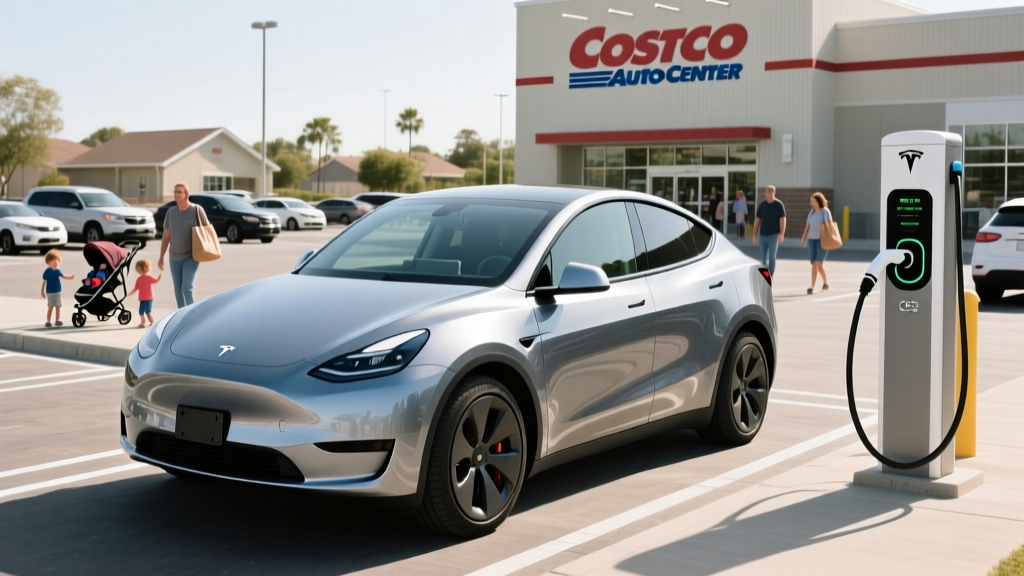
Search "Tesla Costco" and you will find thousands of forum posts, Reddit threads, and hopeful buyers asking the same question: Can I buy a Tesla through Costco's member-only car buying service? The short answer for 2026 is no — Tesla does not participate in the Costco Auto Program. The automaker's direct-to-consumer sales model bypasses franchised dealerships entirely, which is precisely the channel Costco's service relies on to negotiate member pricing.
But that does not mean Costco members are out of luck when shopping for a Tesla, nor does it mean the question is irrelevant. Understanding why Tesla sits outside Costco's network — and what it costs to buy one directly — is essential context before you configure a Model 3, Model Y, Model S, or Model X. Below, we profile the most popular Tesla vehicles with the exact specs, pricing, and tax-credit data you need to make an informed purchase, whether you are a Costco member or not.
Tesla's Direct Sales Model vs. Costco's Dealer Network
The Costco Auto Program works by connecting members with pre-approved franchised dealerships that agree to preset, no-haggle pricing on new and certified pre-owned vehicles. Members typically save between $500 and $1,500 off MSRP depending on the model, plus access member-only incentives on brands like Hyundai, Ford, and Volvo.
Tesla operates differently. Every Tesla is ordered through the company's website or app, configured to your specification, and delivered either to a local service center or directly to your door. There are no franchised dealers, no negotiated pricing, and no third-party discount programs — Costco included. Tesla's pricing is fixed nationally and visible to every buyer at the same time.
This matters for two reasons:
- No hidden dealer markups: Tesla's direct model eliminates the dealer-addendum sticker games that plague high-demand EVs at some franchises.
- No Costco-style discounts: You also will not find a preset member discount. The price you see on Tesla.com is the price you pay, period.
Costco members can use their membership to save on related EV ownership costs — tire purchases, home charging equipment through partner deals, and accessory bundles — but the vehicle itself must be purchased directly from Tesla.
2026 Tesla Model Lineup: Range, Charging, and Performance Specs
Below is a comprehensive spec breakdown of Tesla's current consumer lineup for the 2026 model year. All figures reflect EPA data and Tesla's published specifications.
| Spec | Model 3 Long Range AWD | Model Y Long Range AWD | Model S Long Range | Model X Long Range |
|---|---|---|---|---|
| EPA Range | 341 mi | 320 mi | 402 mi | 335 mi |
| Battery (usable) | ~75 kWh, NMC | ~75 kWh, NMC | ~95 kWh, NMC | ~95 kWh, NMC |
| Drivetrain | Dual-Motor AWD | Dual-Motor AWD | Dual-Motor AWD | Dual-Motor AWD |
| Horsepower | ~346 hp | ~384 hp | ~670 hp | ~670 hp |
| 0–60 mph | 4.2 sec | 4.8 sec | 3.1 sec | 3.8 sec |
| Peak DC Fast Charge | 250 kW | 250 kW | 250 kW | 250 kW |
| 10–80% DC Time | ~25 min | ~25 min | ~30 min | ~30 min |
| Level 2 (11.5 kW) | ~44 mi/hr | ~40 mi/hr | ~40 mi/hr | ~36 mi/hr |
| MPGe (combined) | 134 MPGe | 122 MPGe | 120 MPGe | 104 MPGe |
| Cargo (behind 2nd row / max) | 23 / 64 cu ft | 30 / 76 cu ft | 28 / 79 cu ft | 42 / 88 cu ft |
| Base MSRP | $47,240 | $49,990 | $79,990 | $84,990 |
Sources: EPA fueleconomy.gov, Tesla.com. Prices exclude destination fee. Specs reflect Long Range AWD trims for the 2026 model year.
Real-World Range: What the EPA Sticker Does Not Tell You
EPA vs. Real-World Range Reality Check
Model 3 Long Range: EPA 341 mi → Expect ~290–310 mi at sustained highway speeds (70–80 mph); ~240–270 mi in sub-freezing temperatures with cabin heat.
Model Y Long Range: EPA 320 mi → Expect ~270–290 mi highway; ~220–250 mi in cold weather. The crossover's larger frontal area increases aero drag at speed.
Model S Long Range: EPA 402 mi → Expect ~340–370 mi highway. The larger battery provides more buffer, but cold-weather loss still applies proportionally (~15–20%).
Model X Long Range: EPA 335 mi → Expect ~280–300 mi highway; ~230–260 mi in winter. Heavier mass and larger frontal area compound consumption.
Tesla's heat pump — standard across the current lineup — significantly reduces cold-weather range loss compared to earlier resistive-heating models, but physics remains physics. Lithium-ion batteries lose efficiency below ~40°F, and cabin heating at 20°F consumes meaningful energy even with a heat pump. On the positive side, Tesla's navigation system factors in temperature, elevation, and driving style when estimating remaining range, making the in-car range prediction one of the most accurate in the industry.
For daily commuting under 60 miles round-trip, even the most conservative real-world estimates leave substantial buffer. Range becomes a planning factor primarily on road trips exceeding 250 miles between stops — and here, Tesla's Supercharger network remains the strongest advantage in the EV market.
Charging Speed and Network: DC Fast, Level 2, and Supercharger Access
Tesla vehicles charge on three tiers, and understanding the difference between kW (power — the rate of energy flow) and kWh (energy — the battery's total capacity) is essential for interpreting these numbers.
| Level | Power (kW) | Speed (mi/hr) | Typical Use Case | Cost per Full Charge |
|---|---|---|---|---|
| Level 1 (120V) | ~1.4 kW | 3–5 mi/hr | Emergency/overnight trickle | ~$9–$13 (home electric) |
| Level 2 (240V, 48A) | 11.5 kW | 36–44 mi/hr | Daily home charging | ~$9–$13 (home electric) |
| DC Fast (Supercharger V3) | Up to 250 kW | ~1,000 mi/hr (peak) | Road trips, quick top-ups | ~$20–$35 (varies by location) |
Charging curve reality: Tesla's 250 kW peak rate applies only in the 10–30% state-of-charge window. The rate tapers progressively: expect ~150 kW around 50%, ~80 kW at 70%, and ~40 kW above 85%. A 10–80% session takes approximately 25 minutes for Model 3/Y and 30 minutes for Model S/X, but pushing to 100% can add another 20–25 minutes. For road trips, Tesla's navigation automatically preconditions the battery when routing to a Supercharger, which is critical for achieving peak charge rates in cold weather.
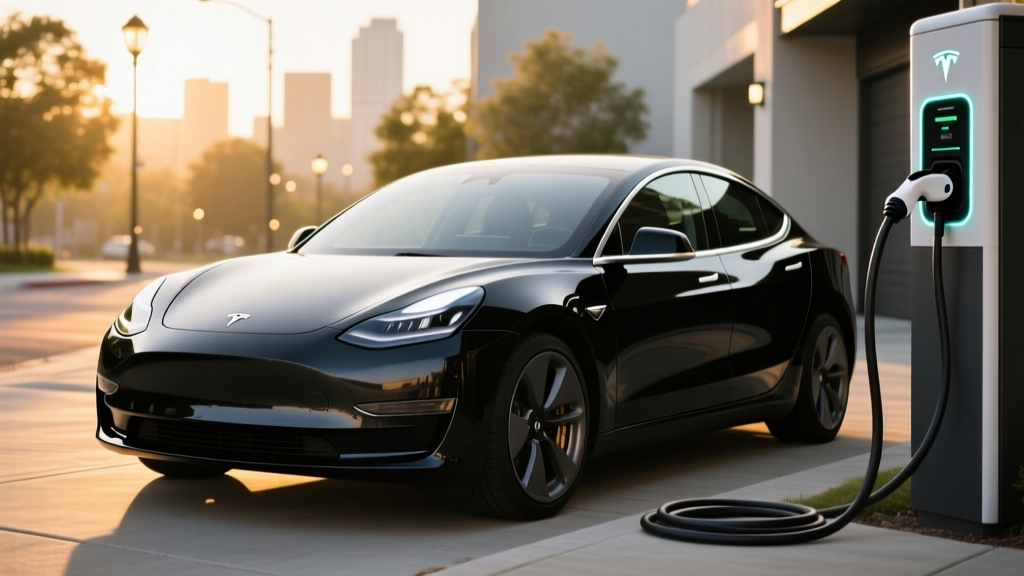
The Tesla Supercharger network now includes over 6,500 V3 and V4 stalls across North America. Since late 2024, Tesla has opened select Superchargers to non-Tesla EVs using a built-in Magic Dock CCS adapter, but Tesla owners still benefit from native NACS (North American Charging Standard) connectivity — no adapter needed, seamless plug-and-charge authentication, and integrated billing through the vehicle's touchscreen.
For home Level 2 charging, Tesla's Wall Connector ($420) delivers up to 11.5 kW on a 60-amp circuit, adding roughly 44 miles of range per hour for a Model 3. Installation costs vary widely: expect $500–$1,500 for a straightforward install near your electrical panel, or $2,000–$4,000+ if a panel upgrade or long conduit run is required. Consult a licensed electrician for a site-specific quote.
Pricing, Trim Levels, and Federal Tax Credit Eligibility
Tesla's pricing is transparent and configured online, but the final out-of-pocket cost depends heavily on federal tax credit eligibility under IRS §30D rules. Here is the current landscape for 2026:
| Model / Trim | Base MSRP | As-Tested (typical config) | §30D Credit Eligible? | Effective Price (if eligible) |
|---|---|---|---|---|
| Model 3 RWD | $38,990 | $39,990 | Yes (up to $7,500) | ~$31,490 |
| Model 3 Long Range AWD | $47,240 | $49,240 | Yes (up to $7,500) | ~$41,740 |
| Model Y Long Range AWD | $49,990 | $52,990 | Yes (up to $7,500) | ~$45,490 |
| Model S Long Range | $79,990 | $85,990 | No (exceeds MSRP cap) | $79,990+ |
| Model X Long Range | $84,990 | $91,990 | No (exceeds MSRP cap) | $84,990+ |
IRS §30D Federal Tax Credit — Key Eligibility Rules (2026)
- MSRP Cap: Sedans (Model 3) must be ≤$55,000; SUVs/pickups/vans (Model Y) must be ≤$80,000.
- Buyer Income Cap: Modified AGI ≤$150,000 (single), ≤$225,000 (head of household), ≤$300,000 (joint).
- Battery Sourcing: The credit is split into two halves ($3,750 each) — one for critical minerals sourcing and one for battery component manufacturing. Both must be met for the full $7,500. Tesla's US-built batteries and increasing domestic mineral sourcing generally qualify, but rules tighten annually.
- Point-of-Sale Transfer: Eligible buyers can transfer the credit to Tesla at purchase, reducing the sale price by up to $7,500 at the point of sale rather than waiting to claim it on their tax return.
Rules change annually. Always verify current eligibility on IRS.gov and consult a tax professional before relying on credit amounts.
For Costco members specifically: while you cannot route a Tesla purchase through Costco Auto, the federal point-of-sale credit transfer effectively provides a similar instant discount — and on the Model 3 RWD, it brings the effective price below $32,000, a compelling entry point for a 272-mile EPA-range EV with access to the Supercharger network.
Tech, Driver Assistance, and Interior: What Sets Tesla Apart
Tesla's cabin philosophy remains minimalist: a single central touchscreen (15.4" in Model 3/Y, 17" in Model S/X) handles virtually all vehicle controls, navigation, media, and climate. There is no traditional instrument cluster — speed and range display on the touchscreen's driver-side edge, supplemented by a small secondary screen for rear passengers in Model S/X.
Standout tech features:
- Over-the-air updates: Tesla pushes meaningful feature updates quarterly — new UI layouts, efficiency improvements, entertainment apps, and driver-assist refinements arrive wirelessly.
- Sentry Mode and Dashcam: All-around cameras double as a security system (recording incidents near the parked vehicle) and a multi-angle dashcam, eliminating the need for aftermarket hardware.
- Tesla app integration: Remote preconditioning, charge monitoring, location tracking, and keyless entry via phone are among the most polished in the industry.
- Frunk + trunk: All Tesla models include a front trunk (frunk) in addition to rear cargo space, adding 3–7 cu ft of secure storage depending on model.
ADAS Level Clarification — Tesla Autopilot and FSD (Supervised)
Tesla Autopilot (standard) and Full Self-Driving Capability / FSD Supervised ($8,000 option) are SAE Level 2 driver-assistance systems. The driver must remain fully engaged, hands on or near the wheel, and eyes on the road at all times. These systems do NOT make the vehicle self-driving. Only Level 4 services like Waymo's driverless robotaxis operate without a human driver. Tesla's camera-only vision system is capable on highways but requires constant supervision, and NHTSA continues to investigate Autopilot-related incidents.
Notable drawbacks:
- Phantom braking: Some owners report unexpected deceleration on Autopilot, particularly in construction zones or when large vehicles pass in adjacent lanes.
- Minimalist interior trade-offs: No physical buttons for climate or mirrors (adjusted via touchscreen) frustrates some buyers accustomed to tactile controls.
- Panel gap variability: Tesla's build quality has improved significantly, but panel-gap inconsistency remains more common than at legacy luxury automakers.
- Insurance premiums: Tesla insurance costs tend to run 15–30% higher than comparable non-Tesla EVs due to repair cost structures and claims data. Tesla's own insurance product (available in most states) uses real-time driving data to price premiums and can be competitive for safe drivers.
Warranty Coverage and Battery Longevity
Tesla's warranty structure is straightforward:
- Basic Vehicle: 4 years / 50,000 miles, whichever comes first.
- Battery and Drive Unit: 8 years / 120,000 miles (Model 3 RWD with LFP battery) or 8 years / 100,000 miles (Long Range and Performance variants, Model S, Model X), with a guaranteed minimum 70% capacity retention over the warranty period.
Real-world degradation data from Tesla's fleet reports and third-party tracking (including data aggregated by sources like Teslanorth.com) shows that NMC batteries in Long Range models typically lose 5–8% capacity over the first 100,000 miles, with degradation slowing significantly after the initial break-in period. LFP batteries in the base Model 3 RWD show excellent cycle life and can be routinely charged to 100% without the same degradation concerns as NMC chemistry — a meaningful advantage for owners who need maximum daily range from a smaller battery.
Out-of-warranty battery replacement remains a legitimate cost consideration: $12,000–$16,000 for a Model 3/Y pack and $18,000–$22,000 for Model S/X, based on current service center estimates. However, the vast majority of Tesla batteries outlast the vehicle's practical service life without requiring replacement.
Who Should Buy a Tesla — and Who Should Look Elsewhere?
Decision Framework
Choose Tesla if:
- You want access to the most reliable and extensive DC fast-charging network in North America (Superchargers).
- You value over-the-air updates that genuinely add features post-purchase.
- You prefer a no-dealer, no-haggle buying experience with transparent national pricing.
- Software integration, app control, and tech-forward UX are top priorities.
Look at competitors (Hyundai Ioniq 5, Ford Mustang Mach-E, Chevrolet Equinox EV, Rivian R1S) if:
- You want physical buttons, a traditional instrument cluster, or Apple CarPlay/Android Auto (Tesla supports neither).
- You need a Costco Auto Program dealer discount or prefer the service infrastructure of a local franchise dealer.
- You want a more luxurious interior at the Model S/X price point (BMW iX, Mercedes EQS).
- You require NACS charging today on a non-Tesla (though NACS adoption is spreading across the industry for 2025+).
Pros and Cons at a Glance
✓ Pros
- Class-leading Supercharger network access (17,000+ stalls in North America)
- Competitive efficiency (134 MPGe combined, Model 3 LR)
- Strong real-world range across lineup (272–402 mi EPA)
- Point-of-sale federal tax credit reduces effective price by up to $7,500
- OTA updates continuously improve the vehicle
- No-dealer pricing eliminates markup games
✗ Cons
- No Costco Auto Program or third-party discount participation
- No Apple CarPlay or Android Auto
- FSD ($8,000) remains Level 2 — not self-driving despite the name
- Insurance premiums run higher than segment average
- Model S/X exceed §30D MSRP cap — no federal tax credit
- Build quality improving but still inconsistent vs. legacy luxury
Frequently Asked Questions
Can I buy a Tesla through Costco Auto Program in 2026?
No. Tesla sells directly to consumers through its website and does not participate in the Costco Auto Program or any third-party dealer discount network. You must order through Tesla.com or the Tesla app.
Does Costco offer any EV-related member benefits?
Yes. Costco members can find deals on tires (including EV-rated tires), home charging accessories, and auto-care products through Costco's warehouse and online store. Some regional Costco locations have hosted EV test-drive events, but these do not include purchase discounts.
What is the cheapest Tesla available in 2026?
The Model 3 RWD at $38,990 MSRP. With the full $7,500 federal tax credit (point-of-sale transfer), the effective price drops to approximately $31,490 for eligible buyers, making it one of the most affordable long-range EVs on the market.
How long does a Tesla battery last?
Tesla's battery warranty guarantees at least 70% capacity retention for 8 years / 100,000–120,000 miles depending on the model. Real-world fleet data suggests NMC batteries degrade 5–8% over 100,000 miles, with most packs lasting well beyond 200,000 miles before approaching the 70% threshold.
Is Tesla's FSD worth $8,000?
For most buyers, no — not yet. FSD (Supervised) is an SAE Level 2 system that requires constant driver attention. It performs well on highways and can handle some city-street scenarios, but it is not autonomous driving. Standard Autopilot (included) covers adaptive cruise and lane centering adequately for most commuters. Consider FSD only if you regularly drive long highway stretches and understand its limitations.
How much does it cost to charge a Tesla at home vs. Superchargers?
Home Level 2 charging at the US average electricity rate of ~$0.16/kWh costs roughly $12 to fully charge a Model 3 Long Range (75 kWh battery). Supercharger rates vary by location and time of day, typically $0.25–$0.50/kWh, putting a full charge at $19–$38. Most owners charge at home overnight and use Superchargers primarily for road trips.
Does the Tesla Model Y qualify for the $7,500 federal tax credit?
Yes, the Model Y Long Range AWD qualifies as an SUV under IRS §30D rules (MSRP cap of $80,000 for SUVs), and at $49,990 base MSRP, it falls well within the limit. Buyer income caps and battery-sourcing requirements still apply — verify on IRS.gov before purchasing.