The Landscape: China's EV Market in 2026
If you are researching tesla competitors in china, you are looking at the most competitive electric vehicle market on Earth. China accounts for roughly 60% of global EV sales, and domestic brands have spent the last half-decade closing the gap—and in many cases, leaping ahead—of Western automakers in battery tech, software, and charging infrastructure. As of 2026, Tesla's Model 3 and Model Y still command respect for efficiency and the Supercharger network, but Chinese OEMs like BYD, NIO, XPeng, and Zeekr offer serious alternatives at lower price points with localized tech ecosystems.
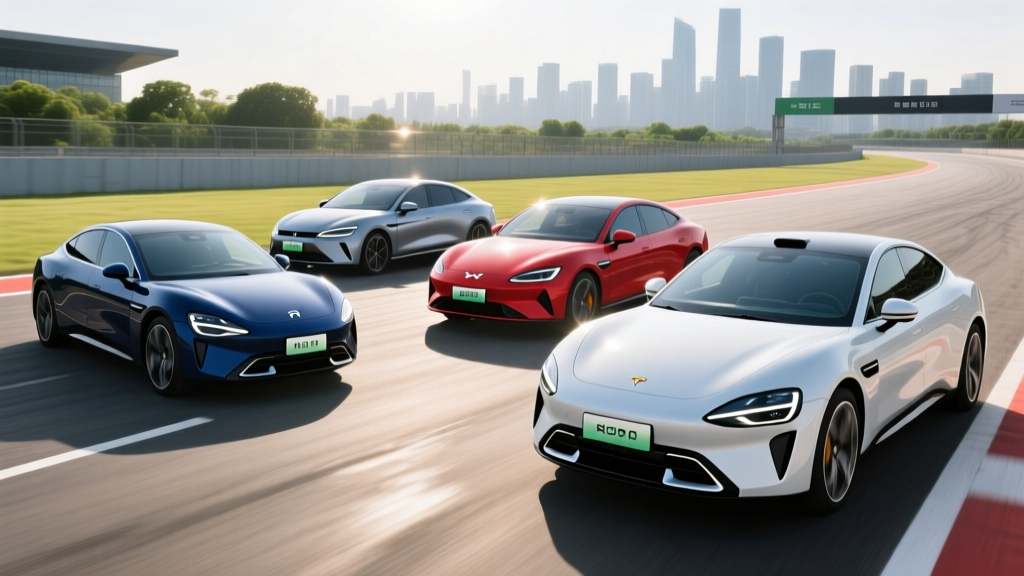
This guide profiles the four most significant Tesla competitors in China that matter to global buyers—whether you are tracking the EV industry, considering an import, or benchmarking what is coming to other markets next.
BYD Seal: The Direct Model 3 Challenger
The BYD Seal is the closest thing China has produced to a direct Tesla Model 3 rival in both form factor and ambition. Built on BYD's e-Platform 3.0, it uses the company's proprietary Blade Battery—an LFP (lithium iron phosphate) cell known for thermal stability and long cycle life rather than peak energy density.
| Spec | BYD Seal (Extended Range) |
|---|---|
| EPA-Est. Range | ~315 mi (est.)* |
| Battery | 82.5 kWh, LFP (Blade) |
| Max DC Fast Charge | 150 kW |
| 10–80% DC Charge Time | ~30 min |
| Level 2 Home Charge | 11 kW (~38 mi/hr) |
| 0–60 mph | 5.9 sec (RWD) / 3.8 sec (AWD Performance) |
| Horsepower | 312 hp (RWD) / 530 hp (AWD) |
| Drivetrain | RWD or Dual-Motor AWD |
| Efficiency | ~115 MPGe / 29 kWh/100mi |
| Cargo Volume | 14.1 cu ft trunk |
| Base MSRP (China) | ~¥189,800 (~$26,200 USD) |
| Warranty | 6 yr/150,000 km battery |
*BYD does not publish EPA figures; estimate based on CLTC-to-EPA conversion and independent testing. Always verify at fueleconomy.gov when US-spec data becomes available.
Who it suits: Urban commuters and cost-conscious buyers who prioritize battery longevity and don't need 350+ mile range. The Seal's LFP battery can handle daily 100% charges without the degradation concerns of NMC chemistry.
NIO ET7: The Premium Sedan with Battery Swapping
NIO positions the ET7 against the Tesla Model S and BMW i5, not the Model 3. Its headline feature is battery swapping: NIO operates over 2,800 swap stations across China (and expanding into Europe), letting drivers exchange a depleted pack for a full one in under 5 minutes. This eliminates the biggest friction point of EV ownership for apartment dwellers who cannot charge at home.
| Spec | NIO ET7 (100 kWh) |
|---|---|
| CLTC Range | ~435 mi (CLTC) / ~340 mi (EPA est.) |
| Battery | 100 kWh, NMC (also 75 kWh LFP option) |
| Max DC Fast Charge | 180 kW |
| 10–80% DC Charge Time | ~28 min |
| Level 2 Home Charge | 7 kW (~24 mi/hr) |
| Battery Swap Time | ~5 min (full pack exchange) |
| 0–60 mph | 3.8 sec |
| Horsepower | 644 hp (dual motor) |
| Efficiency | ~105 MPGe / 32 kWh/100mi |
| Cargo Volume | 17.7 cu ft trunk |
| Base MSRP (China) | ~¥378,000 (~$52,200 USD) w/o battery; BaaS from ¥298,000 + monthly lease |
| Warranty | 6 yr/150,000 km vehicle; battery covered under BaaS or 10 yr/unlimited w/ purchase |
Standout Tech: NIO's NOMI AI assistant, 12.8-inch AMOLED center display, 7.1.4 Dolby Atmos sound, and a full ADAS suite with LiDAR (NIO Aquila Super Sensing with 33 sensors including a 120-line LiDAR). The ET7 supports NIO's NOP+ (Navigate on Pilot), a Level 2 highway assist system—not autonomous driving.
Who it suits: Premium sedan buyers in China (or Europe, where NIO is expanding) who want Model S-level performance with battery-swap convenience. The BaaS (Battery as a Service) model lowers upfront cost but introduces a monthly fee (~¥1,280–1,680/mo).
XPeng P7+: The Software-First Challenger
XPeng has carved a niche as China's most software-forward EV maker, and the P7+ (the refreshed, larger successor to the original P7) showcases its XNGP advanced driver-assistance system, which XPeng claims covers 90%+ of urban scenarios in China. The P7+ targets the Model 3 and Model Y simultaneously with a liftback form factor and aggressive pricing.
| Spec | XPeng P7+ (Long Range) |
|---|---|
| CLTC Range | ~447 mi (CLTC) / ~350 mi (EPA est.) |
| Battery | 76.3 kWh, LFP (CATL) |
| Max DC Fast Charge | ~175 kW (800V architecture) |
| 10–80% DC Charge Time | ~20 min |
| Level 2 Home Charge | 7.2 kW (~25 mi/hr) |
| 0–60 mph | ~6.2 sec (RWD) |
| Horsepower | 276 hp (RWD single motor) |
| Efficiency | ~125 MPGe / 27 kWh/100mi |
| Cargo Volume | ~25.5 cu ft (liftback) |
| Base MSRP (China) | ~¥186,800 (~$25,800 USD) |
| Warranty | 5 yr/120,000 km vehicle; 8 yr/160,000 km battery |
Standout Tech: XNGP uses dual NVIDIA Orin-X chips (508 TOPS combined) and a sensor suite including LiDAR. In China, XPeng has mapped and validated city-level NGP across 200+ cities. The P7+ also features an 800V SiC (silicon carbide) platform enabling its rapid 10–80% charge time, and a 15.6-inch floating center screen running XPeng's proprietary OS.
Notable Drawback: XPeng's brand recognition outside China remains low, and service infrastructure in export markets is still developing. The P7+ is not currently sold in the US.
Who it suits: Tech-savvy buyers in China who value cutting-edge ADAS and rapid 800V charging over brand prestige. The P7+ is arguably the best value-to-tech ratio in the Chinese EV market right now.
Zeekr 007: Geely's Answer to the Model 3
Zeekr, Geely's premium EV brand, launched the 007 sedan to directly undercut the Tesla Model 3 on price while matching or exceeding its specs. Built on Geely's SEA (Sustainable Experience Architecture) platform—shared with the Polestar 4 and Volvo EX30—the 007 benefits from a mature global supply chain.
| Spec | Zeekr 007 (Long Range RWD) |
|---|---|
| CLTC Range | ~507 mi (CLTC) / ~380 mi (EPA est.) |
| Battery | 100 kWh, NMC (CATL Qilin) |
| Max DC Fast Charge | ~250 kW (800V) |
| 10–80% DC Charge Time | ~15 min |
| Level 2 Home Charge | 11 kW (~38 mi/hr) |
| 0–60 mph | 5.4 sec (RWD) / 2.84 sec (AWD Performance) |
| Horsepower | 421 hp (RWD) / 646 hp (AWD) |
| Efficiency | ~120 MPGe / 28 kWh/100mi |
| Cargo Volume | ~16.9 cu ft trunk + small frunk |
| Base MSRP (China) | ~¥209,900 (~$29,000 USD) |
| Warranty | 6 yr/150,000 km vehicle; 8 yr/160,000 km battery (≥70% capacity retention) |
Standout Tech: The 007 features a 35.5-inch AR-HUD (augmented reality head-up display), a 15.05-inch 2.5K OLED center screen, and Zeekr's self-developed "Haomo" ADAS with dual Orin-X chips. The 800V architecture with CATL's Qilin cells enables the class-leading 15-minute 10–80% charge—a genuine advantage on road trips where charging infrastructure exists.
Who it suits: Buyers who want the longest real-world range and fastest charging in the mid-size sedan segment at a sub-$30,000 (China) price point. The 007 is also one of the most likely Chinese EVs to reach global markets given Geely's international footprint (Volvo, Polestar, Lotus).
Side-by-Side: How They Stack Up Against Tesla
| Attribute | Tesla Model 3 LR (2026) | BYD Seal | NIO ET7 | XPeng P7+ | Zeekr 007 |
|---|---|---|---|---|---|
| EPA-Est. Range | 363 mi | ~315 mi* | ~340 mi* | ~350 mi* | ~380 mi* |
| Battery (kWh) | 75 kWh (NMC) | 82.5 kWh (LFP) | 100 kWh (NMC) | 76.3 kWh (LFP) | 100 kWh (NMC) |
| DC Charge 10–80% | ~25 min (250 kW) | ~30 min (150 kW) | ~28 min (180 kW) | ~20 min (175 kW) | ~15 min (250 kW) |
| 0–60 mph | 4.2 sec (AWD) | 5.9 / 3.8 sec | 3.8 sec | ~6.2 sec | 5.4 / 2.84 sec |
| Base Price (China) | ~¥259,900 ($35,900) | ~¥189,800 ($26,200) | ~¥298,000+ BaaS ($41,200) | ~¥186,800 ($25,800) | ~¥209,900 ($29,000) |
| ADAS Level | Level 2 (FSD Supervised) | Level 2 | Level 2 (NOP+) | Level 2 (XNGP) | Level 2 (Haomo) |
| Unique Advantage | Supercharger network, efficiency | Blade Battery safety, price | Battery swapping | Best ADAS coverage in China | Fastest charging, range |
*Estimated EPA equivalents based on CLTC conversion; Chinese-market models use CLTC, which inflates range by ~20–25% vs EPA. Verify at fueleconomy.gov for US-spec data.
Tax Credit & Import Reality for US Buyers
If you are reading this from the US and wondering whether you can buy any of these vehicles and claim the federal §30D clean vehicle credit, the short answer is: not currently. None of these Chinese-market EVs are sold in the US as of 2026, and even if they were, §30D eligibility requires:
- MSRP caps: ≤$55,000 for sedans; ≤$80,000 for SUVs/trucks
- Buyer income limits: AGI ≤$150,000 (single) / ≤$300,000 (joint)
- Battery sourcing: Critical minerals and battery components must meet escalating US/free-trade-agreement sourcing thresholds
- Final assembly: Must occur in North America
- Excluded entities: Vehicles containing battery components from a "foreign entity of concern" (FEOC)—which effectively disqualifies most Chinese-manufactured battery supply chains
The FEOC restriction, phased in for battery components in 2024 and critical minerals in 2025, makes it virtually impossible for a Chinese-built EV to qualify for the $7,500 credit under current IRS rules. This is a structural trade barrier, not a temporary policy.
Bottom line for US buyers: These vehicles matter as competitive benchmarks. The technology, pricing, and charging speeds coming from China are shaping what global automakers must deliver. Expect variants of Zeekr and BYD technology to reach Western markets under different brand names (Volvo, Polestar, or potential future badge-engineered models) with localized supply chains that can meet §30D requirements.
Pros and Cons: The Verdict on China's Top Tesla Rivals
Pros
- Price advantage: 25–40% cheaper than equivalent Tesla models at China MSRP
- 800V charging: Zeekr 007 and XPeng P7+ offer 15–20 min 10–80% charges that rival or beat Tesla's V3 Supercharging
- LFP innovation: BYD's Blade Battery sets the standard for thermal safety and cycle life
- Battery swap (NIO): Solves apartment-charging problem that plagues urban EV adoption
- ADAS sophistication: XPeng XNGP covers 200+ Chinese cities with urban navigation assist
- Build quality: Zeekr and NIO interior materials now rival German premium brands
Cons
- No US availability: Tariffs, FEOC rules, and no dealer/service network block US purchase
- No §30D tax credit: Chinese battery supply chains are excluded under current IRS rules
- CLTC range inflation: Chinese range figures overstate by ~20–25% vs EPA—always convert
- Software ecosystem lock-in: Chinese infotainment relies on Baidu, WeChat, Alipay—non-transferable to Western markets
- Resale uncertainty: No long-term depreciation data for these brands outside China
- Service infrastructure: Even in Europe, NIO and XPeng service centers are sparse
Frequently Asked Questions
What is the real-world range of these Chinese EVs?
Real-world range for Chinese-market EVs typically falls 20–30% below the published CLTC figure. For example, the Zeekr 007's 507 mi CLTC translates to roughly 380 mi EPA-equivalent, and real-world highway driving yields ~330–350 mi. The BYD Seal delivers ~250–270 mi highway. Always reduce expectations by another 15–30% in freezing temperatures, especially for LFP packs.
How fast do these EVs charge compared to Tesla?
Tesla's Model 3 charges at up to 250 kW on V3 Superchargers (10–80% in ~25 min). The Zeekr 007 matches this at 250 kW with a faster 10–80% time of ~15 min thanks to its 100 kWh pack and 800V architecture. The XPeng P7+ charges at ~175 kW but achieves 10–80% in ~20 min due to its smaller 76.3 kWh battery. The BYD Seal is the slowest of the group at 150 kW and ~30 min.
Can I buy any of these cars in the United States?
Not as of 2026. Chinese-built EVs face a 100%+ tariff (25% Section 301 tariff plus standard 2.5% auto tariff, with additional duties under consideration), and they cannot qualify for the §30D federal tax credit due to FEOC battery-sourcing exclusions. Polestar and Volvo (Geely-owned) sell related SEA-platform vehicles in the US, but these are manufactured or assembled outside China for the US market.
Does any Chinese EV qualify for the US federal tax credit?
No. The §30D credit requires North American final assembly and battery components free of FEOC (foreign entity of concern) involvement. Chinese OEM battery supply chains (CATL, BYD) are classified as FEOCs, making any vehicle using their cells ineligible regardless of where final assembly occurs.
Which Tesla competitor in China has the best technology?
For ADAS, XPeng's XNGP is widely regarded as the most capable urban navigation-assist system in China. For charging speed, the Zeekr 007's 800V/250 kW system is class-leading. For innovation, NIO's battery-swap ecosystem is unique in solving the home-charging barrier. For battery safety and longevity, BYD's LFP Blade Battery remains the benchmark.
Are these EVs actually better than Tesla?
It depends on the metric. On price-per-spec, the BYD Seal and XPeng P7+ are objectively cheaper. On charging speed, the Zeekr 007 beats the Model 3. On energy efficiency (kWh/100mi), Tesla still leads. On charging network access, Tesla's Supercharger network remains unmatched globally. The honest answer is that Chinese competitors match Tesla on most specs and beat it on price, but Tesla retains advantages in efficiency, software polish, and charging infrastructure outside China.