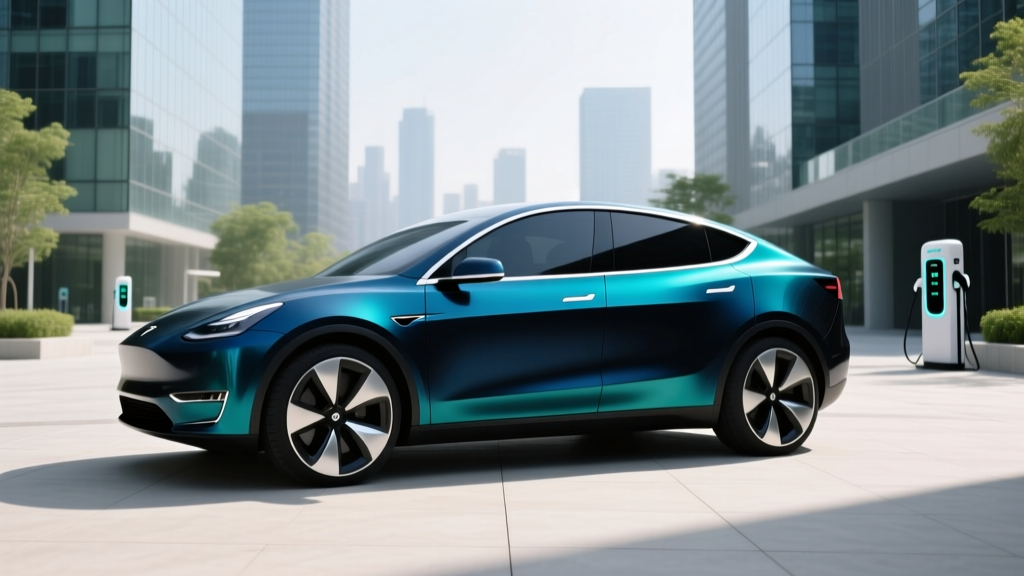
If you've been following EV news, you've likely seen the headlines: Tesla compact SUV plans have dominated industry chatter ever since Reuters broke a series of reports about Tesla's next-generation vehicle platform aimed squarely at the affordable crossover segment. With the global EV market intensifying and competitors like BYD, Hyundai, and Chevrolet pushing sub-$35,000 electric crossovers, Tesla's response — often referred to internally and in media as the "Model 2," "Redwood," or simply the next-gen compact — could be the most consequential vehicle launch of the decade.
But here's the critical thing every prospective buyer needs to understand: as of early 2026, Tesla has not officially launched or opened orders for a compact SUV. What we have are credible reporting threads from Reuters, earnings call breadcrumbs from Tesla executives, supply-chain leaks, and a lot of educated speculation. This article separates confirmed facts from forecasts, gives you the most reliable data points available, and helps you decide whether to wait or buy now.
What Reuters Actually Reported About Tesla's Compact SUV
Reuters published a series of investigative pieces beginning in 2023 and extending into 2025 detailing Tesla's internal plans for a next-generation vehicle built on a dramatically reengineered platform. The key claims from Reuters' April 2024 report and subsequent updates include:
- Target price: Approximately $25,000 USD at launch, making it Tesla's most affordable vehicle ever
- Platform: A next-generation architecture featuring Tesla's "unboxed" manufacturing process — assembling vehicles in modular sub-sections rather than the traditional sequential assembly line
- Production timeline: Originally targeted for late 2025; Reuters reporting in mid-2025 suggested delays pushing volume production into 2026 or early 2027
- Form factor: A compact crossover/SUV — the segment with the highest global demand — rather than a hatchback or sedan
- Robotaxi variant: Plans for a dedicated autonomous version without a steering wheel, though this remains speculative and regulatory-dependent
It's important to note that Reuters cited anonymous sources and internal documents. Tesla itself has never published an official spec sheet, pricing, or confirmed launch date for this vehicle. Elon Musk referenced the next-gen platform during multiple earnings calls but has been deliberately vague about timelines and final specifications.
Expected Specifications: What the Supply Chain Tells Us
While we can't present unreleased specs as confirmed, we can piece together reasonable estimates based on supplier reports, patent filings, and Tesla's own engineering trajectory. Here's what industry analysts and EV-focused publications project for the compact SUV:
| Attribute | Estimated Value | Confidence Level |
|---|---|---|
| EPA Range (est.) | 250–300 miles | Medium |
| Battery Capacity | ~50–60 kWh usable | Medium |
| Battery Chemistry | LFP (Lithium Iron Phosphate) | High |
| Drivetrain | RWD base / AWD optional | Medium |
| 0–60 mph (base RWD) | ~5.5–6.5 seconds | Low |
| Peak DC Fast Charge | ~170–200 kW (est.) | Low |
| 10–80% DC Charge Time | ~22–28 minutes (est.) | Low |
| Level 2 Home Charging | ~11.5 kW / ~35 mi/hr | Medium |
| Base MSRP | ~$25,000 (target) | Medium |
| Body Style | Compact crossover SUV | High |
Why LFP Chemistry Is Almost Certain
Tesla has already transitioned its standard-range Model 3 and Model Y vehicles to LFP (lithium iron phosphate) battery cells, primarily sourced from CATL. LFP offers several advantages for a budget-oriented compact SUV:
- Lower cost per kWh: LFP cells avoid expensive cobalt and nickel, reducing battery pack cost by an estimated 15–20% versus NMC
- Longer cycle life: LFP batteries typically sustain 3,000+ full charge cycles before significant degradation — well beyond the vehicle's expected lifespan
- Safety: LFP chemistry is more thermally stable, with a higher threshold for thermal runaway
- 100% daily charging: Unlike NMC, Tesla recommends charging LFP batteries to 100% regularly for accurate state-of-charge calibration
The trade-off: LFP has lower energy density than NMC, meaning a heavier pack for the same range. For a compact SUV with a ~250–300 mile target, this is an acceptable engineering compromise — and it's why virtually every analyst expects LFP in the base model.
Real-World Range Expectations: Beyond the EPA Sticker
EPA Estimate (projected): 250–300 miles
Real-World Highway (70 mph, moderate climate): ~210–260 miles
Real-World Cold Weather (below 32°F, highway): ~175–220 miles
Real-World City (stop-and-go with regen): ~260–310 miles
Note: These are modeled estimates based on comparable Tesla vehicles and LFP pack behavior. Actual figures will depend on final vehicle weight, aerodynamics, and thermal management.
Range in a compact, budget-oriented EV is a function of battery size, vehicle weight, aerodynamic drag, and drivetrain efficiency. Tesla's existing vehicles are among the most efficient in the industry — the Model Y achieves roughly 3.5–4.0 miles per kWh in mixed driving. If the compact SUV carries a ~55 kWh usable pack and achieves similar efficiency, a 250-mile EPA rating is plausible, with 300 miles possible on a higher trim with an extended-range pack.
Cold weather remains the great equalizer for all EVs. LFP batteries are more sensitive to low temperatures than NMC, and without an advanced heat pump (which Tesla has included in recent Model Y refreshes), expect 20–30% range reduction in sub-freezing conditions. This is a critical consideration for buyers in northern climates.
Charging Speed: What to Expect at Home and on the Road
Charging speed is arguably the single most important spec for EV ownership satisfaction — more than 0–60 times, and sometimes even more than range. Here's what we can reasonably project for the Tesla compact SUV:
| Charging Level | Power / Rate | Estimated Speed | Use Case |
|---|---|---|---|
| Level 1 (120V household) | ~1.4 kW | ~4–5 miles/hour | Emergency / overnight trickle |
| Level 2 (240V home) | ~11.5 kW | ~35 miles/hour | Daily home charging |
| DC Fast Charge | ~170–200 kW peak | 10–80% in ~22–28 min | Road trips |
A few important nuances:
- Peak kW is not sustained kW. Like all EVs, the compact SUV will hit peak charge rate only in a narrow state-of-charge window (typically 10–40% SoC). Above 80%, charging slows dramatically to protect the battery — this is called the charge curve taper. Plan road-trip stops around the 10–80% window for optimal speed.
- Supercharger access is a major advantage. Tesla's Supercharger network remains the most reliable and widespread DC fast-charging network in North America, with over 6,000 stalls in the US alone. The compact SUV will almost certainly use the NACS connector natively.
- Home charging is the daily reality. At ~11.5 kW on a Level 2 wall connector, a full charge from 10% to 100% would take roughly 5 hours — meaning overnight charging easily covers any daily commute.
Pricing, Tax Credits, and the $25,000 Question
The headline number — $25,000 — comes from Tesla's stated ambition and Reuters' sourcing. But several factors will determine the real cost to buyers:
Projected Pricing Tiers
- Base RWD: ~$25,000–$28,000 MSRP (if the target holds)
- Long Range RWD: ~$30,000–$33,000 MSRP (larger battery pack)
- AWD / Dual Motor: ~$33,000–$37,000 MSRP
Federal Tax Credit Eligibility (§30D)
Under current IRS §30D rules, a new EV can qualify for up to $7,500 in federal tax credits, split into two halves:
- $3,750 — Battery components manufactured or assembled in North America (percentage thresholds increase annually)
- $3,750 — Critical minerals sourced from the US or free-trade-agreement partners
Here's where it gets complicated for the Tesla compact SUV:
- If Tesla uses CATL-sourced LFP cells (currently manufactured in China), the battery-sourcing requirements could disqualify the vehicle from one or both halves of the credit — or potentially all of it under the Foreign Entity of Concern (FEOC) rules that restrict credits for vehicles with battery components from certain Chinese entities.
- Tesla has been working to localize its LFP supply chain, including potential North American cell production partnerships. If they achieve sufficient domestic sourcing by launch, the full $7,500 credit could apply.
- The MSRP cap for SUVs is $80,000 and for sedans is $55,000 — the compact SUV will easily clear this threshold.
- Buyer income caps apply: $150,000 single / $300,000 joint filers (modified AGI).
- As of 2024, the credit can be transferred to the dealer at point of sale, effectively reducing the purchase price upfront rather than waiting for tax filing.
Competitive Landscape: What It's Up Against
The compact SUV doesn't launch into a vacuum. By the time it reaches showrooms, it will face formidable competition:
| Vehicle | EPA Range | Base MSRP | DC Fast Charge (Peak) | Key Advantage |
|---|---|---|---|---|
| Chevrolet Equinox EV | 319 mi | ~$33,600 | 150 kW | Proven range, GM Ultium platform |
| Hyundai Kona Electric | 261 mi | ~$32,975 | 100+ kW | Value, warranty, NACS adapter |
| Kia EV3 (US launch TBD) | ~300 mi (WLTP) | ~$30,000 (est.) | ~150 kW | Design, interior space efficiency |
| Volvo EX30 | 265 mi | ~$34,950 | 153 kW | Premium build, compact footprint |
| Tesla Compact SUV (projected) | 250–300 mi (est.) | ~$25,000 (target) | ~170–200 kW (est.) | Price, Supercharger network, software |
Tesla's advantages are clear if the pricing target holds: undercutting the competition by $5,000–$10,000 while offering native Supercharger access and Tesla's software ecosystem (navigation, over-the-air updates, mobile app). But competitors offer proven availability today, established dealer networks for service, and in some cases longer confirmed EPA range.
Who Should Wait — and Who Should Buy Now
Wait for the Tesla compact SUV if:
- Your current vehicle has 1–2 years of useful life left
- You're targeting the sub-$30,000 EV segment specifically
- Supercharger network access is a priority for your road-trip habits
- You value Tesla's software, OTA updates, and app integration
- You're comfortable with the risk of delays (Tesla timelines are notoriously optimistic)
- You need a vehicle within the next 6 months
- You want confirmed EPA range and specs, not projections
- Local service and dealer support matter to you (Tesla's service network is thinner than legacy automakers)
- You want to lock in current §30D tax credit eligibility with a confirmed qualifying vehicle
- You need AWD immediately for snow-belt driving
Warranty, Service, and Ownership Considerations
Based on Tesla's current warranty structure, we can project the compact SUV will carry:
- Vehicle Limited Warranty: 4 years / 50,000 miles (whichever comes first)
- Battery & Drive Unit Warranty: 8 years / 100,000 miles (minimum 70% battery capacity retention)
Tesla's battery warranty is competitive with the industry standard (most EVs offer 8yr/100,000mi on the battery pack). However, Tesla's service experience remains a pain point for many owners — service center wait times can stretch weeks in high-demand markets, and mobile service coverage is uneven. For a $25,000 vehicle attracting first-time EV buyers, this could be a friction point compared to the established dealer-service infrastructure of Chevrolet, Hyundai, or Kia.
Frequently Asked Questions
What is the real-world range of the Tesla compact SUV?
Since the vehicle is not yet released, we don't have confirmed EPA or real-world data. Based on projected ~55 kWh LFP battery and Tesla's typical efficiency, expect 250–300 miles EPA, with real-world highway driving yielding roughly 210–260 miles, and cold-weather highway driving dropping to 175–220 miles. These are estimates — confirmed numbers will come when Tesla publishes official specs.
How fast does it charge at home and on DC fast chargers?
Projected Level 2 home charging at ~11.5 kW should deliver roughly 35 miles of range per hour of charging. DC fast charging is estimated at 170–200 kW peak, with a 10–80% session taking approximately 22–28 minutes. Remember that peak kW is only sustained briefly — actual average charge rate during a session will be lower due to the charge curve taper above 80% SoC.
How much will it actually cost after tax credits?
If the $25,000 target MSRP holds and the vehicle qualifies for the full $7,500 §30D federal tax credit, the effective price could drop to ~$17,500. However, battery-sourcing rules (FEOC restrictions on Chinese-manufactured components) could reduce or eliminate the credit if Tesla relies on CATL LFP cells without sufficient North American localization. Realistically budget $25,000–$32,000 and verify credit eligibility on the official IRS clean vehicle credit page before purchasing.
Is it worth waiting for vs. buying a competitor now?
If you can wait 12–18 months and the pricing target is met, the Tesla compact SUV could offer unmatched value in the segment — particularly with Supercharger access. But if you need a vehicle now, the Chevrolet Equinox EV (319 mi EPA, ~$33,600) and Hyundai Kona Electric (261 mi, ~$32,975) are proven, available alternatives with confirmed tax credit eligibility and established service networks.
Does it qualify for the federal EV tax credit?
This is unconfirmed and depends entirely on battery sourcing at time of production. Under current IRS §30D rules, the vehicle must meet battery-component and critical-mineral sourcing thresholds (which tighten annually) and must not contain components from designated Foreign Entities of Concern. Tesla's use of Chinese-sourced LFP cells is the key risk factor. Check the fueleconomy.gov tax credit database once the vehicle is officially listed for a definitive answer.
Will the compact SUV have Autopilot or FSD?
Based on Tesla's current strategy, basic Autopilot (Traffic-Aware Cruise Control + Autosteer) will likely be standard. Full Self-Driving (Supervised) — which remains an SAE Level 2 driver-assistance system requiring active driver engagement — would likely be an optional paid upgrade. Do not expect a Level 4 driverless experience; even Tesla's FSD requires hands-on-wheel attention and driver supervision at all times.
What about the robotaxi version?
Reuters and other outlets have reported that Tesla plans a dedicated robotaxi variant without a steering wheel or pedals. However, this variant faces enormous regulatory hurdles — no US federal framework currently allows sale of a vehicle without manual driving controls to consumers. Consider the robotaxi version a long-term aspiration rather than a near-term purchase option.