Tesla's Cold-Weather Range Reality: What the EPA Sticker Doesn't Tell You
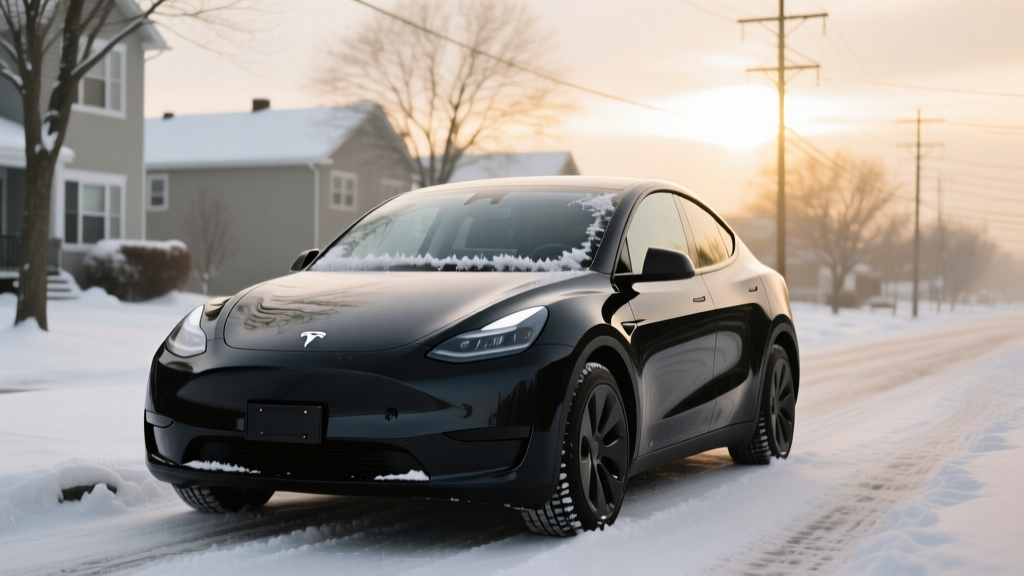
If you live where temperatures regularly dip below freezing, you've probably wondered how a Tesla holds up in winter. The short answer: all EVs lose range in cold weather, but Teslas have some built-in advantages — and some notable limitations — that set them apart from competitors. This isn't theoretical. Cold weather range loss is one of the most consequential ownership factors for EV buyers in northern climates, and Tesla's lineup responds to it differently depending on battery chemistry, drivetrain, and thermal management.
In this guide, we break down exactly what happens to Tesla range, charging speed, and efficiency when temperatures drop — across the Model 3, Model Y, Model S, and Model X lineup as sold in the 2025–2026 model years. We'll give you the EPA numbers, the real-world winter expectations, and the ownership strategies that minimize cold-weather pain.
Why Cold Weather Hits EV Range So Hard
Electric vehicles face two compounding penalties in cold weather. First, lithium-ion battery cells experience increased internal resistance at low temperatures, which reduces the usable energy the battery can deliver. Second, unlike a gas car that uses waste engine heat to warm the cabin, an EV must generate heat from scratch — using energy directly from the traction battery.
Tesla addresses this with a heat pump (standard on all current Model 3, Model Y, Model S, and Model X vehicles), which is significantly more efficient than resistive heating. A heat pump moves heat rather than generating it, typically consuming 1–2 kW for cabin warming versus 4–6 kW for resistive elements. But even with a heat pump, winter energy demands are substantially higher.
The physics are unavoidable: at 20°F (-7°C), expect a Tesla to use roughly 25–35% more energy per mile than in 70°F conditions. At 0°F (-18°C), that penalty can climb to 40% or more, depending on driving speed, cabin heat settings, and trip length.
Tesla Model Lineup: EPA Range vs. Real-World Winter Range
Here's where rubber meets ice. Below is a breakdown of the current Tesla lineup with EPA estimates and realistic cold-weather expectations based on owner data, independent testing, and the well-documented ~30% average winter range reduction for EVs with heat pumps.
EPA range estimates are measured at moderate temperatures (roughly 68–77°F) on standardized drive cycles. In sustained sub-freezing conditions (20°F and below), expect Tesla vehicles to deliver 65–80% of their EPA-rated range, depending on trip length, speed, and preconditioning. Short trips in extreme cold hit hardest because the battery and cabin must be heated from cold every time.
| Model & Trim | EPA Range | Est. Winter Range (20°F) | Battery (kWh usable) | Chemistry | Drivetrain |
|---|---|---|---|---|---|
| Model 3 RWD | 272 mi | ~185–215 mi | ~57 kWh | LFP | RWD |
| Model 3 Long Range AWD | 341 mi | ~235–270 mi | ~75 kWh | NMC | AWD (Dual Motor) |
| Model 3 Performance | 315 mi | ~215–250 mi | ~75 kWh | NMC | AWD (Dual Motor) |
| Model Y Long Range AWD | 320 mi | ~220–255 mi | ~75 kWh | NMC | AWD (Dual Motor) |
| Model Y Performance | 285 mi | ~195–225 mi | ~75 kWh | NMC | AWD (Dual Motor) |
| Model S Long Range | 402 mi | ~280–320 mi | ~95 kWh | NMC | AWD (Dual Motor) |
| Model X Long Range | 335 mi | ~230–270 mi | ~95 kWh | NMC | AWD (Dual Motor) |
Sources: EPA / fueleconomy.gov, Tesla spec sheets. Winter range estimates based on aggregated owner-reported data and independent testing at sustained 20°F with heat pump active, highway speeds ~65 mph.
LFP vs. NMC: How Battery Chemistry Affects Cold Performance
Not all Tesla batteries handle cold the same way. The base Model 3 RWD uses LFP (lithium iron phosphate) chemistry, while Long Range, Performance, Model S, and Model X variants use NMC (nickel manganese cobalt). This distinction matters significantly for winter owners.
| Factor | LFP (Model 3 RWD) | NMC (Long Range / Performance / S / X) |
|---|---|---|
| Cold range retention | Slightly worse (~30–40% loss) | Better (~25–35% loss) |
| Cold DC charging speed | Slower ramp-up; needs more preconditioning | Faster ramp-up to peak kW |
| Recommended SoC for daily use | 100% (Tesla recommends) | 80% daily, 100% for trips |
| Energy density | Lower (heavier pack for same kWh) | Higher (more range per pound) |
| Cycle life / longevity | Superior (3,000+ cycles) | Good (1,500–2,000 cycles) |
| Cost | Lower (reflected in base price) | Higher |
The practical takeaway for cold-climate buyers: if you choose the LFP-equipped Model 3 RWD to save money, expect a steeper winter range penalty and slower cold-weather DC charging. The preconditioning system helps, but LFP cells are inherently more sluggish at low temperatures. For buyers in Minnesota, Wisconsin, Maine, or mountain states, the Long Range AWD with NMC is the more winter-capable choice — you get dual-motor traction, a larger battery buffer, and better cold-weather charge acceptance.
Charging in the Cold: Speeds, Preconditioning, and What to Expect
Cold weather doesn't just reduce range — it also slows DC fast charging. A Tesla that peaks at 250 kW on a warm day may only pull 80–120 kW when the battery is cold and unplugged. Tesla's navigation-based battery preconditioning mitigates this: when you route to a Supercharger, the car begins warming the battery 10–20 minutes before arrival, significantly improving charge acceptance.
| Charging Method | Warm Weather | Cold Weather (20°F, preconditioned) | Cold Weather (no preconditioning) |
|---|---|---|---|
| Level 1 (120V / 12A) | ~1.4 kW (~4 mi/hr) | ~1.4 kW (~3 mi/hr, some energy to heating) | ~1.4 kW (~2–3 mi/hr) |
| Level 2 (240V / 48A) | ~11.5 kW (~37 mi/hr) | ~11.5 kW (~32 mi/hr, net) | ~9–11 kW (~25–30 mi/hr) |
| DC Fast (Supercharger V3) | Peak 250 kW; 10–80% in ~25–30 min | Peak ~200–230 kW; 10–80% in ~30–35 min | Peak ~80–130 kW; 10–80% in ~45–60 min |
Key insight: Always navigate to a Supercharger using the car's built-in navigation, even if you know the route. This triggers preconditioning and can cut your charging time nearly in half compared to arriving with a cold battery. For home Level 2 charging, a Tesla Wall Connector on a 60A circuit delivers up to 11.5 kW — enough to fully replenish any Tesla overnight, even in deep cold, provided you leave it plugged in.
Leaving your Tesla plugged in during winter is strongly recommended. The car uses grid power (not battery energy) to maintain battery temperature, preserving your range for actual driving. Set your charge limit to 80% for NMC vehicles or 100% for LFP, and use scheduled departure to time the battery warming for your commute.
Performance, Efficiency, and Practical Specs
Cold weather doesn't just affect range and charging. Here's a complete performance and practicality snapshot for the most popular Tesla models, with notes on how winter changes the picture.
| Spec | Model 3 LR AWD | Model Y LR AWD | Model S LR |
|---|---|---|---|
| 0–60 mph | 4.2 sec | 4.8 sec | 3.1 sec |
| Horsepower | ~346 hp | ~384 hp | ~670 hp |
| EPA Efficiency (MPGe) | 134 MPGe combined | 122 MPGe combined | 120 MPGe combined |
| kWh / 100 mi | 25 kWh/100mi | 28 kWh/100mi | 28 kWh/100mi |
| Winter efficiency (est.) | ~32–35 kWh/100mi | ~36–40 kWh/100mi | ~36–40 kWh/100mi |
| Cargo (rear seats up) | 23 cu ft | 30 cu ft | 28 cu ft |
| Cargo (seats folded) | — | 72 cu ft | — |
| Rear legroom | 35.3 in | 41.6 in | 40.9 in |
All dual-motor Teslas deliver excellent winter traction. The instant torque vectoring between front and rear motors provides stability control that rivals dedicated AWD systems from traditional automakers. However, winter tires remain the single biggest upgrade for cold-climate Tesla owners — all-season tires on a heavy EV lose significant grip below 45°F.
Pricing, Tax Credits, and Total Winter Ownership Cost
Tesla's pricing has shifted frequently, but here's the current landscape for the 2025–2026 model year. Federal tax credit eligibility under IRS §30D depends on MSRP caps ($55,000 for sedans, $80,000 for SUVs/trucks), buyer income limits ($150K single / $300K joint modified AGI), and battery component / critical mineral sourcing requirements that have tightened significantly since 2024.
| Model & Trim | Base MSRP | §30D Credit Eligible? | Effective Price (est.) |
|---|---|---|---|
| Model 3 RWD | $38,990 | Partial (varies by sourcing) | ~$35,240–$38,990 |
| Model 3 Long Range AWD | $45,240 | Partial (varies by sourcing) | ~$41,490–$45,240 |
| Model 3 Performance | $52,990 | Eligible (under $55K sedan cap) | ~$45,490–$52,990 |
| Model Y Long Range AWD | $44,990 | Partial (varies by sourcing) | ~$41,240–$44,990 |
| Model Y Performance | $48,990 | Partial (varies by sourcing) | ~$45,240–$48,990 |
| Model S Long Range | $79,990 | Eligible (under $80K SUV cap*) | ~$72,490–$79,990 |
| Model X Long Range | $79,990 | Eligible (under $80K SUV cap) | ~$72,490–$79,990 |
*Model S is classified as a sedan for the $55K MSRP cap — it exceeds this limit and does NOT qualify. Model X is classified as an SUV under the $80K cap. Credit eligibility changes frequently based on battery sourcing rules; always verify current status at irs.gov and consult a tax professional. Point-of-sale transfer is available for eligible buyers. Income caps: $150K single / $225K head of household / $300K joint MAGI.
For winter ownership specifically, budget for a set of dedicated winter tires ($800–$1,400 for a set of four, mounted) and consider a home Level 2 charger installation ($500–$2,000 depending on electrical panel capacity). These aren't optional luxuries in cold climates — they're essential for safety and daily usability.
Tesla's Winter Tech Advantages (and Drawbacks)
Tesla equips all current vehicles with features specifically designed for cold weather. Here's what works well — and what doesn't.
Standout Winter Features
- Heat pump (standard all models): 2–3x more efficient cabin heating than resistive systems, preserving more battery for driving.
- Battery preconditioning: Automatic when navigating to a Supercharger; warms cells for faster charging.
- Scheduled departure: Pre-warms battery and cabin while plugged in using grid power — the single most effective cold-weather feature.
- Heated seats and steering wheel (all positions): Uses far less energy than cabin air heating; allows you to lower cabin temp and still stay comfortable.
- Dual-motor AWD traction: Instant torque vectoring provides excellent snow and ice traction with proper tires.
- Over-the-air updates: Tesla continually refines thermal management algorithms; your car may actually improve its cold-weather performance over time.
Notable Winter Drawbacks
- No physical buttons: Adjusting climate settings requires the touchscreen — frustrating with gloves on or when you need quick defrost adjustments.
- Flush door handles: Can freeze shut in ice storms; Tesla's app-based preheating helps, but it's a recurring annoyance.
- Frameless windows: Prone to ice sealing against the weather strip; can make doors difficult to open after freezing rain.
- LFP cold penalty: Base Model 3 RWD owners face steeper range loss and slower charging in extreme cold.
- Autopilot sensor limitations: Cameras can be obscured by road salt spray, slush, and heavy snow — driver attention requirements become even more critical in winter conditions. Tesla's Autopilot and FSD (Supervised) are SAE Level 2 systems requiring full driver engagement at all times.
✅ Pros for Cold-Weather Owners
- Heat pump standard across lineup
- Excellent Supercharger network reliability in winter
- Scheduled departure preconditioning is best-in-class
- Dual-motor AWD with instant traction control
- OTA updates improve thermal management over time
- Heated seats/steering wheel at all positions
❌ Cons for Cold-Weather Owners
- 25–40% range loss in sustained sub-freezing temps
- LFP models hit hardest by cold weather
- Flush handles and frameless windows freeze
- Touchscreen-only controls difficult with gloves
- Camera-based ADAS degraded by salt/snow buildup
- No spare tire on any model
Who Should Buy a Tesla for Cold-Weather Driving?
The Tesla lineup isn't equally suited to every winter scenario. Here's a practical decision framework based on real ownership patterns:
Cold-Climate Buyer Decision Framework
Choose Model 3 Long Range AWD if: You commute 30–60 miles daily in freezing temps, need reliable range headroom, and want the best balance of winter capability and price. The NMC battery and 341-mile EPA range give you ~235+ real winter miles — enough for most commutes with margin.
Choose Model Y Long Range AWD if: You need cargo space for winter gear, ski equipment, or family hauling. The 30 cu ft rear cargo area and available 72 cu ft with seats folded make it the practical winter SUV. AWD with winter tires handles unplowed roads confidently.
Choose Model S Long Range if: You regularly drive 200+ miles in winter and need the maximum buffer. The 402-mile EPA range means ~280+ miles even in deep cold — enough for most single-day winter road trips without charging.
Avoid the Model 3 RWD (LFP) if: You live where temperatures regularly drop below 10°F and your daily driving exceeds 100 miles round trip. The smaller LFP battery, combined with steeper cold-weather losses, may leave you range-stressed. If budget demands the RWD, ensure you have reliable home Level 2 charging and keep trips short.
Skip Tesla entirely if: You lack access to home charging AND live in a region with sparse public charging infrastructure. Cold weather + public-charging-dependency is a stressful combination. Consider a PHEV instead.
Warranty Coverage for Cold-Climate Owners
Tesla's battery and drive unit warranty provides important peace of mind for cold-climate buyers who worry about degradation from repeated cold-weather cycling:
- Battery warranty: 8 years / 100,000 miles (Model 3 RWD) or 8 years / 120,000 miles (Long Range, Performance, Model S, Model X) — whichever comes first, with minimum 70% capacity retention.
- Drive unit warranty: Same 8-year / 100,000–120,000 mile coverage, matching the battery.
- Vehicle limited warranty: 4 years / 50,000 miles (bumper-to-bumper).
Tesla's battery thermal management system actively protects cells from extreme cold damage — the car will not allow charging if cells are below safe temperature thresholds. In practice, Tesla batteries degrade more from sustained high-SoC storage in heat than from cold-weather use. Owners who charge to 80% daily (NMC) or follow Tesla's 100% recommendation (LFP) and keep the car plugged in during winter typically see minimal degradation over the warranty period.
Frequently Asked Questions: Tesla Cold Weather Ownership
What is the real-world winter range of a Tesla Model Y?
The EPA rates the Model Y Long Range AWD at 320 miles. In sustained 20°F weather at highway speeds, expect approximately 220–255 miles. In extreme cold (0°F or below) with short trips and cold starts, range can drop to 190–210 miles. Preconditioning while plugged in and using seat heaters instead of cabin heat can recover 15–25 miles of that loss.
How fast does a Tesla charge in cold weather?
At a V3 Supercharger (250 kW peak), a preconditioned Tesla in 20°F weather will typically peak around 200–230 kW and complete a 10–80% charge in roughly 30–35 minutes, versus 25–30 minutes in warm weather. Without preconditioning, peak rate may be limited to 80–130 kW, pushing 10–80% to 45–60 minutes. Home Level 2 charging (11.5 kW) is minimally affected — plan on 7–9 hours for a full charge regardless of temperature.
Does a Tesla qualify for the federal EV tax credit?
It depends on the model, your income, and current battery sourcing rules. Under IRS §30D, sedans must have an MSRP under $55,000 and SUVs/trucks under $80,000. Buyer income must not exceed $150K (single) or $300K (joint). Battery components and critical minerals must meet escalating domestic-sourcing thresholds. The Model Y and Model 3 have seen fluctuating eligibility — always check the latest status at fueleconomy.gov and consult a tax professional before purchasing.
Is Tesla better than competitors in cold weather?
Tesla's heat pump, Supercharger network, and preconditioning software give it a genuine cold-weather edge over many competitors. The Supercharger network is significantly more reliable than third-party charging in winter (no broken stalls, no CCS connector issues). However, competitors like the Hyundai Ioniq 5 and Kia EV6 offer comparable heat pump efficiency and faster peak DC charging (up to 350 kW on 800V architecture), and some offer physical buttons that are easier to use with gloves. For pure winter road-trip confidence, Tesla's integrated ecosystem remains the benchmark.
Do I need winter tires on my Tesla?
Yes, strongly recommended. Tesla vehicles are heavy (3,900–5,400 lbs), and the instant torque can overwhelm all-season tires on ice and packed snow. Dedicated winter tires (look for the Three-Peak Mountain Snowflake symbol) dramatically improve braking distance, cornering grip, and acceleration traction below 45°F. Budget $800–$1,400 for a set of four mounted on dedicated wheels, which makes seasonal swaps quick and affordable.
Should I leave my Tesla plugged in during winter?
Absolutely. Leaving your Tesla plugged in at home allows the thermal management system to use grid power (not battery energy) to keep the battery at optimal temperature. This preserves your driving range, enables faster charging when you need it, and ensures preconditioning works effectively. Set your charge limit appropriately (80% for NMC, 100% for LFP) and use scheduled departure to time battery warming for your commute.