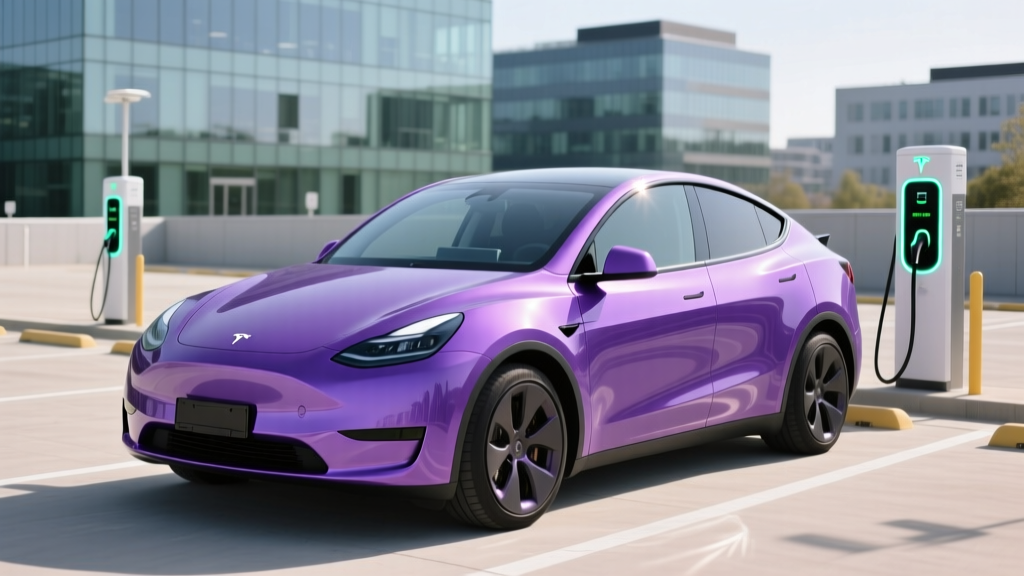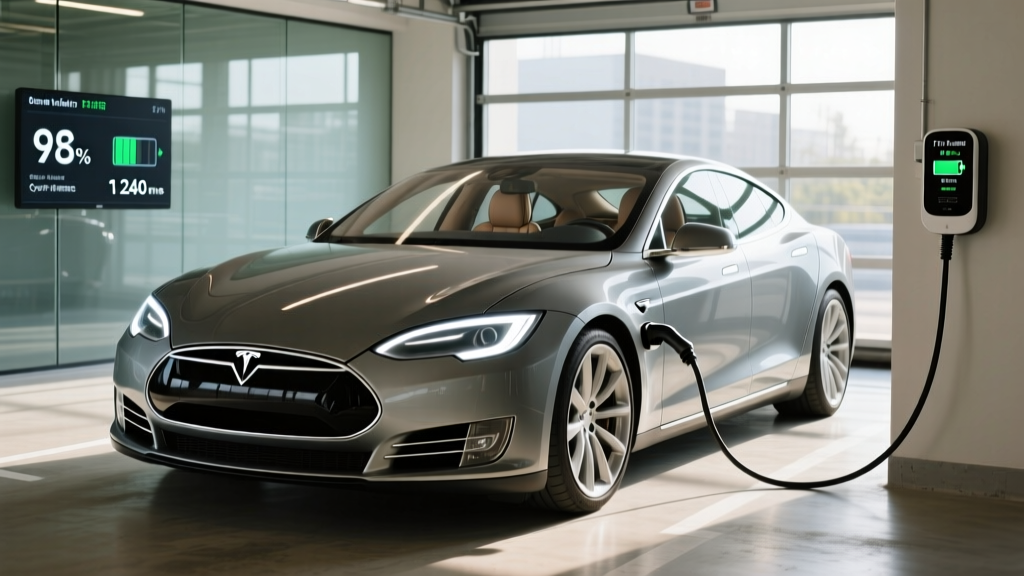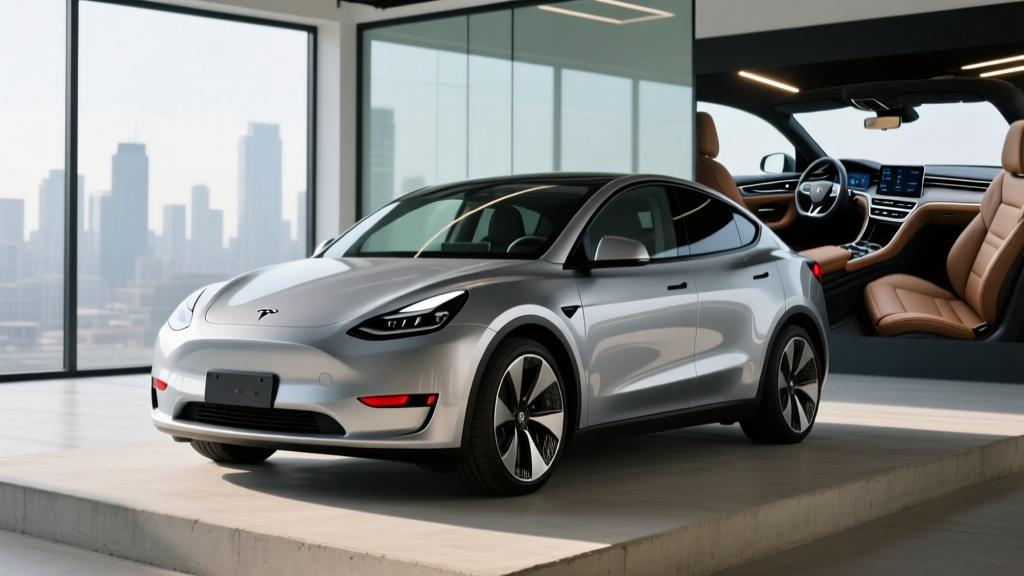
If you have been following EV news lately, you have likely seen headlines about a Tesla class action lawsuit — or several. From Autopilot safety probes to phantom braking complaints and battery degradation disputes, litigation against Tesla seems to cycle through the news every few quarters. For prospective buyers, the question is practical, not legal: do these lawsuits signal real ownership risks, or are they standard corporate noise?
This guide cuts through the legal jargon. First, we summarize the most relevant active and recently resolved Tesla class action cases as of early 2026. Then, we deliver a full spec-driven review of the current 2026 Tesla Model Y — the vehicle most frequently at the center of these disputes and still the best-selling EV in the United States. You will get exact numbers on range, charging, pricing, tax credit eligibility, and the real-world ownership picture so you can decide whether the value proposition still holds.
The Tesla Class Action Landscape in 2026: What Buyers Need to Know
Multiple class action cases have targeted Tesla over the past several years. The most consequential for buyers fall into three categories:
- Autopilot and FSD (Supervised) safety claims: Plaintiffs have alleged that Tesla's marketing of Autopilot and Full Self-Driving (Supervised) overstated the systems' capabilities, leading to unsafe reliance. The NHTSA has conducted its own parallel investigations into Autopilot-related crashes. In late 2025, Tesla agreed to certain disclosure and naming changes as part of settlement discussions, though the company continues to deny wrongdoing. FSD remains an SAE Level 2 driver-assist system — the driver must remain fully engaged at all times.
- Phantom braking allegations: A consolidated class action filed in the Northern District of California alleged that certain Model 3 and Model Y vehicles unexpectedly applied brakes without obstacles present ("phantom braking") after Tesla's transition to the Tesla Vision camera-only system. Tesla has issued multiple over-the-air software updates addressing the issue, and the case has seen partial settlements covering affected 2021–2024 model-year vehicles.
- Battery degradation and range advertising: Separate suits have challenged whether Tesla's EPA range estimates and battery longevity claims match real-world owner experience, particularly around the software-limited usable battery buffer. These cases remain in various stages of litigation as of early 2026.
2026 Tesla Model Y: Quick Verdict
Despite legal headwinds, the 2026 Model Y (refreshed "Juniper" generation, introduced for the 2025 model year and carried forward) remains the benchmark compact electric SUV. It offers class-leading efficiency, access to the largest fast-charging network in North America, and strong cargo versatility. The Long Range AWD variant delivers 320 miles of EPA range, peaks at 250 kW DC fast charging, and starts at $44,990 before incentives. The RWD base model undercuts at $39,990 with 280 miles of range.
The class action lawsuits are worth monitoring but do not, in our assessment, disqualify the Model Y from consideration — provided buyers understand that Autopilot and FSD are not self-driving, that phantom braking risk has been mitigated but not eliminated in software updates, and that battery degradation claims are typical of the broader EV industry's marketing-versus-reality gap.
Range, Battery, and Efficiency: The Real Numbers
| Spec | RWD (Base) | Long Range AWD | Performance AWD |
|---|---|---|---|
| EPA Range | 280 mi | 320 mi | 295 mi |
| Battery (usable) | ~60 kWh (LFP) | ~78 kWh (NMC) | ~78 kWh (NMC) |
| Efficiency | 123 MPGe / 27 kWh/100mi | 117 MPGe / 29 kWh/100mi | 111 MPGe / 30 kWh/100mi |
| Drivetrain | RWD, single motor | AWD, dual motor | AWD, dual motor |
| 0-60 mph | 6.2 sec | 4.8 sec | 3.5 sec |
| Horsepower | ~295 hp | ~384 hp | ~456 hp |
| Base MSRP | $39,990 | $44,990 | $51,490 |
Data sourced from fueleconomy.gov and Tesla's official specifications.
LFP vs. NMC: Which Battery Chemistry Is in Your Model Y?
The base RWD Model Y uses a lithium iron phosphate (LFP) battery, while the Long Range and Performance trims use nickel manganese cobalt (NMC). The trade-offs matter:
| Factor | LFP (RWD) | NMC (Long Range / Performance) |
|---|---|---|
| Energy density | Lower (heavier pack for same kWh) | Higher (more range in same space) |
| Cycle life | ~3,000+ cycles (excellent longevity) | ~1,500–2,000 cycles |
| Charging to 100% | Recommended regularly for calibration | Limit to 80% daily; 100% for trips only |
| Cold-weather performance | Slightly more range loss in extreme cold | Better cold-weather energy delivery |
| Degradation profile | Slower long-term degradation | Moderate; more sensitive to high SoC + heat |
If your priority is maximum range for road trips, the NMC Long Range is the clear pick. If you want the lowest cost of ownership with the best long-term battery durability and primarily commute under 60 miles daily, the LFP RWD is the smarter play.
Charging Speed: DC Fast, Level 2, and the Supercharger Advantage
| Level | Power / Rate | Speed | Notes |
|---|---|---|---|
| Level 1 (120V) | ~1.4 kW | ~4 mi/hr | Emergency/trickle only |
| Level 2 (240V, 48A) | 11.5 kW | ~37 mi/hr | Full charge in ~8–9 hrs (Long Range) |
| DC Fast (V4 Supercharger) | Peak 250 kW | 10–80% in ~22 min (Long Range) 10–80% in ~20 min (RWD/LFP) |
Sustained rate tapers above 60% SoC; preconditioning critical |
Tesla's NACS (North American Charging Standard) connector is now the industry standard, with Ford, GM, Rivian, Hyundai, and others adopting it through 2025–2026. This means the Model Y's Supercharger network advantage is narrowing as competitors gain access — but as of early 2026, Tesla's network still leads in station density and uptime reliability.
Charging curve reality: The 250 kW peak rate applies only between roughly 10–40% state of charge on the Long Range NMC pack. Above 60%, the rate tapers significantly — expect ~80 kW at 70% SoC and ~40 kW above 85%. This is why Tesla quotes 10–80% times rather than 0–100%. Always use navigation-based battery preconditioning when heading to a Supercharger; arriving with a cold battery can add 10+ minutes to your charge session.
Pricing, Tax Credits, and Total Cost
| Trim | MSRP | §30D Credit Eligible? | Effective Price (if eligible) |
|---|---|---|---|
| RWD | $39,990 | Yes — up to $7,500 | ~$32,490 |
| Long Range AWD | $44,990 | Yes — up to $7,500 | ~$37,490 |
| Performance AWD | $51,490 | Yes — up to $7,500 | ~$43,990 |
- MSRP cap: SUVs/vans must be ≤ $80,000. All Model Y trims qualify.
- Buyer income cap: Modified AGI ≤ $300,000 (joint), $225,000 (head of household), $150,000 (single). Exceed these and you get $0 credit.
- Battery sourcing: The full $7,500 requires meeting both critical minerals AND battery component requirements set by the IRS. As of 2026, Tesla's US-built Model Y with LFP cells (sourced from CATL) may face partial credit reduction depending on current FEOC (Foreign Entity of Concern) rules. Verify your specific VIN's eligibility at the point of sale.
- Point-of-sale transfer: You can transfer the credit to the dealer at purchase for an immediate price reduction rather than waiting for tax filing.
Interior, Cargo, and Technology
The Juniper-refreshed Model Y interior is a meaningful step up from the pre-2025 model. Materials quality, ambient lighting, and noise isolation have all improved, though the minimalist philosophy remains polarizing — there are still no physical buttons for climate or mirrors; everything routes through the 15.4-inch center touchscreen.
Dimensions and Space
- Cargo (rear seats up): 30.2 cu ft
- Cargo (rear seats folded): 72.1 cu ft
- Front trunk (frunk): 4.1 cu ft
- Rear legroom: 40.5 inches (competitive with Hyundai Ioniq 5 and Ford Mustang Mach-E)
- Seating: 5-passenger standard; 7-seat option available on Long Range (third row is best suited for children only)
Standout Technology
- Infotainment: Tesla's proprietary OS with native navigation, streaming (Netflix/YouTube while parked), and over-the-air updates. No Apple CarPlay or Android Auto — a dealbreaker for some buyers.
- Autopilot (included): SAE Level 2 adaptive cruise + lane centering. Competent for highway use but requires hands-on-wheel engagement.
- FSD Supervised ($8,000 add-on or $99/mo): Enhanced Level 2 with traffic-light recognition, city-street navigation, and automatic lane changes. Despite the name, this is not self-driving — you are the driver and liable for all vehicle operation. Ongoing Tesla class action litigation specifically targets FSD marketing claims.
- Ventilated front seats, power-folding second row, and a rear-seat entertainment screen are now included on Long Range and Performance trims.
Both Autopilot and FSD are SAE Level 2 driver-assist systems. They do not make the vehicle autonomous. You must keep your hands on the wheel, eyes on the road, and remain prepared to take over instantly. Tesla's driver-monitoring camera enforces attention but has known limitations. Do not use these systems in construction zones, unmapped roads, or severe weather. The driver is always legally responsible.
Warranty and Long-Term Ownership
- Basic vehicle warranty: 4 years / 50,000 miles
- Battery & drive unit warranty: 8 years / 120,000 miles (Long Range/Performance) or 8 years / 100,000 miles (RWD)
- Battery retention threshold: Tesla warrants a minimum of 70% capacity retention during the warranty period
The 70% threshold is standard across the industry but worth noting: if your battery degrades to 71% capacity at 119,000 miles, Tesla owes you nothing. Real-world data from fleet operators and owner surveys suggests most Model Y batteries retain 85–92% capacity at 100,000 miles, though LFP packs show a different (and generally flatter) degradation curve than NMC.
Insurance costs remain a Model Y pain point. Average annual premiums run $2,200–$2,800 depending on state and driver profile — roughly 20–35% higher than comparable ICE crossovers due to repair costs and parts pricing. Factor this into your total cost of ownership.
Model Y vs. Key Competitors: Is It Still the Best Buy?
| Metric | Tesla Model Y LR | Hyundai Ioniq 5 LR AWD | Ford Mustang Mach-E ER AWD |
|---|---|---|---|
| EPA Range | 320 mi | 290 mi | 300 mi |
| DC Fast Charge (peak) | 250 kW | 240 kW | 150 kW |
| 10–80% DC Time | ~22 min | ~18 min | ~36 min |
| 0–60 mph | 4.8 sec | 5.1 sec | 5.5 sec |
| Cargo (rear up) | 30.2 cu ft | 27.2 cu ft | 29.7 cu ft |
| Starting MSRP | $44,990 | $49,500 | $48,995 |
| Apple CarPlay | No | Yes | Yes |
- Maximum range and efficiency are top priorities
- You value Supercharger network reliability
- You prefer OTA software updates and Tesla's tech ecosystem
- Cargo space is a must (class-leading volume)
- You need Apple CarPlay / Android Auto (Ioniq 5, Mach-E)
- You want faster peak charging (Ioniq 5's 18-min 10–80%)
- Physical buttons and conventional controls matter to you
- Active litigation around driver-assist systems makes you uncomfortable
Pros and Cons at a Glance
- Best-in-class efficiency (29 kWh/100mi LR AWD)
- 320-mile EPA range leads the segment
- Supercharger network access (still the gold standard)
- Spacious cargo area + available 7-seat option
- Strong OTA update cadence adds features post-purchase
- LFP option (RWD) offers excellent long-term battery durability
- No Apple CarPlay or Android Auto
- Minimalist interior not for everyone
- Higher insurance premiums than ICE competitors
- Ongoing Tesla class action litigation (Autopilot, phantom braking)
- FSD is expensive ($8,000) and remains Level 2 only
- Panel gaps and service-center wait times remain common complaints
Who Should Buy the 2026 Model Y?
Best for: Daily commuters with home charging access, tech-forward families who need cargo versatility, and road-trippers who prioritize Supercharger network coverage. The Long Range AWD at ~$37,490 after the federal credit is arguably the best value-per-mile vehicle in the EV market.
Less ideal for: Buyers who need Apple CarPlay, prefer traditional dealership service experiences, or are risk-averse regarding active litigation and driver-assist system controversies. If you fall in this camp, the Hyundai Ioniq 5 or Chevrolet Equinox EV are strong alternatives with fewer legal clouds.
Frequently Asked Questions
What is the real-world range of the 2026 Tesla Model Y?
The EPA rates the Long Range AWD at 320 miles. In real-world highway driving at 70–75 mph, expect 270–290 miles. In freezing weather, plan for 220–250 miles. The RWD with its LFP battery is rated at 280 miles EPA and delivers roughly 240–260 miles in mixed real-world use.
How fast does the Model Y charge at home and on the road?
On a 240V Level 2 home charger at 48 amps (11.5 kW), the Long Range adds about 37 miles per hour — a full overnight charge in 8–9 hours. On a V3/V4 Supercharger at 250 kW peak, the Long Range charges from 10–80% in approximately 22 minutes, though the rate tapers significantly above 60% SoC.
Does the 2026 Model Y qualify for the $7,500 federal EV tax credit?
All Model Y trims fall under the $80,000 SUV MSRP cap. However, the full $7,500 credit depends on your income (≤$300K joint / ≤$150K single) and whether the battery's critical minerals and components meet IRS sourcing requirements. The LFP RWD model, which uses CATL cells, may face partial credit restrictions under FEOC rules. Always verify eligibility at the point of sale and consult IRS.gov or a tax professional.
Is it worth buying a Tesla given the class action lawsuits?
The lawsuits center on Autopilot/FSD marketing, phantom braking, and battery range claims. If you plan to use Autopilot as a basic Level 2 assist (not as a self-driving system), understand that phantom braking has been addressed through software updates, and accept that EPA range estimates are lab-tested figures that differ from real-world results, the Model Y remains a strong purchase. If any of these issues are dealbreakers, consider the Hyundai Ioniq 5 or Ford Mustang Mach-E.
What are the biggest pros and cons of the Model Y?
Top pros: class-leading range and efficiency, Supercharger network, spacious cargo area, strong value after tax credits. Top cons: no Apple CarPlay, minimalist controls, elevated insurance costs, and ongoing legal scrutiny of driver-assist features.
How does the Model Y compare to the Hyundai Ioniq 5?
The Model Y wins on range (320 vs 290 miles), cargo space (30.2 vs 27.2 cu ft), and price. The Ioniq 5 wins on peak charging speed (18 vs 22 minutes, 10–80%), offers Apple CarPlay/Android Auto, and has a more conventional interior with physical controls. Both are excellent — your preference for tech ecosystem and charging style should drive the decision.