Quick Verdict: The Export Playbook From Giga Shanghai
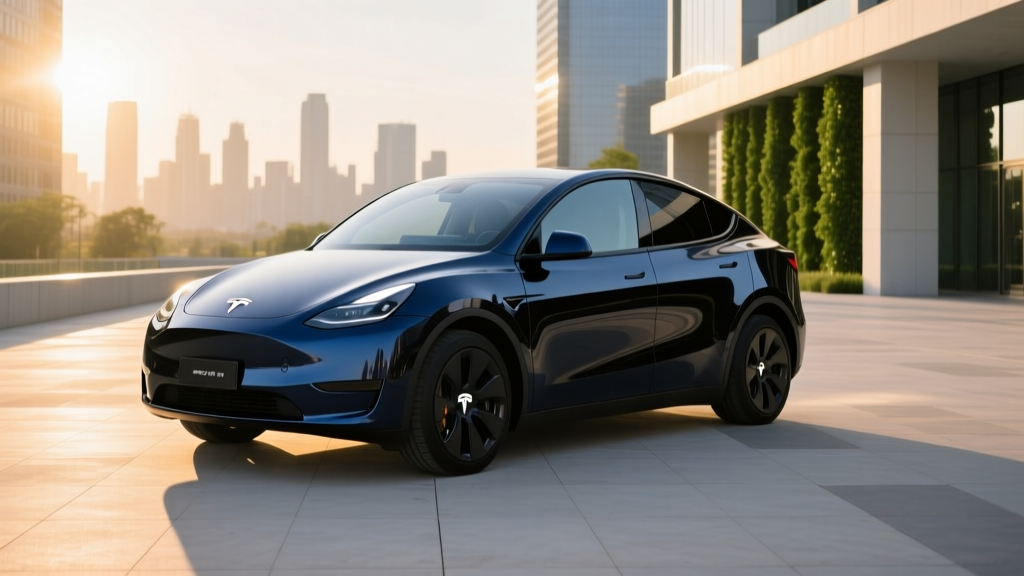
The Tesla China Model Y Long Range (often abbreviated in forums and import circles as the "Model YL") represents the export variant of the refreshed Juniper-generation Model Y built at Giga Shanghai. For US-based buyers who've watched Tesla's global manufacturing shuffle, this SUV sits at a fascinating intersection: it carries a slightly larger battery than earlier domestic Long Range trims, leverages Tesla's latest LFP cell sourcing, and undercuts the US-built Model Y Long Range AWD on price — at least on paper. But importing or buying a China-built Tesla in the US market comes with distinct trade-offs around tax credits, warranty logistics, and software localization that every buyer needs to understand before signing anything.
In this review, we break down the real numbers — EPA range, charging curves, battery chemistry, and total cost — so you can decide whether the China-built Model YL is a smart buy or a logistics headache in 2026.
| Spec | Value |
|---|---|
| EPA Estimated Range | 310 miles (Long Range AWD) |
| Battery Capacity | ~75 kWh usable (LFP chemistry, CATL cells) |
| Drivetrain | Dual-Motor AWD |
| Horsepower | ~384 hp combined |
| 0-60 mph | 4.8 seconds |
| Max DC Fast Charge | 250 kW peak |
| 10-80% DC Fast Charge | ~27 minutes |
| Level 2 Home Charging | 11.5 kW (~44 mi/hr) |
| MPGe (combined) | 111 MPGe |
| Cargo Volume (rear seats up) | 30.2 cu ft |
| Cargo Volume (rear seats folded) | 72.0 cu ft |
| Base MSRP (US equivalent) | ~$44,990 |
| Battery Warranty | 8 years / 120,000 miles |
Range and Efficiency: What the EPA Sticker Won't Tell You
Real-World Highway (75 mph, mild weather): ~265-280 miles
Real-World Cold Weather (below 32°F, mixed driving): ~220-245 miles
City/Commuter Driving (regen-heavy, moderate temps): ~295-315 miles
The 310-mile EPA figure for the China-built Model Y Long Range AWD aligns closely with its US-built Juniper counterpart. The difference is in the battery: Giga Shanghai vehicles predominantly use CATL-sourced LFP (lithium iron phosphate) cells, which trade a small amount of energy density for superior cycle life and thermal stability. In practice, this means the 75 kWh usable pack delivers consistent performance but requires slightly different charging habits than NMC-equipped Teslas.
Efficiency lands at roughly 111 MPGe combined, or about 27 kWh per 100 miles. That's competitive with the Hyundai Ioniq 5 (114 MPGe) but trails the more aerodynamic Tesla Model 3 Long Range (132 MPGe). The SUV profile and heavier curb weight (~4,400 lbs) explain the gap. On a 200-mile highway road trip at 75 mph in 70°F weather, expect to arrive with roughly 15-20% State of Charge remaining — adequate but not generous.
Cold weather remains the great equalizer. LFP batteries are marginally more susceptible to range loss in freezing temperatures than NMC packs because of higher internal resistance at low temperatures. Without preconditioning, a winter commute can shave 25-30% off your range. Always precondition the battery via the Tesla app or scheduled departure before driving in cold weather — it's the single biggest efficiency lever you have.
Charging Speed and Infrastructure: NACS, Superchargers, and the LFP Curve
| Charging Level | Power / Rate | Speed |
|---|---|---|
| Level 1 (120V household) | ~1.4 kW | ~4-5 miles per hour |
| Level 2 (240V, 48A Wall Connector) | 11.5 kW | ~44 miles per hour |
| DC Fast Charge (V3 Supercharger) | 250 kW peak | 10-80% in ~27 minutes |
| DC Fast Charge (V4 Supercharger) | Up to 250 kW (cable-limited for this model) | 10-80% in ~25 minutes |
The China Model YL charges at a peak of 250 kW on Tesla's V3 and V4 Superchargers using the native NACS connector. The 10-80% charge takes approximately 27 minutes under optimal conditions — meaning the battery is preconditioned and ambient temperatures are moderate. Here's where LFP chemistry matters: the charge curve holds strong through 55-60% SoC, then tapers progressively. Unlike NMC packs that cliff-drop at 80%, LFP tapers more gradually, meaning 80-100% top-ups aren't as punishing on time, though Tesla still recommends daily charging to 100% for LFP to maintain accurate SoC estimation (a unique LFP quirk — the battery management system struggles to gauge capacity at partial states of charge).
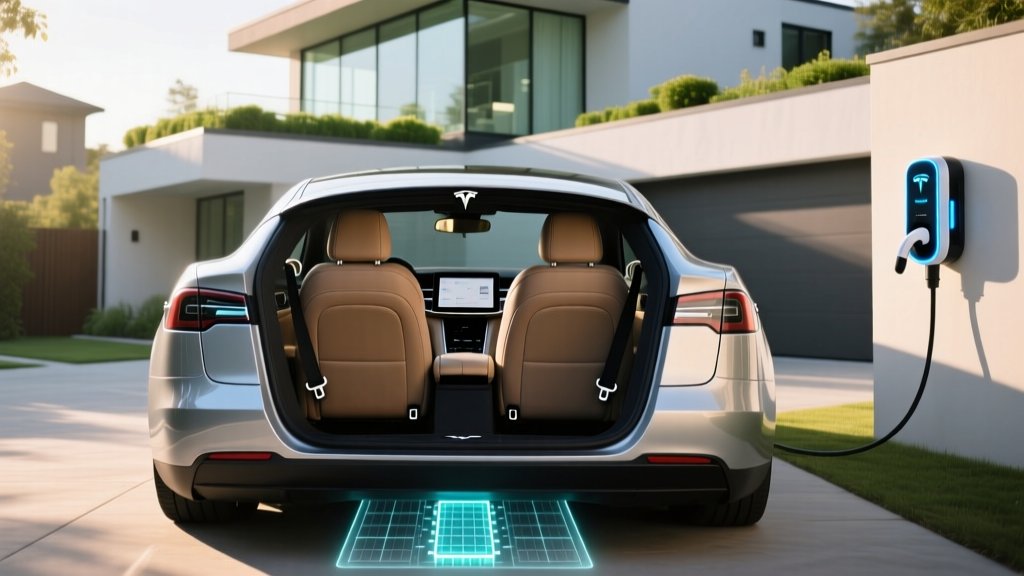
For home Level 2 charging, the onboard charger accepts up to 11.5 kW (48 amps). A full 0-100% charge takes roughly 7 hours on a Tesla Wall Connector, making overnight replenishment straightforward. Most owners will need a 60-amp dedicated circuit; expect home installation to run $800-$2,500 depending on panel proximity and local permit costs.
On third-party DC networks (Electrify America, EVgo), the NACS connector gives you access to Tesla's Supercharger network natively. For CCS-equipped chargers, you'll need a NACS-to-CCS adapter. Tesla's Supercharger network remains the most reliable in the US, with uptime consistently above 95% according to third-party tracking.
Performance and Driving Dynamics
The dual-motor AWD powertrain produces approximately 384 combined horsepower, delivering a 4.8-second 0-60 mph time. That's quick enough for confident highway merging and passing but a step behind the Performance trim (3.5 seconds). The Juniper refresh brought revised suspension tuning with frequency-selective dampers, and the China-built variant carries the same improvements. Ride quality over broken pavement is noticeably better than pre-2025 Model Ys, though the 19-inch Gemini wheels (standard) offer a plusher ride than the optional 20-inch Helix wheels.
Regenerative braking remains aggressive in the Tesla ecosystem — the China Model YL does not offer adjustable regen levels, which may frustrate buyers coming from Hyundai or BMW EVs with one-pedal driving toggles. The steering is precise but light, and the low center of gravity from the skateboard platform keeps body roll well-controlled in corners. Towing capacity stands at 3,500 lbs when properly equipped — sufficient for a small utility trailer or a pair of dirt bikes but not a large camper.
Interior, Tech, and Cargo: The Juniper Refresh Carries Over
The Juniper interior (introduced for the 2025 model year) carries over to the China-built Model YL with minor regional variations. You get a 15.4-inch central touchscreen, a secondary 8-inch rear-seat display, ventilated front seats, ambient lighting, and power-folding second-row seats. The panoramic glass roof now features a power sunshade — a welcome addition over the earlier fixed glass that left cabins baking in summer sun.
Cargo volume is generous: 30.2 cubic feet behind the second row and 72.0 cubic feet with seats folded. The front trunk (frunk) adds another 4.1 cubic feet for charging cables and smaller items. Rear-seat legroom measures 41.6 inches — enough for adults on long trips, though the sloping roofline cuts into headroom for passengers over 6 feet.
The infotainment system runs Tesla's latest software with wireless Apple CarPlay and Android Auto (finally added in the Juniper generation). Navigation, trip planning with automatic Supercharger routing, and over-the-air updates all function identically to US-built models. However, some China-market features — like certain karaoke apps and region-specific streaming services — may not carry over to export vehicles depending on firmware localization.
Pricing, Tax Credits, and Total Cost of Ownership
| Item | Amount |
|---|---|
| Base MSRP (US equivalent Long Range AWD) | $44,990 |
| Destination fee | $1,390 |
| FSD (Supervised) add-on | +$8,000 |
| As-tested (LR AWD + FSD) | ~$54,380 |
| Federal §30D Tax Credit (if eligible) | Up to $7,500 |
| Estimated after-credit price | ~$37,490 – $46,880 |
Here's where the China-built Model YL gets complicated for US buyers. The federal EV tax credit under IRS §30D has strict battery-sourcing and critical-mineral requirements that have tightened significantly since 2024. Vehicles with battery cells manufactured by a "foreign entity of concern" (FEOC) — which includes Chinese battery manufacturers like CATL — are disqualified from the full $7,500 credit. Because the China Model YL uses CATL LFP cells assembled in Shanghai, it is very likely ineligible for the $3,750 battery-component portion of the credit and potentially the full $7,500 depending on critical-mineral sourcing.
- MSRP Cap: SUVs must be at or below $80,000 MSRP — Model YL qualifies
- Buyer Income Cap: AGI must not exceed $150K (single), $225K (head of household), or $300K (joint) — verify your status
- Battery Sourcing: CATL cells likely disqualify the $3,750 battery-component half
- Critical Minerals: Eligibility for the $3,750 mineral portion depends on supply-chain documentation at time of purchase
- Point-of-Sale Transfer: If eligible, credit can be applied at purchase rather than waiting for tax filing
Net result: US buyers of a China-built Model YL should budget for the full MSRP or, at best, a partial $3,750 credit. Compare this to the US-built Model Y Long Range, which has historically qualified for at least a partial credit depending on model year and battery pack sourcing. Always verify eligibility with a tax professional and check the DOE's qualified vehicle list at fueleconomy.gov before purchasing.
On the ownership-cost side, the Model YL benefits from Tesla's low maintenance requirements (no oil changes, minimal brake wear thanks to regen), competitive insurance rates for the segment (~$1,800-$2,400/year depending on state and driving record), and electricity costs averaging $0.13-$0.16/kWh nationally — translating to roughly $0.04-$0.05 per mile versus $0.12-$0.15 per mile for a comparable gas SUV at $3.50/gallon.
Pros and Cons
- 310-mile EPA range is competitive for the segment
- LFP battery offers excellent cycle life and can be charged to 100% daily without degradation concerns
- 250 kW peak charging with 10-80% in ~27 minutes
- Access to Tesla's Supercharger network (most reliable in the US)
- Juniper refresh brings meaningful ride-quality and interior improvements
- Strong cargo capacity (72 cu ft max) and practical SUV form factor
- OTA updates continuously improve the vehicle post-purchase
- China-built variant likely ineligible for full $7,500 federal tax credit due to CATL battery sourcing
- Real-world highway range drops to ~265-280 miles; cold weather cuts further
- No adjustable regenerative braking — take-it-or-leave-it one-pedal feel
- LFP batteries lose more range in extreme cold vs. NMC
- Import/service logistics may complicate warranty claims depending on your region
- FSD (Supervised) remains a Level 2 system at a $8,000 premium — questionable value for most buyers
- Rear headroom limited for tall passengers due to sloping roofline
How It Compares: Model YL vs. Key Competitors
The China Model YL competes directly with the Hyundai Ioniq 5, Kia EV6, Ford Mustang Mach-E, and the US-built Tesla Model Y. Its 310-mile range and 250 kW charging are competitive but not class-leading — the Ioniq 5 and EV6 on the E-GMP platform offer 800V architecture with 10-80% charging in approximately 18 minutes at 350 kW chargers. The Mach-E Extended Range AWD delivers a comparable 312-mile EPA range at a similar price point and is widely eligible for the full $7,500 credit.
Where the Model YL wins is software integration, Supercharger access, and Tesla's OTA pipeline. Where it loses is tax-credit eligibility, charging speed versus 800V competitors, and the LFP cold-weather penalty. If the full $7,500 credit is important to your budget, the US-built Model Y, Ioniq 5, or Mach-E are stronger choices in 2026.
Who Should Buy the Tesla China Model Y Long Range?
- You want a Tesla with an LFP battery for maximum cycle life and daily 100% charging flexibility
- You have reliable home Level 2 charging and primarily drive in moderate climates
- Tax credit eligibility is not a dealbreaker for your budget
- You value Supercharger network access and Tesla's software ecosystem above all else
- You need the full $7,500 federal tax credit to make the numbers work
- You regularly drive in sub-freezing temperatures and need maximum cold-weather range retention
- You want the fastest possible DC charging (consider 800V platforms from Hyundai/Kia)
- You need adjustable regen or a more traditional driving feel
Frequently Asked Questions
What is the real-world range of the Tesla China Model Y Long Range?
The EPA rates it at 310 miles, but real-world highway driving at 75 mph yields roughly 265-280 miles in mild weather. In freezing temperatures, expect 220-245 miles. City commuting with regenerative braking can match or slightly exceed the EPA sticker.
How fast does the China Model YL charge at home and on the road?
On a Level 2 home charger (11.5 kW), you'll add about 44 miles per hour, with a full charge taking ~7 hours. On a Tesla V3 or V4 Supercharger, it peaks at 250 kW and charges from 10-80% in approximately 27 minutes under optimal conditions.
Does the Tesla China Model Y Long Range qualify for the $7,500 federal EV tax credit?
Very likely not the full amount. The CATL-sourced LFP battery cells are manufactured in China, which triggers the FEOC (foreign entity of concern) restriction under IRS §30D rules. You may qualify for a partial $3,750 credit depending on critical-mineral sourcing, but confirm with a tax professional and check fueleconomy.gov before purchase.
Is the LFP battery in the China Model YL better or worse than NMC?
It depends on your priorities. LFP offers longer cycle life (3,000+ cycles vs. ~1,500-2,000 for NMC), better thermal stability, and the ability to charge to 100% daily without accelerated degradation. The trade-offs are lower energy density (slightly heavier pack for the same range), reduced cold-weather performance, and less accurate state-of-charge estimation at partial charges.
Is the China-built Model YL worth buying over the US-built Model Y?
For most US buyers, the US-built Model Y is the more practical choice due to higher likelihood of federal tax credit eligibility, simpler warranty service, and identical specs post-Juniper refresh. The China Model YL makes sense primarily if you're in a market where it's the available variant, or if the LFP battery's longevity advantages outweigh the credit loss for your ownership timeline.
What is the warranty coverage on the battery and powertrain?
Tesla covers the Model Y Long Range battery and drive unit for 8 years or 120,000 miles, whichever comes first, with a minimum 70% capacity retention guarantee over that period. The vehicle limited warranty is 4 years / 50,000 miles.