Is Tesla Really Building a $25,000 Compact SUV?
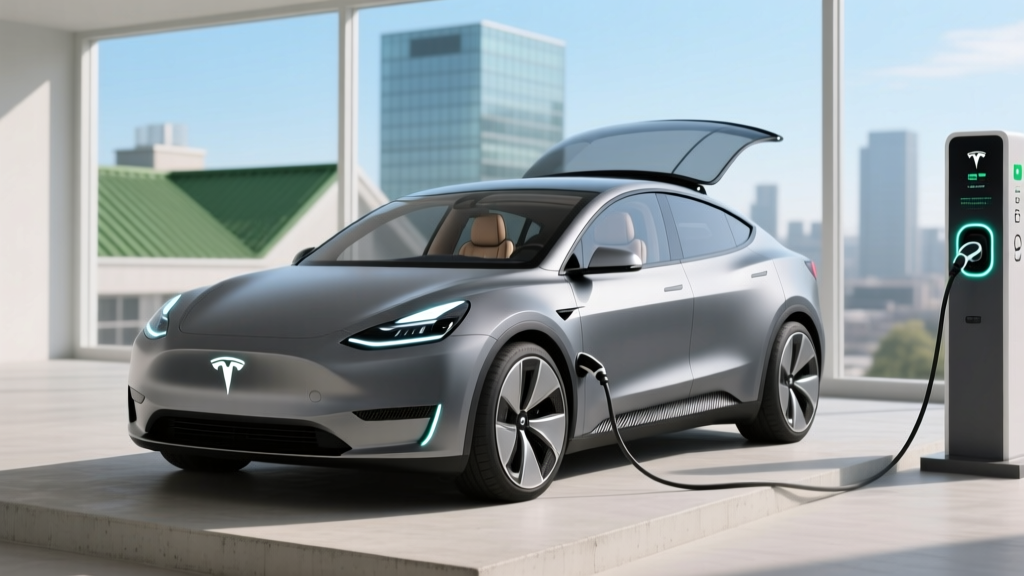
If you've searched "tesla is developing an all new cheaper electric compact suv" lately, you've likely seen a flood of headlines promising a sub-$30,000 Tesla crossover. The rumor mill has been churning since at least 2020, when Elon Musk first floated the idea of a compact, affordable Tesla. As of early 2026, however, no such vehicle is available for purchase, and Tesla has not officially confirmed a production model, nameplate, or delivery timeline.
What we do know is that Tesla has invested heavily in its "next-generation platform" — a smaller, cheaper-to-produce architecture first detailed during the company's 2023 Investor Day. That platform was originally expected to underpin both a compact car and a small crossover SUV, potentially badged as the Model Q or Model 2. But Tesla's product roadmap has shifted repeatedly, most notably toward the Cybercab robotaxi and updated Model Y and Model 3 refreshes.
This article breaks down everything confirmed, everything estimated, and everything still speculative about Tesla's rumored cheaper compact SUV — with hard numbers where they exist and honest labels where they don't.
No Tesla compact SUV (Model Q, Model 2, or otherwise) is currently available for order or delivery as of 2026. All specifications below are based on Tesla's next-gen platform disclosures, industry analyst estimates, and supply-chain reporting. Final production specs may differ significantly.
What We Know About the Next-Gen Platform
During Tesla's March 2023 Investor Day, the company outlined a next-generation vehicle platform designed to cut production costs roughly in half compared to the Model 3/Y architecture. Key engineering targets included:
- Unboxed manufacturing: A modular assembly process where sub-assemblies are built separately and joined late in production, reducing factory footprint by ~40%.
- Smaller battery packs: Targeting approximately 50-60 kWh of usable capacity, likely using LFP (lithium iron phosphate) chemistry for base trims to control cost and improve cycle life.
- 48-volt electrical architecture: Replacing the traditional 12V system to reduce wiring harness weight and complexity.
- Reduced rare-earth content: Tesla confirmed plans for a next-gen drive unit using zero rare-earth materials in the permanent magnets.
If a compact SUV emerges from this platform, it would likely slot below the Model Y in both size and price, targeting the same segment as the Volvo EX30, Hyundai Kona Electric, and Kia Niro EV.
| Spec | Estimated / Target | Notes |
|---|---|---|
| EPA Range | ~250-280 miles | Based on ~55 kWh LFP pack + Tesla efficiency |
| Battery Capacity | ~50-60 kWh (usable) | LFP chemistry likely for base trim |
| Peak DC Fast Charge | ~150-175 kW | LFP charge curves typically taper earlier than NMC |
| 10-80% DC Charge Time | ~25-30 min (est.) | Depends on pack thermal management |
| Level 2 Home Charge | ~11.5 kW / ~35-40 mi/hr | Standard Tesla onboard charger |
| 0-60 mph | ~5.5-6.5 sec (RWD) | Single motor base; AWD option possible |
| Horsepower | ~250-280 hp | Single motor RWD estimated |
| Drivetrain | RWD standard; AWD optional | Dual-motor AWD would cost ~$4,000 more |
| MPGe (est.) | ~120-130 MPGe combined | Tesla's efficiency advantage likely continues |
| Base MSRP (target) | ~$25,000-$30,000 | Musk's stated goal; market realities may push higher |
| Battery Warranty | 8 yr / 100,000 mi (est.) | Consistent with current Tesla LFP warranty terms |
Range, Charging, and Efficiency: What to Expect
The most critical question for any compact EV is whether it can handle real-world driving without constant charging stops. If Tesla equips this SUV with a ~55 kWh LFP pack and maintains the efficiency advantage it holds over rivals (the Model 3 RWD achieves roughly 26 kWh/100mi), a 250-280 mile EPA estimate is plausible.
Even if the EPA sticker reads 270 miles, expect:
- Highway driving at 75 mph: ~220-240 miles (aerodynamic drag dominates at speed)
- Cold weather (below 32°F): ~180-210 miles (LFP batteries lose 20-30% capacity in deep cold without preconditioning)
- Combined city/highway in mild weather: ~250-265 miles (closest to EPA)
LFP chemistry is more tolerant of daily 100% charging than NMC, so you'd actually use more of the pack day-to-day — a meaningful ownership advantage.
Charging Speed: The LFP Tradeoff
LFP batteries generally accept fast charge at slightly lower peak rates than NMC cells. Where a Model Y Long Range (NMC) can peak at ~250 kW on a V3 Supercharger, an LFP-based compact SUV would likely peak around 150-175 kW. That translates to roughly 25-30 minutes from 10-80% SoC at a V3 or V4 Supercharger — adequate for road trips but noticeably slower than the Hyundai Ioniq 5's 18-minute 10-80% sprint on 800V architecture.
| Level | Power | Miles Added | Notes |
|---|---|---|---|
| Level 1 (120V) | ~1.4 kW | ~4-5 mi/hr | Emergency only |
| Level 2 (240V, 48A) | ~11.5 kW | ~35-40 mi/hr | Full charge overnight (~7 hrs) |
| DC Fast (Supercharger V3) | Peak ~150-175 kW | ~150-180 mi in 15 min | 10-80% in ~25-30 min |
Pricing: Can Tesla Actually Hit $25,000?
Elon Musk has repeatedly stated a target price of around $25,000 for Tesla's next-generation compact vehicle. However, the auto industry is littered with promised affordable EVs that launched at significantly higher prices. The Chevrolet Bolt was supposed to be $30,000; it started closer to $37,000 at launch.
A more realistic projection for a Tesla compact SUV, if it reaches production, is a base MSRP of $27,000-$32,000 for an RWD model, with AWD and larger-battery trims pushing toward $38,000-$42,000. This would still undercut the Model Y (starting around $44,990 in 2026) by a substantial margin.
Federal Tax Credit Eligibility (IRS §30D)
If the vehicle is assembled in the U.S. and meets current IRS §30D requirements, it could qualify for up to $7,500 in federal tax credits — or, critically, a point-of-sale transfer that reduces the purchase price at the dealership (or Tesla delivery center) on day one. That could bring an effective price as low as ~$19,500-$24,500.
However, eligibility depends on several factors that are subject to change:
- MSRP cap: SUVs must be under $80,000 — easily met.
- Buyer income cap: Modified AGI ≤ $150,000 (single) / $300,000 (joint).
- Battery sourcing: Critical minerals and battery components must meet escalating percentage thresholds from qualifying trade partners. An LFP pack sourced from CATL in China could jeopardize eligibility.
- North American assembly: Final assembly must occur in the U.S., Canada, or Mexico.
Tesla has been aggressively localizing its supply chain, but LFP cell sourcing remains a wildcard. Consult a tax professional or the IRS before counting on the full credit.
Competitive Landscape: Who's Already Here
Tesla wouldn't be entering an empty segment. The compact electric SUV space is already competitive in 2026, with several well-established options:
| Model | EPA Range | Base MSRP | Peak DC kW | 10-80% Time |
|---|---|---|---|---|
| Hyundai Kona Electric | 261 mi | ~$33,000 | ~100 kW | ~43 min |
| Volvo EX30 | 265 mi | ~$36,000 | ~153 kW | ~27 min |
| Kia Niro EV | 239 mi | ~$31,000 | ~85 kW | ~45 min |
| Chevrolet Equinox EV | 319 mi | ~$33,000 | ~150 kW | ~30 min |
| Tesla Compact SUV (est.) | ~250-280 mi | ~$27,000-$32,000 | ~150-175 kW | ~25-30 min |
Tesla's primary advantages would be Supercharger network access (still the most reliable DC fast-charging network in North America), software/OTA capabilities, and potentially class-leading efficiency. Its disadvantage: it doesn't exist yet, and competitors are shipping real vehicles today with verified EPA data.
Interior, Cargo, and Technology
Based on the next-gen platform's smaller footprint, expect dimensions similar to a subcompact crossover — roughly 174-178 inches long with a ~106-inch wheelbase. That translates to:
- Front legroom: ~41 inches
- Rear legroom: ~35-37 inches (tighter than Model Y's generous 38.4 inches)
- Cargo behind rear seats: ~22-26 cu ft
- Cargo with rear seats folded: ~55-62 cu ft
- Frunk: Likely present but small (~2-3 cu ft) given the compact front sub-assembly
Tech and Driver Assistance
Expect Tesla's signature minimalist interior with a single 15.4-inch center touchscreen, no instrument cluster, and the full Tesla software suite including navigation, streaming, and OTA updates. Driver assistance would almost certainly include:
- Basic Autopilot: Standard (adaptive cruise + lane centering)
- Enhanced Autopilot / FSD (Supervised): Optional subscription or purchase
Both Autopilot and FSD (Supervised) are SAE Level 2 driver-assistance systems. The driver must remain fully attentive, keep hands on or near the wheel, and be prepared to take over at any moment. These are not autonomous driving systems. Only Level 4 services like Waymo operate without a driver.
Should You Wait or Buy Now?
- You need a vehicle within the next 6 months
- You want verified EPA range, real-world reviews, and established service infrastructure
- The Chevrolet Equinox EV (319 mi, ~$33K) or Volvo EX30 (265 mi, ~$36K) meets your needs
- You want to lock in current §30D tax credit rules before potential policy changes
- You can defer your purchase 18-30+ months (realistic earliest availability: late 2027 or 2028)
- Supercharger network access is critical for your road-trip patterns
- You want Tesla's software ecosystem and OTA improvement track record
- You're targeting a sub-$30,000 effective price after credits
- Lowest price point in Tesla's lineup
- Supercharger network access (NACS)
- LFP battery tolerates daily 100% charging
- Tesla's class-leading efficiency (kWh/100mi)
- OTA updates and software ecosystem
- Strong resale value track record
- Not yet available — no firm timeline
- Specs are entirely estimated/preliminary
- LFP cold-weather range loss is significant
- Compact size means tight rear seats and cargo
- Tax credit depends on battery sourcing rules
- Slower DC charging than 800V competitors
Frequently Asked Questions
What is the real-world range of Tesla's cheaper compact SUV?
Since the vehicle is unreleased, there is no verified EPA figure. Based on the expected ~55 kWh LFP battery and Tesla's efficiency, we estimate 250-280 miles EPA. Real-world highway range would likely be 220-240 miles, dropping to 180-210 miles in freezing temperatures without preconditioning.
How fast does it charge?
Projected peak DC fast charging is ~150-175 kW on a Tesla Supercharger, reaching 10-80% SoC in approximately 25-30 minutes. Home Level 2 charging at 11.5 kW would add roughly 35-40 miles per hour, fully replenishing the pack overnight in about 7 hours.
How much does it cost after tax credits?
With a projected base MSRP of $27,000-$32,000 and a potential $7,500 federal tax credit (if all §30D sourcing, income, and assembly requirements are met), the effective price could drop to roughly $19,500-$24,500. However, credit eligibility is not guaranteed and depends on battery supply chain details that have not been confirmed.
Does it qualify for the federal EV tax credit?
Possibly, but it depends on factors we can't yet confirm: whether final assembly occurs in North America, whether the battery's critical minerals and components meet IRS sourcing thresholds, and whether the buyer's income falls under the §30D caps ($150K single / $300K joint). Always verify with the IRS or a tax professional before purchasing.
Is it worth waiting for vs. buying a competitor now?
If you need a compact EV today, the Chevrolet Equinox EV offers 319 miles of range at ~$33,000, and the Volvo EX30 delivers a premium experience at ~$36,000. Waiting for the Tesla compact SUV only makes sense if you can defer your purchase 18-30+ months, prioritize Supercharger access, and are comfortable with the risk that specs, pricing, and timeline may all shift.
Will it have a frunk?
Likely yes, but it will be small — probably 2-3 cubic feet — due to the compact front-drive assembly and 48V electronics packaging. Don't expect Model Y-level frunk space.
What is the expected warranty?
Based on Tesla's current LFP battery warranty (8 years / 100,000 miles with minimum 70% capacity retention), we'd expect similar terms. The basic vehicle warranty would likely be 4 years / 50,000 miles, consistent with Tesla's existing lineup.