The Real Answer: Tesla Charging Times Depend on Three Variables
Search "how long does it take a Tesla to fully charge" and you'll find answers ranging from 15 minutes to 50 hours — all technically correct, all useless without context. The actual answer depends on three factors: which Tesla model you own (battery size ranges from 57.5 kWh to 123 kWh across the 2026 lineup), what charger you're using (Level 1 wall outlet, Level 2 home unit, or DC fast charger), and whether you're measuring to 80% or a true 100% full battery.
Here's the short version: a Tesla Model 3 at a V4 Supercharger reaches 80% in roughly 18–25 minutes. That same car plugged into a standard 120V household outlet (Level 1) needs approximately 50–60 hours for a full charge. At home on a Level 2 wall connector, expect 8–10 hours from near-empty to full — which is why most owners simply plug in overnight and never think about it.
This guide breaks down exact charge times for every 2026 Tesla model across all three charging levels, explains why the last 20% takes so long, and provides the real-world ownership context that spec sheets omit.
2026 Tesla Lineup: Battery, Range, and Charging Spec Table
Before diving into charge times, here are the foundational specs for every current-production Tesla. Battery chemistry matters: Tesla uses LFP (lithium iron phosphate) in standard-range models and NMC (nickel manganese cobalt) in long-range and performance variants. LFP batteries tolerate regular 100% charging better than NMC, which Tesla recommends keeping at 80% daily for longevity.
| Model / Trim | Battery (usable kWh) | Chemistry | EPA Range (mi) | MPGe (combined) | kWh/100mi | Max DC Charge (kW) | Level 2 Rate (kW) |
|---|---|---|---|---|---|---|---|
| Model 3 RWD | 57.5 | LFP | 272 | 132 | 25 | 170 | 11.5 |
| Model 3 Long Range AWD | 78.1 | NMC | 341 | 132 | 25 | 250 | 11.5 |
| Model 3 Performance | 78.1 | NMC | 315 | 121 | 27 | 250 | 11.5 |
| Model Y Long Range AWD | 78.1 | NMC | 320 | 122 | 27 | 250 | 11.5 |
| Model Y Performance | 78.1 | NMC | 298 | 115 | 29 | 250 | 11.5 |
| Model S Long Range | 95.0 | NMC | 402 | 120 | 28 | 250 | 11.5 |
| Model S Plaid | 95.0 | NMC | 359 | 116 | 29 | 250 | 11.5 |
| Model X Long Range | 95.0 | NMC | 348 | 108 | 31 | 250 | 11.5 |
| Model X Plaid | 95.0 | NMC | 326 | 104 | 32 | 250 | 11.5 |
| Cybertruck AWD | 123.0 | NMC | 340 | 76 | 42 | 250+ | 11.5 |
Sources: EPA Fuel Economy, Tesla 2026 spec sheets. Specs reflect current-production models as of early 2026.
DC Fast Charging: Supercharger Times for Every Tesla
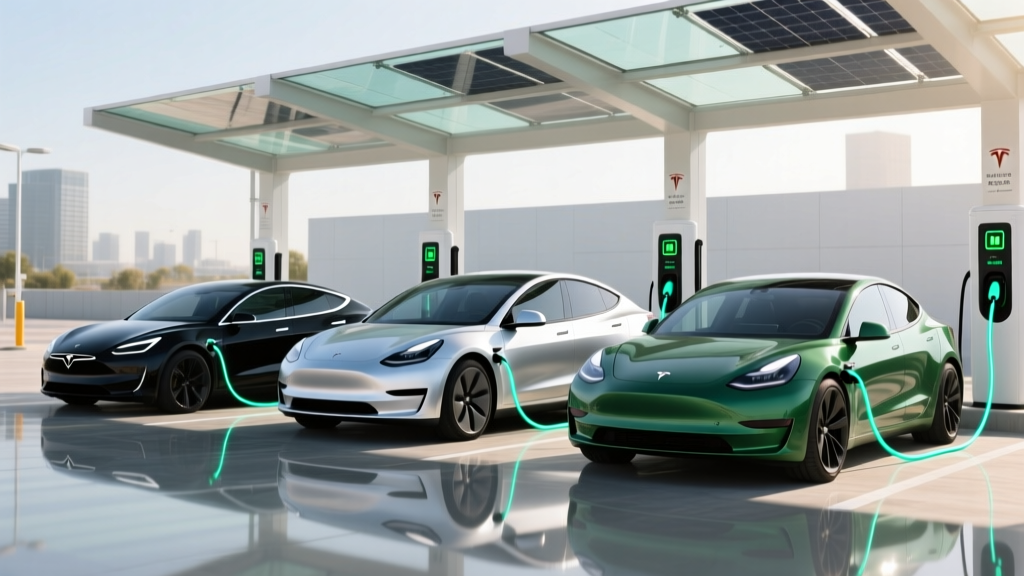
DC fast charging is what makes road trips viable. Tesla's Supercharger network remains the most reliable public fast-charging infrastructure in the US, and every 2026 Tesla uses the NACS connector natively — no adapter needed at Tesla stalls.
The critical number is the 10–80% time. That's because charging speed follows a curve: the battery accepts peak power only at low states of charge, then tapers significantly above 50–60%, and slows to a trickle above 90%. Charging from 80% to 100% on a DC fast charger can take as long as charging from 10% to 80%.
| Model / Trim | Peak DC kW | 10–80% Time (min) | Miles Added in 15 min | Notes |
|---|---|---|---|---|
| Model 3 RWD | 170 | ~25 | ~120 | LFP charges more linearly; less taper |
| Model 3 Long Range AWD | 250 | ~18 | ~175 | Peak at ~15-30% SoC, taper above 60% |
| Model 3 Performance | 250 | ~18 | ~160 | Same pack as LR; slightly less range added |
| Model Y Long Range AWD | 250 | ~20 | ~160 | Heavier vehicle reduces mi/kWh |
| Model Y Performance | 250 | ~20 | ~148 | Lower efficiency = fewer miles per minute |
| Model S Long Range | 250 | ~24 | ~200 | Larger pack takes longer at same kW |
| Model S Plaid | 250 | ~24 | ~180 | Higher consumption reduces miles added |
| Model X Long Range | 250 | ~26 | ~170 | Heaviest sedan-class; slower mi/min |
| Model X Plaid | 250 | ~26 | ~155 | Same pack, more consumption |
| Cybertruck AWD | 250+ | ~28 | ~130 | 123 kWh pack; poor efficiency hurts mi/min |
What About Charging to 100% on DC Fast?
If you genuinely need a full battery — say, before a mountain pass or the final leg to a remote destination — plan for 45–65 minutes total at the Supercharger. The 80–100% phase drops to 20–40 kW and feels agonizingly slow. Practical advice: charge to 80%, drive, and top up at the next stall. Two 18-minute stops beat one 55-minute stop and keep you in the fast part of the charge curve.
Level 2 Home Charging: The Overnight Baseline
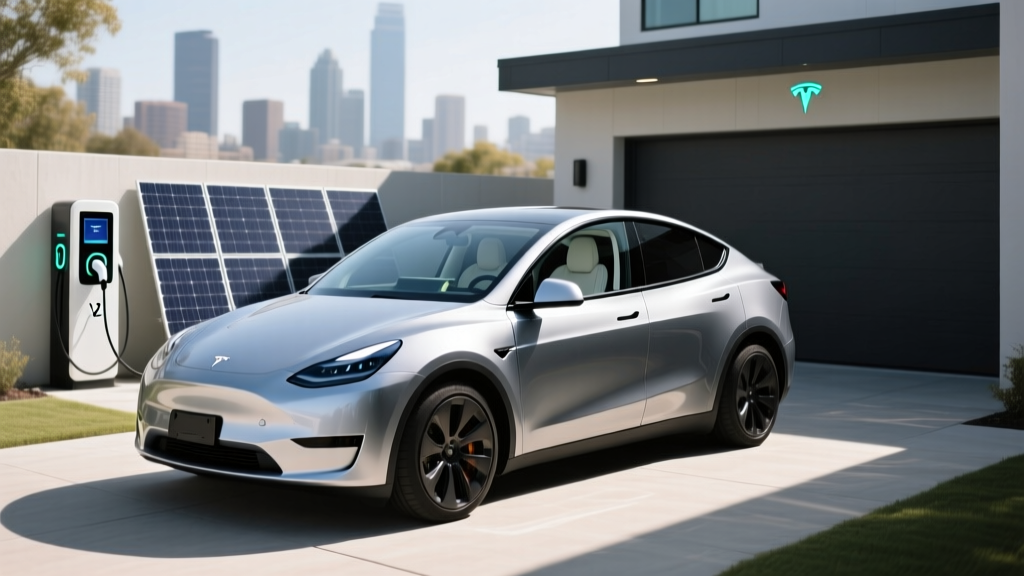
Home Level 2 charging is where 85%+ of Tesla charging actually happens. The Tesla Wall Connector delivers up to 11.5 kW (48 amps on a 60-amp circuit). Most owners plug in at night and wake up to a full or nearly full battery every morning.
| Model | Battery (kWh) | 0–100% Time (hours) | Miles per Hour of Charge | Typical Overnight (8 hrs) |
|---|---|---|---|---|
| Model 3 RWD | 57.5 | ~5.5 | 44 | Full charge |
| Model 3 Long Range | 78.1 | ~7.5 | 44 | Full charge |
| Model 3 Performance | 78.1 | ~7.5 | 41 | Full charge |
| Model Y Long Range | 78.1 | ~7.5 | 41 | Full charge |
| Model Y Performance | 78.1 | ~7.5 | 38 | ~300 mi added |
| Model S Long Range | 95.0 | ~9 | 44 | ~350 mi added |
| Model S Plaid | 95.0 | ~9 | 39 | ~310 mi added |
| Model X Long Range | 95.0 | ~9 | 38 | ~300 mi added |
| Model X Plaid | 95.0 | ~9 | 35 | ~280 mi added |
| Cybertruck AWD | 123.0 | ~11.5 | 29 | ~230 mi added |
Home Charging Installation Reality
The Tesla Wall Connector costs approximately $475 for the hardware. Professional installation on an existing 200-amp panel with a nearby run typically costs $500–$1,500. If you need a panel upgrade (100A to 200A), add $1,500–$3,500. The total investment for a proper home Level 2 setup usually falls between $1,000 and $2,500 for most homes, and potentially up to $5,000 if panel work is needed. Always get a quote from a licensed electrician — actual costs depend on panel capacity, conduit run length, and local permit fees.
For homes with only a 120V outlet available (Level 1), expect roughly 3–5 miles of range per hour of charging. That's 24–40 miles overnight — sufficient for short commutes but inadequate as a primary charging strategy for most owners.
Real-World Range vs. EPA Estimates: What You'll Actually Get
The EPA range figure on the window sticker assumes a specific mix of city and highway driving at moderate temperatures. Real-world range varies significantly based on speed, climate, terrain, and driving style.
City driving (moderate speed, regen active): EPA range ± 5% — sometimes exceeds sticker.
Highway driving (70–75 mph, flat terrain): Expect 85–92% of EPA range.
Highway + cold weather (below 35°F): Expect 65–78% of EPA range. Battery resistance increases and cabin heating draws 2–5 kW continuously.
Highway + hot weather (above 95°F, A/C): Expect 85–93% of EPA range. Less impact than cold, but A/C load is measurable.
Mountain/towing: Expect 50–70% of EPA range depending on grade and trailer weight.
Concrete example: A Model 3 Long Range with an EPA rating of 341 miles will realistically deliver about 290–310 miles on a flat highway at 70 mph in 65°F weather. In January at 25°F on that same highway, expect 230–265 miles. If you regularly drive in cold climates, plan your charging stops around 60–70% of the EPA number to maintain a safety buffer.
Tesla's heat pump (standard on all 2026 models) significantly reduces cold-weather HVAC energy consumption compared to resistive heaters, but it cannot eliminate the physics of cold lithium-ion cells. Preconditioning the battery while plugged in — automatically triggered when you set a departure time in the Tesla app — recovers some of that lost efficiency.
Performance, Space, and Tech: What You Get Beyond Charging
Charging speed matters, but it's one dimension of ownership. Here's what the 2026 lineup delivers in performance, practicality, and technology.
Performance Specs
| Model | Drivetrain | Horsepower | 0–60 mph (sec) | Top Speed (mph) |
|---|---|---|---|---|
| Model 3 RWD | RWD | 271 | 5.8 | 125 |
| Model 3 Long Range AWD | Dual-Motor AWD | 346 | 4.2 | 125 |
| Model 3 Performance | Dual-Motor AWD | 510 | 2.9 | 163 |
| Model Y Long Range AWD | Dual-Motor AWD | 384 | 4.8 | 135 |
| Model Y Performance | Dual-Motor AWD | 510 | 3.5 | 155 |
| Model S Long Range | Dual-Motor AWD | 670 | 3.1 | 155 |
| Model S Plaid | Tri-Motor AWD | 1,020 | 1.99 | 200 |
| Model X Long Range | Dual-Motor AWD | 670 | 3.8 | 155 |
| Model X Plaid | Tri-Motor AWD | 1,020 | 2.5 | 163 |
| Cybertruck AWD | Dual-Motor AWD | 600 | 4.1 | 130 |
Cargo and Passenger Space
| Model | Cargo (rear seats up / folded, cu ft) | Front Legroom (in) | Rear Legroom (in) | Frunk (cu ft) |
|---|---|---|---|---|
| Model 3 | 23 / 64 | 42.7 | 35.2 | 3.1 |
| Model Y | 30 / 72 | 41.8 | 40.5 | 4.1 |
| Model S | 28 / 63 | 42.4 | 35.4 | 5.3 |
| Model X | 44 / 88 (5-seat) | 41.2 | 41.1 | 6.6 |
| Cybertruck | 34 bed / 67 (rear seats folded) | 41.5 | 38.2 | — |
Standout Technology
Every 2026 Tesla includes a 15.4-inch (Model 3/Y) or 17-inch (Model S/X) center touchscreen running Tesla's proprietary infotainment OS. Over-the-air updates add features regularly. Standard Autopilot provides SAE Level 2 adaptive cruise and lane-keeping. Full Self-Driving (Supervised) is an optional $8,000 upgrade (or $99/month subscription) that adds automated lane changes, traffic-light recognition, and navigation-guided driving — but it remains SAE Level 2, meaning the driver must remain fully attentive at all times.
Other notable tech: Sentry Mode (360° parking surveillance), Dog Mode (climate control for pets), Tesla Dashcam, native Spotify/YouTube/Netflix streaming while parked, and the Tesla app's remote preconditioning and charge monitoring.
Pricing, Tax Credits, and Total Cost
Tesla's pricing has shifted frequently, but here are the 2026 MSRP figures by model as of early 2026. The federal EV tax credit under IRS §30D can reduce effective cost by up to $7,500 — but eligibility depends on MSRP caps, buyer income limits, and battery-sourcing requirements that change annually.
| Model / Trim | Base MSRP | MSRP Cap (§30D) | Est. Credit | Effective Price (est.) |
|---|---|---|---|---|
| Model 3 RWD | $38,990 | $55,000 (sedan) | Up to $7,500* | ~$31,490 |
| Model 3 Long Range AWD | $45,990 | $55,000 (sedan) | Up to $7,500* | ~$38,490 |
| Model 3 Performance | $52,990 | $55,000 (sedan) | Up to $7,500* | ~$45,490 |
| Model Y Long Range AWD | $44,990 | $80,000 (SUV) | Up to $7,500* | ~$37,490 |
| Model Y Performance | $49,990 | $80,000 (SUV) | Up to $7,500* | ~$42,490 |
| Model S Long Range | $79,990 | $55,000 (sedan) — EXCEEDS | $0 | $79,990 |
| Model S Plaid | $94,990 | $55,000 (sedan) — EXCEEDS | $0 | $94,990 |
| Model X Long Range | $79,990 | $80,000 (SUV) | Up to $7,500* | ~$72,490 |
| Model X Plaid | $94,990 | $80,000 (SUV) — EXCEEDS | $0 | $94,990 |
| Cybertruck AWD | $79,990 | $80,000 (truck) | Up to $7,500* | ~$72,490 |
*Credit eligibility requires meeting IRS §30D requirements: buyer AGI under $150K single / $225K HOH / $300K joint; battery critical-mineral and component sourcing thresholds; vehicle assembled in North America. Point-of-sale transfer is available. Verify current-year rules at IRS.gov or consult a tax professional.
Warranty Coverage
| Coverage | Model 3 / Model Y | Model S / Model X | Cybertruck |
|---|---|---|---|
| Basic Vehicle | 4 yr / 50,000 mi | 4 yr / 50,000 mi | 4 yr / 50,000 mi |
| Battery & Drive Unit | 8 yr / 100,000 mi (RWD) 8 yr / 120,000 mi (LR/Perf) | 8 yr / 150,000 mi | 8 yr / 120,000 mi |
| Battery Retention Threshold | 70% capacity | 70% capacity | 70% capacity |
Tesla's battery warranty guarantees that the pack will retain at least 70% of its original capacity during the warranty period. If degradation exceeds 30%, Tesla will repair or replace the battery at no cost. In practice, Tesla battery degradation data from fleet studies shows most packs retain 88–92% capacity at 100,000 miles, with LFP packs showing particularly strong longevity.
Pros, Cons, and Who Should Buy a Tesla
Pros
- Supercharger network: 6,000+ US stalls with unmatched reliability and plug-and-charge simplicity
- Charging speed: 10–80% in 18–28 minutes depending on model — among the fastest in the industry
- OTA updates: Continuous feature additions and performance improvements post-purchase
- Efficiency: Model 3 achieves 132 MPGe combined — best-in-class energy consumption
- Low running cost: Home charging at $0.13/kWh = ~$3.25 for 100 miles vs. ~$12+ for gas
- Cargo versatility: Model Y offers 72 cu ft with seats folded; frunk adds bonus storage
Cons
- No Apple CarPlay/Android Auto: Tesla's proprietary system is the only option
- Build quality variability: Panel gaps and paint inconsistencies still reported, though improving
- Repair costs: Collision repair and out-of-warranty component replacement are expensive
- Insurance premiums: Typically 15–30% higher than comparable ICE vehicles
- FSD cost vs. capability: $8,000 for a Level 2 system that still requires full driver attention
- Minimal physical controls: Nearly all functions are touchscreen-only, including climate and mirrors
Who Each Tesla Suits Best
- Model 3 RWD: Budget-conscious commuters, apartment dwellers with workplace charging, rideshare drivers. Lowest entry price, LFP battery ideal for daily 100% charging.
- Model 3 Long Range / Performance: Daily drivers wanting AWD security and road-trip capability. 341-mile EPA range handles most trips with a single charge stop.
- Model Y Long Range: Families needing cargo space and rear-seat room. Best-selling Tesla for a reason — it does everything adequately and nothing poorly.
- Model S/X: Luxury buyers who want flagship range (402 mi for S LR) and premium build. Tax credit ineligible on most trims due to MSRP caps.
- Cybertruck: Truck buyers who want EV torque and bed utility. Towing-capable (11,000 lb rating) but efficiency suffers dramatically when hauling.
Frequently Asked Questions
How long does it take a Tesla to charge at home from 0 to 100%?
On a Tesla Wall Connector (11.5 kW Level 2), a Model 3 RWD charges fully in about 5.5 hours. A Model 3/Y Long Range takes roughly 7.5 hours. The larger Model S/X (95 kWh) needs about 9 hours, and the Cybertruck (123 kWh) requires approximately 11.5 hours. Most owners never charge from true 0% — daily top-ups from 30–80% take 3–5 hours overnight.
Can I charge a Tesla on a regular 120V outlet?
Yes, using the Tesla Mobile Connector with a NEMA 5-15 adapter. Level 1 charging delivers approximately 1.4 kW and adds 3–5 miles of range per hour. A full charge on Level 1 takes 40–60 hours for most models. It's viable as a backup or for very low-mileage drivers but not practical as a primary charging method.
Does charging to 100% damage the Tesla battery?
For NMC batteries (Long Range, Performance, Model S/X), regularly charging to 100% accelerates degradation. Tesla recommends setting the daily charge limit to 80% and charging to 100% only before long trips. For LFP batteries (Model 3 RWD), Tesla actually recommends charging to 100% at least once a week for accurate battery calibration — LFP chemistry tolerates full charges much better.
How much does it cost to charge a Tesla at a Supercharger?
Supercharger pricing varies by location, time of day, and state utility rates. Typical rates in 2026 range from $0.25 to $0.50 per kWh. Charging a Model 3 Long Range from 10–80% (roughly 55 kWh) costs approximately $14–$28. That's still significantly less than filling a gas tank for equivalent range, but the gap has narrowed as utility rates have risen.
Does the Tesla Model 3 or Model Y qualify for the $7,500 federal tax credit?
As of early 2026, the Model 3 RWD, Model 3 Long Range, Model 3 Performance, Model Y Long Range, and Model Y Performance all fall under their respective MSRP caps ($55,000 for sedans, $80,000 for SUVs/trucks) and are potentially eligible for up to $7,500 under IRS §30D. However, the buyer must also meet income limits ($150K single / $300K joint AGI) and the vehicle must meet battery critical-mineral and component sourcing thresholds that change annually. The credit can be transferred to the dealer at point of sale as a purchase-price reduction. Always verify current eligibility at IRS.gov.
How does Tesla Supercharger speed compare to Electrify America or other networks?
Tesla's V3 and V4 Superchargers deliver consistent, reliable peak power with minimal downtime. Third-party networks like Electrify America and EVgo offer comparable peak speeds (up to 350 kW at some EA stations), but real-world reliability and uptime remain lower. Tesla owners can also use non-Tesla networks via the included NACS-to-CCS adapter or the growing number of Superchargers opened to other brands. The advantage of Tesla's ecosystem is seamless plug-and-charge with no app or payment friction.
What happens if I charge at a CCS station with my Tesla?
All 2026 Teslas use the NACS connector natively. To charge at a CCS1 station, you'll need a NACS-to-CCS adapter (Tesla sells one for ~$250, and some models include one). Charge speeds at CCS stations are limited by the station's maximum output and the adapter's throughput — typically no more than 150–200 kW through the adapter, slightly below native Supercharger speeds.
How long do Tesla batteries last before needing replacement?
Tesla's battery warranty covers 8 years and 100,000–150,000 miles (depending on model) with a 70% capacity retention threshold. Real-world fleet data indicates most Tesla batteries retain 85–92% capacity at 100,000 miles. Full battery replacements outside warranty currently cost $12,000–$20,000 depending on the model, but the vast majority of packs outlast the vehicle itself. Proper charging habits (avoiding constant 100% charges on NMC, minimizing DC fast-charging frequency) extend longevity.