The Tesla Charge Cable Unlatch Problem Every Owner Should Know
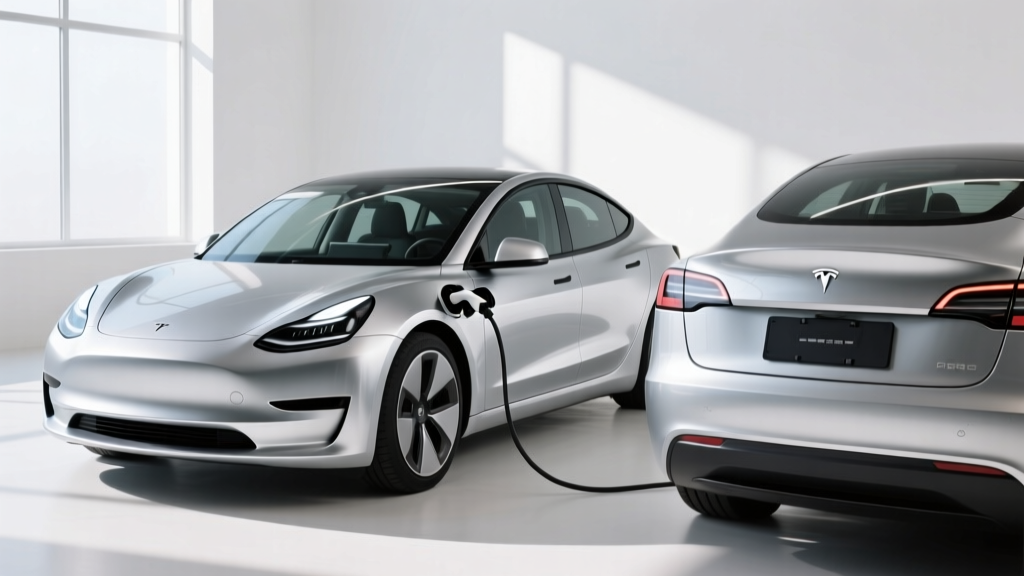
If you've searched for "Tesla charge cable unlatch," you're not alone. One of the most common friction points for Tesla owners — new and experienced — involves the charge port latch mechanism refusing to release the cable cleanly. Whether it's a frozen latch in sub-zero weather, a software glitch preventing unlatch via the app, or the physical button on the Supercharger handle failing to disengage, understanding how the system works (and fails) is essential before you even evaluate the car itself.
This guide tackles the charge cable unlatch issue head-on, then delivers a full profile of the current 2026 Tesla Model 3 — the vehicle most affected by these reports and still the benchmark compact electric sedan.
2026 Tesla Model 3: Range, Battery, and Real-World Efficiency
The 2026 Model 3 lineup carries over three trims with distinct battery chemistries and range profiles. Tesla has standardized on the North American Charging Standard (NACS) connector across all trims, and the refreshed "Highland" body continues with improved aerodynamics (0.219 Cd) that directly benefit highway efficiency.
| Spec | Long Range RWD | Long Range AWD | Performance |
|---|---|---|---|
| EPA Range | 363 mi | 346 mi | 315 mi |
| Battery (usable) | 75 kWh (NMC) | 75 kWh (NMC) | 75 kWh (NMC) |
| Efficiency | 132 MPGe / 25 kWh/100mi | 126 MPGe / 27 kWh/100mi | 113 MPGe / 30 kWh/100mi |
| 0-60 mph | 4.9 sec | 4.2 sec | 2.9 sec |
| Horsepower | 271 hp | 346 hp | 510 hp |
| Drivetrain | RWD | Dual-Motor AWD | Dual-Motor AWD |
| Base MSRP | $42,490 | $47,490 | $52,990 |
Charging Speed: DC Fast Charge, Level 2, and the Unlatch System
Charging infrastructure compatibility and speed remain Tesla's strongest advantage. The Model 3 charges on the proprietary NACS connector, which has been adopted by Ford, GM, Rivian, and most major automakers through 2025–2026, making Tesla Superchargers the de facto national fast-charging network.
| Level | Power | Miles Added per Hour | Notes |
|---|---|---|---|
| Level 1 (120V) | 1.4 kW | ~4 mi/hr | Emergency/trickle only |
| Level 2 (240V/48A) | 11.5 kW | ~44 mi/hr | Home Wall Connector; 0–100% in ~7.5 hrs |
| DC Fast (V3 Supercharger) | Peak 250 kW | ~1,000 mi/hr (peak) | 10–80% in ~25 min; tapers sharply above 80% |
| DC Fast (V4 Supercharger) | Peak 250 kW (Model 3 limited) | ~1,000 mi/hr (peak) | V4 hardware supports higher, but Model 3 architecture caps at 250 kW |
Charge curve reality: The Model 3 peaks at 250 kW only between roughly 10–30% State of Charge (SoC). From 30–60%, it sustains around 150–170 kW. Above 80%, speed drops to under 50 kW as the Battery Management System (BMS) protects cell longevity. Always precondition the battery by navigating to a Supercharger in the Tesla app — this warms the pack and enables peak charge rates, especially in cold weather.
Troubleshooting the Charge Cable Unlatch
The electronic latch system occasionally fails. Here's a practical diagnostic sequence:
- App/Touchscreen Unlatch: Go to Controls → Charging → Release Latch on the 15.4-inch touchscreen, or use the Tesla app. If this works, the physical button on the handle may be faulty.
- Unlock the Car: The latch auto-releases when the car is unlocked (via phone key, key card, or fob). Walk up, unlock, wait 2 seconds, then pull the handle.
- Manual Release Cable: Open the trunk, locate the small handle on the left side behind the trim panel (marked with a charge port icon), and pull firmly. This mechanically disengages the solenoid.
- 12V Battery Check: A depleted 12V lithium auxiliary battery will prevent the solenoid from actuating. The Model 3 uses a 16V lithium 12V-replacement battery; if the car won't wake, you may need a 12V jump to the front terminals under the tow eye cover.
- Software Reset: Hold both scroll wheels on the steering wheel for 10 seconds to reboot the MCU. Once the screen returns, try the touchscreen unlatch again.
If the cable remains stuck after all steps, the solenoid actuator likely needs replacement under warranty. Tesla's charging support documentation covers this under the basic vehicle warranty (4 years / 50,000 miles).
Performance, Interior, and Standout Tech
The Model 3 Performance trim delivers 510 hp and a 2.9-second 0–60 mph time, rivaling sports cars at twice the price. Even the base Long Range RWD at 4.9 seconds feels immediate thanks to instant electric torque. The dual-motor AWD trims add adaptive damping and a track mode (Performance only) that adjusts torque bias, stability control, and regen settings.
Interior dimensions:
- Front legroom: 42.2 inches
- Rear legroom: 35.2 inches
- Cargo (trunk + frunk): 23.0 cu ft total (19.8 trunk + 3.2 frunk)
- Rear seats fold 60/40 for longer cargo
The Highland refresh brought ventilated front seats, ambient lighting, a rear 8-inch touchscreen for passengers, and acoustic glass that cuts cabin noise significantly. The minimalist interior remains polarizing — no physical stalks (turn signals are on the steering wheel rim), no instrument cluster, and all climate controls live on the touchscreen.
Driver assistance: Basic Autopilot (traffic-aware cruise + lane centering) is standard. Enhanced Autopilot ($6,000) adds auto lane change, navigate on Autopilot, and Smart Summon. Full Self-Driving (Supervised) at $8,000 adds traffic light/stop sign recognition and city street autosteering. Critically, all Tesla driver-assist features are SAE Level 2 — the driver must remain fully engaged with hands on the wheel and eyes on the road at all times.
Pricing, Tax Credit Eligibility, and Total Cost
The 2026 Model 3 pricing structure reflects Tesla's strategy of undercutting legacy EV competitors while maintaining margin through manufacturing efficiency.
| Trim | MSRP | Est. After §30D Credit | Credit Eligible? |
|---|---|---|---|
| Long Range RWD | $42,490 | ~$34,990 | ✅ Up to $7,500 |
| Long Range AWD | $47,490 | ~$39,990 | ✅ Up to $7,500 |
| Performance | $52,990 | ~$45,490 | ✅ Up to $7,500 |
IRS §30D tax credit rules (2026): The federal credit offers up to $7,500 for qualifying new EVs, but eligibility depends on three hurdles:
- MSRP cap: Sedans must be under $55,000 — all Model 3 trims qualify.
- Buyer income cap: AGI must not exceed $150,000 (single), $225,000 (head of household), or $300,000 (joint). Check IRS §30D guidelines for current-year thresholds.
- Battery sourcing: A percentage of critical minerals and battery components must be sourced from the US or FTA partners. Tesla's US-built cells (with Panasonic at Giga Nevada/Texas) generally meet the requirement, but the exact credit amount ($3,750 or $7,500) depends on the specific build week and mineral sourcing compliance. Confirm with your tax professional before purchase.
- Point-of-sale transfer: As of 2024+, you can transfer the credit to the dealer at purchase for an immediate price reduction rather than waiting for a tax return credit.
Warranty, Ownership Costs, and Long-Term Battery Health
Tesla's warranty structure is competitive within the EV segment:
- Basic vehicle: 4 years / 50,000 miles (covers charge port solenoid, interior, electronics)
- Battery & drive unit: 8 years / 120,000 miles (Long Range RWD); 8 years / 120,000 miles (AWD/Performance)
- Battery retention threshold: Tesla warrants 70% capacity retention during the warranty period. If degradation exceeds 30%, Tesla replaces or refurbishes the pack at no cost.
Real-world NMC battery degradation data from Tesla fleet reports shows approximately 10–12% capacity loss after 100,000 miles. Daily charging to 80–90% (rather than 100%) and avoiding frequent DC fast charging in extreme heat extends pack longevity. The Model 3's active thermal management (liquid cooling/heating) is among the best in the industry for preserving battery State of Health (SoH).
Insurance note: Model 3 insurance premiums average 15–25% higher than equivalent gas sedans due to repair costs (aluminum/steel mixed body, sensor recalibration). Get quotes before purchasing — Tesla Insurance is available in many states and can be competitive.
Pros and Cons: The Honest Verdict
✅ Pros
- Best-in-class Supercharger network (17,000+ stalls in North America)
- 363-mile EPA range (Long Range RWD) beats most competitors under $50K
- 250 kW peak DC fast charging with reliable preconditioning
- Over-the-air updates continuously add features
- Lowest energy consumption (25 kWh/100mi) in its class
- Strong resale value relative to legacy EVs
❌ Cons
- Charge cable unlatch solenoid can fail (manual release needed)
- No physical turn signal stalks or instrument cluster
- Rear seat space tighter than Hyundai Ioniq 6 or BMW i4
- FSD (Supervised) remains Level 2 — not autonomous despite the name
- NMC battery more cold-sensitive than LFP alternatives
- Service center wait times can stretch weeks in some metro areas
Who Should Buy the 2026 Tesla Model 3?
Best for: Daily commuters with home Level 2 charging who prioritize range efficiency, fast road-trip charging via Superchargers, and a tech-forward driving experience. The Long Range RWD at ~$35,000 after the federal credit is arguably the best value-per-mile EV sedan available in 2026.
Consider alternatives if: You need maximum rear-seat space (check the Hyundai Ioniq 6 or BMW i4), prefer physical controls and a traditional instrument cluster, live in extreme cold where LFP chemistry or a heat-pump-equipped rival (like the Ioniq 6) may suit better, or want Level 4 autonomous capability (not available in any consumer vehicle).
Charge cable unlatch takeaway: The issue is real but manageable. Familiarize yourself with the manual release cable location before you need it, keep the Tesla app updated, and if the solenoid fails repeatedly, it's a warranty-covered repair. It shouldn't deter you from an otherwise outstanding EV — but it's a known quirk worth understanding.
Frequently Asked Questions
What is the real-world range of the 2026 Tesla Model 3?
The Long Range RWD achieves 363 miles EPA, but expect 290–310 miles on highway road trips and 220–250 miles in freezing temperatures. The Performance trim drops to 315 EPA / ~250 real-world highway miles due to stickier tires and higher power draw.
How fast does the Model 3 charge at home and on DC fast chargers?
At home on a Tesla Wall Connector (240V/48A), you get 11.5 kW / ~44 miles per hour, fully recharging in about 7.5 hours. On a V3 Supercharger, 10–80% takes approximately 25 minutes at peak 250 kW, though the charge curve tapers significantly above 80% SoC.
Does the 2026 Model 3 qualify for the $7,500 federal EV tax credit?
All three trims fall under the $55,000 MSRP sedan cap. Eligibility depends on your AGI (under $150K single / $300K joint) and battery sourcing compliance at the time of manufacture. Confirm exact credit amount ($3,750 or $7,500) with a tax professional and check the IRS clean vehicle credit page for the latest sourcing requirements.
Is the Model 3 worth buying vs the Hyundai Ioniq 6 or BMW i4?
The Model 3 wins on charging network access (Supercharger reliability), efficiency (25 kWh/100mi vs Ioniq 6's ~27), and total cost after credits. The Ioniq 6 offers more rear-seat room and an 800V architecture for slightly faster charging peaks. The BMW i4 provides a more traditional luxury interior but at a higher price with less range. For most buyers, the Model 3's ecosystem advantage is decisive.
How do I fix a stuck Tesla charge cable?
Try the touchscreen (Controls → Charging → Release Latch), the Tesla app, or unlocking the vehicle. If those fail, pull the manual release cable in the trunk behind the left-side trim panel. As a last resort, reboot the MCU by holding both steering wheel scroll wheels for 10 seconds. Persistent failures indicate a solenoid replacement is needed — covered under the 4-year/50,000-mile basic warranty.