Tesla's 2026 Lineup at a Glance
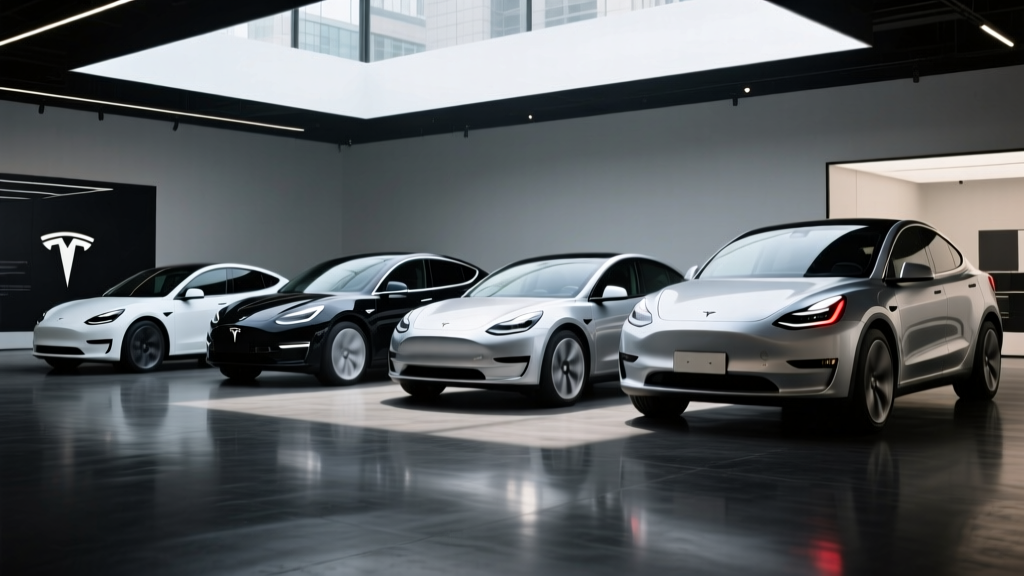
Tesla sells four core passenger vehicles in the U.S. for the 2026 model year: the Model 3 sedan, Model Y crossover, Model S luxury sedan, and Model X luxury SUV. Each shares Tesla's vertically integrated software stack, Supercharger network access, and minimalist interior philosophy — but they diverge sharply on range, price, and practicality. Below, we evaluate Tesla cars pros and cons across the full lineup with hard data: EPA range, battery chemistry, DC fast-charge speeds, real-world ownership costs, and federal tax-credit eligibility under current IRS §30D rules.
| Spec | Model 3 LR AWD | Model Y LR AWD | Model S LR | Model X LR |
|---|---|---|---|---|
| EPA Range | 341 mi | 320 mi | 402 mi | 335 mi |
| Battery (usable) | ~75 kWh (NMC) | ~75 kWh (NMC) | ~95 kWh (NMC) | ~95 kWh (NMC) |
| Peak DC Charge | 250 kW | 250 kW | 250 kW | 250 kW |
| 10–80% DC Time | ~27 min | ~27 min | ~33 min | ~33 min |
| Level 2 Rate | 11.5 kW (~44 mi/hr) | 11.5 kW (~44 mi/hr) | 11.5 kW (~44 mi/hr) | 11.5 kW (~44 mi/hr) |
| 0–60 mph | 4.2 sec | 4.8 sec | 3.1 sec | 3.8 sec |
| Horsepower | 346 hp | 384 hp | 670 hp | 670 hp |
| Drivetrain | Dual-Motor AWD | Dual-Motor AWD | Dual-Motor AWD | Dual-Motor AWD |
| MPGe (combined) | 132 MPGe | 122 MPGe | 120 MPGe | 102 MPGe |
| Cargo (max) | 23 cu ft | 72 cu ft | 28 cu ft | 88 cu ft |
| Base MSRP | $47,740 | $48,630 | $79,990 | $84,990 |
Sources: fueleconomy.gov, Tesla.com 2026 configurator.
Real-World Range: What the EPA Sticker Doesn't Tell You
EPA range estimates are measured under controlled lab conditions. Real-world driving — especially sustained highway speeds, cold temperatures, and elevation changes — consistently delivers less. Here's what to actually expect from Tesla's 2026 fleet.
Range Reality Check
Model 3 Long Range (EPA 341 mi): Expect ~290–310 mi on a mixed highway commute at 70 mph. In sub-freezing winter conditions (below 32°F), plan for 220–260 mi due to battery resistance and cabin heating draw. Tesla's heat pump (standard on all 2026 models) recovers some efficiency versus older resistive heaters, but cold-weather losses of 20–30% are physics, not a flaw.
Model Y Long Range (EPA 320 mi): The taller, heavier crossover loses slightly more to aerodynamic drag at highway speed. Expect ~265–285 mi real-world in mild weather, and ~200–240 mi in deep cold.
Model S Long Range (EPA 402 mi): The larger 95 kWh pack delivers genuine 340–360 mi highway range in temperate conditions — the strongest real-world performer in the lineup. Cold weather drops this to ~280–310 mi.
Model X Long Range (EPA 335 mi): The heaviest vehicle here, with falcon-wing door seals and a bluff front end. Expect ~275–300 mi real-world, falling to ~220–250 mi in winter.
For context, the EPA's side-by-side tool confirms Tesla's MPGe leadership among non-luxury EVs, but MPGe measures energy equivalence, not distance. Use kWh/100mi (Model 3: 25; Model Y: 27; Model S: 28; Model X: 33) for direct efficiency comparison against competitors like the Hyundai Ioniq 6 (24 kWh/100mi) or BMW iX (35 kWh/100mi).
Charging Speed: Supercharger Network vs. Home Level 2
All 2026 Teslas use the North American Charging Standard (NACS) connector natively — the port Tesla designed and that Ford, GM, Rivian, and most major automakers have now adopted. This gives Tesla owners first-party access to over 20,000 Supercharger stalls in North America, widely regarded as the most reliable public DC network by uptime metrics.
| Charge Level | Power | Miles Added per Hour | Typical Use Case |
|---|---|---|---|
| Level 1 (120V) | ~1.4 kW | ~5 mi/hr | Emergency / trickle top-off |
| Level 2 (240V, 48A) | 11.5 kW | ~44 mi/hr | Home Wall Connector, overnight |
| DC Fast (V3 Supercharger) | Up to 250 kW | ~200 mi in 15 min (peak) | Road trips, public stations |
| DC Fast (V4 Supercharger) | Up to 250 kW (cabinet-limited) | Similar to V3 for current Teslas | Newer highway corridors |
The Charge Curve Reality
Tesla's peak 250 kW rate only holds between roughly 10–30% State of Charge (SoC) when the battery is properly preconditioned via the onboard navigation routing. Above 50% SoC, the curve tapers significantly — by 80% you're pulling under 60 kW, and charging from 80–100% can take as long as 10–80%. For road trips, plan stops around 10–80% and skip the final 20% unless you're ending for the day. Preconditioning is automatic when you navigate to a Supercharger; arriving at a charger without preconditioning (e.g., pulling in from a cold-soak) can add 5–10 minutes to your session.
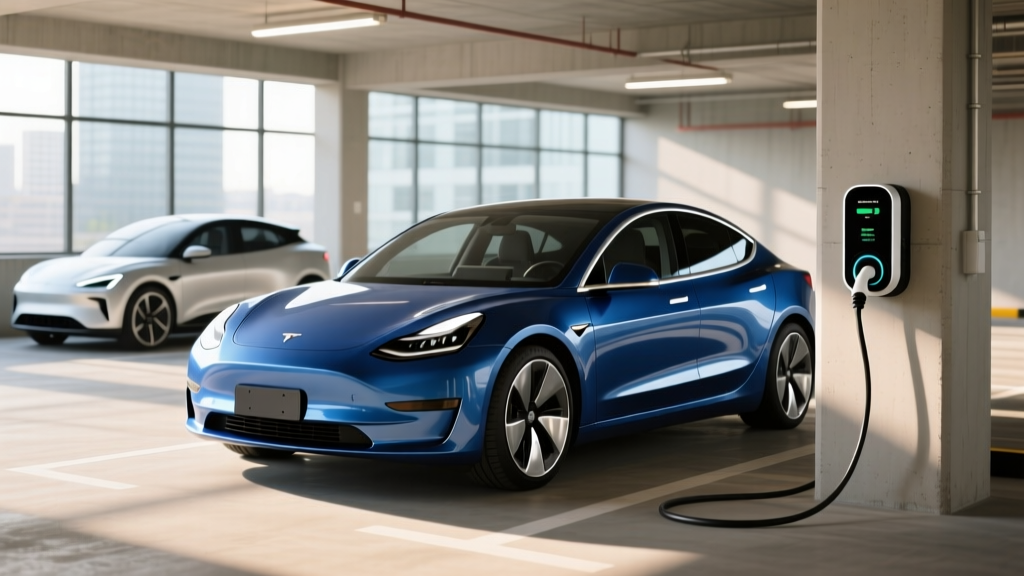
At home, the Tesla Wall Connector ($420, hardwired) delivers up to 11.5 kW on a 60A circuit. Most owners install a NEMA 14-50 outlet instead (~$8–12/hr of range on the Mobile Connector at 32A/7.7 kW). Budget $800–$2,000 for a professional 240V installation depending on panel proximity and local permit costs — and note that older homes with 100A panels may need a $2,000–$4,000 service upgrade.
Pricing, Trims, and Federal Tax Credit Eligibility
Tesla's pricing has stabilized after years of volatile cuts and hikes. Here's the 2026 lineup with federal tax-credit implications under IRS §30D rules.
| Model / Trim | MSRP | §30D Credit | Effective Price | Eligibility Notes |
|---|---|---|---|---|
| Model 3 RWD (LFP) | $38,990 | Up to $7,500 | ~$31,490 | LFP battery — critical minerals sourcing may limit to $3,750 depending on supply chain; MSRP under $55K cap ✓ |
| Model 3 LR AWD | $47,740 | Up to $7,500 | ~$40,240 | NMC pack; MSRP under $55K cap ✓; income limits apply |
| Model Y LR AWD | $48,630 | Up to $7,500 | ~$41,130 | MSRP under $80K SUV cap ✓; qualifies for point-of-sale transfer |
| Model Y Performance | $53,490 | Up to $7,500 | ~$45,990 | Under $80K SUV cap ✓ |
| Model S LR | $79,990 | $0 | $79,990 | Exceeds $55K sedan MSRP cap ✗ |
| Model X LR | $84,990 | $0 | $84,990 | Exceeds $80K SUV MSRP cap ✗ |
§30D Eligibility Checklist (2026 Rules)
- Income caps: Modified AGI ≤ $150K single / $225K head of household / $300K joint filers
- MSRP caps: ≤ $55,000 for sedans (Model 3) / ≤ $80,000 for SUVs and trucks (Model Y)
- Battery sourcing: Critical minerals and battery component requirements phase up annually — the full $7,500 requires meeting both thresholds; partial ($3,750) if only one is met
- Point-of-sale transfer: You can assign the credit to the dealer at purchase for an immediate price reduction rather than waiting to claim on your tax return
- VIN verification: Confirm your specific vehicle's eligibility at fueleconomy.gov before purchase — Tesla's battery supply chain has shifted credit eligibility mid-year before
Note: Model S and Model X buyers do not qualify for §30D due to MSRP caps. Some state-level incentives (e.g., California, Colorado, New York) may still apply — check your state energy office.
Tesla Cars Pros and Cons: The Full Breakdown
✅ Pros
- Supercharger network: 20,000+ stalls, 99%+ uptime, automatic plug-and-charge billing — still the gold standard for road-trip charging in 2026
- Efficiency leadership: Tesla's heat pump, SiC inverters, and low-drag design deliver class-leading kWh/100mi across the lineup
- Over-the-air updates: Continuous feature additions and performance improvements without dealer visits — Tesla's software cadence is unmatched
- Performance per dollar: Model 3 LR does 0–60 in 4.2 sec for under $48K; Model S Plaid hits 1.99 sec for under $90K — no ICE competitor matches this at the price
- Resale value: Tesla models retain value better than most EVs, though depreciation has increased as competition grows
- NACS standardization: Owning the connector means native compatibility with every charging network going forward — no adapters needed
- Safety ratings: Model 3 and Model Y hold IIHS Top Safety Pick+ and 5-star NHTSA ratings; low center of gravity minimizes rollover risk
❌ Cons
- Minimalist interior isn't for everyone: No physical stalks (turn signals are on the steering wheel touch buttons in refreshed models), no instrument cluster, no Apple CarPlay/Android Auto
- Panel gaps and build variance: Improved since Fremont's early days, but Austin-built Model Y units still show occasional trim and alignment inconsistencies vs. legacy luxury brands
- FSD (Supervised) is Level 2, not self-driving: Despite the "Full Self-Driving" name, NHTSA classifies this as SAE Level 2 — you must remain engaged, hands on or near the wheel, eyes on the road at all times. The $8,000 option does not eliminate driver responsibility
- No Model 3 or Model Y HUD: Speed and navigation info lives on the center screen only — a common complaint on long drives
- Insurance costs: Tesla insurance premiums run 20–40% higher than comparable ICE vehicles in most states due to repair costs and parts pricing; Tesla's own insurance product is available in select states but not universally cheaper
- Model S/X pricing exceeds tax credit caps: The flagship sedan and SUV get no federal purchase incentive, making them harder to justify vs. the Lucid Air or BMW iX
- Service center wait times: Mobile service handles minor issues well, but collision repair and major warranty work can involve multi-week waits in metro areas
Interior, Tech, and Daily Livability
All 2026 Teslas run the same 15.4-inch center touchscreen interface (17-inch in Model S/X, which can tilt between landscape and portrait). The infotainment system includes native navigation with real-time Supercharger routing, Netflix/YouTube/Theater mode while parked, a gaming suite, and Spotify/Apple Music integration. There is no Apple CarPlay or Android Auto — Tesla's walled garden is a dealbreaker for some buyers accustomed to phone-mirroring.
Cargo and Passenger Space
The Model 3's 23 cu ft trunk is sedan-competitive but trails hatchback rivals; rear legroom (35.3 in) is adequate for adults but tight for tall passengers on long trips. The Model Y's 72 cu ft with seats folded makes it a genuine small-family hauler, and the optional third row (for children only) adds flexibility. The Model X's 88 cu ft and standard third row offer the most utility in the lineup, though its $85K price puts it in BMW iX and Mercedes EQS SUV territory.
Driver Assistance: Autopilot vs. FSD (Supervised)
Every 2026 Tesla ships with Basic Autopilot (adaptive cruise + lane centering) at no extra cost. Enhanced Autopilot ($6,000) adds auto lane-change, navigate-on-autopilot, and Smart Summon. Full Self-Driving (Supervised) at $8,000 adds traffic-light recognition and city-street autosteer — but this remains SAE Level 2, meaning the driver is legally and practically responsible for all vehicle operation. Do not confuse Tesla's marketing terminology with SAE automation levels: only Waymo and Zoox robotaxis operate at Level 4 (no driver needed in a defined zone).
⚠️ FSD (Supervised) Limitations
FSD does not make the vehicle autonomous. It requires continuous driver supervision, can misinterpret construction zones, may not detect all stationary objects, and does not operate in all weather conditions. NHTSA's Standing General Order requires Tesla to report all Level 2+ crashes. Review NHTSA's crash data portal before purchasing FSD.
Warranty and Battery Longevity
Tesla's warranty structure is straightforward but not class-leading:
- Basic Vehicle: 4 years / 50,000 miles
- Battery & Drive Unit (Model 3/Y): 8 years / 100,000 miles (120,000 for LR/AWD)
- Battery & Drive Unit (Model S/X): 8 years / 150,000 miles
- Capacity retention threshold: Tesla warrants that the battery will retain at least 70% of original capacity during the warranty period
Real-world degradation data from fleet analytics (Tessie, Recurrent Auto) shows Tesla NMC packs losing roughly 5–8% capacity in the first 50,000 miles, then flattening to ~10–12% total loss at 150,000 miles. LFP packs (Model 3 RWD) degrade more slowly but have lower energy density. Out-of-warranty battery replacement costs $12,000–$20,000 depending on pack size — a figure to factor into 10-year ownership models.
Decision Framework: Which Tesla (If Any) Is Right for You?
Choose Tesla If...
- Model 3 RWD ($38,990): You want the lowest-cost entry into the Supercharger ecosystem, commute under 50 miles daily, and can charge at home. LFP chemistry means you can (and should) charge to 100% daily without degradation concerns.
- Model 3 LR AWD ($47,740): You need all-weather traction, take regular 200+ mile road trips, and want the best efficiency-to-price ratio in the EV market. Strongest value in the lineup.
- Model Y LR AWD ($48,630): You have a family, need cargo flexibility, and want tax-credit eligibility. The best-selling vehicle in America (gas or electric) for good reason.
- Model S LR ($79,990): You want 400-mile range, sub-3.5-sec acceleration, and don't need the tax credit. Competes with Lucid Air Pure and BMW i5 — drive all three before deciding.
- Model X LR ($84,990): You need three rows, falcon-wing doors for tight parking, and accept the price premium. Cross-shop the Kia EV9 and Rivian R1S first.
Look Elsewhere If...
- You want Apple CarPlay, a head-up display, or physical controls — consider Hyundai Ioniq 5/6, BMW i4/i5
- You want Level 3+ hands-off highway driving today — GM's Super Cruise (hands-off on mapped highways) offers a different experience
- You need 350+ kW DC charging — Hyundai/Kia's E-GMP platform (Ioniq 5, EV6) charges 10–80% in ~18 minutes on 350 kW chargers
- You want a truck — the Cybertruck exists but sits outside this passenger-car comparison; the Rivian R1T and Ford F-150 Lightning are more proven
Frequently Asked Questions
What is the real-world range of Tesla cars in 2026?
Real-world range depends on model, speed, and temperature. The Model 3 LR delivers ~290–310 mi at highway speeds in mild weather, dropping to ~220–260 mi in sub-freezing cold. The Model S LR is the range king at ~340–360 mi real-world. Always plan road trips around 80% of EPA range to buffer for conditions and charging availability.
How fast do Teslas charge at home and on the road?
At home on a Level 2 Wall Connector (11.5 kW), all 2026 Teslas add ~44 miles of range per hour — a full overnight charge from 20% to 100% takes roughly 8–9 hours. On DC fast chargers, Teslas peak at 250 kW and charge from 10–80% in approximately 27–33 minutes depending on pack size, with significant taper above 80% SoC.
Does Tesla qualify for the $7,500 federal EV tax credit?
The Model 3 (RWD and LR) and Model Y (all trims) qualify for up to $7,500 under §30D, subject to buyer income limits ($150K single / $300K joint), MSRP caps ($55K sedan / $80K SUV), and battery-sourcing requirements that may reduce the credit to $3,750. The Model S and Model X exceed MSRP caps and do not qualify. Always verify your specific VIN at fueleconomy.gov before purchase.
Is Tesla's FSD actually self-driving?
No. Full Self-Driving (Supervised) is classified as SAE Level 2 driver assistance, the same category as GM Super Cruise and Ford BlueCruise. The driver must remain fully engaged and is legally liable for all vehicle operation. Only Level 4 services like Waymo operate without a driver, and those are limited to geo-fenced urban zones in select cities.
Are Teslas expensive to insure?
Yes, relative to ICE vehicles. Average Tesla insurance premiums run 20–40% higher than comparable gas cars due to higher repair costs, specialized parts, and aluminum body panels. Tesla offers its own insurance product in ~12 states using real-time driving data, which can be cheaper for safe drivers but isn't available everywhere. Get quotes from at least three insurers before purchasing.
How long do Tesla batteries last?
Tesla warrants its batteries for 8 years / 100,000–150,000 miles (depending on model) with a 70% capacity retention floor. Real-world fleet data shows most NMC packs retaining ~88–90% capacity at 100,000 miles. LFP packs (Model 3 RWD) degrade even more slowly. Out-of-warranty replacement runs $12,000–$20,000 — rare but a real financial risk past year 8.
Is buying a Tesla worth it versus competitors in 2026?
The Model 3 and Model Y remain the default recommendations for first-time EV buyers who have home charging access, primarily because of the Supercharger network's reliability and Tesla's efficiency advantage. However, the Hyundai Ioniq 5, Ford Mustang Mach-E, BMW i4, and Chevrolet Equinox EV all offer compelling alternatives with CarPlay, physical controls, or faster 350 kW charging. Test-drive at least two competitors before committing.