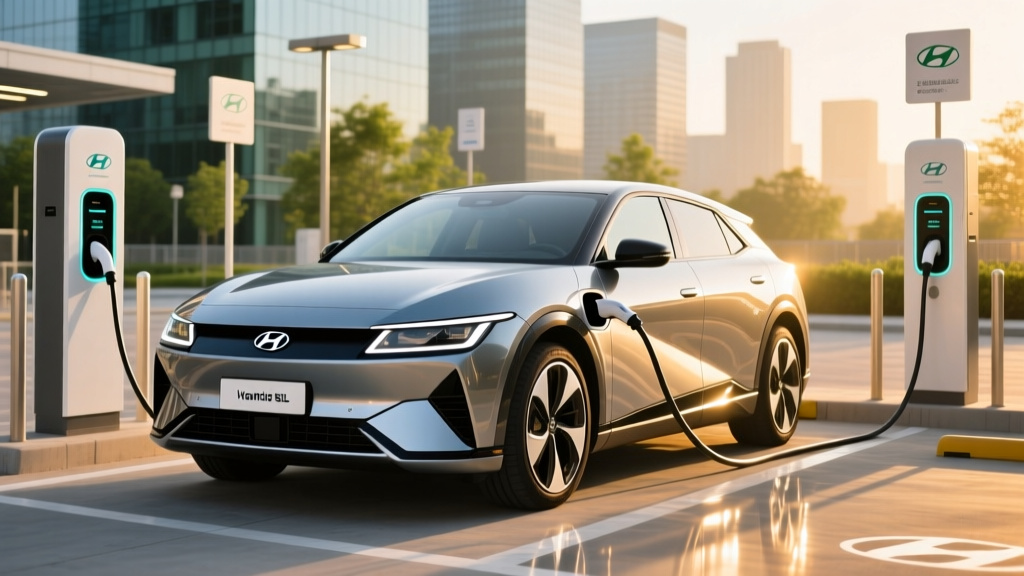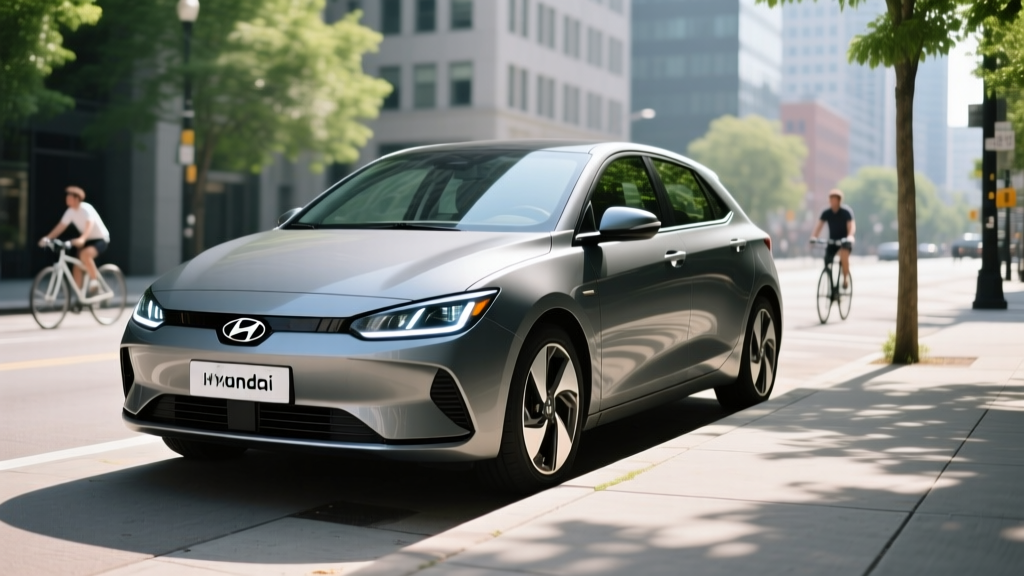
The compact EV segment is about to get a serious new contender. The Hyundai Ioniq 2 — Hyundai's entry-level addition to its Ioniq electric sub-brand — is positioned to undercut the Ioniq 5 on price while still delivering competitive range, modern charging architecture, and the brand's generous warranty. For buyers searching for a Hyundai Ioniq 2 affordable electric vehicle option in a market still dominated by $45,000+ EVs, this could be the sweet spot.
But "affordable" in the EV world is relative, and specs on paper don't always translate to satisfaction in the driveway. Below, we dissect everything known about the 2026 Ioniq 2 — range, charging, pricing, tax-credit eligibility, and how it stacks up against rivals like the Chevrolet Bolt EV, Nissan Leaf successor, and Tesla's rumored low-cost model.
Hyundai Ioniq 2: Key Specifications at a Glance
| Spec | Estimated Figure |
|---|---|
| EPA Range | ~250–280 miles (preliminary) |
| Battery Capacity | ~58–65 kWh usable (LFP expected) |
| DC Fast Charge Peak | ~150 kW (estimated) |
| 10–80% DC Charge Time | ~25–30 minutes (estimated) |
| Level 2 Home Charge Rate | ~10.9 kW (est. ~35 mi/hr) |
| Drivetrain | Rear-wheel drive (single motor) |
| Horsepower | ~160–170 hp (estimated) |
| 0–60 mph | ~7.5–8.0 seconds (estimated) |
| Efficiency | ~120–130 MPGe / ~26–28 kWh/100mi |
| Starting MSRP | ~$30,000–$33,000 (estimated) |
| Battery Warranty | 10 years / 100,000 miles |
Sources: Hyundai Motor Group announcements; industry analysis. Final EPA figures pending certification.
Range and Efficiency: What to Expect in the Real World
EPA Estimate: ~250–280 miles
Real-World Highway (70 mph): ~210–240 miles
Cold Weather (below 32°F): ~175–210 miles (20–30% reduction typical for LFP packs without heat pump preconditioning)
Hyundai is targeting the 250–280 mile EPA range window for the Ioniq 2, which places it squarely in the commuter-sweet-spot category. For context, the current Chevrolet Bolt EV achieves 259 miles EPA from a 65 kWh battery, and the Ioniq 2 is expected to use a similarly sized pack.
The Ioniq 2 is widely expected to adopt LFP (lithium iron phosphate) battery chemistry for its base trim. LFP offers several ownership advantages: longer cycle life (often 3,000+ cycles vs. ~1,500 for NMC), greater thermal stability, and lower cost. The trade-off is lower energy density — meaning a slightly heavier pack for the same kWh — and more pronounced cold-weather range loss compared to NMC chemistry.
If Hyundai equips the Ioniq 2 with a heat pump (standard on the Ioniq 5 in most markets), cold-weather losses could be mitigated to around 15–20%. Without one, expect the full 25–30% hit common to LFP packs in freezing conditions. This is a critical spec to watch when final trim details emerge.
Efficiency should land around 120–130 MPGe combined, or roughly 26–28 kWh per 100 miles. That translates to about $0.04–$0.06 per mile on the U.S. average electricity rate of ~$0.17/kWh — dramatically cheaper than a 30 MPG gas car at $3.30/gallon ($0.11/mile).
Charging Speed: DC Fast Charging and Home Level 2
| Charging Level | Power | Speed |
|---|---|---|
| Level 1 (120V household) | ~1.4 kW | ~4–5 miles per hour |
| Level 2 (240V home/public) | ~10.9 kW | ~35 miles per hour (full charge ~6–7 hrs) |
| DC Fast Charge | ~150 kW peak | 10–80% in ~25–30 min |
The Ioniq 2 will likely charge via the NACS (North American Charging Standard) connector, as Hyundai has confirmed its transition to NACS for North American models starting with 2025 model-year vehicles. This grants access to Tesla's Supercharger network — currently the most reliable and expansive DC fast-charging network in the U.S. — using the vehicle's native port without an adapter.
At an estimated 150 kW peak DC charge rate, the Ioniq 2 won't match the Ioniq 5's class-leading 240 kW (enabled by its 800V architecture). The Ioniq 2 is expected to use a conventional 400V platform, which keeps costs down but caps charging speed. Expect the charge curve to taper noticeably above 60% State of Charge (SoC), with the final 80–100% taking nearly as long as the 10–80% session.
Practical takeaway: For daily commuting, home Level 2 charging will cover virtually all needs — plug in overnight and wake up to a full battery. For road trips, plan for a 25–30 minute stop every 200-ish miles. That's a coffee-and-restroom break, not a lunch stop, but it's noticeably slower than 800V competitors.
Performance and Driving Dynamics
The Ioniq 2 is not positioned as a performance EV. With an estimated 160–170 horsepower from a single rear-mounted motor and a 0–60 mph time around 7.5–8.0 seconds, it's adequate for highway merging and city driving but won't pin you to your seat. For comparison, the Ioniq 5 RWD makes 168 hp and hits 60 in about 7.4 seconds, while the dual-motor AWD version drops that to 4.5 seconds.
What the Ioniq 2 should offer is refined urban drivability. EVs deliver instant torque from 0 RPM, so even a modest-power EV feels responsive off the line and in stop-and-go traffic. Hyundai's E-GMP platform (or a derivative for the smaller Ioniq 2) has proven well-tuned for ride comfort, and the low center of gravity from the under-floor battery pack should keep body roll controlled in corners.
Regenerative braking with multiple levels — including a true one-pedal driving mode — is expected, consistent with Hyundai's current EV lineup. The Ioniq 5's i-Pedal mode is one of the smoother implementations in the segment, and the Ioniq 2 should inherit this.
Pricing, Trims, and Federal Tax Credit Eligibility
| Trim (Est.) | MSRP (Est.) | After Est. §30D Credit |
|---|---|---|
| SE Standard Range | ~$30,000 | ~$22,500–$26,250 |
| SEL | ~$33,000 | ~$25,500–$29,250 |
| Limited | ~$37,000 | ~$29,500–$33,250 |
Hyundai's pricing strategy for the Ioniq 2 appears aimed squarely at the sub-$35,000 segment before incentives — a price point that, if achieved, would make it one of the most affordable new EVs on the U.S. market.
Federal tax credit (§30D) eligibility is the big variable. Under current IRS rules for new clean vehicles, the Ioniq 2 must satisfy several requirements to qualify for up to $7,500:
- MSRP cap: Vans, SUVs, and pickup trucks are capped at $80,000; other vehicles (sedans, hatchbacks) at $55,000. The Ioniq 2, as a compact hatchback/crossover, would fall under the $55,000 cap — easily satisfied at its expected price.
- Buyer income limits: Modified adjusted gross income must not exceed $150,000 (single), $225,000 (head of household), or $300,000 (joint filers).
- Battery component sourcing: A percentage of battery components must be manufactured or assembled in North America, increasing annually. The critical minerals requirement also tightens each year.
- Final assembly: Must occur in North America. Hyundai's new EV plant in Ellabell, Georgia (Savanah area) is expected to produce the Ioniq 2 for the U.S. market, which should satisfy this requirement.
- Point-of-sale transfer: Buyers can transfer the credit to the dealer at purchase, effectively reducing the purchase price upfront rather than waiting for a tax refund.
Critical caveat: Battery sourcing rules are the wildcard. Hyundai has been working to localize its battery supply chain through partnerships with SK On and LG Energy Solution's U.S. plants, but the specific cell chemistry and mineral sourcing for the Ioniq 2's LFP pack — which often relies on Chinese-processed lithium and iron — could jeopardize partial or full credit eligibility. We'll update this section when Hyundai confirms its credit qualification status. Always verify current eligibility on the fueleconomy.gov tax credit tracker before purchasing.
Interior, Cargo, and Technology
The Ioniq 2 is expected to be a compact hatchback or subcompact crossover — think slightly smaller than the Ioniq 5, which itself slots below the Ioniq 6 sedan in Hyundai's EV hierarchy. Expected interior dimensions place it in the same ballpark as the Chevrolet Bolt EV:
- Cargo volume (behind rear seats): ~20–24 cu ft (estimated)
- Cargo volume (rear seats folded): ~50–55 cu ft (estimated)
- Rear legroom: ~35–37 inches (estimated)
- Front headroom: ~39–40 inches (estimated)
On the technology front, expect Hyundai's latest infotainment system with a 12.3-inch touchscreen, wireless Apple CarPlay and Android Auto, over-the-air (OTA) update capability, and the full Hyundai SmartSense ADAS suite. SmartSense includes:
- Forward collision-avoidance assist with pedestrian/cyclist detection
- Lane keeping assist and lane following assist
- Blind-spot collision-avoidance assist
- Rear cross-traffic collision-avoidance assist
- Adaptive cruise control with stop-and-go (on higher trims)
- Highway driving assist (SAE Level 2 — driver must remain engaged)
Higher trims may add a digital key (phone-as-key via NFC/UWB), vehicle-to-load (V2L) capability for powering external devices, a head-up display, and Hyundai's Digital Side Mirrors (camera-based, market-dependent).
How It Compares: Ioniq 2 vs. the Affordable EV Competition
| Spec | Hyundai Ioniq 2 (Est.) | Chevrolet Bolt EV | Nissan Leaf (2025) |
|---|---|---|---|
| EPA Range | ~250–280 mi | 259 mi | 212 mi (SV) / 149 mi (S) |
| Battery | ~58–65 kWh LFP | 65 kWh NMC | 40/60 kWh NMC |
| DC Fast Charge | ~150 kW (NACS) | 55 kW (CCS) | ~100 kW (CHAdeMO) |
| 10–80% Time | ~25–30 min | ~55 min | ~40 min |
| Starting MSRP | ~$30,000 | ~$27,000 | ~$29,000 |
| Battery Warranty | 10 yr / 100k mi | 8 yr / 100k mi | 8 yr / 100k mi |
The Ioniq 2's primary advantages over the Bolt EV and Leaf are faster DC charging (the Bolt's 55 kW peak is painfully slow for road trips), NACS native access to Tesla Superchargers, and Hyundai's industry-leading 10-year/100,000-mile battery warranty — two years longer than GM and Nissan offer.
The Bolt EV retains an edge on base price and proven availability (it's on sale now), while the Leaf is hamstrung by its CHAdeMO connector in a CCS/NACS world and its shorter range on the base trim.
Pros and Cons
✅ Pros
- Projected sub-$33,000 starting MSRP — among the most affordable new EVs
- Native NACS connector — no adapter needed for Tesla Superchargers
- LFP battery chemistry — longer cycle life, better thermal safety
- 10-year / 100,000-mile battery warranty (best in class)
- Estimated 250+ mile EPA range covers most commutes comfortably
- Full Hyundai SmartSense ADAS suite standard
- OTA updates and modern infotainment
❌ Cons
- 400V platform limits DC charging to ~150 kW (slower than 800V rivals)
- LFP cold-weather range loss can be significant without a heat pump
- Modest power (~160–170 hp) — not a performance EV
- Tax credit eligibility uncertain due to LFP battery sourcing
- Smaller cargo area than Ioniq 5 or compact SUV competitors
- Not yet available for purchase — final specs unconfirmed
Who Should Buy the Hyundai Ioniq 2?
- Daily commuters with a 30–80 mile round trip who can charge at home overnight
- First-time EV buyers who want low upfront cost and a strong warranty safety net
- Urban and suburban drivers who rarely need more than 200 miles in a day
- Budget-conscious buyers who want access to the Tesla Supercharger network without buying a Tesla
- You take frequent 400+ mile road trips and can't tolerate 30-minute charge stops
- You need AWD for snow-belt winters (no AWD option expected)
- You need SUV-level cargo space for family hauling
- You live in an area with limited public charging and no home charging option
Frequently Asked Questions
What is the real-world range of the Hyundai Ioniq 2?
Based on preliminary estimates of 250–280 miles EPA, expect roughly 210–240 miles in real-world highway driving at 70 mph, and 175–210 miles in freezing temperatures. LFP batteries tend to lose more range in cold weather than NMC packs, though a heat pump (if equipped) can reduce this penalty.
How fast does the Ioniq 2 charge?
At a DC fast charger, the Ioniq 2 is expected to peak around 150 kW and charge from 10–80% in approximately 25–30 minutes. At home on a Level 2 (240V) charger, it should add about 35 miles of range per hour, fully replenishing overnight in 6–7 hours.
Does the Hyundai Ioniq 2 qualify for the federal EV tax credit?
Likely, but it's not guaranteed. The Ioniq 2 should satisfy the MSRP cap (well under $55,000) and final-assembly requirement (expected U.S. production in Georgia). However, the LFP battery's critical mineral and component sourcing — particularly if processed in China — could reduce or eliminate the credit under current IRS §30D rules. Verify eligibility at the point of sale and consult a tax professional.
How much does the Ioniq 2 cost after tax credits?
If the full $7,500 federal credit applies, the base SE trim could drop from ~$30,000 to approximately $22,500 — making it one of the cheapest new EVs in America. Even a partial $3,750 credit brings it to ~$26,250. State and utility incentives may stack on top, depending on your jurisdiction.
Is the Ioniq 2 worth buying vs. the Chevrolet Bolt EV or Nissan Leaf?
If you can wait for availability, the Ioniq 2 offers meaningful advantages: faster DC charging (~150 kW vs. the Bolt's 55 kW), native NACS/Supercharger access, a longer 10-year battery warranty, and more modern platform architecture. The Bolt EV remains the price leader if you need to buy today, and its proven track record matters. The Leaf is hard to recommend given its CHAdeMO connector and limited range on the base trim.
Will the Ioniq 2 have all-wheel drive?
Hyundai has not confirmed an AWD variant. Given its positioning as an affordable, efficiency-focused commuter EV, a single-motor RWD layout is the expected configuration. If AWD is essential for your climate, consider the Ioniq 5 AWD or a competing compact EV with dual-motor options.
What connector does the Ioniq 2 use?
The Ioniq 2 for the North American market is expected to use the NACS (J3400) connector natively, granting direct access to Tesla Superchargers and a growing number of NACS-equipped public chargers from Electrify America, EVgo, and others.