Why Tesla Car Weight Matters More Than You Think
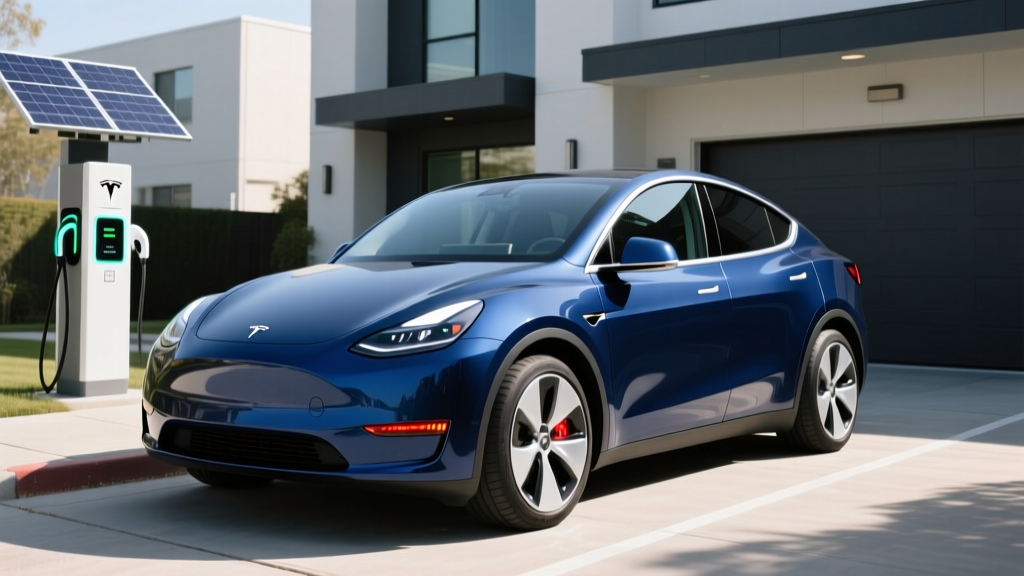
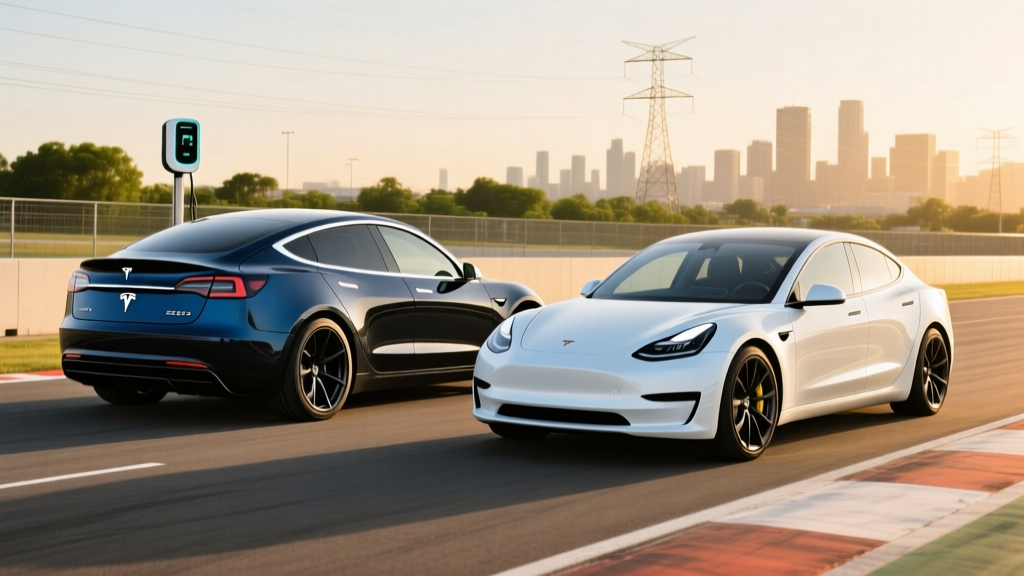
When shoppers compare EVs, they fixate on range and 0-60 times. But curb weight quietly governs both — and it shapes tire wear, braking distances, charging efficiency, and even how a vehicle handles on a mountain pass. Tesla's lineup spans from the relatively svelte Model 3 to the 5,185-pound Cybertruck, and that mass differential shows up everywhere: in the EPA efficiency ratings, in how quickly range evaporates at 80 mph, and in the kinetic energy the regen system must recapture on every descent.
This guide dissects every current-production Tesla's weight, then connects that number to the specs buyers actually care about — real-world range, MPGe, charging speed, and total cost. If you've ever wondered why a Model Y Long Range and a Rivian R1S with similar battery sizes deliver different highway range, mass is a large part of the answer.
2026 Tesla Lineup: Curb Weight and Core Specs at a Glance
| Model / Trim | Curb Weight (lbs) | Battery (kWh usable) | Chemistry | EPA Range (mi) | MPGe (combined) | 0-60 mph (sec) | HP | Drivetrain |
|---|---|---|---|---|---|---|---|---|
| Model 3 RWD | 3,862 | 57.5 | LFP | 272 | 132 | 5.8 | 271 | RWD |
| Model 3 Long Range AWD | 4,034 | 75 | NMC | 341 | 131 | 4.2 | 346 | Dual-motor AWD |
| Model 3 Performance | 4,065 | 75 | NMC | 315 | 121 | 2.9 | 510 | Dual-motor AWD |
| Model Y Long Range AWD | 4,363 | 75 | NMC | 320 | 122 | 4.8 | 384 | Dual-motor AWD |
| Model Y Performance | 4,418 | 75 | NMC | 298 | 117 | 3.5 | 456 | Dual-motor AWD |
| Model S Long Range | 4,561 | 95 | NMC | 402 | 120 | 3.1 | 670 | Dual-motor AWD |
| Model X Long Range | 5,092 | 95 | NMC | 335 | 109 | 3.8 | 670 | Dual-motor AWD |
| Cybertruck AWD | 6,603 | 123 | NMC | 340 | 74 | 4.1 | 600 | Tri-motor AWD |
Source: Tesla specifications and fueleconomy.gov. Curb weights reflect base configurations; adding options (20" wheels, yoke, towing package) alters both weight and range.
The Physics: How Weight Drives Range and Efficiency
Every pound a vehicle carries requires energy to accelerate, to climb grades, and to overcome rolling resistance. The relationship isn't linear — kinetic energy scales with the square of velocity, so a 6,603-lb Cybertruck at 80 mph carries roughly 72% more kinetic energy than a 3,862-lb Model 3 RWD at the same speed. That energy must come from the battery, and regen braking can only recover a fraction of it.
The efficiency data bears this out. The Model 3 Long Range, at 4,034 lbs with a 75 kWh pack, achieves 131 MPGe combined — roughly 3.9 miles per kWh. The Model X Long Range carries 1,058 more pounds with an even larger 95 kWh pack, yet manages only 109 MPGe, or about 3.1 miles per kWh. The Cybertruck's stainless-steel exoskeleton pushes its curb weight to 6,603 lbs, cratering efficiency to 74 MPGe despite a massive 123 kWh battery.
Weight also explains why the Model 3 Performance (4,065 lbs, 315 mi EPA) gives up 26 miles of range to the Long Range trim (4,034 lbs, 341 mi EPA) despite sharing the same 75 kWh NMC battery. The Performance variant's stickier tires, wider contact patch, and more aggressive powertrain tuning add rolling resistance and parasitic loss — and those 31 extra pounds are only a small part of the equation.
Charging Speed Across the Tesla Lineup
Heavier Teslas with larger batteries take longer to fill — but Tesla compensates by equipping the Model S, Model X, and Cybertruck with higher peak DC charge rates. Here's the full breakdown:
| Model / Trim | Peak DC Charge (kW) | 10-80% DC Time | Level 2 Rate (kW) | Miles Added/Hr (L2) |
|---|---|---|---|---|
| Model 3 RWD (LFP) | 170 | ~30 min | 11.5 | ~37 mi/hr |
| Model 3 Long Range / Perf | 250 | ~25 min | 11.5 | ~44 mi/hr |
| Model Y Long Range / Perf | 250 | ~27 min | 11.5 | ~40 mi/hr |
| Model S / Model X | 250 | ~30 min | 11.5 | ~35 mi/hr |
| Cybertruck | 350 (V4 Supercharger) | ~25 min | 19.2 | ~38 mi/hr |
Charge times assume battery preconditioning is active and ambient temps are 65-85°F. Cold batteries charge substantially slower until warmed.
A critical nuance for weight-conscious buyers: the charge curve. Every Tesla peaks at its rated kW only at low states of charge (typically 10-30% SoC). Above 50%, charge rates taper to protect the battery; above 80%, they drop sharply. The Cybertruck's 350 kW peak is impressive, but sustained average from 10-80% is closer to 200 kW. Heavier vehicles with larger packs spend more time in the taper zone because there are simply more kWh to push through. This is why a Model 3 Long Range (75 kWh) hits 80% faster than a Model S (95 kWh), even at the same 250 kW peak.
For home charging, the Cybertruck's 19.2 kW Level 2 capability is a standout — but it requires a 100-amp circuit and a Tesla Wall Connector configured for maximum output. Most homes with standard 60-amp EV circuits will deliver 11.5 kW (48 amps), which is adequate for overnight replenishment on any Tesla.
Pricing, Tax Credits, and Total Cost
| Model / Trim | Base MSRP | Federal §30D Credit | Effective Price (est.) |
|---|---|---|---|
| Model 3 RWD | $38,990 | Up to $7,500 | ~$31,490 |
| Model 3 Long Range AWD | $45,490 | Up to $7,500 | ~$37,990 |
| Model 3 Performance | $52,990 | Up to $7,500 | ~$45,490 |
| Model Y Long Range AWD | $44,990 | Up to $7,500 | ~$37,490 |
| Model Y Performance | $49,990 | Up to $7,500 | ~$42,490 |
| Model S Long Range | $79,990 | $0 (MSRP cap) | $79,990 |
| Model X Long Range | $84,990 | $0 (MSRP cap) | $84,990 |
| Cybertruck AWD | $79,990 | $0 (MSRP cap) | $79,990 |
Source: IRS §30D guidelines. Credit eligibility depends on buyer income caps ($150K single / $300K joint MAGI), vehicle MSRP caps ($55K sedans / $80K SUVs & trucks), and battery critical-mineral/component sourcing requirements that shift annually. The credit can be transferred to the dealer at point of sale as a purchase-price reduction. Always confirm current-year eligibility with your tax professional.
The MSRP cap is the key detail many buyers miss. Sedans (Model 3) must be under $55,000 MSRP to qualify; SUVs and trucks (Model Y, Model X, Cybertruck) must be under $80,000. The Model S and Model X exceed their respective caps in most configurations, eliminating the federal credit. The Cybertruck's AWD trim at $79,990 sits right at the truck cap — but only if the buyer meets income limits and the battery sourcing requirements are satisfied for the production batch.
For the Model 3 RWD, the math is compelling: $38,990 minus a $7,500 point-of-sale credit yields an effective price near $31,490 — competitive with a well-equipped Toyota Camry. That's the strongest value proposition in Tesla's lineup on a pure-cost basis, and the lightest car in the range reaps the efficiency rewards to keep operating costs low.
Warranty, Cargo, and Day-to-Day Practicality
Tesla's battery and drive unit warranty varies by model and chemistry:
- Model 3 RWD (LFP): 8 years / 100,000 miles, whichever comes first, with minimum 70% capacity retention
- Model 3 Long Range & Performance, Model Y (NMC): 8 years / 120,000 miles, 70% retention
- Model S & Model X (NMC): 8 years / 150,000 miles, 70% retention
- Cybertruck (NMC): 8 years / 120,000 miles, 70% retention
The LFP battery in the Model 3 RWD is worth calling out. Lithium iron phosphate chemistry sacrifices some energy density (hence the smaller 57.5 kWh pack and 272-mile range), but it offers superior cycle life and can be charged to 100% regularly without the degradation concerns that apply to NMC packs. For a daily commuter, this is a meaningful practical advantage — you get the full 272 miles every morning, not 80% of it.
Cargo capacity reflects the weight-to-utility trade-off:
- Model 3: 23 cu ft trunk (no hatch) + 3.1 cu ft frunk
- Model Y: 30.2 cu ft behind second row (76.2 cu ft folded) + 4.1 cu ft frunk
- Model S: 28 cu ft rear hatch + 2.8 cu ft frunk
- Model X: 14.4 cu ft behind third row (85.1 cu ft max) + 6.7 cu ft frunk
- Cybertruck: ~34 cu ft bed (lockable tonneau) + 7.1 cu ft frunk
Legroom is generous across the board — 42.7 inches front / 37.4 inches rear in the Model 3; 41.8 / 41.6 in the Model Y. The Model X's falcon-wing doors and optional third row make it the family hauler, but that complexity and the 5,092-lb curb weight come at a measurable efficiency cost.
Tech, Driver Assists, and What's Missing
Every 2026 Tesla ships with a 15.4-inch center touchscreen (17-inch in Model S/X), over-the-air updates, and Tesla's basic Autopilot suite (Traffic-Aware Cruise Control and Autosteer). Full Self-Driving (Supervised) remains a $8,000 add-on or $99/month subscription — and it is critical to understand that FSD is an SAE Level 2 driver-assist system, not autonomous driving. The driver must remain attentive, hands on or near the wheel, at all times. Tesla's camera-only vision stack has improved substantially, but it does not replace an engaged driver.
Standout tech includes the Tesla Supercharger network (over 60,000 stalls globally, with NACS now the industry standard adopted by Ford, GM, Rivian, and others), Sentry Mode dashcam recording, and the Tesla app's remote preconditioning — which warms the battery before you reach a Supercharger, enabling those peak charge rates.
Pros
- Industry-leading Supercharger network access
- Over-the-air updates continuously add features
- Model 3 RWD at ~$31.5K after credit is exceptional value
- LFP option allows daily 100% charging without degradation worry
- Strong resale values relative to most EV competitors
- Best-in-class energy efficiency (Model 3/Y per pound)
Cons
- No Apple CarPlay or Android Auto
- Panel gaps and interior material quality still trail legacy luxury brands
- Repair costs and insurance premiums run above segment average
- Model S/X priced out of federal tax credit eligibility
- Cybertruck weight (6,603 lbs) severely limits efficiency to 74 MPGe
- FSD (Supervised) costs $8,000 and remains Level 2 — not self-driving
Who Should Buy Which Tesla?
Commuter on a budget: Model 3 RWD. At 3,862 lbs and 272 EPA miles, it's the lightest, cheapest, and most efficient Tesla. LFP chemistry means you charge to 100% nightly without guilt. Effective price after the §30D credit can drop below $32K.
Family needing cargo space: Model Y Long Range AWD. The 4,363-lb curb weight is the trade-off for 30.2 cu ft of hatchback cargo, available third-row seats (for small children), and 320 miles of range. It's the best-selling vehicle in Tesla's lineup for good reason.
Road-tripper prioritizing range: Model S Long Range. The 4,561-lb sedan carries a 95 kWh pack for 402 EPA miles — the longest range in production. Highway real-world range still lands around 320-340 miles, which is unmatched.
Truck buyer who needs towing: Cybertruck AWD. Its 11,000-lb tow rating and stainless-steel bed are genuinely capable, but the 6,603-lb weight and 74 MPGe mean you'll visit Superchargers often on trips. Plan accordingly.
Frequently Asked Questions
What is the real-world range of a Tesla?
EPA estimates are a starting point, not a guarantee. For highway driving at 75-80 mph, expect 85-90% of the EPA sticker. In cold weather (below freezing), expect 70-80% due to battery resistance and cabin heating. The Model 3 Long Range (341 EPA) typically delivers 290-310 highway miles in summer and 250-270 in winter. Heavier models like the Model X lose proportionally more because mass amplifies the energy cost of climate control and rolling resistance.
How fast does a Tesla charge at home and on the road?
At home on a Level 2 Tesla Wall Connector (11.5 kW), expect 35-44 miles of range per hour of charging — enough to fully replenish any Model 3 or Model Y overnight. On DC fast chargers, peak rates range from 170 kW (Model 3 RWD) to 350 kW (Cybertruck at V4 Superchargers). Real-world 10-80% times are 25-30 minutes with battery preconditioning active. Charge speed tapers significantly above 80% SoC.
Does the Tesla Model 3 qualify for the $7,500 federal tax credit?
The Model 3 RWD and Long Range can qualify for up to $7,500 under IRS §30D, provided the buyer's modified adjusted gross income is under $150,000 (single) or $300,000 (joint), and the vehicle's battery meets critical-mineral and component-sourcing thresholds that tighten each year. The credit can be applied as a point-of-sale price reduction at the dealer. The Model 3 Performance ($52,990 MSRP) falls under the $55,000 sedan cap and may qualify, but always verify current sourcing compliance on irs.gov before purchasing.
Why is the Cybertruck so much heavier than other Teslas?
The Cybertruck's stainless-steel exoskeleton, 123 kWh battery pack, tri-motor powertrain, and 11,000-lb tow-rated frame push its curb weight to 6,603 lbs — nearly 2,800 lbs more than a Model 3 RWD. That mass enables its capability but crushes efficiency to 74 MPGe. For comparison, the Ford F-150 Lightning (similar truck capability) weighs around 6,200 lbs and achieves 70-78 MPGe depending on battery option.
Is a Tesla worth buying versus competitors like the Hyundai Ioniq 6 or BMW i4?
It depends on your priorities. The Tesla Supercharger network remains the most reliable and extensive DC fast-charging infrastructure in North America — a significant advantage for road-trippers. The Model 3's efficiency per pound is best-in-class. However, the Ioniq 6 (346 EPA miles, 800V architecture for ultra-fast charging) and BMW i4 (more refined interior, Apple CarPlay) offer compelling alternatives if you value interior quality or charging speed over network breadth. Test-drive both before committing.
Does Tesla car weight affect tire and brake wear?
Yes, substantially. Heavier EVs wear tires faster than comparable ICE vehicles — industry data suggests 20-30% shorter tire life due to the combined effects of mass and instant torque. A 5,092-lb Model X will consume tires noticeably faster than a 3,862-lb Model 3 under identical driving patterns. Brake wear, conversely, is minimal on all Teslas thanks to regenerative braking handling most deceleration — expect brake pads to last 100,000+ miles under normal use.