The Reality of Tesla Car Games: Entertainment While You Wait
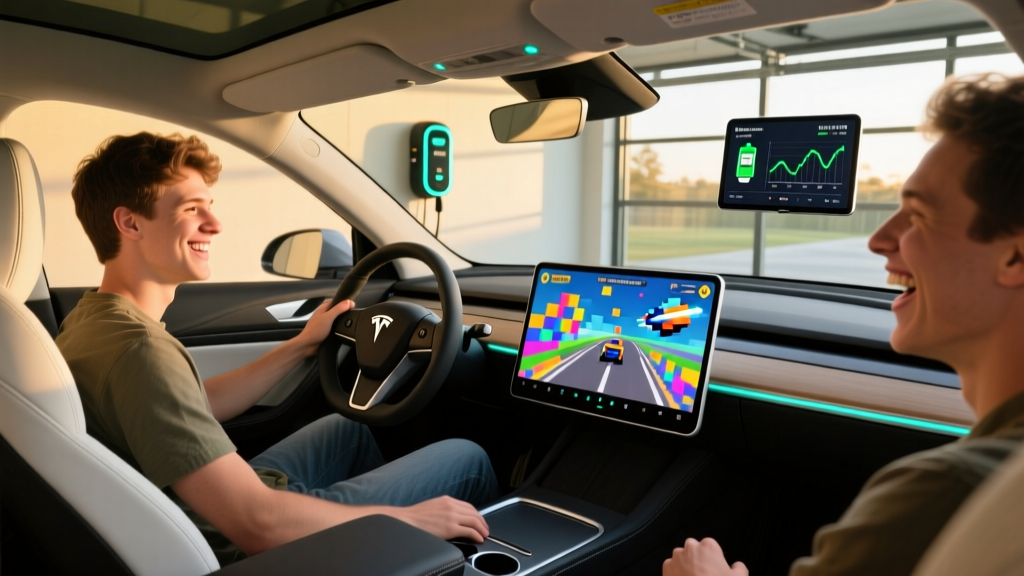
If you've spent any time at a Tesla Supercharger, you've likely noticed drivers enganced in their vehicles—not staring blankly at their phones, but actively playing games on the car's massive center touchscreen. Tesla car games have become one of the brand's most talked-about features, transforming charging stops from tedious waits into genuine entertainment sessions.
But here's what most buyers actually need to know: How good are these games really? Do they work while driving? And more importantly, does the rest of the Tesla ownership experience—range, charging speed, real-world efficiency—justify buying into the ecosystem for the entertainment alone?
This review breaks down Tesla's in-car gaming and entertainment suite alongside the hard specs that matter: EPA range versus real-world expectations, DC fast-charge curves, battery chemistry trade-offs, and whether 2026 Tesla models still qualify for the federal EV tax credit under current IRS §30D rules.
Which Tesla Models Support Car Games in 2026?
Every current-production Tesla—Model 3, Model Y, Model S, Model X, and the newer Cybertruck—ships with Tesla Arcade, the company's built-in gaming platform accessible through the Toybox menu on the center display. The experience varies by model based on screen size and hardware generation.
| Model | Screen Size | Hardware Gen | Game Library Access | Controller Support |
|---|---|---|---|---|
| Model 3 (Highland/2026) | 15.4" center | HW4 | Full Tesla Arcade | Bluetooth gamepads, USB |
| Model Y (Juniper/2026) | 15.4" center | HW4 | Full Tesla Arcade | Bluetooth gamepads, USB |
| Model S (2026) | 17" center | HW4 | Full Tesla Arcade + AAA titles | Bluetooth, USB, steering wheel |
| Model X (2026) | 17" center | HW4 | Full Tesla Arcade + AAA titles | Bluetooth, USB, steering wheel |
| Cybertruck (2026) | 18.5" center | HW4 | Full Tesla Arcade | Bluetooth gamepads, USB |
What Games Can You Actually Play?
Tesla Arcade includes a rotating library of titles spanning casual games (2048, Stardew Valley, Cuphead), racing simulators (Beach Buggy Racing, Tesla's own racing demos), and on Model S/X with AMD Ryzen processors, full AAA ports like Cyberpunk 2077 and The Witcher 3. You can also use the steering wheel and pedals as controllers in select racing titles—a gimmick, sure, but one that impresses passengers.
Critical limitation: Tesla car games are only playable while the vehicle is in Park. The car will not allow gameplay while in Drive, even with Autopilot or FSD (Supervised) engaged. This is a deliberate safety restriction, and Tesla has maintained it despite pressure from some owners.
Real-World Range: Beyond the EPA Sticker
The entertainment value of Tesla Arcade matters most during charging stops—and how often you need those stops depends entirely on real-world range, which rarely matches the EPA estimate.
2026 Tesla Model Y Long Range AWD — Range Reality Check
EPA Estimated Range: 320 miles
Real-World Highway (70-75 mph): ~260-280 miles
Real-World City/Suburban: ~290-310 miles
Cold Weather (below 32°F): ~220-250 miles (30% reduction typical)
Why the gap? EPA testing uses a mix of low-speed city cycles and moderate highway speeds. Sustained 75+ mph driving increases aerodynamic drag exponentially. Cold temperatures increase battery internal resistance and require cabin heating, which draws 2-4 kW continuously from the traction battery.
According to fueleconomy.gov, the 2026 Model Y Long Range achieves 122 MPGe combined, translating to roughly 28 kWh per 100 miles in mixed driving. Expect 32-35 kWh/100mi on the highway and 38-42 kWh/100mi in freezing conditions.
Charging Speed: How Long Until You're Back on the Road?
This is where Tesla's Supercharger network advantage becomes concrete—and where the gaming experience comes into play. If you're charging for 20-30 minutes, having Cyberpunk 2077 or Stardew Valley available makes the stop feel shorter.
| Charging Method | Peak Power | 10-80% Time | Miles Added per Hour |
|---|---|---|---|
| Level 1 (120V household) | 1.4 kW | N/A (too slow) | ~3-5 miles/hr |
| Level 2 (240V, 48A Wall Connector) | 11.5 kW | ~7-8 hours | ~35-44 miles/hr |
| DC Fast (V3 Supercharger) | 250 kW peak | ~25-28 minutes | ~1,000+ miles/hr (at peak) |
| DC Fast (V4 Supercharger) | 350 kW peak | ~18-22 minutes | ~1,200+ miles/hr (at peak) |
The Charging Curve Reality
Tesla's published "10-80% in 25 minutes" assumes optimal conditions: battery preconditioned to ~120°F, V3 Supercharger availability, and ambient temps above 50°F. In practice:
- Peak 250 kW is only sustained from roughly 10-30% State of Charge (SoC)
- 50-60% SoC: power tapers to ~150-180 kW
- 70-80% SoC: power drops further to ~80-120 kW
- Above 80%: charging slows dramatically to protect battery longevity—expect 20-40 kW
This taper is why Tesla (and most EV makers) quote 10-80% times rather than 0-100%. Charging the final 20% can take as long as the first 70%.
Battery Specs: Chemistry, Capacity, and Longevity
For 2026, Tesla uses two primary battery chemistries depending on model and trim:
- LFP (Lithium Iron Phosphate): Standard Range Model 3 and Model Y. Lower energy density but superior cycle life, thermal stability, and no cobalt/nickel supply-chain concerns. Tesla recommends charging LFP batteries to 100% regularly for calibration.
- NMC (Nickel Manganese Cobalt): Long Range and Performance variants of all models. Higher energy density enabling 300+ mile ranges, but Tesla recommends daily charge limits of 80-90% to maximize longevity.
| Model/Trim | Battery Capacity (usable) | Chemistry | Warranty |
|---|---|---|---|
| Model 3 Standard Range | ~57 kWh | LFP (CATL) | 8 years / 100,000 miles |
| Model 3 Long Range | ~79 kWh | NMC | 8 years / 120,000 miles |
| Model Y Long Range AWD | ~79 kWh | NMC | 8 years / 120,000 miles |
| Model S Plaid | ~95 kWh | NMC | 8 years / 150,000 miles |
| Cybertruck AWD | ~123 kWh | NMC | 8 years / 120,000 miles |
Tesla warrants that batteries will retain at least 70% of original capacity over the warranty period. Real-world data from high-mileage owners suggests NMC packs degrade ~8-12% over 100,000 miles, while LFP packs show 5-8% degradation over the same distance—though LFP's lower starting energy density means absolute range is lower.
Performance and Efficiency: The Numbers That Matter
Tesla's performance credentials are well-established, but efficiency—measured in kWh per 100 miles—is what determines your actual charging cost and frequency.
| Model | 0-60 mph | Horsepower | Drivetrain | MPGe (combined) | kWh/100mi |
|---|---|---|---|---|---|
| Model 3 RWD | 5.8 sec | 283 hp | Rear-Wheel Drive | 132 MPGe | 25 |
| Model 3 Long Range AWD | 4.2 sec | 346 hp | Dual-Motor AWD | 125 MPGe | 27 |
| Model Y Long Range AWD | 4.8 sec | 384 hp | Dual-Motor AWD | 122 MPGe | 28 |
| Model S Long Range | 3.1 sec | 670 hp | Dual-Motor AWD | 120 MPGe | 28 |
| Cybertruck AWD | 3.9 sec | 600 hp | Dual-Motor AWD | 76 MPGe | 44 |
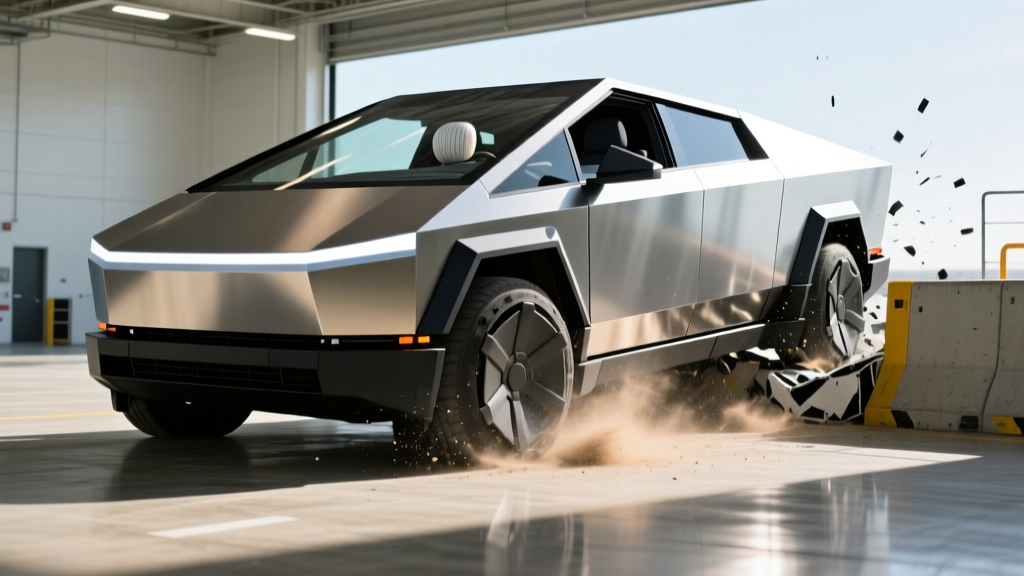
The Cybertruck's 44 kWh/100mi efficiency is notably poor—its brick-like aerodynamics (despite the angular styling claiming a low drag coefficient) and heavy curb weight (~6,700 lbs) demand far more energy per mile than a Model Y. For buyers prioritizing range and charging cost, the Model 3 and Model Y remain Tesla's most efficient offerings.
Interior Space and Practicality
Gaming on a 15-18 inch screen is only enjoyable if the cabin is comfortable. Here's how Tesla's interior dimensions stack up:
| Model | Front Legroom | Rear Legroom | Cargo (rear seats up) | Cargo (seats folded) |
|---|---|---|---|---|
| Model 3 | 42.7" | 35.2" | 23 cu ft | 60 cu ft |
| Model Y | 41.8" | 37.0" | 30 cu ft | 72 cu ft |
| Model S | 42.7" | 35.4" | 28 cu ft + frunk | 63 cu ft |
| Model X | 41.2" | 38.4" | 88 cu ft (5-seat) | N/A |
| Cybertruck | 42.0" | 38.0" | 67 cu ft bed | N/A |
The Model Y's crossover ride height and 37" rear legroom make it the most family-friendly option. The Model 3's lower seating position and 35.2" rear legroom feel tighter for adult passengers on longer trips.
Pricing, Tax Credits, and Total Cost
Tesla's pricing has fluctuated frequently, but as of early 2026, base MSRPs are:
| Model/Trim | Base MSRP | Federal Tax Credit (§30D) | Effective Price |
|---|---|---|---|
| Model 3 RWD | $38,990 | Up to $7,500* | ~$31,490 |
| Model 3 Long Range AWD | $45,990 | Up to $7,500* | ~$38,490 |
| Model Y Long Range AWD | $47,990 | Up to $7,500* | ~$40,490 |
| Model S Long Range | $79,990 | $0 (exceeds MSRP cap) | $79,990 |
| Cybertruck AWD | $79,990 | $0 (exceeds MSRP cap) | $79,990 |
*Federal tax credit eligibility requirements (2026):
- MSRP caps: Vans/SUVs/pickups ≤$80,000; sedans ≤$55,000. Model S and Cybertruck exceed these limits and are ineligible.
- Buyer income limits: AGI ≤$150,000 (single), ≤$225,000 (head of household), ≤$300,000 (joint). Above these thresholds, no credit.
- Battery sourcing: Vehicles must meet critical minerals and battery component requirements that phase in annually. Tesla's supply chain compliance varies by build date—confirm with your Tesla advisor before purchase.
- Point-of-sale transfer: As of 2024, buyers can transfer the credit to the dealer at purchase, reducing the upfront price rather than waiting for tax refund.
Always verify current eligibility at irs.gov or consult a tax professional before assuming the full $7,500 applies to your situation.
Pros and Cons: The Honest Take
Pros
- Best-in-class Supercharger network reliability and coverage
- Tesla Arcade provides genuine entertainment during 20-30 min charging stops
- Over-the-air updates continuously add features and improve performance
- Strong efficiency (Model 3/Y) keeps charging costs low
- Autopilot standard; FSD (Supervised) available for $8,000 or $99/month
- LFP battery option offers superior longevity for daily drivers
Cons
- Minimalist interior lacks physical controls—everything is touchscreen-dependent
- No Apple CarPlay or Android Auto integration
- Build quality inconsistencies still reported (panel gaps, paint defects)
- FSD (Supervised) is SAE Level 2—requires constant driver attention, not autonomous
- Model S/X pricing puts them well beyond tax credit eligibility
- Cybertruck efficiency is poor; real-world range significantly below EPA
Who Should Buy a Tesla in 2026?
Best for: Tech-forward commuters and road-trippers who value charging infrastructure reliability, want in-car entertainment during stops, and can charge at home (Level 2 installation recommended). The Model 3 and Model Y offer the best value proposition, especially when the federal tax credit applies.
Consider alternatives if: You need Apple CarPlay, prefer traditional button/knob interfaces, require towing capacity beyond 3,500 lbs (Model Y), or need a third row (look at Rivian R1S, Kia EV9, or wait for Tesla's rumored next-gen platform).
Not ideal for: Apartment dwellers without reliable home or workplace charging access. Public charging remains more expensive and less convenient than home Level 2, and relying solely on DC fast charging accelerates battery degradation.
FAQ: Tesla Car Games and Ownership
Can you play Tesla car games while driving?
No. Tesla Arcade games are only accessible when the vehicle is in Park. This restriction applies even with Autopilot or FSD (Supervised) engaged. Tesla enforces this via software—there is no override.
Do Tesla games work offline?
Most Tesla Arcade titles require an active internet connection (via Tesla's built-in LTE or your phone's hotspot). A few simple games like 2048 can run offline, but AAA titles like Cyberpunk 2077 require connectivity for license verification.
Can I use my own gaming controller with a Tesla?
Yes. Tesla supports Bluetooth gamepads (Xbox Wireless Controller, PlayStation DualSense, and generic Bluetooth controllers) as well as USB wired controllers. Pair via the Bluetooth menu in settings.
How much does Tesla Arcade cost?
Tesla Arcade is included free with all Tesla vehicles. There are no subscription fees or in-app purchases for the games themselves. Premium connectivity ($10/month) is required for LTE streaming but not for Arcade gameplay over Wi-Fi.
Is the Tesla Model Y still worth buying vs. competitors?
The Model Y Long Range AWD at ~$40,490 (after tax credit) remains competitive against the Hyundai Ioniq 5 ($44,000), Ford Mustang Mach-E ($45,000), and Kia EV6 ($43,000). Tesla's advantages: Supercharger network access, software updates, and efficiency. Competitors offer: better build quality, physical controls, Apple CarPlay, and in some cases faster 10-80% charging (Ioniq 5 at 18 minutes vs. Model Y at 25 minutes).
What's the real-world range of the Model Y in winter?
Expect 220-250 miles in sustained below-freeing temperatures, a ~30% reduction from the 320-mile EPA estimate. Preconditioning the battery while plugged in and using seat heaters instead of cabin heat can recover 10-15 miles of range.