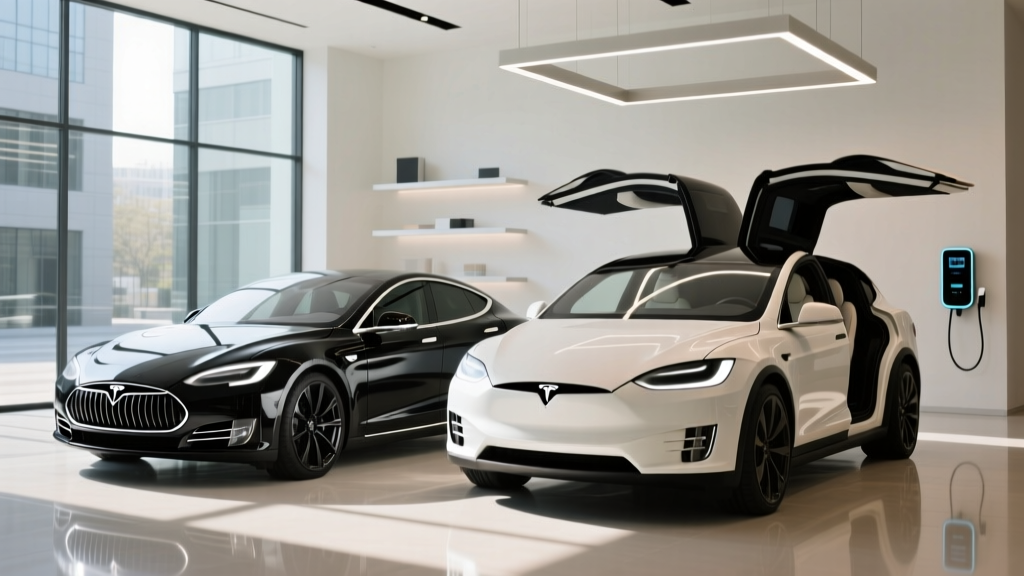
For over a decade, the Tesla Model S and Model X served as the flagship benchmarks of the electric vehicle market — the cars that proved EVs could be fast, luxurious, and capable of real road trips. But in early 2026, Tesla confirmed what industry analysts had long suspected: Tesla cancels Model S and X production, ending the run of its original luxury sedan and SUV to focus factory capacity on higher-volume platforms and next-generation robotics.
If you're researching these vehicles right now, you likely have questions. Can you still buy one? What were the final specs? Do remaining inventory units qualify for federal tax credits? And what should you consider instead? This guide answers every critical question with exact numbers, real-world ownership data, and a clear-eyed look at what comes next.
Final 2025 Model S and Model X: Complete Spec Breakdown
Before production ended, Tesla offered both vehicles in Long Range and Plaid trims. Here are the definitive final-year specifications based on EPA data and Tesla's official spec sheets.
| Specification | 2025 Model S Long Range | 2025 Model S Plaid | 2025 Model X Long Range | 2025 Model X Plaid |
|---|---|---|---|---|
| EPA Range | 402 mi | 359 mi | 335 mi | 311 mi |
| Battery (usable) | ~95 kWh (NMC) | ~95 kWh (NMC) | ~95 kWh (NMC) | ~95 kWh (NMC) |
| Drivetrain | Dual-Motor AWD | Tri-Motor AWD | Dual-Motor AWD | Tri-Motor AWD |
| Horsepower | 670 hp | 1,020 hp | 670 hp | 1,020 hp |
| 0–60 mph | 3.1 sec | 1.99 sec | 3.8 sec | 2.5 sec |
| MPGe (combined) | 120 MPGe | 116 MPGe | 102 MPGe | 98 MPGe |
| Efficiency | 28 kWh/100 mi | 29 kWh/100 mi | 33 kWh/100 mi | 34 kWh/100 mi |
| Peak DC Charge | 250 kW | 250 kW | 250 kW | 250 kW |
| 10–80% DC Time | ~30 min | ~30 min | ~31 min | ~31 min |
| Level 2 Rate | 11.5 kW (~44 mi/hr) | 11.5 kW (~44 mi/hr) | 11.5 kW (~36 mi/hr) | 11.5 kW (~36 mi/hr) |
| Base MSRP | $74,990 | $89,990 | $79,990 | $94,990 |
| Cargo Volume | 28 cu ft (rear) / 71 cu ft (folded) | 28 / 71 cu ft | 88 cu ft (behind 2nd row) | 88 cu ft |
| Battery Warranty | 8 yr / 150,000 mi | 8 yr / 150,000 mi | 8 yr / 150,000 mi | 8 yr / 150,000 mi |
Real-World Range: What the EPA Numbers Don't Tell You
- Model S Long Range: EPA 402 mi — expect ~320–340 mi at sustained 75 mph highway speeds; ~260–290 mi in freezing weather with cabin heat.
- Model S Plaid: EPA 359 mi — expect ~280–300 mi highway; aggressive driving drops this below 250 mi.
- Model X Long Range: EPA 335 mi — expect ~260–280 mi highway; towing cuts range roughly in half.
- Model X Plaid: EPA 311 mi — expect ~240–260 mi highway.
The Model S Long Range's 402-mile EPA figure was among the highest of any production EV sold in the U.S. However, the EPA test cycle includes significant low-speed and city driving, where regenerative braking recovers energy. On a flat interstate at 70–75 mph in moderate temperatures, real-world tests consistently show a 15–20% reduction from the sticker number. In sub-30°F weather without preconditioning, lithium-ion internal resistance increases and cabin heating draws significant power — plan for 25–35% range loss depending on conditions.
The Model X, with its larger frontal area and heavier curb weight (~5,100 lbs vs. the S's ~4,560 lbs), sacrifices efficiency for utility. If you plan to tow (rated up to 3,500 lbs), expect range to drop to approximately 160–180 miles per charge at highway speeds.
Charging Speed: DC Fast Charging and Home Setup
Both final-year models use Tesla's proprietary NACS connector and support up to 250 kW on V3 Superchargers. Here's what that means in practice:
| Charging Method | Power / Rate | Time / Range Added |
|---|---|---|
| Level 1 (120V household) | ~1.4 kW | ~3–5 mi/hr |
| Level 2 (240V, Wall Connector) | 11.5 kW | ~36–44 mi/hr |
| DC Fast Charge (V3 Supercharger) | Peak 250 kW | 10–80% in ~30 min |
| DC Fast Charge (CCS via adapter) | Up to 150 kW typical | 10–80% in ~45 min |
The 250 kW peak charge rate applies only to a narrow state-of-charge window (roughly 10–25% SoC). The charge curve tapers progressively: by 50% SoC, you're typically seeing ~120 kW; by 80%, it drops to ~60 kW. This is standard behavior for NMC lithium-ion chemistry — the battery management system (BMS) restricts current at higher states of charge to protect cell longevity.
For home charging, Tesla's Wall Connector on a 60-amp circuit delivers 11.5 kW (48 amps continuous). That translates to a full overnight replenishment for most daily driving. A typical commute of 40 miles round-trip requires roughly 1.5 hours of Level 2 charging to recover.
With Tesla opening the Supercharger network to NACS-equipped non-Tesla EVs and providing a CCS adapter for Model S/X owners, you also gain access to Electrify America and other CCS networks — though at reduced peak rates due to adapter throughput limitations.
Pricing, Tax Credits, and Final Inventory Deals
Because Tesla cancels Model S and X production, remaining new inventory is limited to dealer lots and Tesla's own fulfillment pipeline. Pricing was already at a premium before the discontinuation announcement:
| Trim | Base MSRP | As-Tested (typical options) | Federal §30D Credit Eligible? |
|---|---|---|---|
| Model S Long Range | $74,990 | $78,000–$82,000 | No — exceeds $55,000 sedan MSRP cap |
| Model S Plaid | $89,990 | $93,000–$97,000 | No — exceeds $55,000 sedan MSRP cap |
| Model X Long Range | $79,990 | $84,000–$90,000 | No — exceeds buyer income limits for most; MSRP under $80K SUV cap |
| Model X Plaid | $94,990 | $98,000–$105,000 | No — exceeds $80,000 SUV MSRP cap |
Under IRS §30D rules for new clean vehicles, the federal tax credit of up to $7,500 requires meeting several criteria simultaneously: the vehicle MSRP must not exceed $55,000 for sedans or $80,000 for SUVs/pickups; the buyer's modified adjusted gross income must fall below $150,000 (single) or $300,000 (joint); and the battery must meet critical-mineral and component-sourcing thresholds that tighten annually through 2030.
The Model S, classified as a sedan, faced the $55,000 MSRP cap — making no trim eligible. The Model X Long Range technically fell under the $80,000 SUV cap, but battery-sourcing requirements (particularly the critical-minerals provision requiring FTA-country sourcing) eliminated most Tesla vehicles from credit eligibility by 2025. Additionally, many buyers in this price bracket exceed the income limits. Bottom line: virtually no new Model S or Model X buyer qualified for the $7,500 federal credit in the final production year.
If you're considering a used Model S or X, the separate §25E used-EV credit offers up to $4,000 (30% of sale price, capped) on vehicles priced at $25,000 or less, subject to income caps of $75,000 (single) / $150,000 (joint). Given depreciation on 2020–2023 models, some used examples may now qualify.
Interior, Cargo, and Technology Overview
The Model S and X share Tesla's minimalist interior architecture centered on a 17-inch landscape touchscreen running Tesla's proprietary infotainment OS. Both include:
- Yoke or round steering wheel (buyer choice at order time)
- 17-inch center display + 12.3-inch driver cluster + 8-inch rear passenger screen
- 22-speaker 960W audio system with active noise cancellation
- HEPA air filtration with Bioweapon Defense Mode (hospital-grade HEPA)
- Ventilated front seats, heated rear seats, heated steering wheel
- Glass roof with UV/IR protection
Cargo capacity differentiates the two vehicles sharply:
- Model S: 28 cu ft behind rear seats, 71 cu ft with seats folded, plus a ~5.3 cu ft front trunk (frunk). Generous for a sedan; competitive with the Lucid Air (32 cu ft) and well ahead of the Mercedes EQS sedan.
- Model X: Up to 88 cu ft behind the second row (5-seat config), or ~42 cu ft with the third row up (6/7-seat config). The falcon-wing rear doors provide dramatic stand-up access in tight parking spaces, though they add mechanical complexity and have been a reliability concern historically.
Legroom is generous in both: 42.7 inches front / 35.4 inches rear in the Model S; the Model X offers similar front room with slightly more rear headroom thanks to its taller roofline.
Driver-Assist Technology: Autopilot and FSD Supervised
Tesla Autopilot and Full Self-Driving (Supervised) are Level 2 driver-assist systems, not autonomous driving. The driver must remain fully engaged, hands on the wheel (or providing torque input), and eyes on the road at all times. Tesla's FSD branding has been the subject of regulatory scrutiny; the "Supervised" label was added to clarify the driver's required role.
Standard Autopilot includes Traffic-Aware Cruise Control and Autosteer (lane centering). The optional FSD (Supervised) package — priced at $8,000 or $99/month as of the final model year — adds:
- Automatic lane changes on highways
- Navigate on Autopilot (on/off-ramp and interchange management)
- Autosteer on city streets with traffic light and stop sign recognition
- Smart Summon (low-speed parking lot navigation)
Real-world FSD performance varies significantly by geography and road conditions. On well-marked divided highways, the system performs competently. In construction zones, poorly marked rural roads, and complex urban intersections, disengagements remain frequent. Tesla's camera-only vision approach (no LiDAR or radar) continues to generate debate; independent NHTSA data shows Tesla vehicles involved in a disproportionate share of reported Level 2 crashes, though this partly reflects Tesla's much larger fleet of vehicles equipped with active driver-assist systems and mandatory crash-reporting requirements.
- It does not make the car self-driving — you are legally and practically the driver at all times
- It does not handle all weather conditions (heavy rain, snow, fog degrade camera performance)
- It does not eliminate the need for insurance — you remain fully liable for all vehicle actions
- It does not guarantee hands-free operation — the system requires steering-wheel torque or camera-based attention monitoring
Pros and Cons: The Honest Assessment
- Class-leading EPA range (402 mi Model S LR)
- Access to Tesla Supercharger network — the most reliable DC fast-charging infrastructure in the U.S.
- Tri-Motor Plaid powertrain delivers hypercar acceleration (1.99s 0–60)
- Over-the-air updates continue to add features post-purchase
- Strong resale value relative to luxury EV competitors
- Best-in-class HEPA air filtration
- No federal tax credit eligibility at these price points
- Interior material quality trails Lucid Air, Mercedes EQS, and BMW i7 at similar prices
- Falcon-wing doors on Model X add weight, complexity, and repair cost
- No Apple CarPlay or Android Auto integration
- Yoke steering remains controversial for low-speed maneuvering
- Service center capacity strained — wait times for body and warranty work can stretch weeks
- Discontinued: long-term parts availability is an emerging concern
What to Buy Instead: Competitor Comparison
With Tesla canceling the Model S and X, buyers in this segment have several strong alternatives. Here's how the competitive landscape looks in 2026:
| Attribute | 2025 Tesla Model S LR | 2026 Lucid Air Pure | 2026 Mercedes EQS 450+ | 2026 BMW i7 xDrive60 |
|---|---|---|---|---|
| EPA Range | 402 mi | 419 mi | 390 mi | 318 mi |
| Base MSRP | $74,990 | $69,900 | $104,400 | $119,300 |
| 0–60 mph | 3.1 sec | 5.2 sec | 5.9 sec | 4.5 sec |
| Max DC Charge | 250 kW | 200 kW | 200 kW | 195 kW |
| Interior Quality | Good | Very Good | Excellent | Excellent |
| Charging Network | Supercharger (NACS) | NACS + EA | CCS / NACS adapter | CCS / NACS adapter |
For the luxury sedan buyer: The Lucid Air Pure offers more EPA range at a lower starting price, with superior interior materials. The trade-off is a less mature service network and slower DC charging. The Mercedes EQS and BMW i7 deliver traditional luxury build quality, dealer service, and whisper-quiet cabins — at significantly higher prices and with lower range.
For the luxury SUV buyer replacing the Model X: Consider the Rivian R1S (tri-motor, 410 mi range, ~$82,000), the Kia EV9 (3-row, ~$59,000, eligible for §30D credit), or the upcoming refreshed Tesla Model Y (smaller but far more affordable at ~$45,000). None match the Model X's falcon-wing drama, but all offer more practical service and parts ecosystems going forward.
Ownership, Warranty, and Long-Term Support
Tesla's battery and drive unit warranty covers 8 years or 150,000 miles (whichever comes first), with a guaranteed minimum 70% capacity retention. This is competitive with the industry standard (most luxury EVs offer 8 yr / 100,000 mi). The basic vehicle limited warranty is 4 years / 50,000 miles.
The discontinuation raises a legitimate question: will Tesla support Model S and X owners long-term? Tesla has stated it will continue to provide parts, service, and over-the-air software updates for existing vehicles. Historically, Tesla has maintained support for discontinued models (the original Roadster and early Model S variants still receive critical firmware updates). However, as the fleet ages and parts inventory winds down, body-panel and falcon-wing-component repair lead times may lengthen. Owners should consider:
- Establishing a relationship with a Tesla-certified body shop now
- Retaining OEM parts receipts for warranty claims
- Monitoring Tesla's parts catalog for any discontinued-SKU announcements
Insurance costs for the Model S and X remain elevated relative to the segment average. Average annual premiums for a Model S Plaid run $3,800–$4,500 depending on state and driver profile, according to industry data — roughly 40–60% above equivalent internal-combustion luxury sedans. This reflects high repair costs, aluminum-intensive construction, and Tesla's direct-repair-channel pricing.
Frequently Asked Questions
Why did Tesla cancel the Model S and X?
Tesla has not released a detailed statement, but the decision reflects shifting production priorities. The Fremont factory lines that built the Model S and X are being repurposed for next-generation vehicles and Tesla's Optimus robotics program. Global demand for the S and X had been declining for several years as the Model 3, Model Y, and competitors offered compelling range and performance at far lower prices. Combined annual S/X deliveries had fallen below 5% of Tesla's total volume.
Can I still buy a new Model S or Model X?
Tesla stopped accepting new custom orders in early 2026. Remaining inventory (unclaimed or cancelled orders) may be available through Tesla's existing-inventory page at a discount. Once this stock is sold, no further new units will be produced.
Will software updates and Supercharger access continue?
Yes. Tesla has committed to ongoing over-the-air updates and full Supercharger network access for all existing Model S and X vehicles. The Supercharger network is a core revenue stream and is not model-specific.
Does a used Model S or X qualify for any tax credits?
Possibly. The §25E used clean vehicle credit provides up to $4,000 (30% of the sale price, capped at $4,000) on vehicles priced at $25,000 or less from a licensed dealer. Buyer income must not exceed $75,000 (single) or $150,000 (joint). Model-year 2018–2021 examples with higher mileage may now fall into this price range. Verify eligibility at IRS.gov before purchasing.
What's the real-world range of a Model S Long Range?
EPA-rated at 402 miles, real-world highway driving at 70–75 mph in moderate temperatures typically yields 320–340 miles. In freezing weather with cabin heating, expect 260–290 miles. Preconditioning the battery before departure (via the Tesla app or scheduled departure feature) can recover 5–10% of cold-weather range by warming the cells and reducing internal resistance.
Is it worth buying a discontinued Model S or X?
If you value the Supercharger network, class-leading range, and proven powertrain — and can accept potential parts-availability risks and no federal tax credit — a remaining-new or certified-pre-owned Model S/X can still be an excellent vehicle. If long-term resale certainty and dealer service infrastructure are priorities, the Lucid Air, Mercedes EQS/EQE, or BMW i7 offer stronger support ecosystems. For SUV buyers, the Rivian R1S or Kia EV9 provide more practical alternatives with active production and credit eligibility.
How fast does the Model S charge at home?
On a Tesla Wall Connector with a 60-amp circuit (240V), the Model S charges at up to 11.5 kW, adding approximately 44 miles of range per hour. A full 10–100% charge takes roughly 9–10 hours. Most owners charging overnight from a daily commute (30–50 miles) will fully replenish in 2–3 hours.
The end of the Model S and X marks the close of an era — these were the vehicles that forced every legacy automaker to take electrification seriously. Their specs remain impressive even by 2026 standards. But the market has caught up, and for most buyers today, newer platforms offer better value, easier service, and access to incentives that Tesla's flagships never qualified for. If you can find remaining inventory at a discount, the S and X are still remarkable machines. If not, the alternatives have never been stronger.