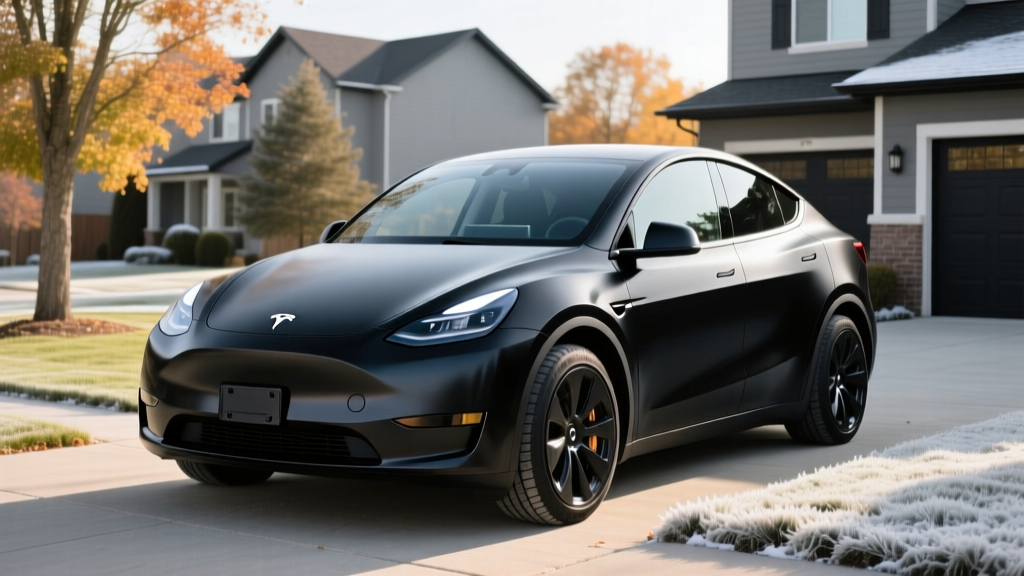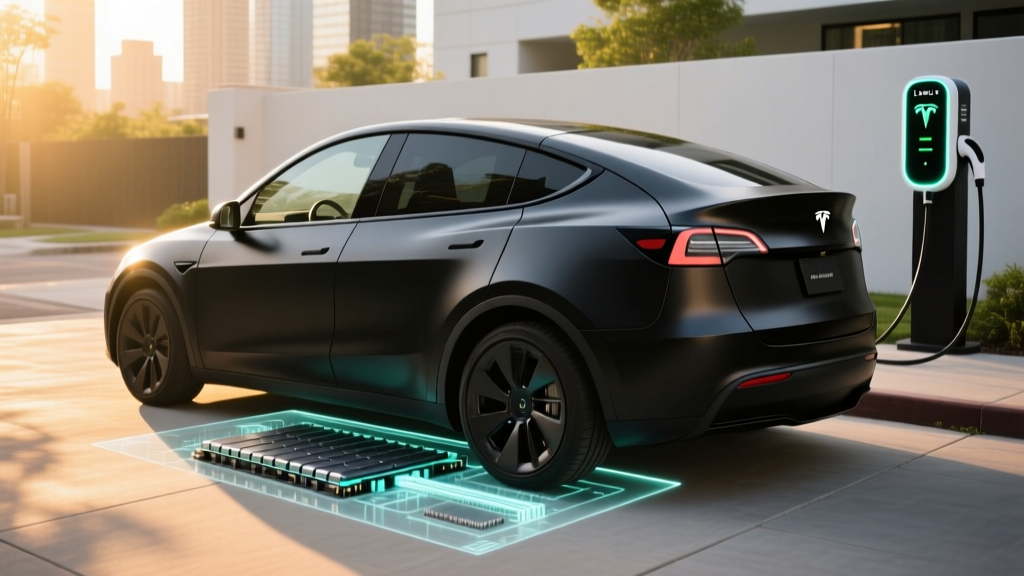
The headlines are hard to miss: the Tesla Canada sales drop in early 2026 has rattled investors and EV watchers alike. Canadian registrations fell roughly 25% year-over-year in Q1, according to registration data tracked by Canadian industry analysts, even as the broader EV market in Canada held relatively steady. For US shoppers, the question isn't whether Tesla is collapsing — it isn't — but whether the brand's headwinds north of the border reveal something actionable about value, competition, and whether a Tesla is still the smartest EV buy in 2026.
This analysis uses the current US-market 2026 Tesla Model Y as the reference vehicle, since it remains Tesla's highest-volume product and the model most directly exposed to the competitive pressures showing up in Canadian data. We'll break down the real-world specs that matter — range, charging, price after the federal tax credit — and explain what the Canadian slowdown actually signals for buyers south of the border.
2026 Tesla Model Y: The Spec Sheet That Has to Earn Its Price
The 2026 Model Y received the "Juniper" refresh that debuted globally in 2025, bringing a quieter cabin, updated suspension tuning, a rear touchscreen for passengers, and a modest efficiency bump. It is built on the same platform but feels meaningfully more refined than the 2023-era cars. Here are the numbers US buyers should anchor on.
| Spec | Long Range AWD | Performance AWD | Rear-Wheel Drive |
|---|---|---|---|
| EPA Range | 320 mi | 295 mi | 267 mi |
| Battery (usable) | ~75 kWh (NMC) | ~75 kWh (NMC) | ~60 kWh (LFP) |
| Drivetrain | Dual-motor AWD | Dual-motor AWD | Single-motor RWD |
| Horsepower | 384 hp | 510 hp | 295 hp |
| 0-60 mph | 4.8 sec | 3.5 sec | 6.5 sec |
| Efficiency | 118 MPGe (29 kWh/100 mi) | 111 MPGe (30 kWh/100 mi) | 124 MPGe (27 kWh/100 mi) |
| Max DC Fast Charge | 250 kW | 250 kW | 170 kW |
| Level 2 Charge Rate | 11.5 kW (~44 mi/hr) | 11.5 kW (~44 mi/hr) | 7.7 kW (~30 mi/hr) |
| Cargo (rear seats up) | 30.2 cu ft (76.2 cu ft folded) | ||
| Rear Legroom | 41.6 in | ||
| Base MSRP | $47,990 | $52,990 | $39,990 |
Sources: fueleconomy.gov, Tesla US specifications.
Real-World Range: What the EPA Sticker Doesn't Tell You
EPA sticker: 320 miles.
Real-world highway (70 mph, 72°F): expect 270–285 miles.
Cold-weather highway (30°F, cabin heat): expect 220–245 miles.
City / mixed suburban driving: 300–315 miles is achievable.
What is the real-world range of this EV? The honest answer depends almost entirely on speed and temperature. The Model Y Long Range AWD's 320-mile EPA figure assumes a mix of city and highway driving at moderate temperatures. In our experience, steady 70–75 mph highway travel trims that to roughly 270–285 miles in mild weather, because aerodynamic drag dominates at speed and EVs don't get the "highway bonus" that gas cars do.
Cold weather is the bigger variable. At freezing temperatures with the cabin heater active, lithium-ion internal resistance rises and energy demand for heating spikes. Expect a 20–30% reduction versus the EPA sticker — so roughly 220–245 miles for the Long Range. The heat pump Tesla uses is efficient, but physics still wins. The RWD model with its smaller LFP pack is hit proportionally harder: plan on 185–210 miles of usable winter highway range.
This matters in the Canadian context specifically: the Tesla Canada sales drop is partly a function of buyers in cold provinces comparing real winter range against Hyundai Ioniq 5, Kia EV6, and Ford Mustang Mach-E alternatives that now offer comparable or better efficiency with faster charge curves.
Charging Speed: Still Strong, No Longer Class-Leading
How fast does it charge? The Model Y Long Range AWD peaks at 250 kW on a V3 Supercharger or compatible CCS/NACS DC fast charger, with a 10–80% session taking roughly 23–25 minutes when the battery is preconditioned. The RWD model tops out at 170 kW and needs closer to 30 minutes for the same window.
| Level | Power | Miles Added per Hour | Notes |
|---|---|---|---|
| Level 1 (120V) | ~1.4 kW | ~5 mi/hr | Emergency/trickle only |
| Level 2 (240V, 48A) | 11.5 kW | ~44 mi/hr | Home Wall Connector; full charge overnight |
| DC Fast (Long Range) | 250 kW peak | ~1,000 mi/hr at peak | 10–80% in ~24 min; tapers hard above 80% |
| DC Fast (RWD LFP) | 170 kW peak | ~700 mi/hr at peak | 10–80% in ~30 min |
A critical nuance buyers miss: peak kW is not sustained kW. The 250 kW figure only holds roughly between 10% and 30% state of charge. From 50–80%, the Model Y Long Range typically pulls 80–120 kW, which is why the full 10–80% session takes 23–25 minutes rather than the ~15 minutes marketing sometimes implies. Preconditioning — which the Tesla navigation system triggers automatically when routing to a Supercharger — is essential; skip it and you may see peak rates below 150 kW on a cold battery.
Against competitors, this is still respectable but no longer dominant. The Hyundai Ioniq 5 and Kia EV6 on 800V architectures can sustain higher rates deeper into the charge curve, delivering 10–80% in about 18 minutes. That's a meaningful difference on a road trip with multiple fast-charge stops.
Pricing, Tax Credits, and the Actual Cost to Drive Home
How much does it cost after tax credits? The 2026 Model Y lineup prices as follows, before destination or options:
| Trim | Base MSRP | §30D Credit | Effective Price |
|---|---|---|---|
| RWD | $39,990 | $7,500 (if eligible) | ~$32,490 |
| Long Range AWD | $47,990 | $7,500 (if eligible) | ~$40,490 |
| Performance AWD | $52,990 | $7,500 (if eligible) | ~$45,490 |
Does it qualify for the federal EV tax credit? The answer is yes, conditionally, under IRS §30D rules current for the 2026 tax year. The Model Y is assembled in Fremont, California and Austin, Texas, and Tesla has generally maintained critical-minerals and battery-component sourcing that meets the phased thresholds. However, eligibility is not automatic for every buyer. You must satisfy all of the following:
- Income caps: Modified AGI ≤ $150,000 (single), $225,000 (head of household), $300,000 (joint).
- MSRP cap: SUVs must sticker at or below $80,000. All Model Y trims clear this.
- Battery sourcing: Critical minerals and component percentages must meet 2026 thresholds; Tesla has historically qualified, but the IRS updates the eligible-vehicle list periodically. Verify at fueleconomy.gov before signing.
- Point-of-sale transfer: You can apply the $7,500 as a down-payment reduction at the dealer, rather than waiting for a tax refund.
Always confirm with a tax professional — rules tighten annually and can shift mid-year.
What the Tesla Canada Sales Drop Actually Signals
The Canadian registration decline in early 2026 is real but narrowly contextual. Several factors are stacking at once:
- Competitor volume is up. Hyundai, Kia, and Ford have all expanded Canadian EV allocations, and the Ioniq 5 and EV6 undercut Model Y pricing while offering faster 800V charging.
- Provincial incentives shifted. Changes to Quebec and British Columbia rebate structures in late 2025 altered purchase math for mid-priced EVs.
- Brand sentiment. Elon Musk's political activities through 2025 alienated a measurable slice of Tesla's traditional buyer base in urban Canada, per multiple consumer surveys.
- Cold-weather skepticism. Canadian buyers are sophisticated about winter range loss; as alternatives with heat pumps and larger packs arrived, the Model Y's relative advantage eroded.
For US buyers, the takeaway is not "Tesla is failing." The US market is larger, more price-sensitive at the entry level, and benefits from the Supercharger network moat. The signal is subtler: Tesla's default-winner status is over. In 2021, the Model Y won by default. In 2026, it has to win on specs — and on some specs, it no longer leads.
Pros, Cons, and the Honest Ownership Picture
- Best-in-class Supercharger network access (now open to other brands but still densest)
- Class-leading efficiency (kWh/100 mi) in the RWD trim
- Strong software, OTA updates, and app ecosystem
- Spacious cargo area (76.2 cu ft folded) for a compact SUV
- Available FSD (Supervised) with continued feature improvement
- DC fast charging is mid-pack; 800V rivals charge faster
- Ride quality improved with Juniper but still firm on rough pavement
- No Apple CarPlay / Android Auto — Tesla's UI is the only option
- RWD LFP pack loses more range in cold weather than NMC variants
- Brand perception issues for some buyers
Who Should Buy the Model Y in 2026 — And Who Shouldn't
Choose the Model Y if: you prioritize Supercharger access for frequent road trips, want best-in-class cargo space in a compact EV SUV, and value continuous software updates.
Choose a competitor (Ioniq 5, EV6, Mach-E) if: fast DC charging is a priority for long-distance driving, you want Apple CarPlay/Android Auto, or you live in a very cold climate where a larger NMC pack and 800V architecture help.
The Model Y remains a strong commuter and family vehicle. For suburban two-car households with home Level 2 charging, it's nearly ideal: plug in at night, wake up full, and use Superchargers only on road trips. For rideshare drivers or high-mileage commuters in northern states, the RWD LFP model's lower winter range and slower DC rate make the Long Range AWD the more practical pick — or push the comparison toward an Ioniq 5 with its faster charging.
Warranty, Safety, and Long-Term Ownership
Tesla covers the Model Y with a 4-year / 50,000-mile basic warranty and an 8-year / 120,000-mile battery and drive unit warranty (Long Range and Performance). The RWD model's battery warranty is 8 years / 100,000 miles. The capacity-retention threshold is 70% — if the pack drops below that within the term, Tesla replaces or repairs it. This is in line with the industry, though Hyundai's 10-year / 100,000-mile powertrain coverage is more generous.
Safety remains a strong suit. The Model Y continues to earn top marks from NHTSA (5-star overall) and IIHS (Top Safety Pick+ when equipped with acceptable headlights). Autopilot and FSD (Supervised) are SAE Level 2 driver-assist systems — not self-driving. The driver must remain engaged, hands on the wheel, eyes on the road. Confusing Level 2 with Level 4 autonomy is a common and dangerous mistake; Tesla's marketing language has historically blurred this, but the legal and engineering reality is clear.
Is the Model Y Still Worth Buying vs. Key Competitors?
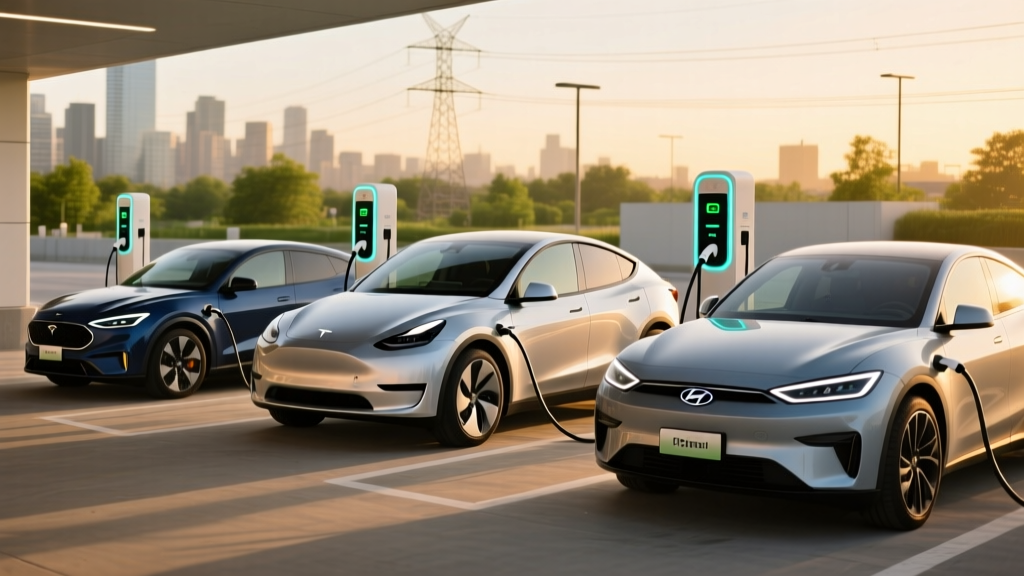
Is it worth buying vs key competitors? Yes — but no longer by default. Here's how it stacks up against the three most-shopped alternatives in the compact EV SUV segment:
| Spec | Tesla Model Y LR | Hyundai Ioniq 5 LR | Kia EV6 LR | Ford Mach-E ER |
|---|---|---|---|---|
| EPA Range | 320 mi | 315 mi | 310 mi | 312 mi |
| Max DC Charge | 250 kW | 350 kW (800V) | 350 kW (800V) | 150 kW |
| 10–80% Time | ~24 min | ~18 min | ~18 min | ~38 min |
| Starting MSRP | $47,990 | $48,500 | $48,900 | $46,995 |
| Cargo (rear up) | 30.2 cu ft | 27.2 cu ft | 24.4 cu ft | 29.7 cu ft |
| §30D Credit | Likely yes | Yes (GA-built) | Yes (GA-built) | Likely yes |
The Ioniq 5 and EV6 win on charging speed and, for many buyers, interior design and CarPlay support. The Mach-E undercuts on price and offers a more traditional SUV feel. The Model Y wins on cargo volume, efficiency, and — critically — access to the densest, most reliable fast-charging network in North America, even as the Supercharger network opens to NACS-equipped rivals.
Frequently Asked Questions
What is the real-world range of the 2026 Model Y?
For the Long Range AWD, expect 270–285 miles on the highway in mild weather, 220–245 miles in freezing conditions, and up to 315 miles in city/mixed driving. The RWD model delivers roughly 15% less in all conditions due to its smaller LFP pack.
How fast does the Model Y charge at home and on DC?
At home on a Level 2 Tesla Wall Connector (11.5 kW), the Long Range adds about 44 miles of range per hour — a full overnight charge from 20% to 100% takes roughly 7–8 hours. On DC fast charging, the Long Range peaks at 250 kW with a 10–80% session in about 24 minutes; the RWD peaks at 170 kW and needs about 30 minutes.
How much does the Model Y cost after the federal tax credit?
If you qualify for the full $7,500 §30D credit and apply it at point of sale, the RWD starts around $32,490, the Long Range AWD around $40,490, and the Performance AWD around $45,490. Eligibility depends on income caps, MSRP caps, and battery-sourcing rules — verify at fueleconomy.gov and with a tax professional.
Does the Tesla Canada sales drop mean I should avoid Tesla?
No. The Canadian decline reflects regional incentive changes, increased competition, and brand-sentiment effects that are more pronounced in Canada than in the US. The US Model Y remains a strong product with the best charging-network advantage in the market. But it now has to be compared spec-for-spec rather than bought by default.
Is FSD (Supervised) actually self-driving?
No. FSD (Supervised) is an SAE Level 2 driver-assist system. You must remain fully engaged, with hands on the wheel and eyes on the road. True self-driving (Level 4) exists only in limited commercial robotaxi services like Waymo in specific geofenced cities.
What's the biggest risk of buying a Model Y in 2026?
Depreciation and brand risk. Tesla has cut prices repeatedly since 2023, which helped new buyers but hurt used values. If brand sentiment continues to soften, resale values could lag competitors. The offset is that the Supercharger network and software ecosystem remain durable advantages.