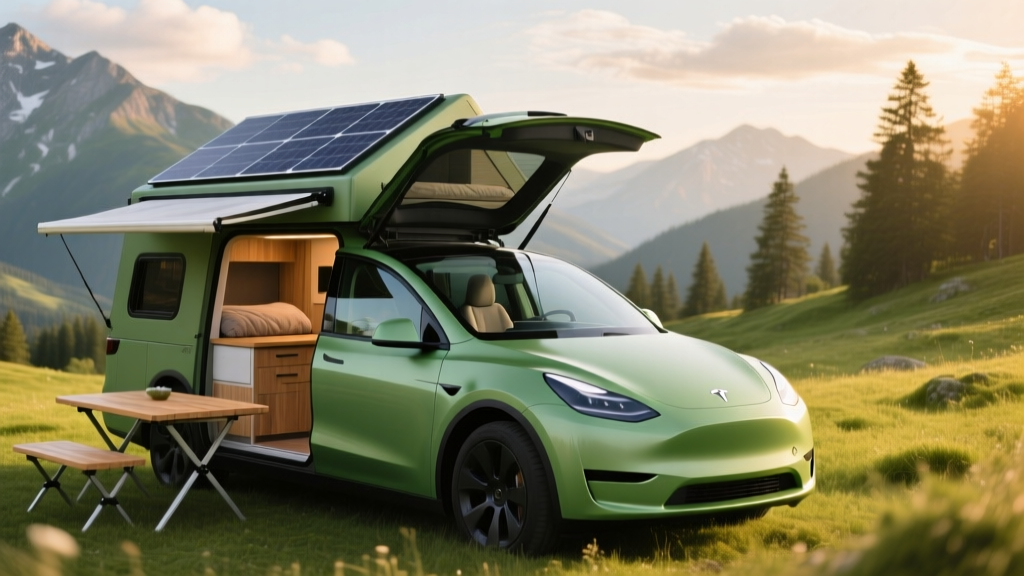
Search "Tesla campervan" on any forum or social platform and you'll find a thriving community of DIY converters, third-party upfitters, and dreamers wondering if an electric crossover can double as a mobile basecamp. Tesla has never produced a factory campervan — and as of early 2026, no such vehicle exists in their lineup or announced roadmap. What does exist is a robust ecosystem of owners converting the Tesla Model Y into a surprisingly capable electric camper, leveraging its flat cargo floor, Camp Mode software, and Supercharger network access.
This guide evaluates the Model Y as a campervan platform using hard data: real-world range under camping loads, charging logistics on remote routes, conversion costs, and the honest limitations you won't find in glossy Instagram builds. If you're weighing a Tesla-based campervan against a traditional gas-powered Sprinter or Transit conversion, the trade-offs are significant — and highly dependent on your use case.
The Tesla Model Y as a Campervan Platform: Core Specs
Before any conversion, the base vehicle matters enormously. The 2026 Tesla Model Y Long Range AWD remains the most popular donor vehicle for campervan builds due to its range, cargo volume, and dual-motor traction. Here are the exact numbers that determine its viability as a camper platform:
| Spec | Value |
|---|---|
| EPA Estimated Range | 320 miles |
| Battery Capacity | 78.1 kWh usable (NMC chemistry) |
| Drivetrain | Dual-motor AWD |
| Horsepower | 384 hp combined |
| 0–60 mph | 4.8 seconds |
| MPGe (Combined) | 122 MPGe |
| Efficiency | 28 kWh/100 mi |
| Cargo Volume (rear seats folded) | 72.1 cu ft |
| Cargo Length (seats folded to liftgate) | ~74 inches |
| Max DC Fast Charge Rate | 250 kW peak (CCS via adapter or NACS native) |
| 10–80% DC Fast Charge | ~25 minutes (at V3/V4 Supercharger) |
| Level 2 Home Charge Rate | 11.5 kW (~44 mi/hr) |
| Base MSRP | $47,990 |
| Battery/Drive Unit Warranty | 8 years / 120,000 miles |
| Basic Vehicle Warranty | 4 years / 50,000 miles |
The 72.1 cu ft cargo space with rear seats folded is the critical dimension. That's roughly a 6'2" x 4' flat platform — enough for a queen-size mattress with minimal overhang, which is why the Model Y dominates the compact EV camper segment. For reference, a Ford Transit Connect offers roughly 120 cu ft, and a Mercedes Sprinter exceeds 300 cu ft, so you're trading interior volume for efficiency and charging infrastructure.
Real-World Range When Loaded for Camping
Real-World Camping Load (2 passengers + 400 lbs gear, 70 mph highway): ~250–270 miles
Cold Weather (30°F, heater on, camping load): ~200–220 miles
Camp Mode Overnight Drain (8 hours, climate at 68°F): ~8–12 miles of range (~2.5–3.5 kWh)
The EPA's 320-mile figure assumes a mixed driving cycle with moderate temperatures and no cargo. In practice, a loaded campervan conversion adds 300–600 lbs of gear, a mattress platform, and often a roof box or bike rack that degrades aerodynamics. Highway driving at 70–75 mph compounds this: EVs are far less efficient at sustained highway speeds than in stop-and-go city traffic due to the absence of regenerative braking opportunities and the cubic relationship between speed and aerodynamic drag.
Cold weather is the bigger concern for campers heading to mountain or northern destinations. Lithium-ion NMC batteries lose roughly 20–30% of effective range at freezing temperatures, and running the cabin heater (which draws 2–5 kW continuously) accelerates the drain. Tesla's heat pump — standard on all 2026 Model Y trims — mitigates this somewhat compared to resistive heaters, but the physics remain unforgiving. If you're planning winter camping trips above 6,000 feet or in sub-freezing conditions, budget for 200 miles of effective range and plan charging stops accordingly.
Camp Mode is Tesla's built-in feature that maintains cabin climate, keeps USB ports powered, and displays a campfire animation on the touchscreen while parked. It's remarkably efficient: roughly 0.3–0.5 kWh per hour depending on outside temperature, meaning an 8-hour night consumes about 2.5–4 kWh — or roughly 8–12 miles of rated range. That's a manageable trade-off for climate-controlled sleeping without running a generator or idling an engine.
Charging Logistics: The Supercharger Advantage and Its Limits
The single strongest argument for a Tesla-based campervan over any other EV conversion is access to the Supercharger network. As of 2026, Tesla operates over 6,500 Supercharger stations in North America, many positioned along highway corridors that overlap with popular camping routes. No other EV charging network matches this density or reliability for long-distance travel.
| Charging Method | Power (kW) | Miles Added per Hour | Notes |
|---|---|---|---|
| Level 1 (120V household outlet) | 1.4 kW | ~5 mi/hr | Emergency/trickle only; 24+ hours for full charge |
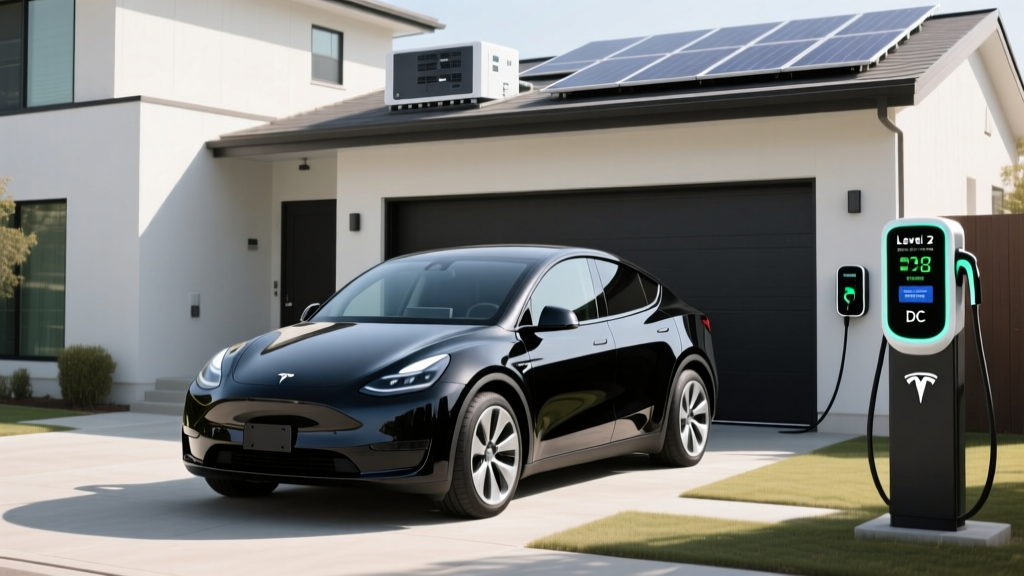
| Level 2 (240V home wall connector) | 11.5 kW | ~44 mi/hr | Full charge in ~7 hours; ideal for home base |
| Level 2 (public, typical 7.2 kW) | 7.2 kW | ~28 mi/hr | Campground pedestal or destination charger |
| DC Fast (V3 Supercharger, 250 kW peak) | 250 kW peak | ~1,000 mi/hr at peak | 10–80% in ~25 min; tapers sharply above 80% |
| DC Fast (V4 Supercharger) | Up to 350 kW capable | Varies by vehicle acceptance | Model Y currently limited to ~250 kW intake |
The charge curve matters enormously on road trips. The Model Y peaks near 250 kW only between roughly 10–30% state of charge (SoC), then steps down to ~150 kW through 50%, ~100 kW through 70%, and drops below 50 kW above 85%. This means the advertised 10–80% time of ~25 minutes is realistic, but charging from 80–100% can take an additional 20–25 minutes. Smart trip planning means charging to 80% and driving, not waiting for a full top-up.
The camping-specific challenge: many campgrounds, national parks, and dispersed camping areas lack any EV charging infrastructure. A campground with a standard 240V/50A NEMA 14-50 outlet (common for RV hookups) can deliver roughly 11.5 kW to the Model Y — adding about 44 miles of range per hour, or a full overnight charge. But a standard 120V campsite outlet adds only ~5 miles per hour, making it effectively useless for anything beyond maintaining battery while parked. Before committing to a Tesla campervan trip, map your charging options using Tesla's in-car navigation, PlugShare, or A Better Routeplanner.
Conversion Options: DIY vs. Professional Upfitters
The Tesla campervan conversion market in 2026 spans three tiers:
DIY Platform Build ($500–$2,000)
The most common approach: a custom or purchased mattress platform that sits on top of the folded rear seats, often using a modular frame system like the TESLACAMPERS or EVenture kits. These provide a flat sleeping surface, under-bed storage bins, and sometimes integrated LED lighting powered by the 12V accessory port. Total weight addition: 80–150 lbs. This approach preserves daily drivability — remove the platform and you have a normal Model Y.
Semi-Permanent Interior Conversion ($3,000–$8,000)
Professional or semi-professional builds that include insulated window covers, a galley slide-out or portable kitchen box, auxiliary house battery (separate from the traction battery), interior cladding, and sometimes a pop-top or roof tent for standing room. Companies like Freeway Camper Kit and E-GO offer Model Y-specific kits. These conversions add 200–400 lbs and reduce the vehicle's efficiency by roughly 5–10%.
Full Campervan Upfit ($12,000–$25,000+)
Complete interior strip-outs with custom cabinetry, induction cooktops, sink/water systems, and solar roof racks. These are rare on the Model Y due to its unibody construction and limited interior height — most full conversions happen on larger vehicles. The cost often exceeds the value of the base vehicle, and the added weight (500–800 lbs) significantly degrades range.
A critical note on Tesla's warranty: interior modifications that require drilling into the body, altering wiring harnesses, or modifying the high-voltage system can void portions of your warranty. Stick to non-invasive, removable conversions to protect your 8-year/120,000-mile battery and drive unit coverage.
Pricing, Tax Credits, and Total Build Cost
| Trim | Base MSRP | Federal §30D Credit Eligibility | Effective Price (if eligible) |
|---|---|---|---|
| Long Range AWD | $47,990 | Up to $7,500 (subject to income, sourcing, and MSRP caps) | ~$40,490 |
| Performance AWD | $52,490 | Up to $7,500 (subject to same rules) | ~$44,990 |
Federal tax credit eligibility under IRS §30D rules is not automatic. For 2026, the credit is structured as follows:
- MSRP Cap: SUVs/crossovers must have an MSRP ≤ $80,000 — both Model Y trims qualify.
- Buyer Income Cap: Modified AGI ≤ $150,000 (single) / $225,000 (head of household) / $300,000 (joint). Exceed these and you receive $0 credit.
- Battery Sourcing: Up to $3,750 requires critical minerals sourced from the US or FTA partners; up to $3,750 requires battery components manufactured or assembled in North America. As of 2026, the Model Y's battery sourcing qualifies for the full $7,500, but this is subject to change as sourcing rules tighten annually.
- Point-of-Sale Transfer: You can transfer the credit to the dealer at purchase, reducing your out-of-pocket cost immediately rather than waiting for tax filing.
- One Credit Per Vehicle, Per Taxpayer: You cannot claim the credit more than once every 3 years.
The realistic total cost of a Tesla campervan build, factoring in vehicle purchase, a mid-tier conversion kit, and tax credit:
- Model Y Long Range AWD: $47,990
- Semi-permanent conversion kit + install: ~$5,000
- Federal tax credit (if fully eligible): –$7,500
- Total: ~$45,490
Compare this to a used Mercedes Sprinter 144" wheelbase ($35,000–$55,000 for a 2018–2022 model) plus a professional conversion ($30,000–$80,000) and you're looking at $65,000–$135,000 for a gas-powered campervan with far more space but dramatically higher fuel and maintenance costs.
Who the Tesla Campervan Concept Actually Suits
- You camp 10–20 nights per year, mostly on weekends within 250 miles of home
- You already own or plan to buy a Model Y as a daily driver and want dual use
- You prioritize low operating costs (electricity vs. gas, minimal maintenance) over interior space
- You camp in areas with Supercharger or destination charger access
- You're comfortable with a compact sleeping footprint (2 people maximum)
- You plan extended off-grid trips (boondocking) where charging infrastructure is absent
- You need standing room, a full kitchen, or bathroom facilities
- You regularly travel with more than 2 people or large gear loads (surfboards, climbing racks)
- You camp in extreme cold where range loss makes EV logistics impractical
- Towing capacity matters (Model Y is rated for 3,500 lbs; Sprinter for 7,500+ lbs)
The honest reality: the Tesla campervan is best understood as a car that can camp, not a dedicated camper. It excels at what traditional vans can't — silent, climate-controlled overnight stays without idling, near-zero fuel costs on trips where charging is available, and daily-driver comfort the rest of the year. It fails at what dedicated vans do well — off-grid self-sufficiency, interior living space, and range confidence in remote areas.
Standout Tech and Notable Drawbacks
The Model Y brings technology to the camping experience that no gas-powered van can match:
- Camp Mode: Maintains cabin temperature, powers USB outlets, and plays ambient sounds or a campfire visual on the 15" touchscreen — all without engine noise or exhaust fumes.
- Autopilot (Level 2): Tesla's adaptive cruise and lane-keeping reduces fatigue on long highway stretches to campgrounds. Per NHTSA guidelines, this is a driver-assist system requiring active supervision — not self-driving.
- Over-the-Air Updates: Tesla regularly adds features; recent updates have improved Camp Mode efficiency and added trip-planning tools for charging stops.
- Frunk Storage: The front trunk (roughly 4.1 cu ft) is ideal for storing camping gear that needs to stay dry and separate from the sleeping area.
The drawbacks are equally real:
- No spare tire: Tesla provides tire sealant and a compressor kit, not a spare. A puncture on a remote forest road is a tow-truck situation.
- Low ground clearance: At 6.6 inches, the Model Y is not built for rough forest service roads or rocky approaches. Most dedicated campers have 8–12 inches.
- Fixed glass roof: No option for a vent or skylight; condensation management requires aftermarket window vent covers.
- Single-zone sleeping: The entire cabin is your bedroom — there's no separation between kitchen, living, and sleeping areas as in a larger van.
- Insurance considerations: Modified vehicles may require specialty insurance riders. Notify your insurer of any permanent conversion to avoid coverage disputes.
- 320-mile EPA range (250+ real-world with load)
- Access to 6,500+ Superchargers for road-trip charging
- Near-silent, fume-free overnight climate control
- Daily-driver usability when not camping
- Low per-mile energy cost (~$0.04–$0.08/mi on home charging)
- Full $7,500 federal tax credit eligibility (if income/sourcing qualify)
- Minimal maintenance vs. gas van (no oil, filters, exhaust, transmission)
- Compact interior — max 2 sleepers, no standing room
- Range drops to ~200 mi in cold weather with camping load
- Limited off-grid capability without campground hookups
- 6.6" ground clearance unsuitable for rough roads
- No factory camper variant — all conversions are aftermarket
- Added weight reduces efficiency and accelerates tire wear
- Charging infrastructure sparse in remote national parks and BLM land
Competitor Comparison: Model Y vs. Other EV Campervan Platforms
The Model Y isn't the only EV being converted for camping. Here's how it stacks up against the most common alternatives in 2026:
| Vehicle | EPA Range | Cargo (seats folded) | Max DC kW | Base MSRP | Best For |
|---|---|---|---|---|---|
| Tesla Model Y LR AWD | 320 mi | 72.1 cu ft | 250 kW | $47,990 | Weekend car camping with Supercharger access |
| Ford F-150 Lightning (XLT) | 240 mi (std) / 320 mi (ext) | ~78 cu ft bed + frunk | 150 kW | $54,995 | Truck-camper slide-in builds, towing |
| Rivian R1S (Dual-Motor) | 352 mi (Max Pack) | ~97 cu ft | 220 kW | $75,900 | Off-road camping, more interior volume |
| VW ID.4 (AWD Pro S) | 263 mi | 64.2 cu ft | 175 kW | $47,290 | Budget EV camper with CCS charging |
The Model Y wins on charging speed and network access. The Rivian R1S wins on range, cargo volume, and off-road capability — at a $28,000 price premium. The F-150 Lightning offers a unique truck-bed camper option that the crossover format can't replicate. Your choice depends on whether range, space, off-road ability, or charging infrastructure is the priority.
Frequently Asked Questions
Does Tesla make a factory campervan?
No. As of 2026, Tesla has not announced or produced any factory campervan variant. All Tesla campervan builds are aftermarket conversions using the Model Y, Model X, or Cybertruck as donor vehicles. Tesla's Camp Mode software feature is the closest the company comes to supporting camping use cases.
Can I sleep comfortably in a Tesla Model Y campervan conversion?
Yes, if you're under about 6'2" and sleeping with one partner. The folded-seat cargo area provides roughly 74 inches of length and 48 inches of width at the narrowest point (between the wheel wells). A standard queen mattress (80" x 60") requires a slight diagonal orientation or a custom-cut foam mattress. Camp Mode maintains your preferred temperature silently all night.
How much range do I lose with a campervan conversion?
Expect a 10–20% reduction in real-world range depending on conversion weight, aerodynamic modifications (roof boxes, racks), and driving speed. A 300-lb interior build with a roof box might reduce the EPA's 320-mile rating to roughly 260 miles in mixed driving, or 250 miles at sustained highway speeds. Cold weather compounds this further.
Can I charge a Tesla campervan at a campground?
It depends entirely on the campground's electrical infrastructure. A 240V/50A RV hookup (NEMA 14-50) can fully charge a Model Y overnight at ~11.5 kW. A standard 120V outlet adds only ~5 miles per hour — impractical for trip charging. Always check PlugShare or call the campground before booking. National parks are increasingly installing Level 2 chargers, but coverage remains inconsistent.
Does a campervan conversion void my Tesla warranty?
Removable, non-invasive conversions (mattress platforms, portable kitchens, window covers) generally do not affect your warranty. Permanent modifications that require drilling, wiring changes, or structural alterations could void coverage for affected components. Tesla's 8-year/120,000-mile battery and drive unit warranty specifically excludes damage from aftermarket modifications. When in doubt, consult Tesla service before committing to a build.
Is the Tesla Model Y campervan worth it vs. a gas van?
For weekend camping within Supercharger range, the Model Y offers dramatically lower operating costs (roughly $0.05/mile on home charging vs. $0.25–$0.35/mile for a gas van), silent climate-controlled sleeping, and daily-driver versatility. For extended off-grid trips, remote boondocking, or group camping requiring standing room and full kitchens, a traditional Sprinter or Transit conversion remains the practical choice. The Tesla campervan is a compelling supplement to outdoor life — not a wholesale replacement for a dedicated camper.