What Is Tesla Cabin Overheat Protection?
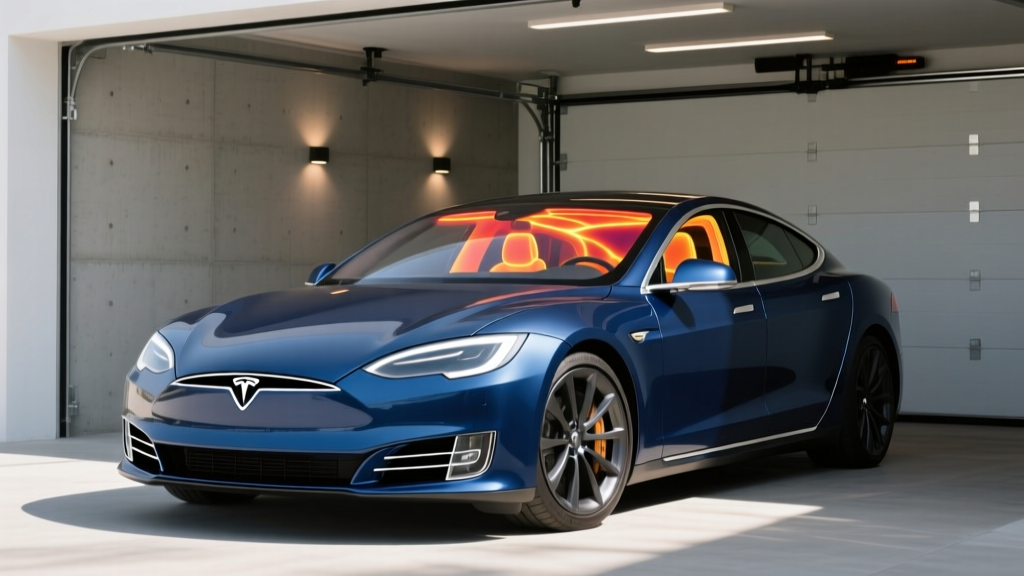
Tesla Cabin Overheat Protection is an automated climate-control feature designed to keep the interior of a parked Tesla vehicle below a set temperature threshold—typically 105°F (40°C)—when the car is turned off and exposed to hot ambient conditions. Unlike conventional vehicles that simply bake in the sun, Teslas can actively manage cabin temperature for up to 12 hours after the driver exits, using either the air conditioning compressor (powered by the high-voltage traction battery) or just the ventilation fans.
Originally introduced as a beta feature in 2016 and refined through subsequent software updates, Cabin Overheat Protection addresses a genuine safety concern: interior temperatures in parked cars can exceed 150°F on hot summer days, posing risks to children, pets, electronics, and even certain materials left inside. For EV owners who already think about thermal management for their battery pack, this feature extends that philosophy to occupant comfort and safety.
How Tesla Cabin Overheat Protection Works
The system relies on the vehicle's existing thermal management hardware—the same heat pump and HVAC compressor used for cabin climate control and battery preconditioning. When enabled, the car monitors interior temperature via cabin sensors. Once the threshold is exceeded, the system activates cooling (or just fan circulation, depending on user settings) until the temperature drops back below the trigger point.
Owners can configure Cabin Overheat Protection through the Tesla mobile app or the vehicle's touchscreen under Controls > Safety > Cabin Overheat Protection. The available settings typically include:
- On: Uses the A/C compressor to actively cool the cabin when temperatures exceed the threshold.
- No A/C (Fan Only): Circulates outside air without engaging the compressor, consuming less energy but providing less cooling.
- Off: Disables the feature entirely.
The activation temperature can often be adjusted in 5°F increments, allowing owners in milder climates to set a lower trigger point (e.g., 95°F) while those in extreme heat might accept 105°F or 110°F to conserve battery.
Which Tesla Models Have Cabin Overheat Protection in 2026?
As of the 2026 model year, Cabin Overheat Protection is standard on all current-production Tesla vehicles:
- Model 3 (including the refreshed 'Highland' variant)
- Model Y (Long Range, Performance, and the 2025+ refresh)
- Model S (Long Range and Plaid)
- Model X (Long Range and Plaid)
- Cybertruck (AWD and Cyberbeast trims)
The feature is also retroactively available on most older Tesla vehicles via over-the-air (OTA) software updates, provided the hardware supports it. Vehicles built before approximately 2018 may lack the necessary sensor integration or heat pump hardware for full A/C-based cooling, though fan-only mode may still be available.
Energy Consumption: What Cabin Overheat Protection Costs Your Battery
One of the most common questions from Tesla owners is how much range Cabin Overheat Protection consumes. The answer depends on ambient temperature, solar load, cabin insulation, and whether you use full A/C or fan-only mode.
Based on owner data logs and Tesla's own energy consumption estimates:
- Full A/C mode: Consumes approximately 1-3 kWh per day in moderate heat (90-100°F ambient), translating to roughly 3-10 miles of range loss over a 12-hour parking session.
- Fan-only mode: Negligible energy draw—less than 0.2 kWh per day, or about 0.5-1 mile of range.
- Extreme heat (110°F+): A/C consumption can spike to 4-6 kWh per day, costing 12-20 miles of range.
For context, a 2026 Model Y Long Range with an EPA-estimated 330 miles of range and an 82 kWh usable battery can afford to lose 10-15 miles to thermal management without materially impacting most daily driving routines. However, owners planning long road trips or those who park for extended periods in extreme heat should factor this into their charging strategy.
| Specification | Value |
|---|---|
| EPA Estimated Range | 330 miles |
| Battery Capacity | 82 kWh usable (NMC chemistry) |
| Max DC Fast Charge Rate | 250 kW peak |
| 10-80% DC Fast Charge Time | ~27 minutes |
| Home Level 2 Charge Rate | 11.5 kW (~44 miles/hour) |
| 0-60 mph | 4.8 seconds |
| Horsepower | 384 hp (dual motor AWD) |
| Efficiency | 122 MPGe combined / 28 kWh/100mi |
| Cargo Volume | 30.2 cu ft (rear seats up) / 76.2 cu ft (folded) |
| Base MSRP | $48,990 (before incentives) |
| Federal Tax Credit Eligibility | Up to $7,500 (§30D, subject to income/MSRP/sourcing rules) |
| Battery/Powertrain Warranty | 8 years / 120,000 miles |
Real-World Range Expectations
EPA Sticker: 330 miles
Real-World Highway (70 mph, mild weather): ~280-300 miles
Cold Weather (32°F, mixed driving): ~220-250 miles
With Cabin Overheat Protection (full A/C, 8-hour park in 100°F): Subtract ~8-12 miles from your available range.
Cabin Overheat Protection vs. Competitor Climate Features
While Tesla popularized active cabin cooling for parked vehicles, other EV manufacturers have introduced similar functionality, though with varying levels of sophistication:
- Hyundai/Kia (Bluelink/Kia Connect): Remote climate control via app allows pre-cooling, but lacks Tesla's automated 12-hour temperature monitoring.
- Ford (FordPass): Remote start with climate control, but no autonomous overheat protection mode.
- Rivian: "Pet Mode" maintains cabin climate for animals left inside, displaying a message on the exterior screen. Functionally similar to Tesla's feature but optimized for occupied cabins rather than empty vehicles.
- BMW (Connected Drive): Auxiliary ventilation with solar-powered fan option on some models, but limited cooling capacity compared to Tesla's compressor-based system.
Tesla's advantage lies in the integration: the same battery and thermal hardware that manages cell temperature also handles cabin climate, allowing for more aggressive and sustained cooling without a separate auxiliary battery or solar panel dependency.
Practical Use Cases: Who Benefits Most?
Cabin Overheat Protection isn't just a gimmick—it solves real problems for specific owner profiles:
- Parents and pet owners: Prevents dangerous temperature spikes if a child or animal is accidentally left in the vehicle (though no feature replaces vigilance).
- Outdoor workers and festival-goers: Keeps the cabin tolerable after hours parked in direct sun.
- Electronics and sensitive cargo: Protects laptops, medications, groceries, and other heat-sensitive items from degradation.
- Rideshare and delivery drivers: Maintains a comfortable environment between trips without manual intervention.
- Hot-climate residents: Arizona, Texas, and Florida owners report year-round utility, especially during summer months.
Enabling and Optimizing Cabin Overheat Protection
To get the most out of the feature without unnecessarily draining your battery:
- Use fan-only mode in mild conditions: If ambient temperatures are below 95°F, circulation alone may prevent the cabin from reaching uncomfortable levels.
- Set a realistic threshold: A 105°F trigger is reasonable for most use cases. Setting it to 90°F will cause the system to cycle on and off frequently, consuming more energy.
- Park in shade when possible: Solar load is the primary driver of cabin heat. Even partial shade dramatically reduces A/C runtime.
- Use sunshades: A reflective windshield sunshade can reduce interior temperatures by 20-30°F, lessening the burden on the HVAC system.
- Monitor via the app: The Tesla app shows real-time cabin temperature and energy consumption, allowing you to disable the feature remotely if range becomes a concern.
Limitations and Drawbacks
Despite its utility, Cabin Overheat Protection has constraints worth understanding:
- Battery drain: In extreme heat, the feature can consume 10-20 miles of range over a full day. Owners with low state-of-charge (below 20%) may see the system disable itself to preserve battery health.
- No occupancy detection: The system is designed for empty vehicles. It will not alert you if a child or pet is inside—it simply cools the cabin.
- 12-hour limit: After 12 hours, the feature deactivates to prevent excessive battery depletion. For longer parking sessions (airport stays, multi-day events), you'll need to manually restart it via the app or accept rising cabin temperatures.
- Noise: The A/C compressor cycling on and off can be audible to passersby, which some owners find undesirable in quiet residential settings.
- Not a substitute for vigilance: Tesla explicitly states that Cabin Overheat Protection is not a safety system and should not be relied upon to protect children or pets left unattended.
Frequently Asked Questions
Does Cabin Overheat Protection work if the car is plugged in?
Yes. If your Tesla is connected to a charger (Level 1, Level 2, or DC fast charger), Cabin Overheat Protection will draw power from the grid rather than the battery, eliminating range loss. This is the ideal scenario for home or workplace parking.
Can I turn on Cabin Overheat Protection remotely if I forgot to enable it?
Yes. You can activate the feature at any time via the Tesla mobile app, provided the vehicle has sufficient battery (typically above 20% state-of-charge) and cellular connectivity.
Does Cabin Overheat Protection affect battery longevity?
Minimally. The energy consumed is small relative to the battery's total capacity, and Tesla's thermal management system prevents the HVAC compressor from operating outside safe parameters. However, frequent deep discharges (below 10% SoC) combined with extended A/C use could theoretically accelerate degradation—keep your battery above 20% when using the feature for extended periods.
Is Cabin Overheat Protection available on older Tesla models?
Most Tesla vehicles built after 2018 support the feature via OTA updates. Earlier models (pre-2017 Model S/X) may lack the necessary hardware for full A/C-based cooling but may still offer fan-only ventilation.
How does Cabin Overheat Protection compare to preconditioning?
Preconditioning is a manual or scheduled process that warms or cools the cabin and battery before a planned departure. Cabin Overheat Protection is an autonomous, reactive system that maintains a safe temperature threshold while the vehicle is parked. They serve different purposes and can be used together.
Final Verdict: Is Cabin Overheat Protection Worth Using?
For Tesla owners in warm climates or those who frequently park outdoors, Cabin Overheat Protection is a genuinely useful feature that leverages the vehicle's existing thermal hardware to solve a real problem. The energy cost is modest—typically 3-15 miles of range per day—and can be eliminated entirely by parking near a charger. While it's not a substitute for responsible pet and child safety practices, it provides peace of mind and comfort that conventional vehicles simply cannot match.
If you're considering a Tesla purchase and live in a region with hot summers, this feature should be on your checklist. Combined with the Supercharger network, over-the-air updates, and Tesla's industry-leading efficiency, it's one more reason the brand continues to set the standard for EV ownership experience.