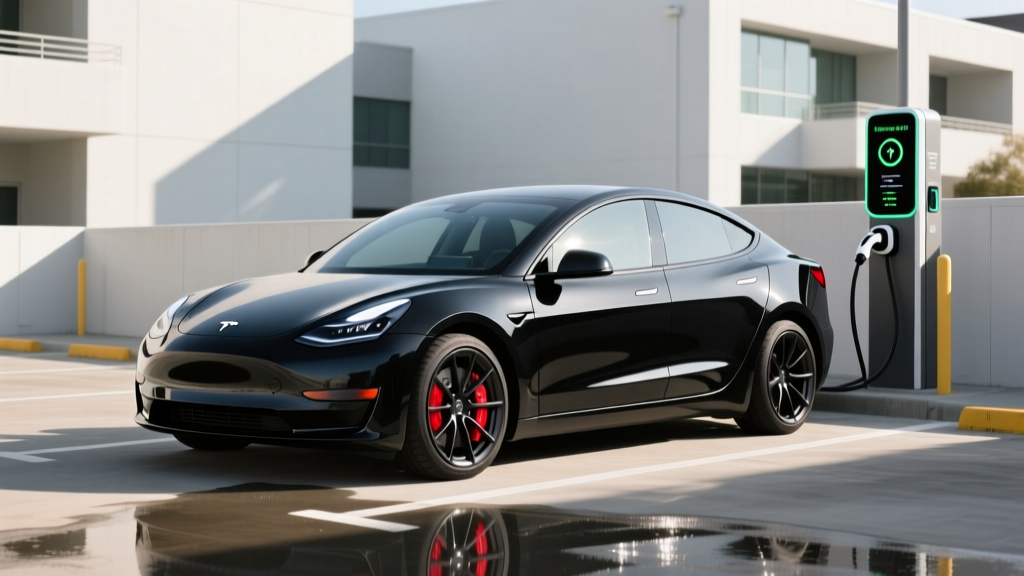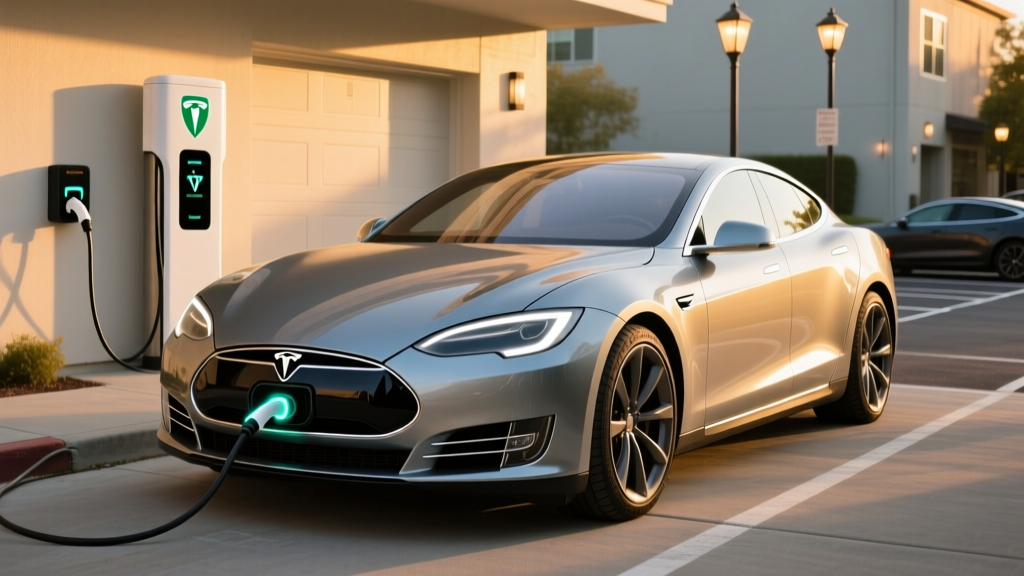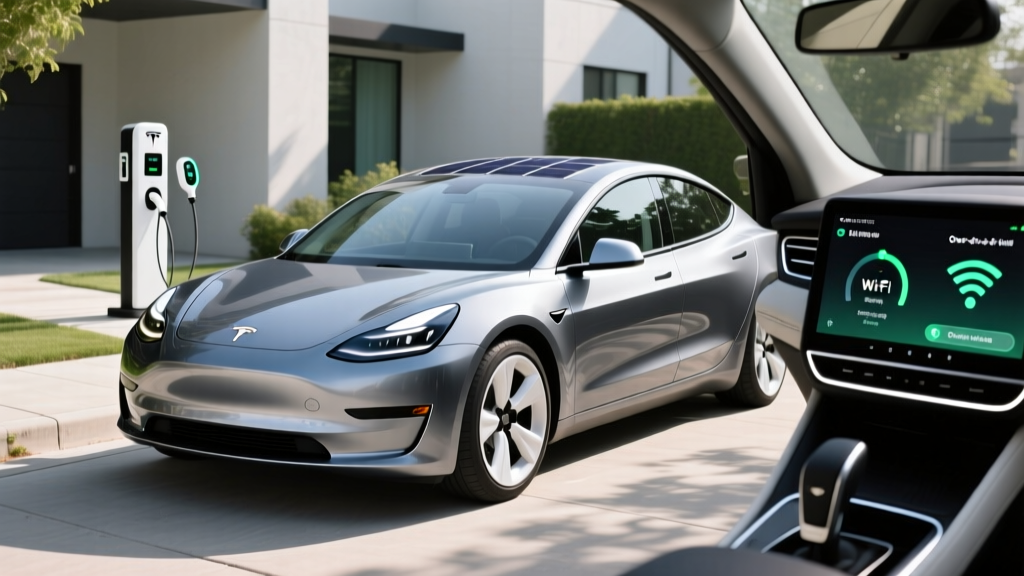
The Tesla Model 3 remains the benchmark compact electric sedan in 2026 — not because it's the newest EV on the market, but because Tesla's iterative hardware and software updates keep it competitive against a wave of challengers from Hyundai, BMW, and Polestar. For shoppers researching the Model 3, one recurring search stands out: Tesla Wi-Fi connectivity. Whether you're setting up home Wi-Fi for over-the-air updates, using the car as a hotspot, or troubleshooting connection drops at a Supercharger, Wi-Fi is central to the Tesla ownership experience. This review covers the full 2026 Model 3 lineup with exact specs, real-world range data, charging performance, and a deep look at connectivity.
2026 Tesla Model 3 Lineup and Pricing
The 2026 Model 3 is offered in three trims. Pricing below reflects base MSRP before destination fees and before any federal or state incentives.
| Trim | Drivetrain | Base MSRP | §30D Credit Eligible? | Est. After Credit |
|---|---|---|---|---|
| Long Range RWD | RWD (single motor) | $42,490 | Yes (if income/sourcing met) | ~$34,990 |
| Long Range AWD | Dual Motor AWD | $47,490 | Yes (if income/sourcing met) | ~$39,990 |
| Performance | Dual Motor AWD | $54,990 | Yes (if income/sourcing met) | ~$47,490 |
All three trims fall under the IRS §30D sedan MSRP cap of $55,000. However, eligibility for the up-to-$7,500 federal tax credit depends on three factors that change periodically: buyer income limits (modified AGI ≤ $150,000 single / $300,000 joint), battery critical-mineral and component sourcing requirements, and point-of-sale transfer rules. Always verify current-year rules at IRS.gov §30D and consult a tax professional before assuming the full credit applies to your situation.
Range, Battery, and Efficiency
Tesla uses different battery chemistries across the Model 3 lineup, and the choice matters for longevity, charging habits, and cold-weather performance.
| Trim | Battery (usable kWh) | Chemistry | EPA Range | MPGe (combined) | kWh/100 mi |
|---|---|---|---|---|---|
| Long Range RWD | ~75 kWh | NMC | 363 mi | 132 MPGe | 25 |
| Long Range AWD | ~75 kWh | NMC | 346 mi | 125 MPGe | 27 |
| Performance | ~75 kWh | NMC | 315 mi | 113 MPGe | 30 |
The EPA numbers above assume a mix of city and highway driving at moderate temperatures. In our experience and consistent with third-party testing:
- Highway-only at 75 mph: Expect 10–15% less than EPA. The Long Range RWD delivers roughly 310–325 miles on a flat, temperate interstate run.
- Cold weather (below 32°F): Range drops 20–30% depending on cabin heating demand and whether you precondition. A 363-mile Long Range RWD may deliver 250–290 miles in freezing conditions.
- City/regenerative driving: You can match or slightly exceed EPA in stop-and-go traffic thanks to aggressive regen recapturing energy.
Bottom line: plan road trips around ~280–310 miles of usable range for the Long Range RWD in mixed real-world conditions, and less in winter.
The NMC (nickel manganese cobalt) chemistry in all 2026 Model 3 trims offers higher energy density than LFP, which is why Tesla reserves LFP for the standard-range variants sold in other markets. NMC batteries benefit from daily charging to 80–90% rather than 100%, with 100% reserved for road trips. Tesla's battery management system includes a robust thermal preconditioning system that warms or cools the pack to optimize charging speed and longevity.
Charging Speed: DC Fast, Level 2, and Home Setup
Charging speed is where Tesla's Supercharger network advantage shows — but the Model 3's onboard charge acceptance is also strong on third-party networks via its native NACS connector.
| Charging Type | Max Rate | Speed / Time | Notes |
|---|---|---|---|
| DC Fast (Supercharger V4) | 250 kW peak | 10–80% in ~25 min | Peak rate sustained to ~50% SoC, then tapers; preconditioning essential |
| DC Fast (third-party NACS) | 250 kW peak | 10–80% in ~25–30 min | Depends on station output and ambient temp |
| Level 2 (Tesla Wall Connector) | 11.5 kW (48A) | ~44 mi/hr added | Requires 60A circuit; full overnight charge in ~8 hrs |
| Level 2 (generic J1772 w/ adapter) | Up to 11.5 kW | ~44 mi/hr added | NACS-to-J1772 adapter included |
| Level 1 (120V household) | ~1.4 kW | ~4–5 mi/hr added | Emergency/trickle only; ~70+ hrs for full charge |
A critical detail many buyers miss: peak kW is not sustained kW. The Model 3 hits 250 kW only in a narrow state-of-charge window (roughly 10–50% SoC with a preconditioned battery). Above 80%, charging slows dramatically to protect battery health — a 80–100% top-off can take as long as the 10–80% session. For road trips, plan to charge from 10–80% and skip the last 20% unless you're at your final destination.
For home charging, Tesla's Wall Connector at 48 amps requires a dedicated 60-amp circuit installed by a licensed electrician. Installation costs typically range from $500 (simple run near the panel) to $2,500+ if a panel upgrade or long conduit run is needed. Confirm your home's electrical capacity with a qualified electrician before purchasing equipment.
Tesla Wi-Fi, Connectivity, and Over-the-Air Updates
This is the feature that drives the most specific owner searches, and for good reason: Tesla Wi-Fi is not optional for the full ownership experience. Here's how connectivity works in the 2026 Model 3.
Why Tesla Wi-Fi Matters
Tesla pushes major software updates — sometimes adding entirely new features like improved regen profiles, UI overhauls, or FSD capability improvements — via Wi-Fi. While some critical security patches arrive over the car's built-in cellular connection, large firmware updates (often 1–4 GB) require Wi-Fi to download in a reasonable timeframe. Without regular Wi-Fi access, your car may fall months behind on software.
Setting Up Tesla Wi-Fi at Home
- Tap the Wi-Fi icon in the top-right corner of the touchscreen.
- Select your home network and enter the password.
- The car will auto-connect when in range (typically within ~50 feet of your router, depending on walls and interference).
- For garage-parked vehicles with weak signal, consider a Wi-Fi mesh node or extender near the garage. A 2.4 GHz band penetrates walls better than 5 GHz, though 5 GHz offers faster download speeds if the car is close to the router.
Cellular Connectivity and Premium Connectivity
Every 2026 Model 3 includes Standard Connectivity (basic maps, navigation, and traffic-based routing) over Tesla's built-in LTE/5G connection at no extra cost. Premium Connectivity ($9.99/month or $99/year) adds satellite maps, live traffic visualization, dashcam live view, in-car internet browsing, and media streaming over cellular when Wi-Fi is unavailable. For owners without home Wi-Fi access (apartment dwellers, street parkers), Premium Connectivity becomes more valuable — but it still won't replace Wi-Fi for the largest OTA updates.
Using Tesla as a Wi-Fi Hotspot
The 2026 Model 3 does not natively function as a Wi-Fi hotspot for your personal devices (laptop, tablet) the way some competitors' built-in hotspots do. You can share your phone's hotspot with the car, but not the reverse. If you need in-car internet for passengers' devices, a dedicated mobile hotspot or phone tethering remains the solution.
Troubleshooting Common Tesla Wi-Fi Issues
- Car won't connect: Toggle Wi-Fi off/on via the touchscreen. Forget the network and re-enter the password. Ensure your router isn't using WPA3-only mode (Tesla supports WPA2/WPA3 mixed).
- Weak signal in garage: A Wi-Fi extender or mesh satellite node within 15–20 feet of the car typically resolves this. Powerline adapters are another option for detached garages.
- Updates not downloading: Tesla schedules downloads when the car is parked, locked, and connected to Wi-Fi — usually overnight. Ensure "Wi-Fi while asleep" isn't blocked by your router's scheduling or MAC filtering.
Performance and Driving Dynamics
| Trim | 0–60 mph | Horsepower | Top Speed | Drivetrain |
|---|---|---|---|---|
| Long Range RWD | 4.9 sec | ~346 hp | 125 mph | Rear-wheel drive |
| Long Range AWD | 4.2 sec | ~440 hp | 125 mph | Dual Motor AWD |
| Performance | 2.9 sec | ~510 hp | 163 mph | Dual Motor AWD |
The Long Range RWD is the value pick — 4.9 seconds to 60 mph is quicker than most buyers will ever need, and the single-motor layout means slightly less weight and better efficiency. The Performance trim's 2.9-second sprint is supercar territory, and Tesla's adaptive dampers (standard on Performance, not available on Long Range) noticeably improve ride quality over rough pavement. All trims feature a low center of gravity from the floor-mounted battery pack, yielding flat cornering and predictable handling.
Regenerative braking remains aggressive in the Model 3, enabling near-one-pedal driving in most conditions. Tesla removed the user-adjustable regen setting several model years ago, so the level of regen is fixed — most owners adapt within a week, but if you're coming from an EV with adjustable regen (Hyundai, BMW), expect a brief adjustment period.
Interior, Cargo, and Technology
The 2026 Model 3's minimalist interior centers on a 15.4-inch touchscreen that controls virtually every vehicle function — climate, mirrors, glove box, and drive settings. Physical controls are limited to steering-wheel buttons and stalk-mounted turn signals (Tesla restored the turn-signal stalk in the 2025 refresh after customer feedback).
| Measurement | Specification |
|---|---|
| Front legroom | 42.7 in |
| Rear legroom | 35.2 in |
| Cargo (trunk) | 21.0 cu ft |
| Frunk (front trunk) | 3.1 cu ft |
| Total cargo | 24.1 cu ft |
Rear-seat space is adequate for adults on short trips but tight for taller passengers on long drives — the sloping roofline cuts into headroom, and the seat cushion sits low. Families with rear-facing child seats will find the Model 3 workable but less spacious than a Model Y or Ioniq 5.
Autopilot and FSD (Supervised): Every Model 3 includes basic Autopilot (traffic-aware cruise control and lane centering). Full Self-Driving (Supervised) is an $8,000 add-on or $99/month subscription. FSD adds automated lane changes, traffic-light and stop-sign recognition, and city-street navigation. However, FSD remains an SAE Level 2 driver-assistance system — the driver must remain fully attentive, hands on or near the wheel, and legally responsible for the vehicle at all times. It is not autonomous driving.
Tesla Autopilot and FSD (Supervised) are SAE Level 2 systems. They do not make the Model 3 self-driving. The driver must continuously monitor the road, maintain steering input, and be prepared to take over instantly. Performance degrades in heavy rain, construction zones, faded lane markings, and unmapped areas. Review NHTSA guidance at NHTSA.gov before relying on any driver-assist feature.
Warranty and Ownership Costs
| Component | Coverage |
|---|---|
| Basic vehicle | 4 years / 50,000 miles |
| Battery & drive unit | 8 years / 120,000 miles (Long Range RWD) |
| Battery & drive unit (AWD/Performance) | 8 years / 120,000 miles |
| Battery capacity retention guarantee | ≥70% of original capacity during warranty period |
Tesla's 8-year/120,000-mile battery warranty guarantees at least 70% capacity retention. If degradation drops below that threshold within the warranty window, Tesla replaces or refurbishes the pack at no cost. Real-world data from high-mileage Tesla owners suggests NMC packs in the Model 3 typically retain 85–92% capacity at 100,000 miles when charged primarily to 80–90% and fast-charged moderately.
Insurance costs for the Model 3 remain higher than the compact-sedan average. Expect annual premiums of $1,800–$2,800 depending on your state, driving record, and trim. Tesla Insurance is available in select states and uses real-time driving data to set premiums — it's worth getting a quote for comparison, but don't assume it will always be cheaper than traditional carriers.
Source: Efficiency and range data cross-referenced with fueleconomy.gov (U.S. EPA).
Who Should Buy the 2026 Tesla Model 3?
- Class-leading Supercharger network access (native NACS)
- Best-in-class efficiency (25 kWh/100 mi on Long Range RWD)
- Continuous OTA software improvements via Wi-Fi
- Strong 0–60 performance across all trims
- Low maintenance costs (no oil, minimal brake wear from regen)
- Eligible for up to $7,500 federal tax credit (subject to §30D rules)
- Minimalist interior frustrates some buyers (no physical climate knobs)
- Rear seat is tighter than Model Y or Ioniq 5
- Higher insurance premiums than average
- Turn-signal stalk restored, but wiper controls still touchscreen-adjacent
- FSD is expensive and still Level 2 — not autonomous
- No native Wi-Fi hotspot for passenger devices
Best for: Tech-savvy commuters and couples who prioritize efficiency, charging-network reliability, and software-driven features. The Long Range RWD at ~$34,990 after the federal credit is one of the best value-per-mile EVs available. Road-trippers benefit from Supercharger density. Solo drivers or two-person households will find the rear-seat compromise acceptable.
Look elsewhere if: You regularly carry rear-seat adults or need maximum cargo space (consider the Model Y or Kia EV6). If you lack home Wi-Fi access and can't install it, the OTA-update dependency becomes a friction point. If you want a traditional luxury interior with physical controls, the BMW i4 or Genesis Electrified G80 may suit you better.
Frequently Asked Questions
What is the real-world range of the 2026 Tesla Model 3?
The Long Range RWD carries an EPA rating of 363 miles. In real-world mixed driving at moderate temperatures, expect 310–340 miles. Highway-only driving at 75 mph reduces that to roughly 310–325 miles. In freezing weather, plan for 250–290 miles depending on cabin heat usage and preconditioning.
How fast does the Model 3 charge at home and on the road?
On a Tesla Supercharger or equivalent 250 kW DC fast charger, the Model 3 charges from 10–80% in approximately 25 minutes with a preconditioned battery. At home on a Level 2 Tesla Wall Connector (11.5 kW / 48A), it adds about 44 miles of range per hour, fully recharging overnight in roughly 8 hours.
Does the 2026 Model 3 qualify for the federal EV tax credit?
All three trims fall under the $55,000 MSRP cap for sedans under IRS §30D. Eligibility for up to $7,500 depends on your modified adjusted gross income (≤$150K single / ≤$300K joint), battery critical-mineral and component sourcing requirements that evolve annually, and point-of-sale transfer election. Always verify current rules at IRS.gov before purchase.
Is the Tesla Model 3 worth buying over competitors in 2026?
The Model 3 Long Range RWD remains the efficiency and charging-network leader. Its Supercharger access (now open to other brands via NACS adapters, but native for Tesla) and software ecosystem are unmatched. Competitors like the Hyundai Ioniq 6 offer similar range and a more traditional interior; the BMW i4 delivers superior build quality and ride refinement at a higher price. If Wi-Fi-dependent OTA updates, Supercharger reliability, and minimalist tech appeal to you, the Model 3 is still the segment default.
How do I set up Tesla Wi-Fi and why is it important?
Connect via the touchscreen Wi-Fi icon using your home network credentials. Wi-Fi is essential because Tesla's largest over-the-air software updates (often 1–4 GB) download primarily over Wi-Fi, not cellular. Without regular Wi-Fi access, your vehicle may miss significant feature updates. For garage-parked cars, a Wi-Fi extender or mesh node near the vehicle resolves most signal issues.
Can I use my Tesla Model 3 as a Wi-Fi hotspot?
No. The 2026 Model 3 does not offer a built-in Wi-Fi hotspot for passenger devices. The car connects to your home Wi-Fi or your phone's hotspot, but cannot broadcast internet to laptops or tablets. For in-car internet on the go, use a dedicated mobile hotspot device or your phone's tethering feature.