The Global EV Sales Race: Why Tesla vs BYD in China Matters to You
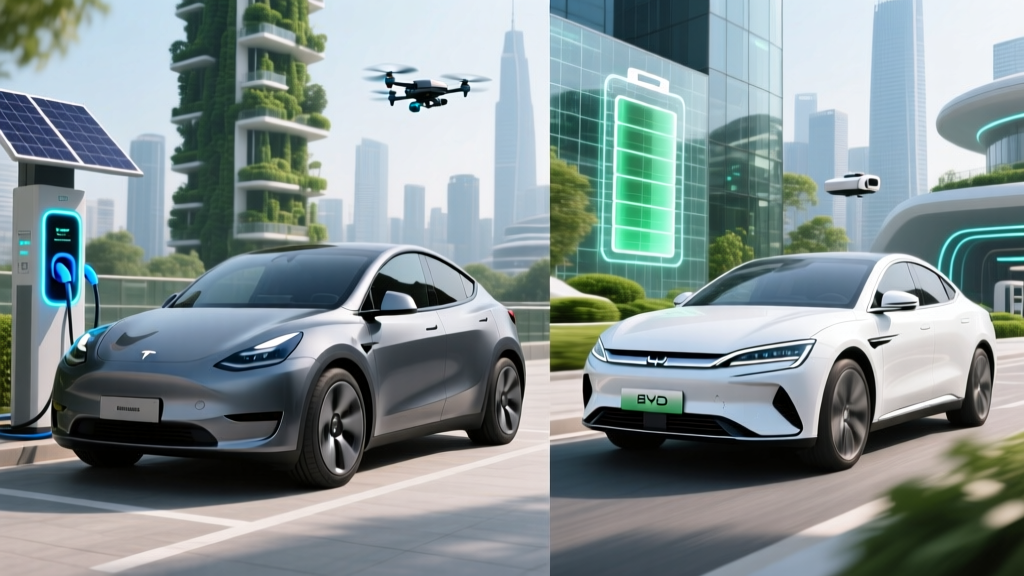
The headline battle for global EV supremacy is being waged on Chinese soil. As Tesla BYD China sales 2026 data continues to roll in, the rivalry between the American pioneer and the Shenzhen-based giant has never been more consequential — not just for the Chinese market, but for pricing, technology, and availability in every region where these two brands compete. BYD surpassed Tesla in total new-energy vehicle deliveries globally in 2023, and through 2025 and into 2026, the gap in pure volume has only widened in China's domestic market. Yet Tesla's Model Y remains a formidable force, routinely topping individual-model sales charts in key months.
For US-based EV shoppers, this matters more than you might think. The China sales battle drives global platform economics, battery supply chains, and feature rollouts that eventually reach American showrooms. In this profile, we break down the two flagship SUVs at the center of the fight — the 2026 Tesla Model Y Juniper refresh and the BYD Seal U (known as the Song Plus EV in China) — with exact specs, real-world range data, charging performance, and tax-credit implications so you can decide which deserves your garage.
2026 Tesla Model Y: Refreshed and Still the Benchmark
The 2026 Tesla Model Y (internally dubbed "Juniper") carries over the architecture that made it the best-selling vehicle in the world in 2023 and 2024, but with meaningful updates to the interior, suspension tuning, and acoustic insulation. The Long Range AWD variant remains the volume seller and the one most US buyers cross-shop against BYD's offerings abroad.
| Spec | Value |
|---|---|
| EPA Est. Range | 320 miles |
| Battery Capacity (usable) | 75 kWh (NMC) |
| Drivetrain | Dual-motor AWD |
| Horsepower | 384 hp |
| 0–60 mph | 4.8 seconds |
| Peak DC Fast Charge | 250 kW |
| 10–80% DCFC Time | ~25 minutes |
| Level 2 Charge Rate | 11.5 kW (~44 mi/hr) |
| MPGe (combined) | 117 MPGe |
| Efficiency | 28 kWh/100 mi |
| Cargo Volume | 30.2 cu ft (rear seats up) / 72.1 cu ft (folded) |
| Rear Legroom | 40.5 in |
| Base MSRP | $44,990 |
| Battery Warranty | 8 years / 120,000 miles |
Real-World Range: What to Actually Expect
The EPA rates the 2026 Model Y Long Range AWD at 320 miles. In real-world highway driving at 70–75 mph, expect approximately 270–290 miles before needing a charge. In freezing temperatures (below 32°F), range can drop to 230–260 miles due to cabin heating demands and battery resistance, even with the standard heat pump. City driving with frequent regenerative braking opportunities can push close to or slightly above the EPA figure.
Charging Performance and Infrastructure
Tesla's Supercharger network remains the gold standard for reliability. The Model Y peaks at 250 kW on V3 Superchargers, though sustained rates average closer to 150–170 kW through the bulk of the 10–80% session due to the charge curve taper. A typical Supercharger stop adds roughly 200 miles in 15 minutes under optimal conditions (battery preconditioned via navigation routing).
At home on a Level 2 Tesla Wall Connector (48A / 11.5 kW), the Model Y recovers about 44 miles of range per hour, fully replenishing overnight on a standard 240V/60A circuit. With the industry-wide shift to NACS (North American Charging Standard), the Model Y's native connector is now the dominant plug across North America, as Ford, GM, Rivian, and others have adopted it for 2025–2026 models.
Tech, Driver Assist, and Interior
The Juniper refresh brought a quieter cabin (acoustic glass front and rear), ventilated front seats, ambient lighting, and a rear-seat touchscreen. The 15.4-inch center display runs Tesla's latest software with integrated navigation, streaming, and over-the-air updates. Autopilot (SAE Level 2) is standard; Full Self-Driving (Supervised) remains an $8,000 option — and it is critical to understand that FSD is not autonomous. The driver must remain fully engaged at all times.
BYD Seal U: China's Challenger Eyes Global Markets
The BYD Seal U (Song Plus EV in China) is one of BYD's best-selling pure-electric SUVs globally, with strong traction in Europe, Southeast Asia, Australia, and Latin America. As of 2026, BYD has not officially launched the Seal U in the United States, but the model's China and export sales volume makes it a key reference point for understanding the competitive pressure shaping Tesla's pricing and feature decisions. For US shoppers considering imported vehicles or tracking the market, here's how it stacks up.
| Spec | Value |
|---|---|
| WLTP Est. Range | 311 miles (500 km) |
| EPA Est. Range | Not rated (not sold in US) |
| Battery Capacity (usable) | 71.8 kWh (LFP — Blade Battery) |
| Drivetrain | Dual-motor AWD |
| Horsepower | 318 hp |
| 0–60 mph (est.) | 5.7 seconds |
| Peak DC Fast Charge | 140 kW |
| 10–80% DCFC Time | ~33 minutes |
| Level 2 Charge Rate | 11 kW (~38 mi/hr) |
| WLTP Efficiency | ~30 kWh/100 mi |
| Cargo Volume | 19.4 cu ft (rear up) / 53.5 cu ft (folded) |
| Rear Legroom | ~38.2 in |
| Base MSRP (China) | ~¥189,800 (~$26,200 USD) |
| Base MSRP (Europe) | ~€42,990 (~$46,500 USD) |
| Battery Warranty | 8 years / 100,000 miles (varies by market) |
Real-World Range: WLTP vs Reality
The BYD Seal U Design AWD carries a WLTP rating of 311 miles (500 km). WLTP tends to run 10–15% more optimistic than EPA testing, so an equivalent EPA figure would likely land around 265–280 miles. In real-world mixed driving, expect approximately 240–265 miles. Cold-weather performance with the LFP Blade Battery sees similar 15–20% reductions, bringing range to roughly 200–225 miles in sub-freezing conditions. The LFP chemistry offers slower degradation over time but is more sensitive to extreme cold than NMC.
BYD's Blade Battery: LFP Chemistry Explained
BYD's signature Blade Battery uses lithium iron phosphate (LFP) chemistry in a cell-to-pack design that eliminates modules, improving volumetric efficiency and thermal stability. LFP batteries trade energy density for longevity — they typically retain 90%+ capacity after 2,000 full charge cycles, compared to roughly 1,000–1,500 cycles for NMC before hitting 80% retention. The trade-off: lower energy density means a heavier pack for the same range, and reduced cold-weather performance.
Head-to-Head: Model Y vs Seal U by the Numbers
| Attribute | Tesla Model Y LR AWD | BYD Seal U Design AWD |
|---|---|---|
| Range (EPA / WLTP) | 320 mi (EPA) | 311 mi (WLTP / ~270 EPA est.) |
| Battery Chemistry | NMC | LFP (Blade) |
| Battery Usable kWh | 75 kWh | 71.8 kWh |
| Peak DC Charge kW | 250 kW | 140 kW |
| 10–80% Time | ~25 min | ~33 min |
| 0–60 mph | 4.8 sec | 5.7 sec (est.) |
| Horsepower | 384 hp | 318 hp |
| Cargo (rear up) | 30.2 cu ft | 19.4 cu ft |
| US Availability | Yes | No (not launched) |
| US Tax Credit | Partial eligibility* | N/A |
| Starting Price (US/EU) | $44,990 | ~€42,990 (EU) |
Charging Speed Deep Dive: Why kW Matters on Road Trips
Charging speed is where the Model Y pulls decisively ahead for road-trip use cases. The 250 kW peak on Tesla's V3 Superchargers means that under ideal conditions (battery preconditioned, ambient temps above 50°F), you can add roughly 175 miles in 15 minutes. The charge curve holds above 200 kW through approximately 30% state of charge before tapering, with sustained averages around 150–170 kW through the 10–80% window.
The Seal U's 140 kW peak is competitive for European CCS infrastructure but noticeably slower on long highway drives. At 140 kW peak with a typical taper curve, a 10–80% session takes roughly 33 minutes, adding about 200 miles in 25 minutes — adequate but meaningfully slower than the Model Y. For home charging, both vehicles perform similarly overnight on Level 2 (11–11.5 kW), so daily commuters who charge at home will notice little difference.
Reminder: kW (kilowatts) measures power — how fast energy flows into the battery. kWh (kilowatt-hours) measures energy capacity — how much the battery holds. A 250 kW charger fills a 75 kWh battery faster than a 140 kW charger, but the battery's acceptance rate (charge curve) determines the actual speed through the session.
Pricing, Tax Credits, and the China Price Gap
The most striking dimension of the Tesla vs BYD China sales story in 2026 is the price differential in BYD's home market. The Seal U starts at roughly ¥189,800 in China — approximately $26,200 USD — undercutting the Model Y's Chinese starting price by a significant margin. This pricing power, fueled by BYD's vertical integration (they manufacture their own batteries, semiconductors, and motors), is what drives BYD's volume dominance in China.
In export markets like Europe, however, the Seal U's price climbs to approximately €42,990 (~$46,500), narrowing the gap considerably once shipping, tariffs, and dealer margins are factored in. The US market remains closed to BYD passenger vehicles due to 100%+ tariffs on Chinese-made EVs, effectively walling off the American market.
2026 Tesla Model Y — Federal Tax Credit Eligibility (§30D)
- MSRP Cap: SUVs must be under $80,000 — Model Y qualifies at $44,990 base ✓
- Buyer Income Cap: AGI ≤ $150,000 (single) / $300,000 (joint) ✓
- Battery Sourcing: Critical minerals and battery component requirements phase in annually; Tesla has shifted some sourcing to comply, but eligibility can vary by production batch — always verify via the DOE/Fuel Economy tax credit lookup before purchasing
- Credit Amount: Up to $7,500, available as a point-of-sale transfer to the dealer (reduces your purchase price at signing)
- Critical Caveat: IRS sourcing rules tighten yearly; confirm current eligibility on irs.gov for your specific delivery date
The BYD Seal U, not being sold in the US, does not qualify for any US federal or state EV incentives. This tariff and credit barrier is the single largest factor preventing BYD from translating its China sales dominance into American market share.
Who Should Buy Which?
Decision Framework
Choose the Tesla Model Y if:
- You need the longest real-world range and fastest road-trip charging in a compact SUV
- Supercharger network reliability is a priority for frequent highway travel
- You want NACS-native charging compatibility as the North American standard
- Cargo space (30.2 cu ft rear-up) and frunk storage matter for family hauling
- You want access to the $7,500 federal tax credit (eligibility dependent on sourcing rules)
The BYD Seal U is relevant if:
- You live outside the US (Europe, Australia, Southeast Asia, Latin America) where it's competitively priced
- You value LFP battery longevity and are a high-mileage commuter who cycles the battery daily
- You're tracking global EV market dynamics to time your next US-market purchase
2026 Tesla Model Y — Pros
- Best-in-class Supercharger network access (17,000+ stalls in North America)
- 250 kW DC fast charging with route preconditioning
- Spacious cargo area (30.2 cu ft) plus front trunk
- Continuous OTA software updates
- Strong resale value relative to EV segment
2026 Tesla Model Y — Cons
- Minimalist interior not to all tastes; no instrument cluster
- FSD ($8,000) remains SAE Level 2 — not autonomous
- Insurance premiums 15–25% above segment average
- Ride firmness on 20-inch wheels (19-inch recommended for comfort)
- Tax credit eligibility uncertain by production batch
Frequently Asked Questions
Why is BYD outselling Tesla in China in 2026?
BYD's vertical integration — manufacturing its own batteries (Blade/LFP), electric motors, and semiconductors — gives it a structural cost advantage of roughly 15–25% over Tesla on comparable vehicles in China. Combined with a broader lineup spanning PHEVs and BEVs across multiple price tiers (from the $10,000 Seagull to the premium Yangwang brand), BYD captures buyers at every segment. Tesla competes primarily with the Model 3 and Model Y in China's premium tier.
Will BYD ever sell cars in the United States?
As of 2026, BYD has no announced plans to sell passenger vehicles in the US. The 100% tariff on Chinese-made EVs (raised from 25% in mid-2024) makes importing economically unviable. BYD is building factories in Thailand, Brazil, Hungary, Indonesia, and Turkey to serve export markets, but US market entry would require either a local factory or a significant tariff policy shift — neither of which appears imminent.
What is the real-world range of the 2026 Tesla Model Y?
The EPA rates the Model Y Long Range AWD at 320 miles. Real-world highway driving at 70+ mph typically yields 270–290 miles. In freezing weather, expect 230–260 miles. City driving with regen braking can match or slightly exceed the EPA number.
Does the Tesla Model Y qualify for the $7,500 federal tax credit?
The Model Y's base MSRP ($44,990) falls under the $80,000 SUV cap, and buyer income limits apply ($300,000 joint / $150,000 single AGI). However, the battery sourcing and critical minerals requirements under IRS §30D change annually and can vary by production batch. Always verify eligibility on fueleconomy.gov for the specific VIN before signing a purchase agreement. The credit can be transferred to the dealer at point of sale, reducing your purchase price directly.
Is LFP (BYD Blade) better than NMC (Tesla)?
It depends on your use case. LFP offers superior cycle life (2,000+ full cycles to 80% retention vs ~1,000–1,500 for NMC), better thermal stability (lower fire risk), and can be charged to 100% daily without accelerating degradation. NMC offers higher energy density (more range per pound) and better cold-weather performance. For a daily commuter who charges every night, LFP is arguably the better long-term bet. For road-trip-heavy owners in cold climates, NMC's density and cold resilience win out.
How does the BYD Seal U compare to the Model Y on charging speed?
The Seal U peaks at 140 kW DC, taking approximately 33 minutes for a 10–80% charge. The Model Y peaks at 250 kW, completing 10–80% in roughly 25 minutes. On road trips, this translates to about 8 fewer minutes per stop with the Tesla — meaningful over a 1,000-mile journey with 3–4 charging stops.
The Bottom Line for US EV Shoppers
The Tesla vs BYD China sales battle in 2026 is a proxy war for global EV leadership, but for US buyers, the practical outcome is clear: the Model Y remains the default compact electric SUV with the best combination of range (320 mi EPA), charging speed (250 kW), cargo utility (30.2 cu ft), and charging-network access available stateside. BYD's pricing advantage in China doesn't translate across the tariff wall, and the Seal U's slower charging and smaller cargo area would make it a tough sell even if it were available.
That said, BYD's pressure is real — it's a key reason Tesla cut Model Y prices aggressively in 2024–2025 and accelerated the Juniper refresh. Every dollar shaved off the Model Y's sticker, every mile of range added, and every Supercharger stall deployed is partly a response to the BYD threat. For American EV shoppers, that competition — even indirect — is the best possible outcome.