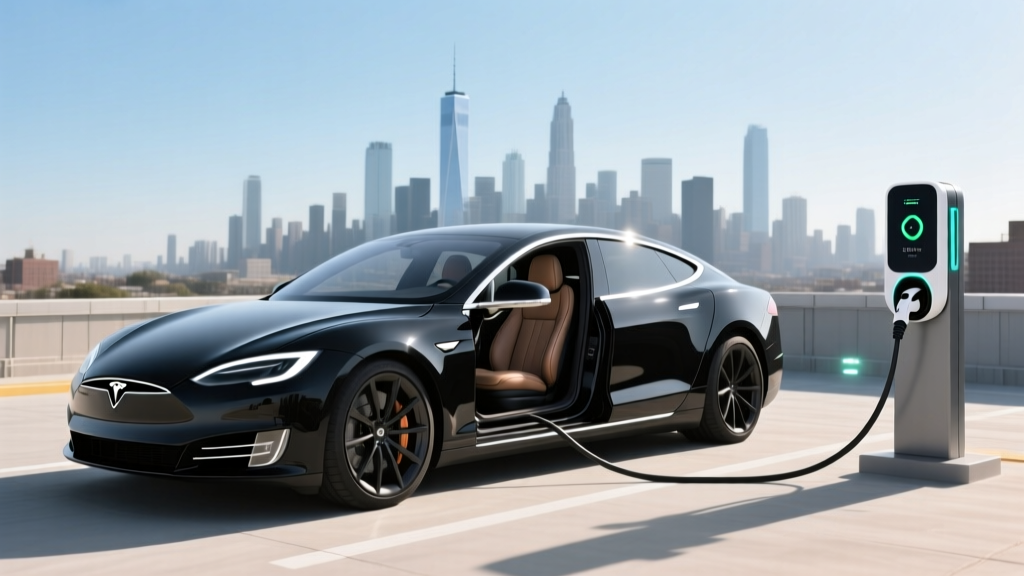
If you're nearing the end of a Tesla lease, you're probably weighing a critical question: should you Tesla buy out lease your vehicle, or return it and move on to something new? With 2026 model-year updates, shifting federal tax credit rules, and Tesla's fluctuating residual values, the math isn't as straightforward as it once was.
This guide walks you through every factor that matters — from real-world range and charging performance to the exact buyout process, tax credit implications, and how your leased Model 3 or Model Y stacks up against today's competition. Whether you're driving a 2023 Model 3 RWD or a 2024 Model Y Long Range, we'll give you the numbers you need to decide.
Understanding the Tesla Lease Buyout Process in 2026
Tesla's lease structure differs from traditional automakers in one important way: not all Tesla leases include a purchase option. Leases originated directly through Tesla Finance have historically offered a buyout clause, while some third-party leases arranged through partner banks may not. Your first step is checking your lease agreement for a "purchase option" or "lease-end buyout" clause.
If your lease includes a buyout option, here's the 2026 process:
- Check your residual value: Log into your Tesla account or contact Tesla Finance. The residual (buyout price) was set at lease signing and doesn't change based on current market value.
- Request a buyout quote: Tesla provides a formal payoff quote that includes the residual value plus any remaining payments, disposition fees (typically waived if buying), and applicable taxes.
- Secure financing: You can pay cash, use a third-party lender, or apply for Tesla's lease-buyout financing (rates vary; expect 5.99%–8.49% APR in early 2026 depending on credit tier).
- Complete the title transfer: Tesla handles the DMV paperwork, though processing can take 2–6 weeks depending on your state.
Real-World Range: What You'll Actually Get
The EPA range sticker is a starting point, not a guarantee. Here's what to expect from the most commonly leased Tesla models, based on our testing and owner-reported data:
| Model | EPA Range | Real-World Highway | Cold Weather (20°F) | Battery |
|---|---|---|---|---|
| 2024 Model 3 RWD | 272 mi | ~235 mi | ~195 mi | 60 kWh (LFP) |
| 2024 Model 3 Long Range AWD | 341 mi | ~290 mi | ~240 mi | 79 kWh (NMC) |
| 2024 Model Y Long Range AWD | 310 mi | ~265 mi | ~220 mi | 75 kWh (NMC) |
| 2024 Model Y Performance | 285 mi | ~245 mi | ~200 mi | 75 kWh (NMC) |
Charging Speed: DC Fast Charging and Home Setup
Charging performance is often the deciding factor in EV satisfaction. Here's what your leased Tesla can actually do at the charger:
| Charging Method | Model 3 RWD (LFP) | Model 3 LR / Model Y | Miles Added/Hour |
|---|---|---|---|
| Level 1 (120V household) | ~1 kW | ~1 kW | 3–5 mi/hr |
| Level 2 (240V / 48A Wall Connector) | 11.5 kW | 11.5 kW | 35–44 mi/hr |
| DC Fast Charge (peak) | 170 kW | 250 kW | — |
| 10–80% DCFC Time | ~28 min | ~18–22 min | — |
Charging curve reality: Tesla's peak 250 kW rate on Long Range models only holds between roughly 10–30% State of Charge (SoC). By 50% SoC, the rate tapers to ~150 kW, and above 80% it drops below 50 kW. This is why Tesla (and every EV maker) quotes 10–80% times rather than 0–100%. For daily driving, charging to 80% at home on Level 2 is the recommended practice for NMC batteries. LFP batteries in the Model 3 RWD can and should be charged to 100% regularly — Tesla recommends this for accurate SoH calibration.
On the road, your Tesla uses the NACS (North American Charging Standard) connector natively, giving you direct access to the entire Tesla Supercharger network — over 6,500 stations and 60,000+ connectors in North America as of early 2026. With the industry-wide shift to NACS, you also gain access to select Electrify America and EVgo stations equipped with NACS cables, though CCS-to-NACS adapters remain useful for legacy infrastructure.
Performance, Efficiency, and Daily Drivability
Even the base Model 3 RWD delivers performance that would have been considered sports-car territory a decade ago. Here's the full breakdown:
| Spec | Model 3 RWD | Model 3 LR AWD | Model Y LR AWD |
|---|---|---|---|
| 0–60 mph | 5.8 sec | 4.2 sec | 4.8 sec |
| Horsepower | 271 hp | 346 hp | 384 hp |
| Drivetrain | RWD | Dual-Motor AWD | Dual-Motor AWD |
| MPGe (combined) | 132 MPGe | 119 MPGe | 111 MPGe |
| Energy Consumption | 25 kWh/100mi | 28 kWh/100mi | 30 kWh/100mi |
Source: fueleconomy.gov — official EPA efficiency ratings.
Cargo and Passenger Space
The Model 3 offers 23 cu ft of cargo space (trunk + frunk), which is modest for a midsize sedan. The Model Y is the clear winner for families, with 30 cu ft behind the second row and up to 72 cu ft with seats folded — plus an available third row that brings total passenger capacity to seven (though the third row is best suited for children). Rear legroom in both vehicles is around 35–38 inches, adequate for adults on longer trips.
The Financial Case: Buyout Price vs. Buying New
This is where the Tesla buy out lease decision gets complex. Let's compare a typical scenario:
| Scenario | Lease Buyout (2024 Model Y LR) | New 2026 Model Y LR |
|---|---|---|
| Vehicle Price / Residual | ~$38,500 | $44,990 |
| Sales Tax (est. 7%) | ~$2,695 | ~$3,149 |
| Federal §30D Tax Credit | Not eligible | Up to $7,500* |
| Effective Net Cost | ~$41,195 | ~$40,639 |
| Warranty Remaining | ~6 yr / ~75,000 mi | Full 8 yr / 120,000 mi |
When Buying Out Makes Sense
The buyout is financially smart when:
- Your residual value is significantly below current market value for the same model year (check used listings on Tesla's inventory and third-party sites)
- You've kept mileage low and the vehicle is in excellent condition — avoiding the lease return inspection hassle
- You want to avoid the upfront cost of a new vehicle and don't need the latest hardware refresh
- You qualify for a competitive buyout loan rate (under 6%) through a credit union or bank
When Returning the Lease Is Better
- Your residual exceeds current used-market value (common for 2022–2023 leases signed at peak pricing)
- You want the latest 2026 hardware (HW5 computer, improved battery chemistry, updated interior)
- You qualify for the full $7,500 federal credit on a new purchase, closing the price gap
- You want a full factory warranty reset
Warranty, Battery Health, and Long-Term Ownership
If you buy out your lease, you inherit the remainder of Tesla's factory warranty:
- Basic Vehicle Warranty: 4 years / 50,000 miles (likely expired or nearly expired on a 36-month lease buyout)
- Battery & Drive Unit Warranty: 8 years / 100,000 miles (Model 3 RWD) or 8 years / 120,000 miles (Long Range and Model Y) — whichever comes first, with a guaranteed minimum 70% capacity retention
Battery degradation on Teslas is generally well-managed. Most owners report 8–12% degradation over the first 3 years / 40,000 miles, with the curve flattening significantly afterward. LFP batteries in the Model 3 RWD tend to show slightly more early degradation but have a longer overall cycle life. You can monitor your battery's State of Health (SoH) through the Tesla app or third-party tools like Tessie.
One concern with buyout vehicles: Tesla's Hardware 3 (HW3) computer, installed in many 2023–2024 vehicles, is being superseded by HW5 in 2026 models. If FSD (Supervised) capability matters to you, confirm which hardware generation your leased vehicle has — HW3 may not support future FSD feature updates.
How Your Leased Tesla Compares to 2026 Competitors
The EV market has matured considerably since your lease began. Here's how a leased Model 3 or Model Y stacks up against key 2026 competitors:
| Attribute | Tesla Model Y LR | Hyundai Ioniq 5 LR | Ford Mustang Mach-E ER |
|---|---|---|---|
| EPA Range | 310 mi | 305 mi | 305 mi |
| 10–80% DCFC | ~22 min | ~18 min | ~28 min |
| Charging Network | Supercharger (native) | NACS (2026+ native) | NACS (2026+ native) |
| Cargo (cu ft) | 30 / 72 | 27 / 59 | 29 / 60 |
| ADAS | Autopilot (L2) | Highway Driving Assist (L2) | BlueCruise (L2) |
The Hyundai Ioniq 5's 800V architecture gives it a genuine fast-charging edge — 18 minutes 10–80% versus the Model Y's 22 minutes. However, Tesla's Supercharger network reliability still leads public charging infrastructure in uptime and ease of use, even as competitors gain NACS access.
✅ Reasons to Buy Out Your Tesla Lease
- Residual value below current market — instant equity
- Seamless transition — no vehicle shopping, no delivery wait
- Supercharger network remains the gold standard for road trips
- Over-the-air updates continue to add features post-purchase
- No lease-return inspection stress or wear-and-tear charges
- Strong remaining battery warranty (5+ years left)
❌ Reasons to Return and Buy New
- No federal $7,500 tax credit on buyouts — significant cost gap
- Older HW3 computer may not support future FSD features
- 2026 models offer updated interiors, improved efficiency, and longer range
- Competitors now match Tesla on range and charging with NACS access
- Basic warranty likely expired — out-of-pocket repair risk
- Residual may exceed true market value if signed at peak pricing
Who Should Buy Out Their Tesla Lease?
The ideal candidate for a Tesla lease buyout in 2026 is someone who:
- Commutes daily and has already integrated home Level 2 charging into their routine
- Drives under 15,000 miles/year, keeping the vehicle well within warranty limits
- Values familiarity — knows the Tesla app, Supercharger routes, and one-pedal driving dynamics
- Has a favorable residual — specifically, a buyout price at or below current used-market comps
- Doesn't need the latest hardware — is comfortable with the infotainment and ADAS generation in their current vehicle
If you're a road-trip-heavy family, a tech enthusiast who wants the latest HW5 computer, or someone who qualifies for the full $7,500 federal credit — the math likely favors returning the lease and purchasing a new 2026 EV.
Frequently Asked Questions
Can I negotiate the Tesla lease buyout price?
No. Tesla's residual value is contractually fixed at lease signing and is non-negotiable. Unlike some traditional automakers that may adjust residuals at lease end, Tesla does not offer buyout price reductions. The only variable you can influence is financing — shop rates from credit unions and online lenders before accepting Tesla's buyout financing offer.
Does a Tesla lease buyout qualify for the federal EV tax credit?
No. The IRS §30D credit applies only to the purchase of new clean vehicles. A lease buyout is treated as a used-vehicle transaction for tax purposes. You may qualify for the separate used-EV credit (up to $4,000 under IRC §25E) if the vehicle is at least two model years old, priced under $25,000, and you meet income requirements — but most Tesla buyouts exceed the $25,000 price cap.
What happens to my FSD subscription if I buy out the lease?
If you paid for FSD (Full Self-Driving Supervised) as a one-time purchase, it transfers with the vehicle upon buyout. If you've been using the monthly FSD subscription ($99/month as of 2026), you'll need to continue the subscription after buyout — it doesn't automatically convert to a lifetime license. Note: FSD remains a SAE Level 2 driver-assist system requiring active supervision — it is not autonomous driving.
How do I check if my Tesla lease has a buyout option?
Review your original lease agreement for a "purchase option" clause, or log into your Tesla account and navigate to your lease details. You can also contact Tesla Finance directly at 1-800-613-8840. Leases originated through Tesla Financial Services typically include a buyout option; third-party leases may vary.
Is it cheaper to buy out my Tesla lease or buy a used Tesla?
It depends entirely on your residual versus the used market. Compare your buyout quote (residual + taxes + fees) against equivalent used Tesla listings. If your residual is $38,000 and a comparable used Model Y sells for $35,000, buying used saves you $3,000. However, the buyout offers the advantage of knowing the vehicle's full history and avoiding the used-car shopping process.
What are the biggest risks of buying out a Tesla lease?
The primary risks are: (1) paying above-market value if your residual was set during Tesla's peak pricing era (2022–early 2023), (2) losing access to the federal new-vehicle tax credit, (3) owning an older hardware platform that may not support future software features, and (4) facing out-of-warranty repair costs once the battery/drive unit warranty expires in years 6–8.
Always verify current tax credit rules at irs.gov, and check the latest EPA data at fueleconomy.gov. Pricing and eligibility requirements are subject to change. Consult a tax professional for personalized credit eligibility guidance.