If you have been searching for a Tesla bus, you are not alone. The term trends regularly as buyers, fleet operators, and tech enthusiasts wonder whether Tesla offers — or plans to offer — a multi-passenger electric bus for consumer or commercial use. The short answer in 2026: Tesla does not sell a consumer electric bus. There is no Tesla-branded school bus, transit bus, or passenger van available for individual purchase.
But the full picture is more nuanced. Tesla's commercial vehicle lineup includes the Tesla Semi (a Class 8 electric truck), and the company has teased a "Robovan" concept for autonomous group transport. Meanwhile, Tesla's existing consumer fleet — particularly the Model X with its optional six- and seven-seat configurations — serves as the closest thing to a Tesla passenger van today.
This guide breaks down every vehicle that touches the "Tesla bus" question, with exact specs, pricing, range, and charging data so you know what is actually available, what is in development, and what alternatives exist.
The Tesla Semi: Tesla's Closest Thing to a Commercial Bus Platform
The Tesla Semi is a Class 8 electric semi-truck that began limited production in late 2022 and has been in low-volume delivery to fleet customers since. While it is a tractor-trailer rather than a bus, its powertrain architecture and battery capacity represent the largest electric vehicle platform Tesla currently produces — and the one most likely to underpin any future Tesla bus or Robovan derivative.
| Specification | 300-Mile Range | 500-Mile Range |
|---|---|---|
| EPA Estimated Range | ~300 mi (loaded) | ~500 mi (loaded) |
| Battery Capacity (estimated) | ~500 kWh | ~900 kWh |
| DC Fast Charge (peak) | Up to ~1 MW (Megacharger) | |
| 10-80% Charge Time | ~30 min at Megacharger | |
| 0-60 mph (loaded) | ~20 seconds (80,000 lb GCW) | |
| 0-60 mph (unloaded) | ~5 seconds | |
| Motors | Tri-motor AWD | |
| Energy Efficiency | ~1.7 kWh/mile (claimed) | |
| Base MSRP (est.) | ~$250,000 | ~$290,000 |
| Availability | Fleet/reservation holders only | |
The Semi is not available to individual consumers. It is sold exclusively to fleet operators (PepsiCo, DHL, and others have taken early deliveries). It also does not qualify for the §30D consumer tax credit — it falls under the §45W Commercial Clean Vehicle Credit instead, which offers up to $40,000 for qualifying commercial vehicles.
The Tesla Robovan: Announced Concept, No Production Date
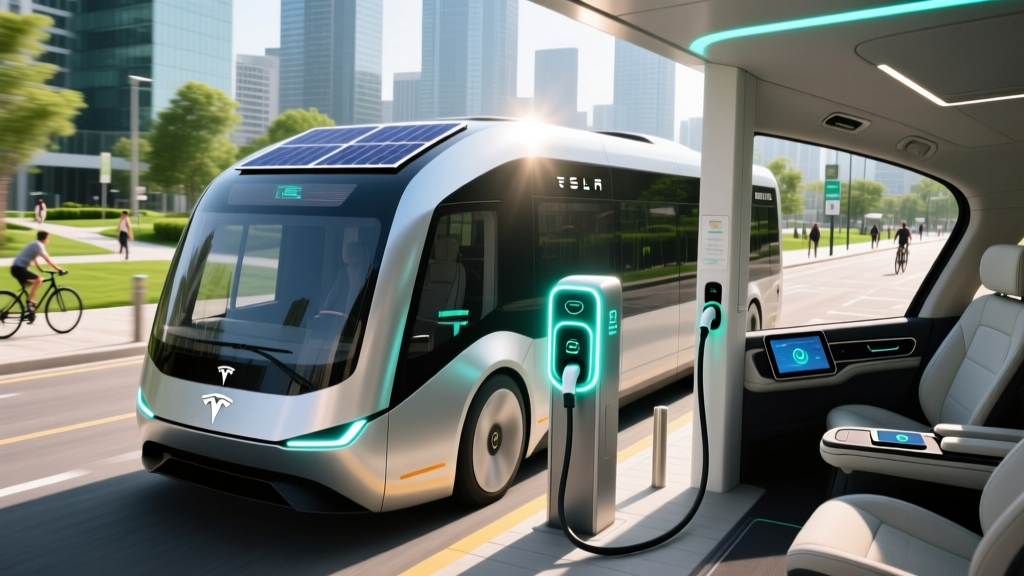
At Tesla's October 2024 "We, Robot" event, CEO Elon Musk unveiled the Tesla Robovan — a sleek, windowless autonomous concept vehicle designed to carry up to 20 passengers. Musk described it as a future robotaxi-style people mover with no steering wheel or pedals.
What we know about the Robovan concept:
- Passenger capacity: Up to 20 riders
- Intended use: Autonomous ride-hailing / people mover (SAE Level 4 target)
- Design: Art-deco-inspired exterior, lounge-style interior seating
- Drivetrain: Fully electric, details unconfirmed
- Production timeline: No date given; industry analysts project 2028 at the earliest if development proceeds
If and when the Robovan reaches production, it would likely be deployed as a fleet-operated service (similar to Waymo's robotaxi model) rather than sold to individual consumers. It would compete with autonomous shuttle services from companies like Zoox and Cruise, not with traditional consumer EVs.
The Model X: Tesla's Largest Consumer Passenger Vehicle
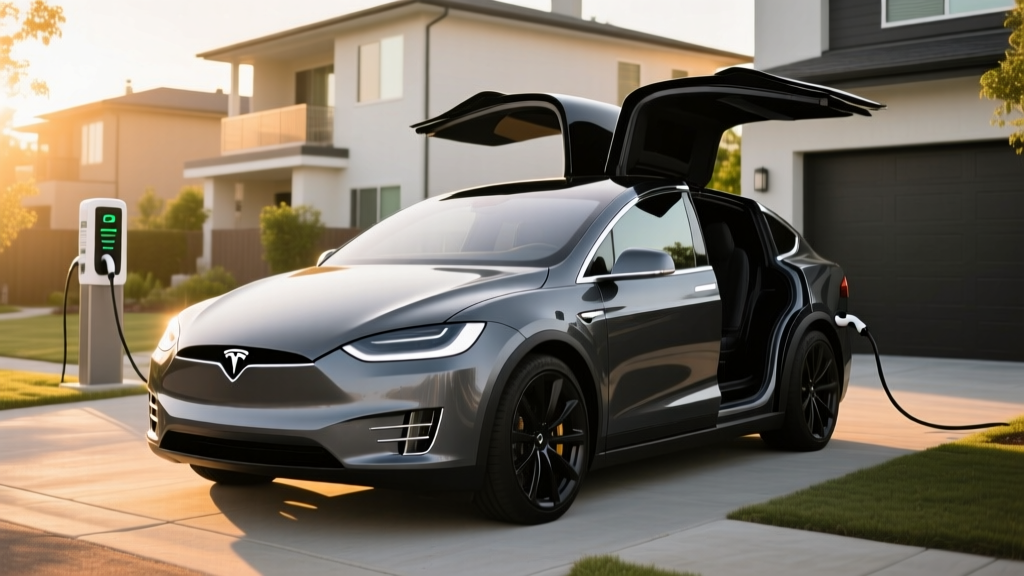
For buyers who want a Tesla that seats the most passengers, the 2026 Tesla Model X is the closest the company offers to a people-mover. Available in six-seat (captain's chairs) and seven-seat (bench third row) configurations, the Model X is a full-size electric SUV that handles family duty, airport runs, and group transport better than any other vehicle in Tesla's consumer lineup.
| Specification | Long Range (AWD) | Plaid (AWD) |
|---|---|---|
| EPA Estimated Range | 335 mi | 311 mi |
| Battery Capacity | ~100 kWh usable (NMC) | |
| Peak DC Fast Charge | 250 kW (V3 Supercharger) | |
| 10-80% DC Charge Time | ~30 minutes | |
| Level 2 Home Charging | 11.5 kW (~34 mi/hr) | |
| 0-60 mph | 3.8 sec | 2.5 sec |
| Horsepower | 670 hp | 1,020 hp |
| Drivetrain | Dual-motor AWD | |
| Efficiency | 101 MPGe | 98 MPGe |
| Seating | 5, 6, or 7 passengers | |
| Cargo (behind 3rd row) | ~15 cu ft | |
| Cargo (all rows folded) | ~81.7 cu ft | |
| Base MSRP | $79,990 | $94,990 |
| Battery Warranty | 8 yr / 150,000 mi | |
Charging the Model X: What Owners Actually Experience
The Model X charges at up to 250 kW on Tesla V3 Superchargers, but like all EVs, it does not sustain peak rate throughout the session. The charge curve peaks around 250 kW from roughly 10-30% state of charge, then tapers progressively. A typical 10-80% session takes about 30 minutes at a V3 stall. On a 48-amp Level 2 home charger (11.5 kW), a full overnight charge adds roughly 34 miles of range per hour, meaning a depleted battery reaches full in about 10 hours.
Preconditioning the battery (navigating to a Supercharger in the car's nav system) is essential for achieving peak charge speeds, especially in cold weather. Without preconditioning, initial charge rates can be cut in half.
Federal Tax Credit: Does the Model X Qualify?
The Tesla Model X does NOT qualify for the federal §30D Clean Vehicle Credit in 2026. Here is why:
- MSRP Cap: §30D limits eligibility to SUVs priced at or below $80,000. The Model X Long Range starts at $79,990 — right at the threshold — but destination fees and any options push it above the cap.
- Income Cap: Even if MSRP qualifies, buyers must have modified AGI at or below $300,000 (joint), $225,000 (head of household), or $150,000 (individual).
- Battery Sourcing: §30D requires critical minerals and battery components to meet escalating domestic-sourcing thresholds. Tesla's supply chain compliance varies by production batch.
The base Long Range trim at $79,990 MSRP may qualify if ordered with zero options and before destination charges, and if the buyer meets income requirements and the vehicle's battery meets sourcing rules. Always verify current eligibility at fueleconomy.gov and consult a tax professional before relying on the credit.
The Tesla Semi falls under the separate §45W Commercial Clean Vehicle Credit (up to $40,000 for vehicles over 14,000 lb GVWR), available to businesses and tax-exempt organizations — not individual consumers.
Third-Party Electric Bus Alternatives Available Now
If you need an actual electric bus — for school districts, transit agencies, or shuttle services — several manufacturers produce dedicated battery-electric buses in 2026. These are commercial/fleet vehicles, not consumer purchases:
| Manufacturer | Model | Type | Range (approx.) | Battery |
|---|---|---|---|---|
| Blue Bird | Vision Electric | School bus | ~120-150 mi | ~155 kWh (NMC) |
| Thomas Built | Saf-T-Liner C2 Jouley | School bus | ~135 mi | ~226 kWh (NMC) |
| Proterra | ZX5 | Transit bus | ~200-325 mi | Up to 660 kWh |
| New Flyer | Xcelsior CHARGE NG | Transit bus | ~200+ mi | Up to 525 kWh |
| Lion Electric | LionC | School bus | ~100-150 mi | Up to 210 kWh |
These vehicles range from $300,000 to $800,000+ depending on configuration and are eligible for various federal and state fleet electrification grants (including EPA Clean School Bus Program funding), not the consumer §30D credit.
Who Should Buy a Tesla (If You Need Group Transport)?
Choose the Model X if:
- You need to seat 6-7 people in a premium electric vehicle
- You want access to the Tesla Supercharger network for road trips
- Falcon-wing rear doors make third-row access easier for kids and car seats
- You can absorb the ~$80K-$100K price tag without relying on tax credits
Look elsewhere if:
- You need to seat more than 7 passengers (no Tesla offers this)
- You need a commercial bus for fleet/transit operations
- You require a vehicle under $50,000
- You need the federal tax credit to make the math work
For families and small groups, the Model X remains the only Tesla that seats more than five. Competitors like the Kia EV9 (3-row, 6-7 seats, starting ~$55,000) and the Rivian R1S (3-row, 7 seats, starting ~$75,000) offer more affordable alternatives with similar passenger capacity, though neither matches Tesla's Supercharger infrastructure advantage.
Pros and Cons: The "Tesla Bus" Question Summarized
Pros (Model X as Passenger Mover)
- Seats up to 7 — most of any Tesla
- 335-mile EPA range (Long Range)
- 250 kW Supercharger access nationwide
- Falcon-wing doors ease 3rd-row loading
- Best-in-class performance (Plaid: 2.5s 0-60)
- Over-the-air updates keep tech current
Cons
- $80K+ price — no federal tax credit for most buyers
- Real-world highway range ~270-290 mi, less in cold
- Third row is tight for adults on long trips
- No Tesla bus, van, or shuttle exists for consumers
- Robovan is concept-only with no production date
- Insurance costs are above average for the segment
Frequently Asked Questions
Does Tesla make a bus you can buy?
No. Tesla does not manufacture or sell a consumer bus, van, or multi-passenger shuttle. The Tesla Semi is a commercial Class 8 truck available only to fleet operators. The Robovan is an announced concept with no production timeline. The Model X (up to 7 seats) is the largest consumer Tesla available.
What is the Tesla Robovan and when will it be available?
The Robovan is an autonomous electric people-mover concept unveiled in October 2024, designed to carry up to 20 passengers with no driver controls. Tesla has not announced a production date, pricing, or specifications. Industry analysts do not expect it before 2028 at the earliest, and it is likely to be a fleet-operated service rather than a consumer purchase.
How much does a Tesla Semi cost?
The Tesla Semi is estimated at approximately $250,000 for the 300-mile range variant and $290,000 for the 500-mile variant. It is sold only to commercial fleet operators and is not available to individual consumers.
Does the Tesla Model X qualify for the $7,500 federal tax credit?
Generally, no. The §30D credit caps SUV eligibility at $80,000 MSRP. The Model X Long Range starts at $79,990, but destination fees and any options push it above the cap. The Plaid trim at $94,990 is well above the limit. Always verify current eligibility at fueleconomy.gov and consult a tax professional.
What electric buses are available for schools or transit agencies?
Dedicated electric school buses are available from Blue Bird (Vision Electric), Thomas Built (Jouley), and Lion Electric (LionC). Transit buses come from Proterra (ZX5) and New Flyer (Xcelsior CHARGE NG). These are commercial vehicles priced from $300,000 to $800,000+ and are eligible for fleet electrification grants, not consumer tax credits.
Can I use a Tesla Model X as a shuttle or rideshare vehicle?
Yes, the Model X seats up to 7 and is used by some premium rideshare and shuttle operators. However, the ~$80K+ purchase price, higher insurance costs, and lack of tax credit eligibility make the economics challenging compared to alternatives like the Kia EV9 or Chrysler Pacifica Hybrid for shuttle duty.
Sources: Tesla Model X specifications, fueleconomy.gov (EPA range and efficiency data), IRS §30D Clean Vehicle Credit rules.