Understanding the Tesla Bull Reclaim Landscape in 2026
The term "Tesla bull reclaim" has gained traction among EV investors and owners looking to recover value after the electric vehicle market experienced significant volatility in 2024-2025. Whether you're holding Tesla stock that's underperformed expectations or own a Tesla vehicle that's depreciated faster than anticipated, the path to reclaiming value requires understanding both the financial and ownership optimization strategies available in today's market.
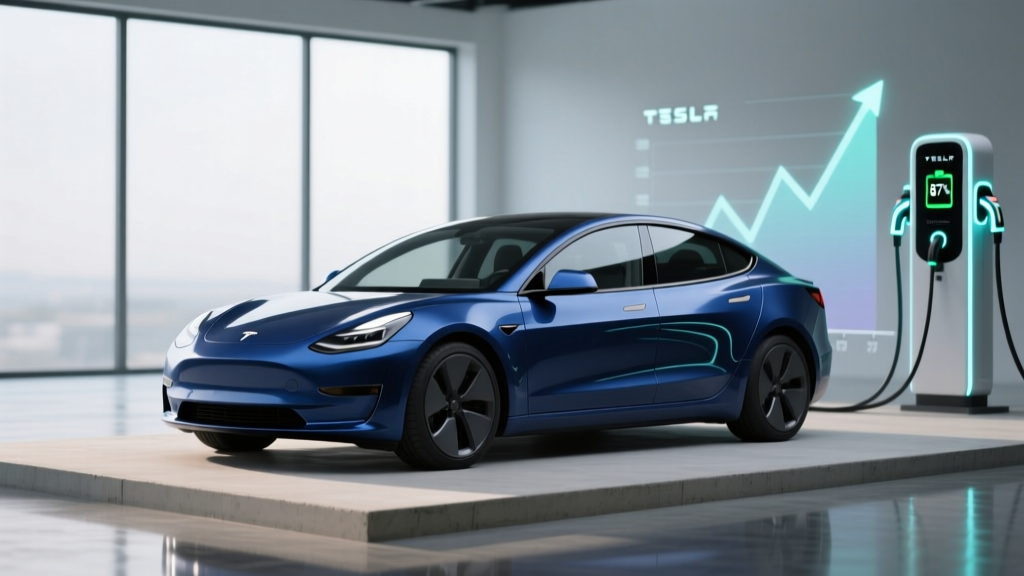
Tesla's vehicle lineup in 2026 continues to dominate the premium EV segment, with the refreshed Model 3 Highland and updated Model Y maintaining strong EPA range figures, industry-leading charging infrastructure access, and competitive pricing after federal tax credits. For Tesla bulls—whether shareholders or committed owners—reclaiming value means leveraging the tangible benefits of Tesla ownership against the backdrop of an increasingly competitive EV landscape.
Current Tesla Lineup: Range, Efficiency, and Real-World Performance
To evaluate whether Tesla ownership delivers the value proposition that supports a bull thesis, we need to examine the concrete specifications that matter to buyers and owners. The 2026 Model 3 and Model Y represent Tesla's volume sellers, and their specs determine real-world usability and resale value retention.
| Specification | Model 3 Long Range AWD | Model Y Long Range AWD |
|---|---|---|
| EPA Estimated Range | 341 miles | 310 miles |
| Battery Capacity (Usable) | 75 kWh (NMC) | 75 kWh (NMC) |
| Efficiency (MPGe Combined) | 132 MPGe | 122 MPGe |
| Energy Consumption | 25 kWh/100mi | 27 kWh/100mi |
| 0-60 mph | 4.2 seconds | 4.8 seconds |
| Horsepower | 346 hp | 384 hp |
| Drivetrain | Dual Motor AWD | Dual Motor AWD |
| Max DC Fast Charge | 250 kW | 250 kW |
| 10-80% DC Charge Time | ~25 minutes | ~27 minutes |
| Level 2 Home Charge Rate | 11.5 kW (44 mi/hr) | 11.5 kW (40 mi/hr) |
| Cargo Volume | 23 cu ft (trunk) | 76 cu ft (rear seats folded) |
| Base MSRP | $47,740 | $50,740 |
Source: EPA Fueleconomy.gov and Tesla official specifications
Real-World Range: What the EPA Sticker Doesn't Tell You
This range discrepancy matters for Tesla bulls evaluating ownership value. The Supercharger network's reliability and density (over 6,000 stations in North America by 2026) mitigates range anxiety, but buyers comparing Teslas to competitors like the Hyundai Ioniq 5 (311 miles EPA, 800V architecture enabling 10-80% in 18 minutes) or Ford Mustang Mach-E (320 miles EPA) need realistic expectations.
Charging Speed and Infrastructure: Tesla's Competitive Moat
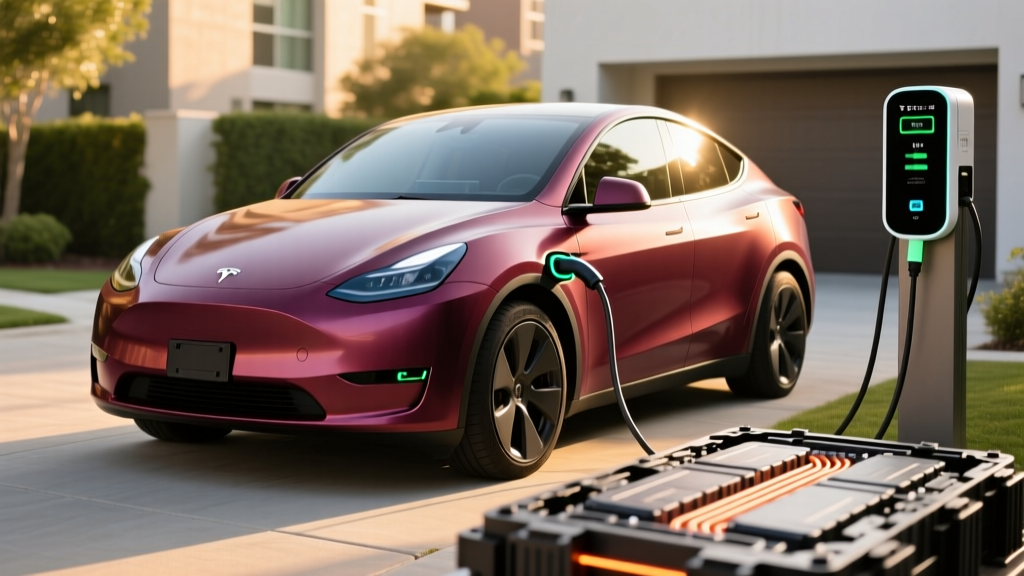
One of the strongest arguments in a Tesla bull reclaim thesis is the company's charging ecosystem advantage. While competitors have gained access to Tesla's Supercharger network through the North American Charging Standard (NACS) adoption, Tesla owners still benefit from seamless plug-and-charge functionality, superior station reliability (99%+ uptime vs. ~85% for third-party networks), and integrated navigation with battery preconditioning.
| Metric | Tesla Model 3/Y | Hyundai Ioniq 5 | Ford Mach-E |
|---|---|---|---|
| Peak DC Fast Charge | 250 kW | 240 kW (350 kW capable) | 150 kW |
| 10-80% Charge Time | 25-27 min | 18 min | 45 min |
| Charging Architecture | 400V | 800V | 400V |
| Native Network Access | Supercharger (NACS) | CCS + Supercharger (adapter) | CCS + Supercharger (adapter) |
| Preconditioning | Automatic (nav-triggered) | Manual/app-triggered | Manual/app-triggered |
The 400V architecture in Tesla vehicles limits peak charging speeds compared to 800V competitors, but Tesla's charge curve management and battery thermal conditioning deliver consistent real-world performance. At a V3 Supercharger (250 kW), expect charging to taper significantly above 60% state of charge—the last 20% (60-80%) takes roughly as long as the first 40% (10-50%).
Federal Tax Credit Eligibility: Maximizing Your Reclaim Value
The IRS Section 30D Clean Vehicle Credit remains a critical factor in Tesla ownership economics. For 2026, both the Model 3 and Model Y qualify for the full $7,500 federal tax credit, but eligibility depends on meeting multiple requirements that buyers must verify before purchase.
- MSRP Caps: $55,000 for sedans (Model 3 qualifies), $80,000 for SUVs/pickups (Model Y qualifies)
- Income Limits: $150,000 single filers, $225,000 head of household, $300,000 joint filers (modified AGI)
- Battery Sourcing: Minimum percentage of critical minerals and battery components must be sourced from US or FTA countries (phasing in through 2026)
- Point-of-Sale Transfer: Credit can be transferred to dealer at purchase, reducing upfront cost
Source: IRS.gov Clean Vehicle Credits
| Model/Trim | Base MSRP | Federal Credit | Effective Price |
|---|---|---|---|
| Model 3 RWD | $40,240 | $7,500 | $32,740 |
| Model 3 Long Range AWD | $47,740 | $7,500 | $40,240 |
| Model 3 Performance | $54,240 | $7,500 | $46,740 |
| Model Y Long Range AWD | $50,740 | $7,500 | $43,240 |
| Model Y Performance | $55,240 | $7,500 | $47,740 |
Critical caveat: Battery sourcing requirements have tightened annually since 2023. Tesla's vertical integration and domestic battery production (4680 cells from Texas Gigafactory, LFP cells from various suppliers) have kept models eligible, but buyers should verify current-year compliance on Tesla's website or via the IRS clean vehicle reporting tool before finalizing purchase.
Total Cost of Ownership: Where Tesla Bulls Reclaim Value
Beyond purchase price and tax credits, Tesla ownership delivers measurable cost advantages that support long-term value reclamation. These include lower fuel costs (electricity vs. gasoline), reduced maintenance (no oil changes, fewer moving parts), and strong residual values relative to non-Tesla EVs.
| Cost Category | Tesla Model 3 LR AWD | BMW 330i (Gas) |
|---|---|---|
| Purchase Price (after credit) | $40,240 | $44,900 |
| Fuel/Energy (15k miles/yr × 5 yrs) | $4,500 | $11,250 |
| Maintenance (5 years) | $1,500 | $4,200 |
| Insurance (5 years) | $9,000 | $7,500 |
| Depreciation (est. 5-yr) | $18,000 | $20,000 |
| Total 5-Year Cost | $73,240 | $87,850 |
Assumptions: $0.15/kWh electricity, $4.50/gallon gas, 25 MPG combined (BMW), national average insurance rates. Actual costs vary by location and driving patterns.
The $14,610 five-year savings with the Model 3 represents a tangible value reclaim for Tesla bulls. However, this advantage depends on home charging access (Level 2 installation costs $800-2,000) and local electricity rates. Public DC fast charging at $0.35-0.50/kWh erodes the fuel cost advantage significantly.
Warranty and Battery Longevity: Protecting Your Investment
Tesla's battery and powertrain warranty provides critical protection for owners concerned about long-term value retention. The 2026 Model 3 and Model Y include:
- Basic Vehicle Warranty: 4 years / 50,000 miles
- Battery & Drive Unit Warranty: 8 years / 120,000 miles (Long Range/Performance) with minimum 70% capacity retention
- RWD Models: 8 years / 100,000 miles battery warranty
Real-world battery degradation data from Tesla's 2025 Impact Report shows average capacity loss of 12% after 150,000 miles across the fleet. NMC chemistry batteries (used in Long Range and Performance models) degrade faster than LFP (Lithium Iron Phosphate) batteries used in RWD models, but offer higher energy density. LFP batteries can be charged to 100% daily without degradation concerns, while NMC batteries benefit from 80% daily charge limits for longevity.
- NMC (Nickel Manganese Cobalt): Higher energy density (longer range), faster degradation, 80% daily charge recommended, better cold-weather performance
- LFP (Lithium Iron Phosphate): Lower energy density (shorter range), slower degradation, 100% daily charge OK, reduced cold-weather range, lower cost
Technology and Driver Assistance: Autopilot and FSD Reality Check
Tesla's Autopilot and Full Self-Driving (Supervised) systems remain controversial but represent significant value-adds for committed owners. It's critical to understand these are SAE Level 2 driver-assistance systems, not autonomous driving capabilities.
For Tesla bulls, the FSD purchase ($8,000 one-time or $99/month subscription in 2026) represents speculative value—potential future capability dependent on regulatory approval and technical advancement. Current functionality includes traffic light/stop sign control, autosteer on city streets, and automatic lane changes, but requires constant vigilance and performs inconsistently in construction zones, adverse weather, and complex intersections.
Standout Tech Features
- 15.4-inch Central Display: All vehicle controls, navigation, and entertainment integrated (no physical gauges)
- Over-the-Air Updates: Continuous feature additions and performance improvements
- Sentry Mode: 360-degree camera recording when parked (requires USB storage)
- Dog Mode/Camp Mode: Climate control for pets or overnight camping
- Supercharger Network Integration: Automatic battery preconditioning, stall availability, and payment
Notable Drawbacks
- Minimalist Interior: No physical buttons, stalks (turn signals on steering wheel buttons), or traditional gauges—steep learning curve
- Panel Gaps and Build Quality: Improved but still inconsistent vs. legacy automakers
- No Apple CarPlay/Android Auto: Tesla's proprietary infotainment only
- Insurance Costs: 20-30% higher than comparable gas vehicles due to repair costs and parts availability
- Phantom Braking: Autopilot occasionally brakes unexpectedly for non-existent obstacles
Who Should Buy Tesla in 2026? Use Case Analysis
The Tesla bull reclaim strategy works best for specific buyer profiles who can maximize the ownership advantages:
- Home Chargers: Owners with garage/driveway access for Level 2 installation (essential for cost savings and convenience)
- High-Mileage Commuters: 15,000+ miles/year maximizes fuel savings vs. gas vehicles
- Tech-Forward Adopters: Comfortable with touchscreen-only controls and OTA update paradigm
- Road Trip Enthusiasts: Supercharger network coverage enables cross-country travel with minimal planning
- Families Needing Cargo Space: Model Y's 76 cu ft cargo volume and frunk (front trunk) offer SUV utility
- You lack home charging access and rely solely on public charging
- You prefer traditional controls, physical buttons, and Apple CarPlay
- You need towing capacity (Model Y: 3,500 lbs max—Rivian R1S, Ford F-150 Lightning offer more)
- You prioritize luxury interior materials and quiet ride quality (BMW i4, Mercedes EQB compete here)
- You want the fastest charging speeds (Hyundai/Kia 800V platforms charge 10-80% in 18 minutes)
Competitive Positioning: Tesla vs. Key Rivals
The 2026 EV market offers legitimate alternatives that challenge Tesla's dominance in specific areas. Here's how the Model 3 and Model Y stack up against key competitors:
| Category | Winner | Why |
|---|---|---|
| Range Efficiency | Tesla Model 3 | 341 mi EPA, 132 MPGe—best in class |
| Charging Speed | Hyundai Ioniq 5 | 800V architecture, 10-80% in 18 min |
| Charging Network | Tesla | Supercharger reliability and density |
| Cargo Utility | Tesla Model Y | 76 cu ft with seats folded, frunk included |
| Interior Quality | BMW i4 | Traditional luxury materials, physical controls |
| Price (After Credit) | Tesla Model 3 RWD | $32,740 effective price, best value |
| Driver Assist Tech | Tesla (controversial) | FSD capability, but reliability debated |
| Warranty Coverage | Hyundai/Kia | 10-year/100,000-mile battery warranty |
Frequently Asked Questions
What is the real-world range of the Tesla Model 3 Long Range?
The EPA estimates 341 miles, but expect 280-300 miles in real-world highway driving at 70-75 mph. Cold weather (below 40°F) reduces range by 20-30%, while city driving with regenerative braking can exceed 350 miles.
How fast does a Tesla charge at home and on the road?
At a V3 Supercharger (250 kW DC), the Model 3/Y charges 10-80% in 25-27 minutes, with significant tapering above 60%. Home Level 2 charging at 11.5 kW adds 40-44 miles per hour, fully recharging overnight (8-10 hours from 10-100%).
Does the Tesla Model 3 qualify for the $7,500 federal tax credit in 2026?
Yes, both Model 3 and Model Y qualify for the full $7,500 credit under IRS §30D, subject to income limits ($150k single/$300k joint) and battery sourcing requirements. The credit can be transferred at point-of-sale to reduce upfront cost. Verify current-year eligibility on IRS.gov before purchase.
Is Tesla still worth buying vs. Hyundai, Ford, or BMW EVs?
Tesla wins on range efficiency, Supercharger network access, and price (Model 3 RWD at $32,740 after credit). Competitors beat Tesla on charging speed (Hyundai 800V), interior luxury (BMW), and warranty (Hyundai 10-year). Choose Tesla if you prioritize range, network reliability, and tech integration; consider alternatives for faster charging or traditional luxury.
What are the biggest pros and cons of Tesla ownership?
- Class-leading range and efficiency
- Supercharger network reliability
- Over-the-air updates add features
- Strong resale value vs. non-Tesla EVs
- Low operating costs (fuel + maintenance)
- Spacious cargo (Model Y: 76 cu ft)
- Steep learning curve (no physical controls)
- Higher insurance costs (20-30% premium)
- Build quality inconsistencies
- No Apple CarPlay/Android Auto
- FSD is expensive and unproven
- Slower DC charging vs. 800V competitors
How long do Tesla batteries last, and what does replacement cost?
Tesla's data shows average 12% degradation after 150,000 miles. The 8-year/120,000-mile warranty covers failures below 70% capacity. Out-of-warranty battery replacement costs $12,000-16,000 for Model 3/Y, though most batteries last 200,000+ miles before requiring replacement.
The Bottom Line: Executing Your Tesla Bull Reclaim Strategy
For Tesla bulls—whether investors or owners—reclaiming value in 2026 requires focusing on the tangible ownership advantages: industry-leading efficiency, the Supercharger network moat, competitive pricing after tax credits, and lower total cost of ownership for high-mileage drivers with home charging access.
The Model 3 Long Range at $40,240 (after $7,500 credit) and Model Y Long Range at $43,240 remain compelling choices for buyers who prioritize range, network reliability, and tech-forward ownership. However, the competitive landscape has matured—Hyundai's 800V charging, BMW's luxury execution, and Ford's utility focus offer legitimate alternatives for specific use cases.
Tesla bulls reclaim value not through stock price recovery alone, but through the measurable economic benefits of ownership: $14,000+ five-year savings vs. gas vehicles, strong residual values, and access to the most reliable charging infrastructure in North America. For the right buyer profile—home charger, high mileage, tech-comfortable—Tesla ownership delivers on the value proposition that underpins the bull case.
For current tax credit eligibility, consult IRS.gov. For official EPA range and efficiency data, visit Fueleconomy.gov. Tesla specifications and pricing verified at Tesla.com as of 2026.