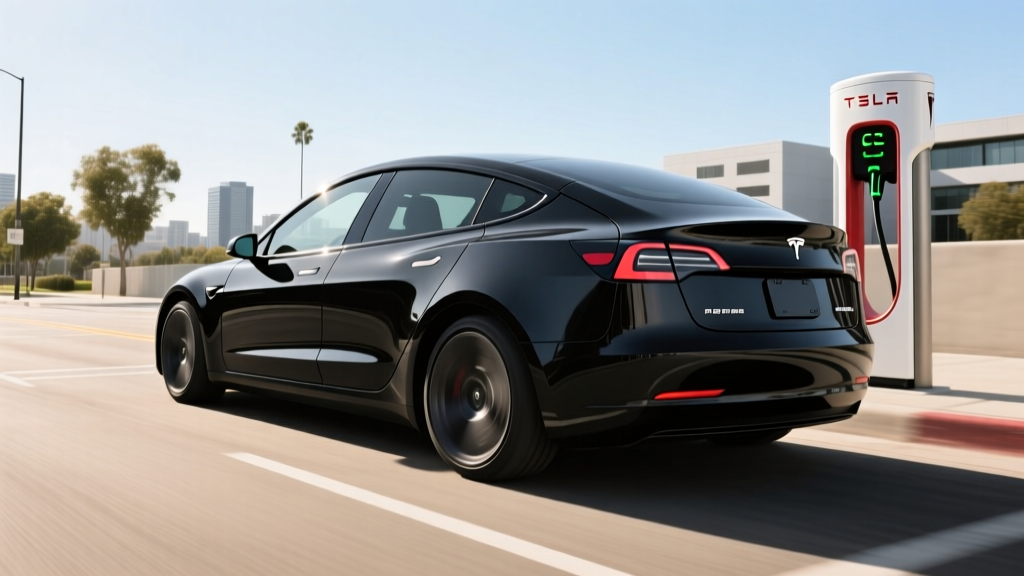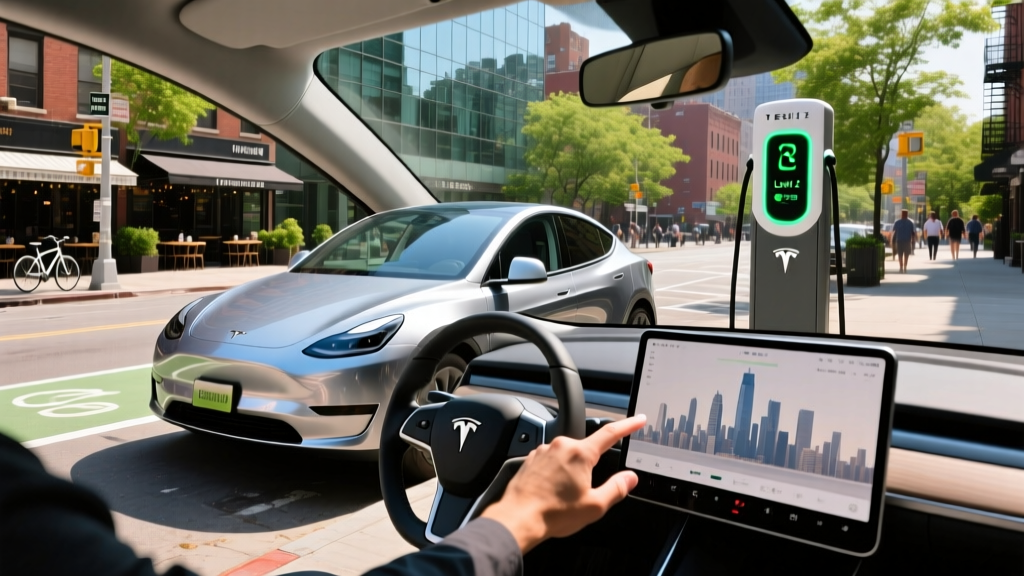
Brooklyn has become one of the most densely populated EV adoption markets in the United States. From the tree-lined streets of Park Slope to the industrial stretches of Red Hook and the sprawling lots of Bensonhurst, Tesla vehicles are a common sight. But buying and owning a Tesla in Brooklyn comes with a unique set of challenges and advantages that don't apply in suburban or rural markets. This guide breaks down exactly what Brooklyn-based EV shoppers need to know about Tesla's current lineup — from real-world range in stop-and-go traffic to the economics of apartment charging versus home installation.
Why Brooklyn Is a Unique Tesla Market
Brooklyn's 2.6 million residents face a specific combination of factors that shape EV ownership: dense urban streets, limited private parking, a robust but competitive public charging network, and some of the best Tesla Supercharger infrastructure on the East Coast. The borough has over a dozen Supercharger stations within its borders or immediately adjacent, including high-capacity V3 and V4 installations at locations like the Brooklyn Navy Yard, Kings Plaza, and Gateway Center.
At the same time, roughly 55% of Brooklyn households do not have access to dedicated off-street parking, according to NYC Department of Transportation data. This makes home Level 2 charging — the backbone of convenient EV ownership — a significant hurdle for many prospective Tesla buyers. Understanding which Tesla model fits your Brooklyn lifestyle requires looking past marketing claims and into real numbers.
Tesla's 2026 Lineup: Brooklyn-Relevant Specs
As of the 2026 model year, Tesla sells four primary vehicle lines in the U.S.: the Model 3 sedan, Model Y crossover, Model S luxury sedan, and Model X luxury SUV. The Cybertruck is also available but remains a niche product for urban buyers. Here's how the most popular models stack up on paper:
| Model / Trim | EPA Range | Battery (kWh, usable) | Chemistry | 0-60 mph | HP | Drivetrain | Base MSRP |
|---|---|---|---|---|---|---|---|
| Model 3 RWD | 272 mi | ~57.5 kWh | LFP | 5.8 sec | 271 | RWD | $38,990 |
| Model 3 Long Range AWD | 341 mi | ~75 kWh | NMC | 4.2 sec | 366 | Dual-Motor AWD | $42,490 |
| Model 3 Performance | 315 mi | ~75 kWh | NMC | 2.9 sec | 510 | Dual-Motor AWD | $52,990 |
| Model Y RWD | 300 mi | ~57.5 kWh | LFP | 6.6 sec | 295 | RWD | $44,990 |
| Model Y Long Range AWD | 330 mi | ~75 kWh | NMC | 4.8 sec | 384 | Dual-Motor AWD | $47,990 |
| Model Y Performance | 298 mi | ~75 kWh | NMC | 3.5 sec | 510 | Dual-Motor AWD | $52,490 |
Sources: fueleconomy.gov, Tesla.com official specs.
Real-World Range: What Brooklyn Drivers Actually Get
EPA range figures are determined under controlled laboratory conditions. In Brooklyn's real-world environment — characterized by frequent stoplights, low average speeds, bridge crossings, and seasonal temperature swings — actual range deviates meaningfully from the sticker.
EPA Estimate: Model 3 Long Range AWD — 341 miles
Brooklyn Summer (city/bridge mix, 75°F): Expect ~300-320 miles. Stop-and-go traffic actually favors EVs due to regenerative braking, and moderate temperatures keep battery efficiency high.
Brooklyn Winter (city driving, 25-35°F): Expect ~235-270 miles. Cold weather reduces battery chemical efficiency and increases cabin heating demand. Tesla's heat pump (standard on all 2026 models) mitigates this compared to older resistance-heater EVs, but 20-30% range loss in sustained sub-40°F weather is normal.
Highway (Belt Pkwy / BQE at 55-65 mph): Expect ~270-290 miles. Aerodynamic drag increases energy consumption at highway speeds. The BQE's frequent slowdowns partially offset this through regen.
For context, the average Brooklyn commute is under 12 miles one-way according to Census Bureau data. Even the base Model 3 RWD at its winter-degraded range can handle a full week of Brooklyn commuting without a single charge session — provided you can charge at home or work.
Charging in Brooklyn: DC Fast, Level 2, and the Apartment Problem
Charging infrastructure is the single most important factor for Brooklyn Tesla buyers. Here's how the numbers break down across charging levels:
| Charging Level | Power (kW) | Miles Added per Hour | 10-80% Time | Typical Brooklyn Availability |
|---|---|---|---|---|
| Level 1 (120V household) | ~1.4 kW | 3-5 mi/hr | N/A (days) | Any standard outlet; emergency/trickle only |
| Level 2 (240V home/garage) | 7.6-11.5 kW | 25-44 mi/hr | 6-9 hours (full) | Private garages, some condo/condo buildings |
| Tesla Supercharger V3 (DC) | Up to 250 kW | ~1,000 mi/hr (peak) | ~25-30 min | 12+ stations across Brooklyn |
| Tesla Supercharger V4 (DC) | Up to 350 kW* | ~1,200 mi/hr (peak) | ~20-25 min* | Select newer installations |
*V4 speeds depend on vehicle architecture; current Model 3/Y peak at ~250 kW even on V4 stalls due to onboard charge-controller limits.
The apartment challenge: If you live in a Brooklyn apartment or brownstone without a private garage, Level 2 home charging is likely off the table. Street parking with a charging cable running across a sidewalk is illegal and unsafe. Your options narrow to:
- Supercharger reliance: Convenient but more expensive than home charging — roughly $0.30-$0.38/kWh at peak rates vs. ~$0.18/kWh for ConEdison residential electricity. A full Model Y Long Range charge at a Supercharger costs roughly $25-$28 vs. ~$13-$14 at home.
- NYC public Level 2: The city has installed curbside Level 2 chargers through the NYC DOT EV charging program and partners like ChargePoint and EVgo, but availability is inconsistent and often occupied.
- Workplace charging: A growing number of Brooklyn employers offer Level 2 charging in employee parking facilities. This is the sweet spot for apartment dwellers.
- Tesla Destination Chargers: Hotels, restaurants, and garages across Brooklyn offer slower Level 2 Tesla-specific connectors — useful for topping up during errands but not a primary strategy.
If you own a private garage or have a landlord willing to install a NEMA 14-50 outlet or Tesla Wall Connector, home charging transforms Tesla ownership economics. A typical installation in a Brooklyn brownstone with an adequate 200-amp panel runs $800-$2,500 for the electrician work plus $400-$500 for a Tesla Wall Connector. Older buildings with 100-amp panels may require a $3,000-$5,000 service upgrade.
Efficiency and Operating Costs: Tesla vs. Gas in Brooklyn
Tesla's energy efficiency is a genuine competitive advantage. The Model 3 Long Range AWD achieves 132 MPGe combined (25 kWh/100 mi) per EPA data, while the Model Y Long Range AWD delivers 122 MPGe combined (28 kWh/100 mi). These figures lead their respective segments.
For a Brooklyn driver covering 10,000 miles per year:
| Vehicle | Energy Source | Cost per Mile | Annual Cost |
|---|---|---|---|
| Model 3 LR (home L2 charging) | ConEdison @ ~$0.18/kWh | $0.045 | $450 |
| Model 3 LR (Supercharger only) | Avg $0.34/kWh | $0.085 | $850 |
| Toyota Camry (gas, 32 MPG combined) | Gas @ $3.80/gal | $0.119 | $1,188 |
| BMW 330i (gas, 28 MPG combined) | Gas @ $3.80/gal | $0.136 | $1,357 |
Even relying entirely on Superchargers, a Tesla Model 3 costs less to "fuel" annually than a comparable gas sedan at Brooklyn gas prices. With home charging, the savings widen to $700-$900 per year.
Federal Tax Credit: Does a Tesla Qualify in 2026?
The federal §30D clean vehicle credit remains one of the most misunderstood aspects of EV buying. For 2026, Tesla models may qualify for up to $7,500, but eligibility depends on multiple intersecting requirements. Here is the current checklist per IRS guidelines:
- MSRP Cap: Sedans (Model 3, Model S) must have MSRP ≤ $55,000. SUVs/trucks/vans (Model Y, Model X) must have MSRP ≤ $80,000.
- Buyer Income Cap: Modified AGI must not exceed $150,000 (single), $225,000 (head of household), or $300,000 (joint filing).
- Battery Sourcing: Battery components must meet escalating domestic-content and critical-minerals thresholds that tighten annually. Tesla's shift toward LFP batteries from CATL (China) for base models has complicated eligibility for some trims.
- Final Assembly: Vehicle must undergo final assembly in North America. All U.S.-market Teslas are assembled in Fremont, CA, or Austin, TX — this requirement is met.
- Point-of-Sale Transfer: Buyers can transfer the credit to the dealer at purchase, reducing the purchase price directly rather than waiting for a tax refund.
- One-Time Use: The §30D credit can only be claimed once every three years per buyer.
Important: Battery sourcing rules are complex and subject to Treasury Department guidance updates. Verify current eligibility on the IRS website or with a tax professional before relying on the credit in your purchase decision.
| Model / Trim | Base MSRP | Est. §30D Credit | Effective Price | Eligibility Notes |
|---|---|---|---|---|
| Model 3 RWD | $38,990 | $3,750 - $7,500* | $31,490 - $35,240 | LFP battery sourcing may reduce credit to $3,750 |
| Model 3 Long Range AWD | $42,490 | $7,500 | $34,990 | NMC battery; verify current sourcing compliance |
| Model 3 Performance | $52,990 | $7,500 | $45,490 | Under $55K sedan cap |
| Model Y Long Range AWD | $47,990 | $7,500 | $40,490 | Under $80K SUV cap |
| Model Y Performance | $52,490 | $7,500 | $44,990 | Under $80K SUV cap |
*Credit amount varies based on critical-mineral and battery-component sourcing percentages as defined by Treasury guidance. Consult irs.gov for the latest qualified-vehicle list.
Tech, Safety, and Driver Assistance
All 2026 Teslas come standard with the company's latest infotainment platform, featuring a 15.4-inch center touchscreen (Model 3/Y) or 17-inch (Model S/X), over-the-air updates, integrated navigation with real-time Supercharger routing, and a full suite of streaming entertainment apps usable while parked.
Autopilot and FSD (Supervised): Tesla's standard Autopilot includes adaptive cruise control, lane-keeping assist, and automatic emergency braking — essentially a competent Level 2 driver-assistance system. The optional Full Self-Driving (Supervised) package, currently priced at $8,000 or $99/month, adds features like automatic lane changes, traffic-light recognition, and city-street navigation. However, FSD remains an SAE Level 2 system: the driver must remain attentive, hands on or near the wheel, and fully responsible for vehicle operation at all times.
Tesla Autopilot and FSD (Supervised) are SAE Level 2 systems. They do not drive the car autonomously. The driver must continuously monitor the road and be prepared to take over immediately. Tesla's camera-based monitoring system enforces attention through steering-wheel torque detection and cabin-camera alerts. This is not a Level 4 robotaxi system like Waymo.
Safety: The Model 3 and Model Y have earned 5-star overall ratings from NHTSA and Top Safety Pick+ designations from IIHS. Tesla's low center of gravity (battery pack under the floor) contributes to exceptional rollover resistance.
Who Should Buy a Tesla in Brooklyn — And Who Shouldn't
- Best-in-class Supercharger network — 12+ Brooklyn locations, reliable uptime
- Industry-leading energy efficiency (MPGe)
- Strong real-world range even in winter thanks to heat pump
- Over-the-air updates add features post-purchase
- High resale value relative to EV competitors
- Extensive service center and mobile service coverage in NYC metro
- Apartment dwellers face serious home-charging barriers
- LFP base models may receive reduced federal tax credit
- Insurance premiums in NYC are 25-40% above national EV average
- Minimal physical controls — everything via touchscreen
- Build quality inconsistency still reported by some owners
- FSD (Supervised) is expensive and remains a Level 2 assist, not autonomy
Choose a Tesla if: You have access to home or workplace Level 2 charging, value the Supercharger network for weekend trips upstate or to the Hamptons, want best-in-class efficiency, and are comfortable with a touchscreen-first interface.
Look at competitors if: You rely exclusively on street parking with no charging access (consider a PHEV like the Toyota RAV4 Prime instead), prefer physical buttons and traditional dealership service, or want a luxury interior that matches the Model 3/Y price point (the Hyundai Ioniq 5 and BMW i4 offer compelling alternatives).
Warranty and Long-Term Ownership
Tesla provides a 4-year/50,000-mile basic vehicle limited warranty and an 8-year/120,000-mile battery and drive unit warranty for Model 3 and Model Y (8-year/150,000-mile for Model S/X). The battery warranty guarantees retention of at least 70% of original capacity during the coverage period. Real-world degradation data from Tesla's own fleet reports show most Model 3/Y packs retain approximately 88-92% capacity at 100,000 miles — well above the warranty threshold.
For Brooklyn buyers planning long-term ownership, the LFP chemistry in base RWD models offers a meaningful longevity advantage: LFP cells tolerate frequent 100% charging without accelerated degradation, making them ideal for daily top-up routines. NMC packs in Long Range and Performance trims benefit from charging to 80% daily and 100% only before long trips.
Frequently Asked Questions
What is the real-world range of a Tesla in Brooklyn?
For the Model 3 Long Range AWD (EPA 341 mi), expect approximately 300-320 miles in summer city driving, 270-290 miles on highway stretches, and 235-270 miles in winter conditions. Brooklyn's stop-and-go traffic actually helps EVs through regenerative braking, partially offsetting winter losses.
How fast does a Tesla charge at Brooklyn Superchargers?
V3 Superchargers deliver up to 250 kW peak, adding roughly 200 miles in 15 minutes for a Model 3 Long Range. A 10-80% charge takes approximately 25-30 minutes. Note that peak rates only hold between roughly 10-50% SoC; charging tapers significantly above 80% to protect the battery.
How much does a Tesla cost after tax credits in 2026?
A Model 3 Long Range AWD at $42,490 MSRP can drop to approximately $34,990 with the full $7,500 §30D credit, assuming you meet income caps and the battery sourcing requirements are satisfied. The base Model 3 RWD may qualify for a reduced credit ($3,750) due to LFP battery sourcing from China. Always verify on irs.gov before purchasing.
Is a Tesla worth buying in Brooklyn vs. competitors?
Tesla's Supercharger network dominance, energy efficiency, and resale value make it a strong choice — especially for buyers who can charge at home. However, the Hyundai Ioniq 5 (now with NACS adapter access to Superchargers), Ford Mustang Mach-E, and Chevrolet Equinox EV offer competitive range and pricing. If apartment living prevents home charging, a PHEV may be a more practical bridge.
Does Tesla qualify for the federal EV tax credit?
Yes, with conditions. Tesla's U.S.-built vehicles meet the final-assembly requirement. However, the §30D credit also requires buyer income below specified caps ($150K single / $300K joint), MSRP below limits ($55K sedans / $80K SUVs), and battery component/critical-mineral sourcing thresholds that vary by trim and model year. The LFP-equipped base Model 3 RWD may receive a partial credit. Check the IRS qualified vehicles list for the most current information.
Can I charge a Tesla in a Brooklyn apartment building?
It depends entirely on your building's infrastructure. Some newer condos and managed buildings have installed shared Level 2 chargers in parking areas. For most pre-war buildings and brownstones without off-street parking, apartment charging is not feasible. Your best strategy is workplace charging combined with periodic Supercharger visits.