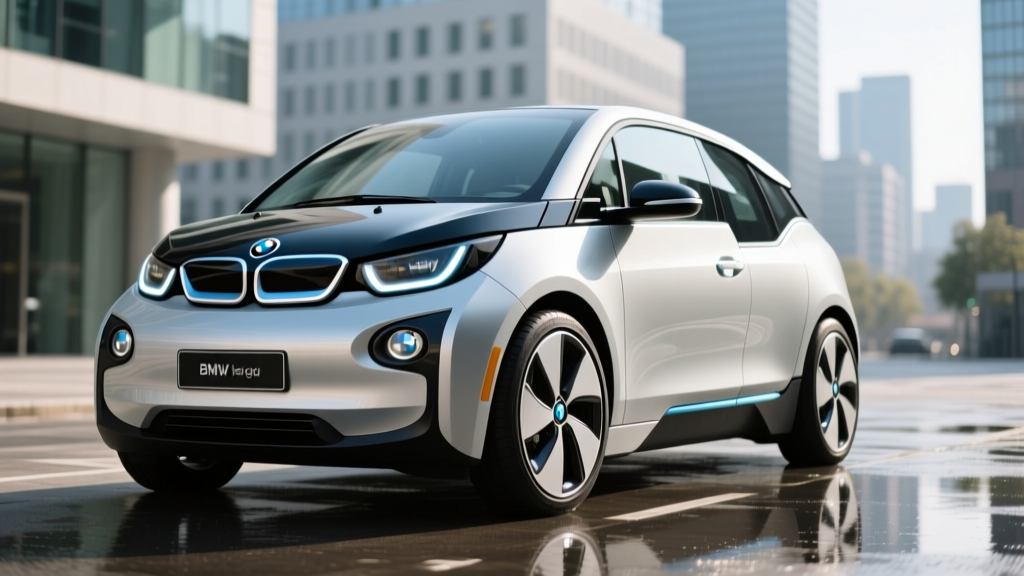
The original BMW i3 was a polarizing pioneer — a carbon-fiber-reinforced-plastic city car that proved BMW could think differently about electrification. Discontinued in the U.S. after the 2021 model year, the i3 nameplate is now poised for a comeback. Recent BMW i3 spy shots from European testing grounds reveal a radically different vehicle: a sleek, low-slung electric sedan built on BMW's upcoming Neue Klasse platform. This is no quirky hatchback revival — it's a ground-up rethink aimed squarely at the Tesla Model 3 and Hyundai Ioniq 6.
Because this vehicle has not yet entered production, the specifications below are preliminary estimates based on spy-shot analysis, BMW's confirmed Neue Klasse platform details, and supply-chain reporting. Final EPA figures, pricing, and U.S. availability will be confirmed closer to launch. We'll update this profile as official data becomes available.
The next-generation BMW i3 has been spotted in camouflage testing but is not yet available for purchase. BMW has confirmed the Neue Klasse sedan family will begin production in 2025 (Europe) with U.S. deliveries expected for the 2026 or 2027 model year. All specifications in this article are estimated and subject to change.
What the BMW i3 Spy Shots Actually Show
The most recent BMW i3 spy shots, captured throughout 2024 and early 2025 at BMW's Munich testing facilities and on public roads in Scandinavia, reveal a vehicle that shares almost no design DNA with the outgoing i3 hatchback. Key observations from the camouflage prototypes:
- Body style: A four-door sedan with a fastback roofline, similar in proportion to the current BMW 3 Series but with a shorter overhang and a more cab-forward stance enabled by the dedicated EV skateboard platform.
- Dimensions: Estimated wheelbase of approximately 112 inches — roughly 2 inches longer than the G20 3 Series — suggesting BMW is prioritizing interior cabin space and battery packaging.
- Design language: A simplified, flush door-handle treatment, a reinterpreted kidney grille (likely a closed-off aerodynamic panel with integrated sensors), and thin LED lighting signatures front and rear consistent with the BMW i Vision Neue Klasse concept shown at IAA 2023.
- Wheels and aero: Test mules wearing low-rolling-resistance 19-inch wheels with aero covers, hinting at efficiency-first tuning for the base variant.
- Charging port: Spy photographers have noted a rear-quarter charge door, consistent with BMW's current packaging but potentially repositioned for NACS adoption in the U.S. market.
The Neue Klasse platform underpinning this car represents BMW's first dedicated electric architecture — no shared underbody with ICE models, no transmission tunnel compromise. This is a significant engineering shift from the CLAR-based i4 and iX, which adapted existing platforms.
Estimated Battery, Range, and Efficiency
BMW has confirmed that Neue Klasse vehicles will use cylindrical lithium-ion cells — a move away from the prismatic cells used in current BMW EVs and a direct parallel to Tesla's 4680-format strategy. These new cells are expected to deliver approximately 20% higher energy density and support faster charging through improved thermal characteristics.
| Attribute | Estimated Value |
|---|---|
| Battery Chemistry | NMC (Nickel Manganese Cobalt), cylindrical format |
| Battery Capacity (usable) | ~75 kWh (base) / ~100 kWh (LR estimated) |
| EPA Range (est.) | ~300 mi (base) / ~380 mi (LR) |
| Efficiency (est.) | ~26-28 kWh/100 mi (~120-130 MPGe) |
| Max DC Fast Charge | ~250 kW (800V architecture) |
| 10-80% DC Charge Time | ~20 minutes (est.) |
| Level 2 Home Charge Rate | 11 kW (est. ~37 mi/hr) |
| Powertrain (base) | RWD, single rear motor |
| Horsepower (base est.) | ~280 hp |
| 0-60 mph (base est.) | ~5.8 seconds |
| Base MSRP (est.) | ~$47,000 - $52,000 |
| Battery Warranty (BMW std.) | 8 years / 100,000 miles |
With an estimated EPA range of ~300 miles for the base variant, real-world driving will vary significantly by conditions:
- Highway (70-80 mph, moderate temps): Expect ~240-270 miles before needing to charge. Sedan aerodynamics help, but sustained high speed remains the biggest range killer.
- City/commute (stop-and-go with regen): ~290-320 miles — regenerative braking recaptures energy in urban driving.
- Cold weather (below 32°F): Expect a 20-30% reduction, putting effective range at ~210-240 miles. BMW's current heat-pump-equipped EVs (i4, iX) manage cold-weather loss better than most, and Neue Klasse is expected to improve further with an integrated thermal management system.
The shift to cylindrical cells is a major strategic bet. BMW has stated these cells will reduce battery cost by up to 30% while improving energy density — critical for competing with Tesla's structural battery pack and CATL's latest LFP offerings. However, BMW has not indicated an LFP variant for the i3 sedan; the NMC chemistry choice prioritizes range and performance over the lower cost and longer cycle life that LFP provides. For buyers who charge daily at home and rarely exceed 80% state of charge, NMC remains a proven and reliable choice.
Charging Speed and Infrastructure Compatibility
One of the most significant upgrades the Neue Klasse platform promises is 800-volt architecture — a first for BMW production vehicles. Current BMW EVs (i4, iX, i7) use 400V systems that cap DC fast-charging at roughly 200-205 kW. The move to 800V places BMW on par with Hyundai/Kia's E-GMP platform and Porsche's Taycan, enabling faster charging sessions and thinner, lighter wiring harnesses.
| Charging Level | Power | Speed / Time |
|---|---|---|
| Level 1 (120V household) | ~1.4 kW | ~4-5 mi/hr (emergency/trickle only) |
| Level 2 (240V home, 48A) | 11 kW | ~37 mi/hr (full charge overnight in ~8-9 hrs) |
| DC Fast Charge (peak) | ~250 kW | 10-80% in ~20 min; ~180 mi added in 10 min |
A critical nuance for fast-charging expectations: peak kW is not sustained kW. The estimated 250 kW figure represents the maximum rate the battery will accept at a low state of charge (typically 10-20% SoC) with optimal battery temperature. As the battery fills past 50-60%, the charge rate tapers to protect cell longevity. A realistic average rate across a 10-80% session will likely be closer to 170-190 kW — still excellent, but not the headline number. This taper behavior is universal across all EVs and is why we report 10-80% times rather than peak rates alone.
On connector compatibility, BMW has committed to adopting the NACS (Tesla) charging standard for North American vehicles. If the next-gen i3 launches for the 2027 model year as expected, it should ship with a native NACS port, granting access to Tesla's Supercharger network — currently the most reliable and extensive DC fast-charging infrastructure in the U.S. For the transition period, BMW will likely provide a CCS-to-NACS adapter.
Performance, Driving Dynamics, and Platform
BMW's brand identity rests on driving dynamics, and the Neue Klasse platform is engineered to deliver. The dedicated EV skateboard places the battery pack low and central, giving the i3 sedan a lower center of gravity than the ICE 3 Series and a near 50/50 weight distribution that BMW engineers have historically obsessed over.
Expected powertrain configurations based on supply-chain reporting and BMW's Neue Klasse announcements:
- i3 base (RWD): Single rear motor, ~280 hp, ~5.8s 0-60. This is the volume variant, competing directly with the Tesla Model 3 RWD and Hyundai Ioniq 6 SEL.
- i3 xDrive (AWD): Dual motor, ~400 hp, ~4.5s 0-60. Positioned against the Model 3 Long Range AWD and Ioniq 6 Limited AWD.
- i3 M (performance): BMW has confirmed an M-badged Neue Klasse variant is in development, likely producing 600+ hp. Details remain scarce, but this would target the Tesla Model 3 Performance and Porsche Taycan.
BMW's current EVs use fifth-generation eDrive motors that avoid rare-earth magnets in the rotor — a design choice that reduces supply-chain vulnerability and environmental impact. Expect sixth-generation eDrive units in the Neue Klasse i3, with improved power density and efficiency.
On driver-assistance technology, the i3 will feature BMW's latest Highway Assistant system — a Level 2 (SAE) hands-free-capable highway driving aid that requires the driver to remain attentive and eyes on the road. This is comparable to GM's Super Cruise and Ford's BlueCruise. BMW has also demonstrated Level 3 automated driving capabilities in Europe (where regulations permit), but U.S. availability of Level 3 features remains uncertain due to regulatory fragmentation across states.
BMW Highway Assistant is an SAE Level 2 system. The driver must remain engaged, monitor the road, and be prepared to take over at any moment. It is not "self-driving." Hands-free operation on approved highways does not mean the vehicle handles all scenarios — construction zones, adverse weather, and complex merges still require full driver attention.
Interior, Technology, and Cargo Space
The Neue Klasse interior philosophy represents a dramatic departure from current BMW cabins. The i Vision Neue Klasse concept previewed a "panoramic vision" head-up display that spans the entire width of the windshield, replacing the traditional instrument cluster. Combined with a central touchscreen (estimated 15-17 inches) and a new iDrive X operating system, the cabin aims for a minimalist, screen-dominant environment.
Estimated interior dimensions based on the wheelbase and segment positioning:
- Front legroom: ~42 inches (comparable to 3 Series)
- Rear legroom: ~36-37 inches (improved over 3 Series thanks to flat floor and longer wheelbase)
- Cargo volume (trunk): ~15-17 cu ft (sedan trunk, potentially with a pass-through)
- Frunk (front trunk): Likely small (~2-3 cu ft) or absent — BMW has historically skipped frunks in favor of HVAC and power electronics packaging, though the dedicated EV platform may change this.
Notable expected tech features:
- Panoramic windshield HUD with augmented-reality navigation overlays
- Over-the-air (OTA) software updates for powertrain, chassis, and infotainment
- Digital Key Plus (UWB-based phone-as-key)
- Vehicle-to-load (V2L) capability — BMW has not confirmed this, but 800V platforms typically support it
- Sustainable interior materials (recycled textiles, no leather standard — consistent with BMW i brand ethos)
Pricing, Tax Credits, and Ownership Economics
Pricing for the next-generation BMW i3 will not be confirmed until closer to launch, but we can estimate based on BMW's current EV pricing strategy, Neue Klasse cost-reduction targets, and competitive positioning.
| Trim (Est.) | Base MSRP | After §30D Credit (if eligible) |
|---|---|---|
| i3 Base (RWD) | ~$47,000 - $50,000 | ~$39,500 - $42,500 |
| i3 xDrive (AWD) | ~$54,000 - $58,000 | ~$46,500 - $50,500 |
| i3 M (Performance) | ~$70,000+ | Likely above MSRP cap |
Whether the next-gen i3 qualifies for the up to $7,500 federal tax credit depends on several factors that may not be finalized until the vehicle launches:
- MSRP cap: Sedans must have an MSRP ≤ $55,000 to qualify. The base RWD i3 may clear this; AWD and M variants likely will not.
- Buyer income cap: Modified adjusted gross income ≤ $150,000 (single) / $300,000 (joint). Verify with your tax professional.
- Battery sourcing: Critical minerals and battery components must meet escalating domestic-sourcing percentages per IRS §30D rules. BMW's use of cylindrical cells — potentially sourced from new North American or European gigafactories — will determine eligibility. This is the biggest unknown.
- Point-of-sale transfer: Eligible buyers can apply the credit as a down-payment reduction at the dealer rather than waiting for a tax refund.
- Final assembly: Must occur in North America. BMW's Spartanburg, SC plant is a likely candidate for U.S.-bound Neue Klasse production, but this is unconfirmed.
On the ownership-cost side, BMW includes 3 years / 36,000 miles of complimentary maintenance on current models, and the battery warranty is expected to carry BMW's standard 8 years / 100,000 miles coverage with a capacity-retention threshold of 70%. Insurance premiums for BMW EVs tend to run 15-25% above equivalent ICE models due to higher repair costs and parts pricing — factor this into your total cost of ownership.
How It Compares: BMW i3 vs. Key Rivals
The next-gen i3 sedan enters the most competitive segment in the EV market. Here's how the estimated specs stack up against confirmed current competitors:
| Spec | BMW i3 (est.) | Tesla Model 3 LR | Hyundai Ioniq 6 SEL |
|---|---|---|---|
| EPA Range | ~300 mi | 363 mi | 361 mi |
| Battery (kWh) | ~75 | 75 | 77.4 |
| DC Fast Charge (peak) | ~250 kW | 250 kW | 240 kW |
| 10-80% Time | ~20 min | ~25 min | ~18 min |
| 0-60 mph | ~5.8s | 5.8s | 6.9s |
| Base MSRP | ~$48,000 | $42,490 | $42,450 |
| Platform | Neue Klasse (dedicated EV) | Dedicated EV | E-GMP (dedicated EV) |
The i3's challenge is clear: it must justify a likely price premium over the Model 3 and Ioniq 6 through superior build quality, driving refinement, and the BMW dealer/service experience. The Neue Klasse platform's 800V architecture and next-gen cells could give it a charging-speed edge over the aging Model 3 platform, but Tesla's Supercharger network advantage and aggressive pricing remain formidable barriers.
- 800V architecture for fast DC charging
- BMW driving dynamics and build quality
- Panoramic HUD and next-gen iDrive
- Native NACS port for Supercharger access
- Dedicated EV platform (no ICE compromise)
- Strong dealer/service network
- Likely higher MSRP than Model 3/Ioniq 6
- Tax credit eligibility uncertain (sourcing rules)
- Sedan body may limit cargo vs. SUV buyers
- BMW's infotainment learning curve (iDrive complexity)
- Insurance premiums likely above segment average
- Not available yet — 2026-2027 timeline
Who Should Wait for the Next-Gen BMW i3?
Based on the BMW i3 spy shots and confirmed platform details, this car is shaping up for a specific buyer profile:
- The premium-commuter buyer who wants a refined, well-built electric sedan with strong highway manners and doesn't need SUV cargo space. If you currently drive a 3 Series or Audi A4 and want to go electric without stepping into a crossover, this is your shortlist.
- The driving-enthusiast EV adopter who has resisted Tesla's minimalist interior and wants something with more traditional luxury execution and better panel gaps. BMW's chassis tuning pedigree is a genuine differentiator.
- The BMW loyalist with an existing dealer relationship and BMW Financial Services history. Brand loyalty and service familiarity are real purchase factors, and BMW's dealer network is a competitive advantage over direct-to-consumer brands for buyers who value in-person service.
This car is not the right choice if you need maximum range per dollar (look at the Ioniq 6 or Model 3), if you need a hatchback or SUV for family hauling, or if you need a vehicle today rather than in 12-18 months. The wait could pay off if BMW delivers on Neue Klasse's cost-reduction and technology promises, but timing risk is real in a market where competitors are iterating rapidly.
Frequently Asked Questions
What is the real-world range of the next-gen BMW i3?
Based on estimated EPA figures of ~300 miles (base RWD), expect approximately 240-270 miles in real-world highway driving at moderate temperatures, and 210-240 miles in cold weather below freezing. City driving with regenerative braking may yield 290-320 miles. These are projections — final EPA certification will come before launch.
How fast does the BMW i3 charge?
The Neue Klasse platform's 800V architecture is expected to support DC fast charging at up to ~250 kW, enabling a 10-80% charge in approximately 20 minutes under optimal conditions. At home on a Level 2 charger (11 kW), a full charge should take roughly 8-9 hours — standard overnight charging for daily use.
How much will the next-gen BMW i3 cost after tax credits?
If the base RWD i3 comes in under the $55,000 MSRP cap for sedans and meets IRS §30D battery-sourcing requirements, eligible buyers could pay as little as ~$39,500-$42,500 after the $7,500 credit. However, battery sourcing compliance is the largest unknown — BMW has not confirmed where Neue Klasse cells will be manufactured. AWD and M variants will likely exceed the MSRP cap and be ineligible.
Is the BMW i3 worth waiting for vs. buying a Model 3 or Ioniq 6 now?
If you can wait 12-18 months and value BMW's build quality, driving dynamics, and dealer experience, the i3 could be worth it — especially if 800V charging delivers a meaningful road-trip advantage. If you need a car now or prioritize maximum range per dollar, the Tesla Model 3 Long Range (363 mi EPA, starting ~$42,490) and Hyundai Ioniq 6 (361 mi, ~$42,450) are excellent, proven options available today with known tax-credit eligibility.
Will the BMW i3 have a frunk?
BMW has not confirmed frunk availability for Neue Klasse vehicles. Current BMW EVs (i4, iX) do not include front trunks, as BMW uses that space for HVAC and power-electronics packaging. The dedicated EV platform could free up space, but don't count on meaningful frunk storage until BMW confirms it.
Does the next-gen BMW i3 qualify for the federal EV tax credit?
Eligibility depends on final MSRP (must be ≤$55,000 for sedans), buyer income limits, battery critical-mineral and component sourcing rules, and North American final assembly. BMW has not confirmed all of these details. Check fueleconomy.gov and irs.gov closer to launch for confirmed eligibility.
Sources: BMW Group press releases on Neue Klasse platform; fueleconomy.gov for competitor EPA data; irs.gov for §30D tax credit rules. All i3 specifications are preliminary estimates and subject to change.