Why Tesla Body Shop Certification Matters for Your EV
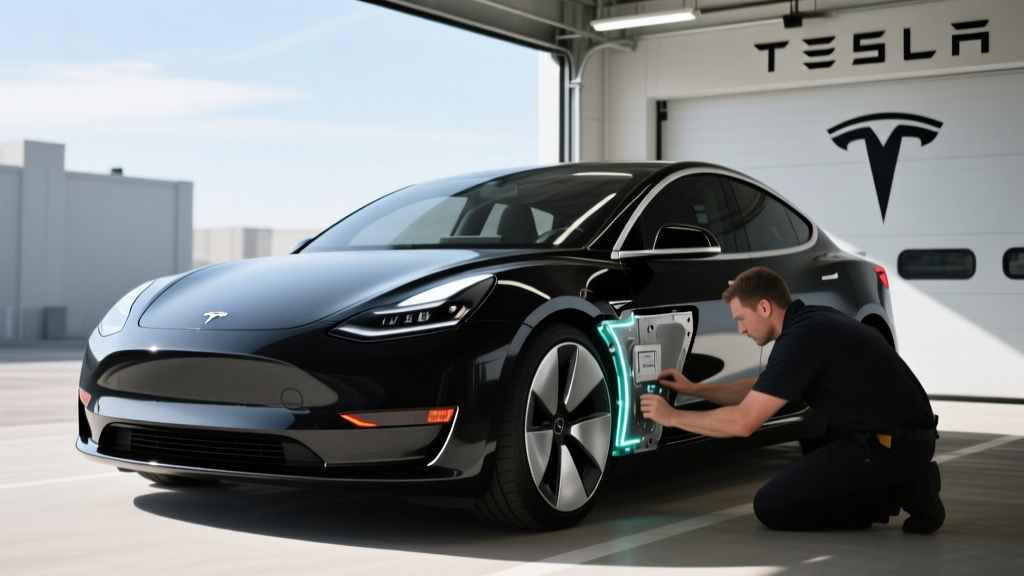
Tesla vehicles are engineered around a structural battery pack, gigacast aluminum body panels, and high-voltage architecture that conventional auto body shops are not equipped to handle safely. A fender-bender in a Model Y isn't just sheet metal — it involves sensors, thermal management lines, and potentially the battery enclosure itself. That's why Tesla's Approved Body Shop program exists, and why understanding it is essential before you ever need a repair.
This guide breaks down the certification process, how to locate an approved facility, and what it means for your ownership experience. We'll also cover the 2026 Tesla Model Y — the vehicle most likely to need this information — with full specs on range, charging, pricing, and federal tax-credit eligibility.
What Is the Tesla Approved Body Shop Program?
Tesla does not operate traditional franchise dealerships. Instead, the company authorizes independent collision repair facilities through its Approved Body Shop Program. These shops must meet Tesla's requirements for:
- Specialized training: Technicians complete Tesla-specific coursework covering high-voltage safety, structural battery pack handling, aluminum welding, and ADAS recalibration.
- Equipment standards: Shops must invest in Tesla-specified frame-straightening machines, aluminum dent-repair tools, and diagnostic software that interfaces with Tesla's proprietary systems.
- OEM parts access: Approved shops can order genuine Tesla body panels, glass, and hardware directly from the company's parts network — something unauthorized shops cannot do.
- Warranty compliance: Repairs performed at non-approved facilities may void portions of your vehicle's limited warranty, particularly if structural or high-voltage components are involved.
You can locate your nearest approved facility through the Tesla Body Shop Support page or by contacting Tesla Service directly through the app. As of early 2026, Tesla lists over 450 approved body shops across the United States, though coverage varies significantly by state — rural owners in particular should identify their nearest shop before an accident occurs.
2026 Tesla Model Y: Full Spec Breakdown
Since the Model Y remains Tesla's highest-volume vehicle and the one most owners will need body-shop support for, here's a comprehensive look at the 2026 lineup following its "Juniper" refresh.
| Spec | Long Range RWD | Long Range AWD | Performance |
|---|---|---|---|
| EPA Range | 320 mi | 308 mi | 280 mi |
| Battery (usable) | ~75 kWh (NMC) | ~75 kWh (NMC) | ~75 kWh (NMC) |
| Drivetrain | RWD (single motor) | AWD (dual motor) | AWD (dual motor) |
| 0-60 mph | 5.8 sec | 4.8 sec | 3.5 sec |
| Horsepower | ~346 hp | ~384 hp | ~456 hp |
| MPGe (combined) | 122 MPGe | 116 MPGe | 110 MPGe |
| kWh/100 mi | 28 | 29 | 31 |
| Max DC Fast Charge | 250 kW | 250 kW | 250 kW |
| 10-80% DC Time | ~25 min | ~25 min | ~25 min |
| Level 2 Home Rate | 11.5 kW (~44 mi/hr) | 11.5 kW (~44 mi/hr) | 11.5 kW (~44 mi/hr) |
| Base MSRP | $44,990 | $47,990 | $52,490 |
Charging Speed: DC Fast, Level 2, and Real-World Curves
The refreshed Model Y retains Tesla's 250 kW peak DC fast-charging capability on V3 Superchargers and compatible CCS/NACS third-party stations. But peak rate is only part of the story — the charge curve matters more for trip planning.
| Level | Power | Speed | Use Case |
|---|---|---|---|
| Level 1 (120V) | ~1.4 kW | ~5 mi/hr | Emergency / overnight trickle |
| Level 2 (240V) | 11.5 kW | ~44 mi/hr | Home daily charging |
| DC Fast (V3 Supercharger) | 250 kW peak | 10-80% in ~25 min | Road trips |
| DC Fast (above 80%) | Tapers to ~40 kW | 80-100% adds ~20 min | Only if needed at destination |
The 250 kW peak rate is available only between roughly 10% and 35% state of charge. From 50% to 80%, the rate tapers to approximately 100–150 kW, which is why the 10-80% time is 25 minutes rather than the ~15 minutes you might calculate from peak power alone. Always precondition the battery (the car does this automatically when you navigate to a Supercharger) to achieve the fastest charge rates.
Pricing, Trims, and Federal Tax Credit Eligibility
The 2026 Model Y lineup starts at $44,990 for the Long Range RWD, which positions it within the federal §30D tax-credit MSRP cap for SUVs ($80,000). However, qualifying for the full $7,500 credit depends on several factors that change frequently under current IRS rules.
| Trim | MSRP | Max §30D Credit | Effective Price* |
|---|---|---|---|
| Long Range RWD | $44,990 | Up to $7,500 | As low as $37,490 |
| Long Range AWD | $47,990 | Up to $7,500 | As low as $40,490 |
| Performance | $52,490 | Up to $7,500 | As low as $44,990 |
*Effective price assumes full §30D credit eligibility. Actual credit depends on battery-component and critical-mineral sourcing requirements, buyer income, and point-of-sale transfer availability. Verify current rules at IRS.gov §30D.
- MSRP cap: Vehicle must be under $80,000 (SUV classification — all Model Y trims qualify).
- Buyer income cap: Modified AGI ≤ $150,000 (single), $225,000 (head of household), or $300,000 (joint).
- Battery sourcing: The credit splits into two halves ($3,750 each) — one for battery-component manufacturing in North America, one for critical-mineral sourcing from the U.S. or FTA partners. Tesla's supply chain has shifted significantly; check the current DOE/Fuel Economy credit list for the exact credit amount available at time of purchase.
- Point-of-sale transfer: Eligible buyers can transfer the credit to the dealer at purchase, reducing the out-of-pocket price immediately rather than waiting for a tax return.
Interior, Cargo, and Daily-Use Practicality
The Juniper-refreshed Model Y brings a quieter cabin, ventilated front seats, a rear touchscreen for passengers, and ambient lighting. Cargo capacity remains one of the Model Y's strongest advantages over sedan-shaped EVs:
- Cargo (rear seats up): 30.2 cu ft
- Cargo (rear seats folded): 72.1 cu ft
- Front trunk (frunk): 4.1 cu ft
- Rear legroom: 41.6 inches
- Front headroom: 41.0 inches
The 15.4-inch center touchscreen runs Tesla's latest software, which includes navigation with real-time Supercharger routing, a built-in dashcam viewer, and over-the-air updates. Autopilot (basic lane-keeping and adaptive cruise) is standard; Full Self-Driving (Supervised) remains an $8,000 option and is an SAE Level 2 system requiring continuous driver attention — it is not autonomous driving.
Warranty Coverage and Battery Longevity
Tesla's warranty structure for the 2026 Model Y is competitive with other mainstream EV manufacturers:
- New Vehicle Limited Warranty: 4 years / 50,000 miles (whichever comes first)
- Battery & Drive Unit (Long Range): 8 years / 120,000 miles, with minimum 70% capacity retention
- Battery & Drive Unit (Performance): 8 years / 100,000 miles, with minimum 70% capacity retention
Tesla uses NMC (nickel manganese cobalt) chemistry in the Model Y Long Range and Performance trims. NMC offers higher energy density than LFP (lithium iron phosphate), enabling the 320-mile EPA range in a relatively compact pack. However, NMC batteries benefit from daily charging limits of 80–90% for longevity, unlike LFP packs which tolerate regular 100% charges. Tesla's battery management system includes a configurable charge limit to help owners manage this.
Pros, Cons, and the Repair-Network Reality
Pros
- Class-leading Supercharger network (20,000+ stalls in North America)
- Strong EPA range (320 mi Long Range RWD) with efficient kWh/100 mi
- Excellent cargo versatility (72.1 cu ft folded)
- Continuous OTA improvements to software and features
- Low running costs — ~$0.04–0.06/mi on home Level 2 charging
Cons
- Limited approved body shop network in rural areas
- Aluminum and gigacast repairs can mean long wait times for parts
- FSD (Supervised) remains expensive at $8,000 and is only Level 2
- No Apple CarPlay or Android Auto integration
- Insurance premiums often higher than comparable non-Tesla EVs
Frequently Asked Questions
What is the real-world range of the 2026 Tesla Model Y?
The EPA rates the Long Range RWD at 320 miles, but real-world highway driving at 70+ mph typically yields 270–290 miles. In cold weather (below 32°F), expect 220–240 miles due to cabin heating demands and increased battery resistance. The AWD Long Range drops to roughly 260–280 miles highway in moderate conditions.
How fast does the Model Y charge at home and on the road?
On a home Level 2 charger (240V, 48A), the Model Y charges at 11.5 kW, adding approximately 44 miles of range per hour — enough to fully recharge overnight. On a V3 Supercharger at 250 kW peak, the 10-80% session takes about 25 minutes, though the rate tapers significantly above 80% state of charge.
How much does the Model Y cost after federal tax credits?
The Long Range RWD starts at $44,990 MSRP. If you qualify for the full $7,500 §30D credit (subject to income caps, battery-sourcing rules, and MSRP limits), the effective price drops to $37,490. Verify current eligibility on the IRS clean vehicle credits page and check fueleconomy.gov for the latest sourcing-compliance list before purchasing.
Is the Model Y worth buying vs. key competitors?
Against the Hyundai Ioniq 5 (318 mi, ~$42,500), the Model Y offers a more mature Supercharger network and greater cargo space but lacks CarPlay and has a thinner approved body-shop network in some regions. The Ford Mustang Mach-E (320 mi Extended Range, ~$43,000) offers a more traditional interior layout. The Model Y remains the default pick for buyers who prioritize charging infrastructure and cargo utility, but test-drive competitors for fit and finish.
Does the Tesla Model Y qualify for the federal EV tax credit?
All 2026 Model Y trims fall under the $80,000 SUV MSRP cap. However, the actual credit amount ($0, $3,750, or $7,500) depends on battery-component and critical-mineral sourcing rules that the IRS updates periodically. Buyer income must also fall below the §30D thresholds. Check the IRS and fueleconomy.gov sites for current compliance status at the time of your purchase.
How do I find a Tesla-certified body shop near me?
Visit the Tesla Body Shop Support page on Tesla.com or use the Tesla app to contact Service. Tesla maintains a directory of approved collision centers by ZIP code. If you're in an area with limited coverage, Tesla can also coordinate mobile service for minor repairs or arrange a flatbed to the nearest approved facility for major collision work.
Will using a non-approved body shop void my Tesla warranty?
It can. Tesla's warranty excludes damage caused by unauthorized repairs or modifications. If a non-approved shop damages a high-voltage component, sensor, or structural element during repair, Tesla may deny warranty coverage for that component. For any work involving the battery pack, drive unit, ADAS sensors, or structural aluminum, always use an approved facility.