What Is Tesla's Birds Eye View System?
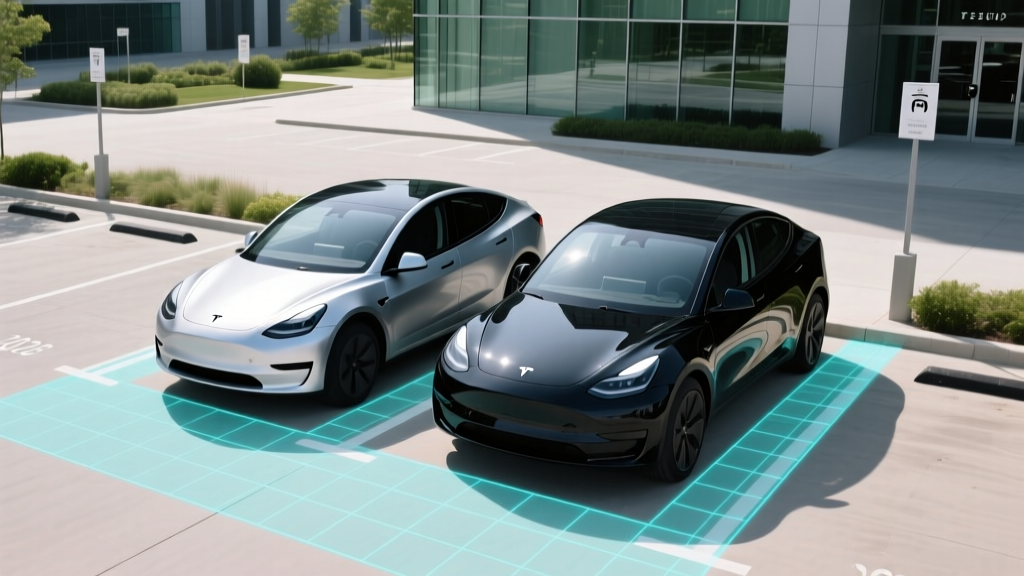
If you've searched for Tesla birds eye view capabilities, you're likely wondering whether Tesla vehicles offer a true top-down 360° surround camera like those found on the Nissan Ariya, Hyundai Ioniq 5, or Toyota bZ4X. The short answer: Tesla does not offer a traditional birds eye view camera system generated from physical wide-angle lenses mounted around the vehicle. Instead, Tesla relies on its Tesla Vision camera array — eight exterior cameras feeding real-time video to the center display — to deliver parking-assist overlays, curb views, and a simulated top-down perspective during low-speed maneuvers.
This matters because buyers cross-shopping Tesla against rivals with true 360° cameras (stitched from four fisheye lenses) will notice differences in image fidelity, distortion, and low-light performance. Let's break down exactly what Tesla's camera system delivers in 2026, which models include it, and how the underlying vehicles stack up on range, charging, pricing, and ownership practicality.
Tesla's Camera Hardware: Eight Lenses, No Fisheye Stitching
Every current Tesla — Model 3, Model Y, Model S, and Model X — ships with the same Tesla Vision hardware suite:
- 8 exterior cameras: front main, front wide, front narrow, left fender, right fender, left rear pillar, right rear pillar, and rear
- No dedicated ultrasonic sensors (removed in late 2022; parking distance now estimated via vision)
- No true fisheye 360° stitching — the top-down parking view is a software-generated composite, not a true birds eye camera feed
When you shift into reverse or tap the camera icon at low speed, the 15.4-inch (Model 3/Y) or 17-inch (Model S/X) center display shows a multi-panel view: the rear camera feed, side curb cameras, and a rendered overhead graphic showing the car's position relative to detected obstacles. It's functional for parallel parking and tight garage entry, but it doesn't match the seam-free 360° imagery from dedicated surround-view systems.
Which Tesla Model Has the Best Camera View for Parking?
All four current Tesla models share the same camera hardware and software rendering. The practical difference comes down to vehicle dimensions and screen size:
| Attribute | Model 3 (2026) | Model Y (2026) | Model S (2026) | Model X (2026) |
|---|---|---|---|---|
| Parking Camera Panels | Rear + sides + rendered top-down | Rear + sides + rendered top-down | Rear + sides + rendered top-down | Rear + sides + rendered top-down |
| Center Display | 15.4" | 15.4" | 17" | 17" |
| Vehicle Length | 184.8 in | 187.0 in | 196.0 in | 199.1 in |
| Ease of Parking | Best (compact) | Good | Moderate | Most challenging |
The Model 3 is the easiest Tesla to park thanks to its shorter length and tighter turning circle, and the camera system is most proportionally useful on this sedan. The Model X, at nearly 199 inches long with falcon-wing doors requiring overhead clearance, benefits most from camera assists but also demands the most driver attention.
Real-World Range and Efficiency Across the 2026 Tesla Lineup
Parking tech aside, range remains a top purchase driver. Here's what the 2026 lineup delivers per EPA estimates at fueleconomy.gov, paired with real-world expectations:
| Model / Trim | EPA Range | Real-World Highway (est.) | Battery (usable) | Chemistry | MPGe (combined) |
|---|---|---|---|---|---|
| Model 3 RWD | 363 mi | ~290-310 mi | ~57.5 kWh | LFP | 132 MPGe |
| Model 3 Long Range AWD | 363 mi | ~290-315 mi | ~75 kWh | NMC | 134 MPGe |
| Model 3 Performance | 315 mi | ~250-275 mi | ~75 kWh | NMC | 121 MPGe |
| Model Y Long Range AWD | 320 mi | ~260-280 mi | ~75 kWh | NMC | 122 MPGe |
| Model Y Performance | 285 mi | ~230-250 mi | ~75 kWh | NMC | 111 MPGe |
| Model S Long Range | 402 mi | ~320-350 mi | ~95 kWh | NMC | 124 MPGe |
| Model X Long Range | 335 mi | ~270-295 mi | ~95 kWh | NMC | 109 MPGe |
Efficiency leaders are the Model 3 Long Range AWD at 134 MPGe combined (roughly 25 kWh/100 mi) and the Model 3 RWD at 132 MPGe. The heavier Model X sacrifices efficiency for its three-row cabin and falcon-wing doors.
Charging Speeds: Supercharger Network and Home Level 2
Tesla's Supercharger network remains a key ownership advantage, with over 6,500 stalls across North America. Here's what each model can accept at a DC fast charger and at home:
| Model | Max DC Fast Charge | 10-80% Time | Level 2 Home Rate | Miles Added/Hr (L2) |
|---|---|---|---|---|
| Model 3 RWD (LFP) | 170 kW peak | ~30 min | 11.5 kW (48A) | ~44 mi/hr |
| Model 3 LR / Perf | 250 kW peak | ~25 min | 11.5 kW (48A) | ~44 mi/hr |
| Model Y LR / Perf | 250 kW peak | ~27 min | 11.5 kW (48A) | ~40 mi/hr |
| Model S LR | 250 kW peak | ~30 min | 11.5 kW (48A) | ~36 mi/hr |
| Model X LR | 250 kW peak | ~32 min | 11.5 kW (48A) | ~32 mi/hr |
Charging-curve reality: Peak kW is not sustained kW. Tesla's 250 kW peak typically holds from roughly 10-30% State of Charge, then tapers progressively. Expect an average of ~150-170 kW over a full 10-80% session. Preconditioning the battery (triggered automatically when navigating to a Supercharger) is essential for hitting peak rates — without it, cold-soaked batteries may start at under 50 kW.
All 2026 Teslas use the NACS (North American Charging Standard) connector natively. This is now the industry standard adopted by Ford, GM, Rivian, Hyundai, and others, meaning Tesla owners have the broadest DC fast-charging access available.
Performance: 0-60 Times and Drivetrain Configurations
| Model / Trim | 0-60 mph | Horsepower | Drivetrain |
|---|---|---|---|
| Model 3 RWD | 5.8 sec | 271 hp | RWD (single motor) |
| Model 3 Long Range AWD | 4.2 sec | 346 hp | AWD (dual motor) |
| Model 3 Performance | 2.9 sec | 510 hp | AWD (dual motor) |
| Model Y Long Range AWD | 4.8 sec | 384 hp | AWD (dual motor) |
| Model Y Performance | 3.5 sec | 456 hp | AWD (dual motor) |
| Model S Long Range | 3.1 sec | 670 hp | AWD (dual motor) |
| Model S Plaid | 1.99 sec | 1,020 hp | AWD (tri-motor) |
| Model X Long Range | 3.8 sec | 670 hp | AWD (dual motor) |
Pricing, Trims, and Federal Tax Credit Eligibility
2026 Tesla pricing starts at $38,990 for the Model 3 RWD and climbs to over $89,000 for the Model S Plaid. All Tesla SUVs (Model Y, Model X) fall under the $80,000 MSRP cap for the IRS §30D federal EV tax credit, while the Model S sedan exceeds the $55,000 sedan cap and does not qualify.
| Model / Trim | Base MSRP | §30D Credit Eligible? | Effective Price (max credit) |
|---|---|---|---|
| Model 3 RWD | $38,990 | Up to $3,750* | ~$35,240 |
| Model 3 Long Range AWD | $45,240 | Up to $7,500* | ~$37,740 |
| Model 3 Performance | $52,990 | Up to $7,500* | ~$45,490 |
| Model Y Long Range AWD | $44,990 | Up to $7,500* | ~$37,490 |
| Model Y Performance | $49,990 | Up to $7,500* | ~$42,490 |
| Model S Long Range | $79,990 | No (exceeds $55K sedan cap) | $79,990 |
| Model X Long Range | $79,990 | Yes (under $80K SUV cap) | ~$72,490 |
* §30D credit eligibility depends on buyer income limits (AGI: $150K single / $300K joint), battery critical-mineral and component sourcing requirements, and point-of-sale transfer election. Credit amounts vary by trim and sourcing compliance — verify current eligibility at irs.gov or with a tax professional. Tesla's LFP-equipped Model 3 RWD may qualify for only the $3,750 critical-minerals portion depending on supply-chain sourcing in the purchase year.
Cargo Space, Interior Dimensions, and Practicality
| Model | Cargo (rear seats up) | Cargo (rear seats folded) | Frunk | Rear Legroom |
|---|---|---|---|---|
| Model 3 | 23 cu ft (trunk) | N/A (sedan) | 3.1 cu ft | 35.2 in |
| Model Y | 30 cu ft | 72 cu ft | 4.1 cu ft | 41.6 in |
| Model S | 28 cu ft (hatch) | ~65 cu ft | ~4.0 cu ft | 38.0 in |
| Model X | ~15 cu ft (6-seat) | ~82 cu ft | ~6.6 cu ft | 38.4 in (2nd row) |
The Model Y dominates practicality with hatchback versatility and an optional third row (though the third row is best suited for children under ~5'4"). The Model 3's trunk is generous for a sedan but lacks a hatchback opening, limiting bulky-item loading.
Warranty Coverage and Battery Longevity
Tesla's warranty structure is consistent across the lineup:
- Basic Vehicle: 4 years / 50,000 miles
- Battery & Drive Unit (Model 3 RWD, LFP): 8 years / 100,000 miles, minimum 70% capacity retention
- Battery & Drive Unit (Model 3 LR, Model Y, Model S, Model X): 8 years / 120,000 miles, minimum 70% capacity retention
The 70% retention threshold is standard across the industry. In practice, Tesla's NMC packs have shown ~10-12% degradation at 100,000 miles based on fleet data, while LFP packs in the Model 3 RWD tolerate frequent 100% charging sessions with less calendar degradation concern — a genuine ownership advantage for high-mileage commuters.
Driver-Assist Tech: Autopilot and FSD (Supervised)
Every Tesla ships with Basic Autopilot (lane centering + adaptive cruise control). The optional FSD (Supervised) package adds automated lane changes, traffic-light recognition, and city-street navigation, priced at $8,000 upfront or $99/month as of 2026.
Both Autopilot and FSD (Supervised) are SAE Level 2 driver-assist systems. The driver must remain fully engaged, hands on or near the wheel, eyes on the road, and ready to take over instantly. These are not self-driving systems. Only Level 4 services like Waymo operate without a human driver.
FSD's camera-based approach (no lidar or radar) has improved significantly but still struggles with construction zones, faded lane markings, and unprotected left turns in heavy traffic. It's a compelling highway companion, not an autonomous chauffeur.
Pros and Cons of the 2026 Tesla Lineup
- Class-leading Supercharger network access (NACS native)
- Best-in-class efficiency (MPGe) across Model 3/Y
- Over-the-air updates continuously add features
- Strong real-world range on Long Range trims
- LFP battery option (Model 3 RWD) for daily 100% charging
- Spacious Model Y cargo area for the footprint
- No true 360° birds eye view camera (rendered top-down only)
- No ultrasonic parking sensors — vision-only distance estimation
- FSD (Supervised) costs $8,000 extra and remains Level 2
- Model S exceeds §30D sedan MSRP cap — no federal credit
- Minimal physical controls — everything runs through the touchscreen
- Insurance premiums often 20-35% above segment average
Who Should Buy a Tesla in 2026?
- Choose Model 3 RWD if you want the most affordable entry point, daily 100% LFP charging, and commute under 50 miles round-trip.
- Choose Model 3 Long Range AWD if you need all-weather traction, maximum range for road trips, and full §30D credit eligibility.
- Choose Model Y Long Range if you need family cargo space, hatchback versatility, and an optional third row for small children.
- Choose Model X if you need genuine three-row seating for six adults and falcon-wing doors for tight-side-access loading — but accept the higher price and lower efficiency.
- Look elsewhere if a true 360° birds eye view parking camera is a must-have. The Hyundai Ioniq 5, Kia EV6, and Toyota bZ4X all offer stitched surround-view cameras that outperform Tesla's rendered top-down graphic.
Frequently Asked Questions
Does Tesla have a real birds eye view 360° camera?
No. Tesla does not use fisheye lenses or stitched 360° surround-view imaging. The top-down parking graphic on the center display is a software rendering based on the eight Tesla Vision cameras, not a true optical birds eye view. Competitors like the Hyundai Ioniq 5 and Nissan Ariya offer genuine stitched 360° cameras.
What is the real-world range of the Tesla Model Y Long Range?
The 2026 Model Y Long Range AWD carries an EPA estimate of 320 miles. Expect approximately 260-280 miles during sustained highway driving at 70-80 mph, and potentially 220-250 miles in sub-freezing winter conditions with cabin heating active.
How fast does a Tesla charge at a Supercharger?
Long Range and Performance trims peak at 250 kW on V3 Superchargers, achieving a 10-80% charge in roughly 25-27 minutes. The LFP-equipped Model 3 RWD peaks at 170 kW with a 10-80% time of approximately 30 minutes. Actual speeds depend on battery temperature, state of charge, and stall availability.
Does the Tesla Model 3 qualify for the $7,500 federal tax credit?
The Model 3 Long Range AWD and Performance trims can qualify for up to $7,500 under IRS §30D, provided the buyer meets income limits ($150K single / $300K joint AGI) and the vehicle meets battery-sourcing requirements. The Model 3 RWD with LFP battery may qualify for a partial credit ($3,750) depending on critical-mineral sourcing. Always verify at irs.gov before purchasing.
Is Tesla's FSD self-driving?
No. FSD (Supervised) is an SAE Level 2 driver-assist system. The driver must remain fully attentive, keep hands on or near the steering wheel, and be prepared to take immediate control at all times. It is not autonomous driving.
What is Tesla's battery warranty?
Tesla covers the battery and drive unit for 8 years / 100,000 miles on the Model 3 RWD and 8 years / 120,000 miles on Long Range, Performance, Model S, and Model X trims. The warranty guarantees a minimum of 70% capacity retention during the coverage period.
Is a Tesla worth buying vs. competitors in 2026?
Tesla's advantages — Supercharger network, efficiency, OTA updates, and NACS standardization — remain strong. However, competitors like the Hyundai Ioniq 5 (800V ultra-fast charging, true 360° camera), Ford Mustang Mach-E (more conventional controls), and Chevrolet Equinox EV (lower starting price) offer compelling alternatives. If birds eye view parking cameras and physical button controls are priorities, cross-shop Hyundai/Kia. If charging-network reliability and software integration matter most, Tesla still leads.