Quick Verdict: Affordable Range With Modest Power
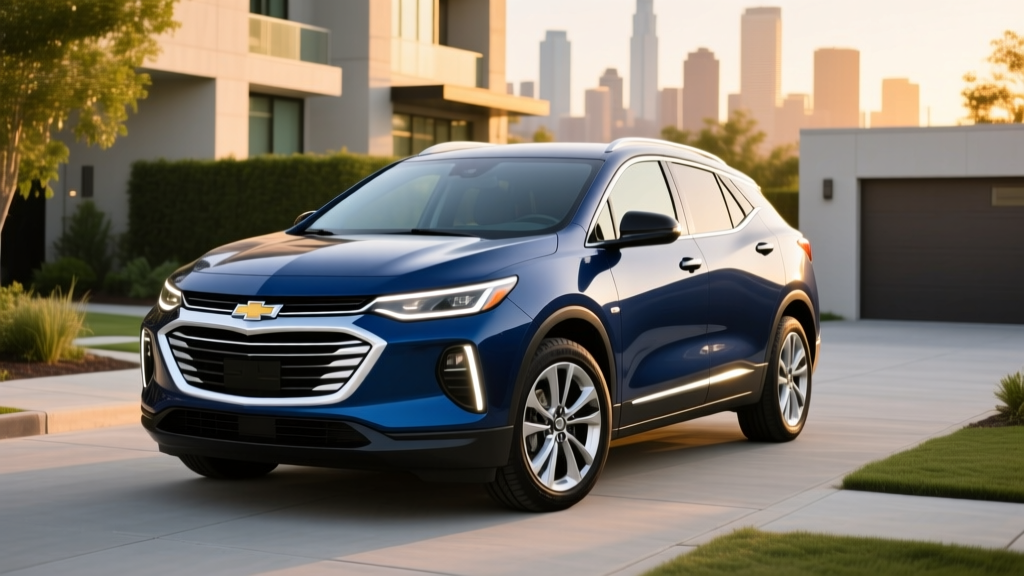
The 2026 Chevrolet Equinox EV occupies a rare sweet spot: a mainstream compact electric SUV with over 300 miles of EPA-estimated range starting under $35,000. For buyers transitioning from a gas-powered Equinox or Blazer, it delivers familiar proportions, a surprisingly spacious cabin thanks to GM's Ultium skateboard platform, and daily-driver practicality. But the Equinox EV's horsepower output — 213 hp on front-wheel-drive models and 220 hp with all-wheel drive — puts it squarely in the adequate-not-thrilling camp. If you prioritize range-per-dollar and cabin space over sub-6-second 0-60 sprints, this is one of the strongest value propositions in the 2026 EV market.
EPA Estimated: 319 miles (FWD, 85 kWh battery)
Real-World Expectation: 270–290 miles in mixed city/highway driving at moderate temperatures. Highway-only cruising at 75 mph drops this to roughly 250–265 miles. In sub-30°F winter conditions without preconditioning, expect 210–240 miles due to battery chemistry limitations and cabin heating load. The 319-mile figure is achievable in city-heavy driving with liberal regen use in 60–75°F weather.
Equinox EV HP, Performance & Drivetrain Breakdown
The headline question for performance-minded shoppers: how much horsepower does the Equinox EV actually make? The answer depends on your drivetrain choice, and neither configuration will win drag races — but both deliver smooth, responsive electric torque that makes city merging effortless.
| Spec | FWD (2LT / 3LT) | AWD (RS / Launch Edition) |
|---|---|---|
| Horsepower | 213 hp | 220 hp (dual-motor) |
| Torque | 236 lb-ft | 355 lb-ft |
| 0–60 mph | ~8.4 sec | ~7.9 sec |
| Drivetrain | Single-motor FWD | Dual-motor AWD |
| Battery (usable) | ~85 kWh, NMC | ~85 kWh, NMC |
| EPA Range | 319 mi | 285–307 mi |
| MPGe (combined) | ~115 MPGe | ~105 MPGe |
| Efficiency | ~29 kWh/100mi | ~32 kWh/100mi |
The FWD model's 213 hp may sound underwhelming on paper, but electric motors deliver peak torque from 0 RPM — meaning stoplight acceleration feels significantly quicker than the 8.4-second 0-60 time suggests. The AWD dual-motor variant adds 119 lb-ft of torque (355 total), which translates to confident highway passing and better traction in rain or snow, though it does cost you 12–34 miles of EPA range depending on trim and wheel size. For context, the EPA's fueleconomy.gov listing confirms the FWD variant as the range champion of the lineup.
Battery Chemistry, Range & Real-World Efficiency
The Equinox EV uses GM's Ultium platform with an NMC (nickel manganese cobalt) lithium-ion battery pack. The usable capacity sits at approximately 85 kWh. Unlike LFP (lithium iron phosphate) packs found in some rivals, NMC chemistry offers higher energy density — which is how Chevy fits over 300 miles of range into a compact SUV footprint — but it requires more careful charging habits for long-term longevity.
What NMC means for your daily routine: GM recommends charging to 80% for daily use and reserving 100% charges for road trips. This is standard NMC guidance. The vehicle's infotainment system lets you set a target charge limit, and the battery management system includes a top and bottom buffer (roughly 3–5% each) that you can't access, protecting the cells from deep discharge or overcharge damage.
Efficiency in practice: The FWD model's ~29 kWh/100mi efficiency is competitive for the segment. In real-world mixed driving, owners typically see 3.0–3.4 miles per kWh. Regenerative braking is adjustable via steering-wheel paddles, and the one-pedal driving mode is aggressive enough to handle most city deceleration without touching the friction brakes.
Charging Speed: DC Fast Charge, Level 2 & Home Setup
Charging capability is where the Equinox EV makes practical compromises to hit its price target. It does not feature the 800-volt architecture found in the Hyundai Ioniq 5 or Kia EV6, so DC fast charging peaks lower and tapers earlier in the charge curve.
| Charge Level | Max Power (kW) | Speed / Time | Connector |
|---|---|---|---|
| Level 1 (120V household) | ~1.4 kW | ~4 mi/hr | Standard outlet |
| Level 2 (240V home/public) | 11.5 kW | ~34 mi/hr; full charge in ~9.5 hrs | J1772 (NACS adapter available) |
| DC Fast Charge | 150 kW peak | 10–80% in ~30 min | CCS1 (NACS via adapter) |
The charging-curve reality: The 150 kW peak only holds between roughly 10–35% state of charge (SoC). From 35–60%, expect sustained rates around 90–110 kW. Above 80%, the rate drops sharply to under 40 kW as the battery management system protects cell health. On a road trip, plan your stops around the 10–80% window for the fastest turnaround — pushing to 95% at a DC fast charger will add 20+ minutes for only ~45 miles of extra range.
Home charging practicality: The 11.5 kW onboard charger is a strong point. On a 48-amp Level 2 home circuit (requiring a 60-amp breaker), you'll recover a full battery overnight in about 9.5 hours. This means even a completely depleted battery is ready by morning. Most owners driving 40–60 miles daily will only need 2–3 hours of Level 2 charging per night. Budget $500–$1,200 for a quality Level 2 home charger (like the ChargePoint Home Flex or Emporia Vue) and $800–$2,500 for professional electrician installation, depending on your panel capacity and run length.
Pricing, Trim Levels & Federal Tax Credit Eligibility
The Equinox EV's pricing strategy is aggressive, undercutting many rivals by thousands. Here's the 2026 lineup at a glance:
| Trim | MSRP | Est. After §30D Credit* | Drivetrain |
|---|---|---|---|
| 2LT FWD | $33,600 | ~$26,100 | FWD |
| 3LT FWD | $36,200 | ~$28,700 | FWD |
| RS FWD | $36,600 | ~$29,100 | FWD |
| RS AWD | $41,900 | ~$34,400 | AWD |
| 3LT AWD | $43,400 | ~$35,900 | AWD |
*Estimated after $7,500 IRS §30D federal tax credit, applied as a point-of-sale rebate. Eligibility is NOT automatic — see checklist below. Destination charge (~$1,395) not included in MSRP figures.
- MSRP cap: SUVs must be at or below $80,000 MSRP — all Equinox EV trims qualify ✓
- Buyer income limits: AGI must not exceed $150,000 (single), $225,000 (head of household), or $300,000 (joint filers)
- Battery sourcing: Critical minerals and battery components must meet escalating domestic/free-trade-partner sourcing thresholds — verify current-year compliance at IRS.gov's qualified vehicle list before purchase, as eligibility can change mid-year
- Point-of-sale transfer: You can transfer the credit to the dealer for an upfront price reduction, but you must still meet income requirements at tax filing time — if your AGI exceeds the cap, you'll owe the credit back
- Consult a tax professional for your specific situation — this is general guidance, not tax advice
Interior Space, Cargo & Daily Practicality
One of the Equinox EV's strongest selling points is interior volume. The Ultium platform's flat floor and pushed-out wheels create cabin space that exceeds the gas-powered Equinox in several dimensions.
- Cargo volume (behind rear seats): 26.4 cu ft — competitive with the Toyota RAV4 and larger than the Hyundai Ioniq 5's rear cargo area
- Cargo volume (rear seats folded): 57.2 cu ft
- Front legroom: 42.3 inches
- Rear legroom: 38.2 inches — genuinely comfortable for two adults on longer trips
- Front trunk (frunk): Not available — the Equinox EV does not include a front cargo compartment, which is a missed opportunity for this segment
The cabin materials in the 2LT are hard-plastic-heavy but durable; the 3LT and RS trims add soft-touch surfaces, heated ventilated front seats, and a synthetic leather that holds up well. The 17.7-inch diagonal infotainment touchscreen dominates the dashboard and runs GM's latest Google Built-in interface, which integrates Google Maps navigation, Google Assistant, and the Play Store directly into the vehicle. Wireless Apple CarPlay and Android Auto are standard across all trims.
Driver Assistance & Safety Technology
Every 2026 Equinox EV ships with Chevy's Super Cruise preparation hardware, but Super Cruise itself is an optional upgrade on 3LT and RS trims (approximately $2,500 add-on or included in specific packages). Without it, you get Chevy Safety Assist 2.0, which includes:
- Automatic emergency braking with pedestrian detection
- Following distance indicator and adaptive cruise control
- Lane keep assist with lane departure warning
- Blind zone steering assist and rear cross-traffic alert
- HD surround vision (360° camera) on 3LT and above
Both Chevy Safety Assist and Super Cruise are SAE Level 2 driver-assistance systems. This means the vehicle can manage steering and acceleration/braking simultaneously under specific conditions, but you must remain fully attentive, keep your hands on or near the wheel, and be prepared to take over at any moment. Super Cruise on mapped highways offers hands-free driving with eye monitoring, but it is not autonomous (Level 4) — you are the driver at all times.
Warranty Coverage & Battery Longevity
GM backs the Equinox EV's battery and drive-unit components with an 8-year / 100,000-mile warranty, which covers defects and capacity loss below a specified threshold (typically 60–70% of original capacity, though confirm the exact retention percentage in your purchase documentation). The limited vehicle warranty is 3 years / 36,000 miles bumper-to-bumper and 5 years / 60,000 miles powertrain.
For NMC batteries like the one in the Equinox EV, real-world degradation data from GM's broader Ultium fleet is still accumulating. Based on industry averages for liquid-cooled NMC packs, expect roughly 8–12% capacity loss over 8 years with typical use patterns (daily charging to 80%, occasional 100% charges, avoiding frequent DC fast charging above 80%). A full battery replacement out of warranty would likely cost $12,000–$18,000 at current pricing, though individual module replacement may be possible at lower cost.
Pros, Cons & Competitor Comparison
- 319-mile EPA range at a sub-$34K starting price — best range-per-dollar in segment
- Spacious cabin with 26.4 cu ft cargo and generous rear legroom
- 11.5 kW Level 2 onboard charger enables fast overnight home charging
- Google Built-in infotainment with large 17.7" screen
- One-pedal driving with adjustable regen paddles
- All trims well under the $80K §30D MSRP cap
- 213–220 hp is modest; 0-60 in ~8 seconds trails sportier rivals
- 150 kW peak DC charging is slower than 800V competitors (Ioniq 5, EV6)
- No front trunk (frunk) — wasted packaging space
- NMC battery requires 80% daily charge limit for longevity
- Hard plastics prominent in base 2LT trim
- Super Cruise is an expensive optional add-on, not standard
- You want maximum EPA range for minimum dollars (319 mi at $33,600)
- Your daily commute is under 80 miles and you can charge at home
- Cabin and cargo space matter more than acceleration
- You prefer a traditional SUV driving position over crossover-coupe styling
- You road-trip frequently and need the fastest possible DC charging (consider Hyundai Ioniq 5 at 240 kW peak)
- You want 300+ hp and sub-5-second 0-60 performance (consider Tesla Model Y Long Range or Ford Mustang Mach-E GT)
- You need a frunk for gear organization or LFP chemistry for 100% daily charging flexibility (consider Tesla Model Y with LFP base pack)
Is the Equinox EV Worth Buying vs. Key Competitors?
The Equinox EV's closest rivals in 2026 include the Hyundai Ioniq 5, Kia EV6, Tesla Model Y, and Volkswagen ID.4. Each has distinct trade-offs:
- vs. Hyundai Ioniq 5: The Ioniq 5 charges dramatically faster (240 kW peak, 10-80% in ~18 min on 800V architecture) but starts ~$9,000 higher and offers slightly less EPA range (305 mi). If road-trip charging speed is your priority, the Ioniq 5 wins. For budget-conscious buyers who charge mostly at home, the Equinox EV's value is hard to beat.
- vs. Tesla Model Y: The Model Y Long Range offers 310+ miles of range, significantly more power (346 hp), access to the Supercharger network natively, and a frunk. But it costs ~$10,000 more and has a firmer ride. The Equinox EV trades performance for affordability and a more traditional SUV interior layout.
- vs. Volkswagen ID.4: The ID.4 offers similar pricing and AWD availability but trails on range (~275 mi EPA) and infotainment usability. The Equinox EV's Google Built-in system is noticeably more responsive.
Frequently Asked Questions
What is the real-world range of the Equinox EV?
The EPA rates the FWD Equinox EV at 319 miles, but real-world mixed driving typically yields 270–290 miles. Highway-only trips at 75 mph drop this to about 250–265 miles, and cold weather (below 30°F) can reduce range to 210–240 miles without preconditioning. Use the vehicle's battery preconditioning feature before DC fast charging or when navigating to a charger in cold weather to minimize losses.
How fast does the Equinox EV charge at home and on the road?
At home on a 240V Level 2 charger, the Equinox EV accepts up to 11.5 kW, adding roughly 34 miles of range per hour and fully recharging in about 9.5 hours. On a DC fast charger, it peaks at 150 kW and charges from 10–80% in approximately 30 minutes. Expect charging to slow significantly above 80% — plan road-trip stops around the 10–80% window for efficiency.
How much does the Equinox EV cost after the federal tax credit?
The base 2LT FWD starts at $33,600 MSRP. If you qualify for the full $7,500 §30D federal tax credit (income within limits, battery sourcing requirements met), the effective price drops to approximately $26,100 — making it one of the cheapest 300+ mile EVs available. However, eligibility is not guaranteed: verify current battery-sourcing compliance on the IRS qualified vehicles list at the time of purchase, and confirm your AGI is within the cap.
Does the Equinox EV qualify for the $7,500 federal EV tax credit?
All Equinox EV trims fall well under the $80,000 SUV MSRP cap. Qualification then depends on (1) your adjusted gross income being within the §30D limits ($150K single / $300K joint), and (2) the vehicle's battery meeting current-year critical-mineral and component sourcing requirements. GM has worked to secure domestic sourcing for Ultium batteries, but the specific credit amount ($3,750 or $7,500) can vary by production batch and model year. Always check the IRS list and consult a tax professional before relying on the credit.
Is the Equinox EV good for road trips?
It's capable but not class-leading for road trips. The 319-mile range means fewer stops than most rivals, but the 150 kW peak DC charging speed and ~30-minute 10-80% time means longer waits at chargers compared to 800V vehicles. If you road-trip more than 6–8 times per year and regularly drive 400+ mile routes, consider a vehicle with faster charging or native Supercharger access. For occasional road trips, the Equinox EV's range advantage offsets its charging speed disadvantage.
What is the Equinox EV's towing capacity?
The 2026 Equinox EV is rated to tow up to 1,500 pounds when properly equipped — enough for a small utility trailer or a pair of dirt bikes, but not suitable for boats or campers. Towing will significantly reduce range, typically by 30–50% depending on trailer weight and aerodynamics.
Sources: EPA range and efficiency data via fueleconomy.gov; federal tax credit rules and qualified vehicle lists via IRS.gov §30D guidance; manufacturer specifications via Chevrolet's official media site. Pricing and credit eligibility reflect 2026 model-year information and are subject to change. Always verify with your dealer and tax advisor before purchasing.