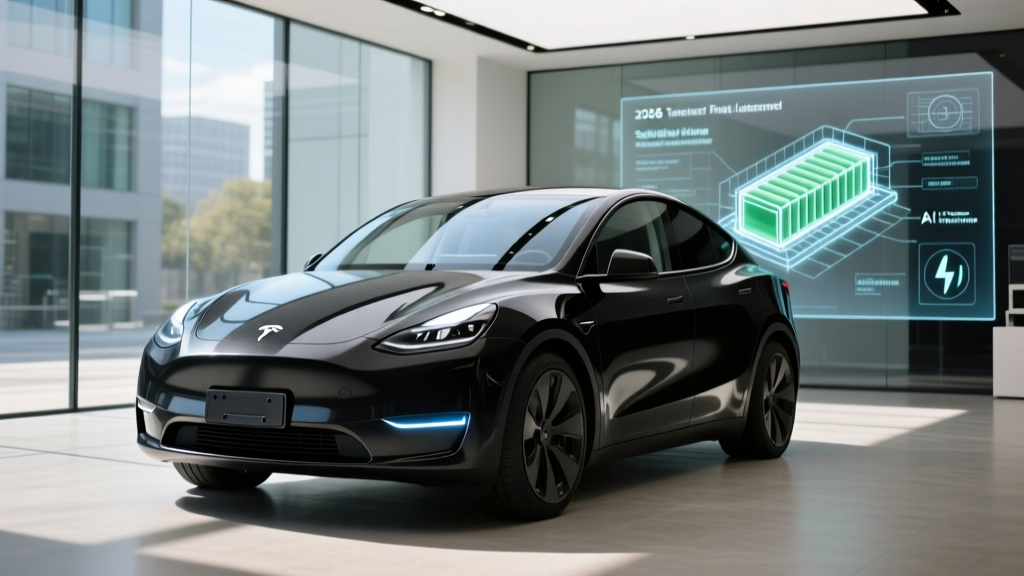
Tesla's "Bioweapon Defense Mode" sounds like marketing hyperbole, but it's a genuine engineering feature with measurable results. First introduced on the Model X in 2016 and later expanded to the Model S and refreshed Model Y, this system uses a hospital-grade HEPA filter and positive cabin pressurization to strip particulate matter, allergens, bacteria, and even some viruses from the air you breathe while driving. For EV buyers in wildfire-prone regions, dense urban corridors, or areas with poor air quality, it's one of the most practical — and underappreciated — features in the Tesla lineup.
But how does it actually work, which 2026 Tesla models include it, and what does the rest of the vehicle package look like in terms of range, charging, and ownership cost? This guide answers every question, with exact specs and real-world context.
How Tesla's Bioweapon Defense Mode Works
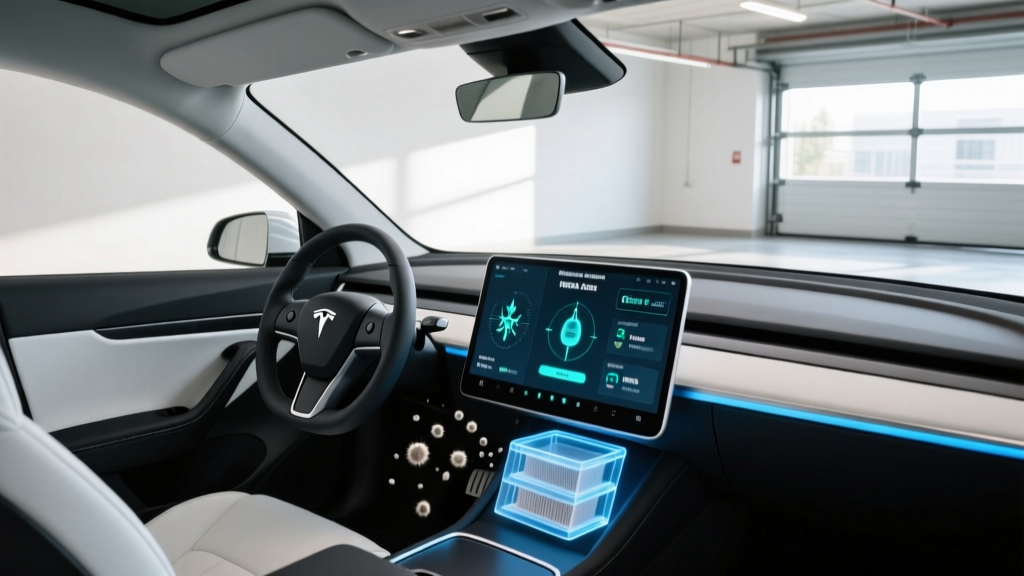
At its core, Bioweapon Defense Mode is an oversized HEPA (High-Efficiency Particulate Air) filtration system paired with intelligent cabin pressurization. Here's the technical breakdown:
- HEPA filter media: Tesla's cabin air filter is roughly 10× larger than a standard automotive cabin filter. It captures 99.97% of particulates at 0.3 microns — the most penetrating particle size (MPPS) for HEPA certification. This includes PM2.5 (fine particulate matter from wildfires, diesel exhaust, and industrial emissions), pollen, mold spores, and bacteria.
- Positive cabin pressure: When activated, the HVAC system pushes filtered air into the cabin at a higher rate than it exhausts, creating slight positive pressure. This prevents unfiltered outside air from seeping in through door seals, window gaps, and ventilation openings — the same principle used in hospital isolation rooms and cleanrooms.
- Activated carbon layer: Beyond the HEPA media, Tesla's filter includes an activated carbon stage that adsorbs volatile organic compounds (VOCs), ozone, and odor-causing gases — things a pure particulate filter cannot capture.
- Real-time AQI display: The touchscreen shows a live air-quality graph, visualizing the system's effect on cabin PM2.5 levels in real time.
Tesla demonstrated the system in a sealed test chamber with PM2.5 levels exceeding 1,000 µg/m³ (hazardous by any standard). The company reported cabin levels dropping to undetectable within minutes. Independent tests by owners and journalists using handheld air-quality monitors have confirmed dramatic reductions, though not always to the same extreme degree in real-world driving conditions with doors opening and windows cracked.
Which 2026 Tesla Models Have Bioweapon Defense Mode?
Not every Tesla includes the HEPA system. The smaller physical filter housing in the Model 3 (prior to the Highland refresh) could not accommodate the full-size HEPA unit. Here's the 2026 availability matrix:
| Model | Bioweapon Defense Mode | Filter Type | Notes |
|---|---|---|---|
| Model S (2026) | ✅ Standard | HEPA + Activated Carbon | Full system since 2021 refresh |
| Model X (2026) | ✅ Standard | HEPA + Activated Carbon | Original launch vehicle for the feature (2016) |
| Model Y Juniper (2026) | ✅ Standard | HEPA + Activated Carbon | Added with Juniper redesign |
| Model 3 Highland (2026) | ❌ Not available | Standard cabin filter | Improved filter vs. pre-Highland, but not full HEPA |
| Cybertruck (2026) | ❌ Not available | Standard cabin filter | No HEPA option as of 2026 model year |
If air filtration is a priority — say you live in California wildfire country or commute through heavy industrial zones — the Model Y Juniper is the most affordable entry point into the full HEPA system for 2026.
2026 Tesla Model Y: Range, Battery, and Efficiency
Since the Model Y Juniper is the most accessible Tesla with Bioweapon Defense Mode, let's anchor the spec deep-dive here. The 2026 Model Y is offered in three primary configurations:
| Spec | Long Range RWD | Long Range AWD | Performance AWD |
|---|---|---|---|
| EPA Range | 320 mi | 300 mi | 280 mi |
| Battery (usable) | ~75 kWh (NMC) | ~75 kWh (NMC) | ~75 kWh (NMC) |
| Drivetrain | RWD, single motor | AWD, dual motor | AWD, dual motor |
| 0-60 mph | 5.8 sec | 4.8 sec | 3.5 sec |
| Horsepower | ~346 hp | ~384 hp | ~456 hp |
| MPGe (combined) | 123 MPGe | 117 MPGe | 111 MPGe |
| Efficiency | 27 kWh/100 mi | 29 kWh/100 mi | 30 kWh/100 mi |
| Cargo (rear seats up) | 30.2 cu ft (behind 2nd row) / 72.1 cu ft (folded) | ||
| Legroom (front/rear) | 41.8 in / 37.3 in | ||
The battery pack uses NMC (Nickel Manganese Cobalt) chemistry across all 2026 Model Y trims. NMC offers higher energy density than LFP (lithium iron phosphate), which is why it's used in Long Range and Performance variants. The trade-off: NMC degrades slightly faster over time and is more sensitive to sustained 100% state-of-charge storage. Tesla recommends daily charging to 80-90% for NMC packs and reserving 100% for road trips.
Charging Speed: DC Fast Charge and Home Level 2
Charging speed is where the Juniper Model Y made meaningful gains over its predecessor. Here's the full breakdown:
| Charging Level | Power / Rate | Speed | Notes |
|---|---|---|---|
| DC Fast Charge (V3/V4 Supercharger) | Peak 250 kW | 10-80% in ~25 min | Peak rate holds to ~50% SoC, then tapers. Sustained average ~150 kW. |
| DC Fast Charge (CCS adapter / non-Tesla) | Up to 250 kW | Similar to Supercharger | NACS connector native; CCS via adapter (included) |
| Level 2 (Tesla Wall Connector, 48A) | 11.5 kW | ~44 mi/hr of charge | Requires 60A circuit. Full charge in ~7-8 hours. |
| Level 2 (Mobile Connector, 32A / 240V) | 7.7 kW | ~30 mi/hr of charge | NEMA 14-50 outlet. Full charge in ~10 hours. |
| Level 1 (120V household) | ~1.4 kW | ~3-4 mi/hr of charge | Emergency/trickle only. Not viable for daily use. |
The charge curve matters: you'll see 250 kW only in the 10-30% state-of-charge window. By 60%, power drops to roughly 120 kW, and above 80% it falls below 50 kW. This is normal for NMC packs with active thermal management, but it means that charging from 80-100% takes nearly as long as 10-80%. For road trips, plan stops around the 10-80% window and skip topping off unless you need the final miles.
Home charging setup cost: A Tesla Wall Connector installation on a 60A circuit typically runs $800-$2,000 including the $475 unit and electrician labor, assuming your panel has capacity. A panel upgrade to 200A (if needed) adds $1,500-$3,500. Always get a licensed electrician to assess your panel before committing.
2026 Model Y Pricing and Federal Tax Credit
| Trim | Base MSRP | Federal Tax Credit (§30D) | Effective Price (if eligible) |
|---|---|---|---|
| Long Range RWD | $44,990 | Up to $7,500 | ~$37,490 |
| Long Range AWD | $47,990 | Up to $7,500 | ~$40,490 |
| Performance AWD | $52,490 | Up to $7,500 | ~$44,990 |
Critical tax-credit caveats for 2026 (IRS §30D):
- MSRP cap: SUVs (which the Model Y is classified as) must have an MSRP at or below $80,000. All Model Y trims clear this.
- Buyer income cap: Modified adjusted gross income must not exceed $300,000 (married filing jointly), $225,000 (head of household), or $150,000 (single). Above these thresholds, the credit phases to zero.
- Battery sourcing requirements: The full $7,500 requires meeting both critical-minerals and battery-component sourcing thresholds set by the IRS. Tesla's supply chain has shifted significantly toward compliant sources, but the exact credit amount ($3,750 if only one requirement is met, $7,500 if both are met) can change as Treasury updates its eligible vehicle list. Always verify on IRS.gov before purchase.
- Point-of-sale transfer: As of 2024, you can transfer the credit to the dealer at purchase, reducing your out-of-pocket cost immediately rather than waiting for a tax refund.
Destination fees (~$1,390), paint upgrades, and FSD purchase are additional and not covered by the credit.
Tech, Driver Assistance, and the HEPA System in Practice
Beyond Bioweapon Defense Mode, the 2026 Model Y Juniper carries Tesla's current-generation tech suite:
- Infotainment: 15.4-inch center touchscreen with improved processing, ventilated front seats, ambient lighting, and a rear-seat entertainment screen on higher trims. No Apple CarPlay or Android Auto — Tesla's native system handles navigation, media, and vehicle controls.
- Autopilot (standard): Adaptive cruise control + lane-centering. This is SAE Level 2 driver assistance — you must keep hands on the wheel and eyes on the road at all times.
- Full Self-Driving (Supervised): Optional ($8,000 purchase or $99/month as of 2026). Adds automated lane changes, traffic-light recognition, and city-street navigation. Despite the name, FSD is still SAE Level 2 — the driver is legally and practically responsible for all driving decisions. Only Level 4 systems like Waymo operate without human oversight in defined service areas.
- Safety: The Model Y earned a 5-star overall rating from NHTSA and top marks from IIHS. Standard automatic emergency braking, blind-spot monitoring, and side-collision warning.
- It does not filter carbon monoxide (CO) — a colorless, odorless gas. No automotive HEPA system can.
- It is not a substitute for sheltering in place during a genuine biological or chemical attack.
- It does not eliminate the need to replace the HEPA filter — Tesla recommends replacement every 2-3 years depending on air quality exposure (~$100-$150 for the filter, plus labor if you don't DIY).
- The system slightly increases HVAC energy draw when active, which can reduce range by 1-3% on short trips in extreme pollution events.
Warranty, Ownership Costs, and Who Should Buy
Tesla's warranty coverage for the 2026 Model Y:
- Basic vehicle: 4 years / 50,000 miles
- Battery and drive unit: 8 years / 120,000 miles (Long Range and Performance) with a minimum 70% capacity retention guarantee
- HEPA filter: Covered under the basic 4-year warranty for defects; consumable replacement is the owner's responsibility
5-year estimated cost of ownership (Long Range AWD, 15,000 mi/yr, national average electricity at $0.16/kWh):
- Electricity: ~$4,350 (vs. ~$8,250 in gasoline for a comparable ICE SUV at 25 MPG and $3.30/gal)
- Maintenance: ~$1,200 (no oil changes, minimal brake wear due to regen; cabin filter replacements, tire rotations, wiper fluid)
- Insurance: ~$9,500-$12,000 (Teslas carry higher premiums — get quotes before committing)
- Tires: ~$2,400 (EVs wear tires faster due to weight and instant torque; expect 25,000-35,000 miles per set)
- Wildfire-zone commuters: If you live in the Pacific Northwest, California, or Colorado and deal with weeks of smoky air each year, the HEPA system is genuinely valuable.
- Urban families with allergy sufferers: The combination of particulate filtration and positive pressure is measurably better than any standard cabin filter.
- Road-trip-capable daily driver: 300 miles of range + Supercharger network access makes this viable for 400-500 mile trips with one 25-minute stop.
- You want the cheapest Tesla with good filtration — the Model 3 Highland's improved filter is adequate for most buyers.
- You need three-row seating — only the Model X offers that in Tesla's lineup.
- You prefer Apple CarPlay — Tesla's ecosystem is closed.
Pros and Cons at a Glance
- Genuine hospital-grade HEPA filtration with measurable PM2.5 reduction
- 300-320 mi EPA range covers most commutes and moderate road trips
- 250 kW DC fast charging; 10-80% in ~25 min
- Supercharger network reliability remains best-in-class
- Spacious cargo area (72.1 cu ft folded) for a compact SUV
- Federal tax credit eligible (verify sourcing on IRS.gov)
- 8-year / 120,000-mi battery warranty with 70% retention guarantee
- Bioweapon Defense Mode not available on Model 3 or Cybertruck
- Real-world highway and cold-weather range drops 15-30% vs EPA
- No Apple CarPlay or Android Auto
- Insurance premiums run 15-25% above segment average
- FSD (Supervised) remains Level 2 — not autonomous despite the name
- HEPA filter replacement is an added ownership cost ($100-$150 every 2-3 years)
Frequently Asked Questions
What is the real-world range of the 2026 Tesla Model Y?
The EPA rates the Long Range RWD at 320 miles and the Long Range AWD at 300 miles. In real-world highway driving at 70-75 mph, expect 260-280 miles. In sub-freezing temperatures, plan for 220-250 miles. City driving with regenerative braking in mild weather can match or slightly exceed the EPA estimate.
How fast does the 2026 Model Y charge?
On a V3 or V4 Tesla Supercharger, the Model Y peaks at 250 kW and charges from 10-80% in approximately 25 minutes. At home on a Level 2 Tesla Wall Connector (11.5 kW), you'll add about 44 miles of range per hour, fully charging overnight in 7-8 hours.
How much does the 2026 Model Y cost after tax credits?
The Long Range RWD starts at $44,990 MSRP. If you meet all IRS §30D requirements (income cap, battery sourcing), the effective price drops to approximately $37,490 via the $7,500 point-of-sale credit. Always verify current eligibility at IRS.gov before purchasing.
Does the 2026 Model Y qualify for the federal EV tax credit?
Yes — the Model Y qualifies for up to $7,500 under §30D, provided the buyer's income is within limits ($150K single / $300K joint), the MSRP is under $80K (all trims qualify), and battery sourcing requirements are met. The exact amount ($3,750 or $7,500) depends on current Treasury sourcing determinations.
Is the Model Y worth buying vs. key competitors?
Versus the Hyundai Ioniq 5, Ford Mustang Mach-E, and Chevrolet Equinox EV, the Model Y's advantages are Supercharger network access (though competitors now use NACS adapters), the HEPA filtration system (unique in this class), and cargo space. The Ioniq 5 charges faster (10-80% in ~18 min on 800V architecture) and offers CarPlay. The Mach-E has a more traditional driving feel. If air quality and ecosystem integration matter most, the Model Y wins. If charging speed and CarPlay are priorities, cross-shop the Ioniq 5.
Can I retrofit Bioweapon Defense Mode onto an older Model Y or Model 3?
No. The HEPA system requires a physically larger filter housing, different HVAC ducting, and software integration that cannot be retrofitted. If this feature is important, buy a 2021+ Model S/X or a 2025+ Model Y Juniper.
How often does the Tesla HEPA filter need replacement?
Tesla recommends replacing the HEPA filter every 2-3 years, or sooner if you frequently drive in areas with poor air quality (wildfire smoke, heavy pollution). The filter itself costs roughly $100-$150. Some owners replace it themselves; others pay a service center.
Sources: EPA efficiency data from fueleconomy.gov; tax credit rules from IRS.gov §30D; safety ratings from NHTSA. All specs reflect 2026 model-year information available at publication. Verify pricing and credit eligibility with Tesla and the IRS before purchase.