Quick Answer: Is the Mercedes C-Class Electric Right for You?
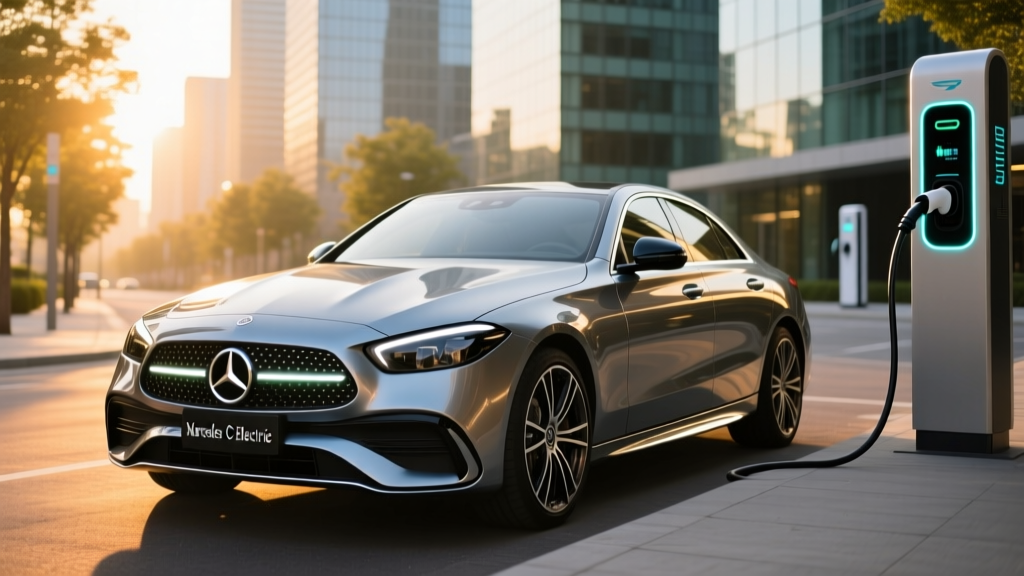
The Mercedes C-Class Electric (the CLA-based compact EV sedan riding the MMA platform) is Mercedes' 2026 entry into the premium compact EV sedan segment. With an expected EPA range around 350–400 miles on the long-range RWD variant, 800-volt architecture enabling DC fast charging up to ~250 kW, and a starting MSRP likely in the mid-$50,000s, it targets Tesla Model 3, BMW i4, and Hyundai Ioniq 6 buyers who want a three-pointed star on the hood. Key caveat: As an imported Mercedes, it will almost certainly not qualify for the $7,500 federal §30D new EV tax credit due to battery-sourcing and final-assembly rules — a factor that meaningfully shifts its value equation versus American- and Korean-built rivals.
What Is the Mercedes C-Class Electric? (And What It Isn't)
First, a naming clarification that trips up many shoppers: Mercedes is not literally badging a "C-Class EV." Instead, the vehicle occupying the C-Class slot in the electric lineup is built on the new Mercedes Modular Architecture (MMA), previewed by the Concept CLA Class. Production begins with the CLA EV sedan, with C-Class-sized variants (wagon, possibly a second sedan) following. When buyers search "Mercedes C-Class electric," this is the vehicle family they're finding.
Powertrain highlights based on announced MMA platform specs:
- Battery options: ~58 kWh LFP (entry) and ~85 kWh NMC (long-range)
- Architecture: 800V nominal, enabling faster DC charging and lighter wiring
- Drivetrain: RWD standard, AWD (4MATIC) available on higher trims
- Efficiency target: ~5.2 miles/kWh (over 120 MPGe), per Mercedes' pre-production data
This positions it directly against the Tesla Model 3 Long Range, BMW i4 eDrive40, and the Hyundai Ioniq 6 — each of which has different trade-offs on price, charging network access, and tax-credit eligibility.
Range, Charging, and Real-World Numbers That Matter
Sticker range is only half the story. Here's what the numbers actually look like once you factor in real-world conditions and charging physics.
| Spec | Entry LFP (~58 kWh) | Long-Range NMC (~85 kWh) |
|---|---|---|
| EPA Range (est.) | ~260 mi | ~380 mi |
| Real-World Highway (70 mph) | ~215–230 mi | ~310–330 mi |
| Cold-Weather (20°F, mixed) | ~180 mi | ~260–280 mi |
| Peak DC Fast Charge | ~175 kW | ~250 kW |
| 10–80% DCFC Time (est.) | ~22 min | ~18 min |
| Level 2 (11 kW onboard) | ~6 hrs 10–100% | ~8 hrs 10–100% |
| 0–60 mph (RWD) | ~7.0 sec | ~5.8 sec |
| Horsepower | ~238 hp | ~268 hp (RWD) / ~350 hp (AWD) |
Real-world range reality: The WLTP figure Mercedes has touted ("over 750 km") translates to roughly 466 miles, but WLTP is notoriously optimistic versus EPA. Expect an EPA rating closer to 380 miles for the long-range variant — and plan trips around ~300 usable miles in temperate highway driving, ~260 in cold weather. Heat-pump standard fitment helps, but physics still wins in sub-freezing temps.
Charging curve honesty
Peak 250 kW is a ceiling, not an average. On the NMC pack, expect ~250 kW from roughly 10–30% SoC, tapering to ~180 kW through 50%, ~120 kW at 70%, and ~50 kW above 85%. The 10–80% average is closer to 175 kW — still excellent, and meaningfully faster than 400V rivals like the base BMW i4, but not the full 250 kW sustained. On Electrify America 350 kW stalls (where available and functional), the MMA platform can stretch its legs; on older 50–150 kW hardware, the 800V advantage is muted.
Mercedes C-Class Electric vs Gas C-Class vs Rivals
The cross-shop most buyers actually face: do you get the electric MMA sedan, stick with the C300 gas C-Class, or jump to a Model 3 / i4? Here's the data.
| Metric | Mercedes MMA EV (LR) | Mercedes C300 (Gas) | Tesla Model 3 LR AWD | BMW i4 eDrive40 |
|---|---|---|---|---|
| Base MSRP (est.) | ~$58,000 | ~$48,500 | $47,740 | $57,975 |
| Federal Tax Credit | $0 (likely) | $0 | $0 (post-2025 phase-out rules apply) | $0 (imported) |
| EPA Range / MPG | ~380 mi / 130 MPGe | 30 MPG combined | 341 mi / 132 MPGe | 307 mi / 109 MPGe |
| Energy Cost per 1,000 mi | ~$40 (home L2) | ~$115 ($3.45/gal) | ~$40 | ~$45 |
| 10–80% DCFC | ~18 min | N/A (5 min gas) | ~20 min | ~31 min |
| 0–60 mph | ~5.8 sec | ~5.7 sec | ~4.2 sec | ~5.5 sec |
Key takeaway: On pure performance and efficiency, the MMA EV matches or beats the C300 while costing roughly one-third per mile to fuel at home. But the ~$10,000 price premium over the C300 and the lack of a federal credit mean payback takes longer than it does for a credit-eligible rival. Buyers who can access cheap home electricity and drive 15,000+ miles/year close the gap in 5–6 years; lower-mileage owners may not.
The Real Cost of Ownership: 5-Year Breakdown
Purchase price is only the opening move. Here's what a 5-year / 75,000-mile ownership cycle actually costs, assuming $3.50/gal gas, $0.14/kWh home electricity, and 70% home / 30% public DCFC charging.
| Category | MMA EV (LR) | C300 Gas |
|---|---|---|
| Purchase (MSRP + dest.) | $59,500 | $48,500 |
| Federal Tax Credit | $0 | $0 |
| Fuel/Energy (75k mi) | $3,750 | $8,625 |
| Maintenance | $1,800 | $3,900 |
| Insurance (avg.) | $9,500 | $7,800 |
| Home L2 Charger Install | $1,200 | $0 |
| Depreciation (est. 5-yr) | $28,000 | $21,000 |
| 5-Year Total Cost | ~$75,750 | ~$68,825 |
The EV saves roughly $6,700 on fuel and maintenance over five years, but gives back most of that on higher insurance premiums (Mercedes EVs carry costly repair bills post-collision), faster projected depreciation, and the one-time home charger install. Net: the MMA EV costs ~$7,000 more over 5 years under these assumptions. Shift to a state with cheap electricity and high gas prices (California, Washington), add state rebates, or stretch to 10 years, and the math flips.
For current federal incentive rules, always verify on IRS.gov's §30D page, as battery sourcing and MSRP/income caps change frequently.
First-Time EV Buyer Essentials: What Nobody Tells You
| Myth | Fact |
|---|---|
| "380 miles means I can drive 380 miles" | Highway driving at 75 mph cuts 15–20%; cold weather another 20–30%. Plan around 280–300 usable miles. |
| "DC fast charging is 250 kW the whole time" | Peak is a ceiling. Average 10–80% is closer to 175 kW; above 80% it drops sharply to protect the battery. |
| "I don't need a home charger" | Public DCFC costs 3–4× more per kWh than home L2. Without home charging, the cost advantage over gas largely evaporates. |
| "The battery will need replacing" | Mercedes warranties the pack for 8 years/100,000 miles at 70% capacity retention. Real-world degradation on NMC is typically 10–15% over 8 years. |
| "It qualifies for the $7,500 credit" | Imported Mercedes vehicles almost never meet §30D's North American assembly and critical-mineral sourcing requirements. |
Home charging access is the single biggest variable
If you can install a Level 2 (240V, 48A / 11.5 kW) home charger, the MMA EV refuels overnight at ~$0.14/kWh — roughly $12 for 300 miles. If you live in an apartment without charging access or rely exclusively on public DCFC ($0.35–$0.55/kWh typical), your per-mile cost doubles or triples, and convenience drops sharply. Before committing, budget $600–$2,000 for a licensed electrician to install a 60A circuit and hardwired wallbox; older homes may need a $2,000–$4,000 panel upgrade to 200A.
Decision Framework: Should You Buy It?
Buy the Mercedes C-Class Electric (MMA EV) if:
- You want a premium compact EV sedan with Mercedes build quality, MBUX, and design language
- You have home Level 2 charging access (or can install it)
- You drive 12,000+ miles/year, making the fuel savings meaningful
- You value 800V charging speed and 380-mile range for road trips
- You accept paying a premium over Tesla/Hyundai and forgoing the federal tax credit
Consider a rival instead if:
- Federal or state tax credits are make-or-break for your budget → look at US-built options
- You need Supercharger network reliability today → Tesla Model 3 (though NACS adoption is broadening fast)
- Your budget is sub-$50,000 → Hyundai Ioniq 6 or Tesla Model 3 RWD
- You can't charge at home and your commute is under 30 miles → a PHEV like the BMW 330e may suit better
Frequently Asked Questions
Will the Mercedes C-Class Electric qualify for the $7,500 federal tax credit?
Almost certainly not. The §30D credit requires final assembly in North America plus strict battery-critical-mineral and component sourcing thresholds. Mercedes' MMA vehicles are built in Europe (Rastatt, Germany, and Kecskemét, Hungary), and their battery supply chains don't currently meet the domestic-content rules. Always confirm on fueleconomy.gov before purchasing.
How does 800V architecture actually help me?
Higher voltage means lower current for the same power, which reduces heat and allows thinner, lighter wiring. The practical benefit: faster DC charging (250 kW vs. ~180 kW on 400V rivals like the base i4) and slightly better efficiency under load. You'll feel it most on road trips when 10–80% takes 18 minutes instead of 30.
Is LFP or NMC the better battery choice here?
The entry ~58 kWh pack uses LFP (lithium iron phosphate) chemistry — heavier and less energy-dense, but longer cycle life and can safely be charged to 100% daily. The long-range ~85 kWh pack uses NMC (nickel manganese cobalt), which delivers more range per pound but benefits from staying between 20–80% for daily use. If your commute is short and you want longevity, LFP is underrated; for road-trip range, NMC wins.
What about the Mercedes C-Class PHEV (C300e) instead?
The C300e plug-in hybrid offers ~50–60 miles of electric-only range plus a gas engine for longer trips. It's an excellent bridge solution if you lack reliable DCFC access on road trips or live in extreme cold. Downside: you're maintaining two powertrains (oil changes, gas-engine maintenance) and electric range is too short for many daily commutes once you factor in HVAC load.
When can I actually buy one?
The MMA-based CLA EV sedan launches in the US for the 2026 model year, with C-Class-sized variants following in 2027. Pre-production specs in this article are based on Mercedes' published platform data; final EPA ratings and MSRP will be confirmed closer to on-sale date.
What's the real insurance cost versus a gas C-Class?
Expect 15–25% higher premiums on the EV variant, driven by higher repair costs (battery enclosure damage, aluminum bodywork, specialized ADAS calibration). Get a quote from your insurer before ordering — the spread varies wildly by ZIP code and driving record.
Sources: Mercedes-Benz MMA platform technical briefing, fueleconomy.gov, IRS §30D guidance.