Let's Clear the Air: Tesla Bikes Don't Exist (But the Model Y Might Be What You Actually Need)
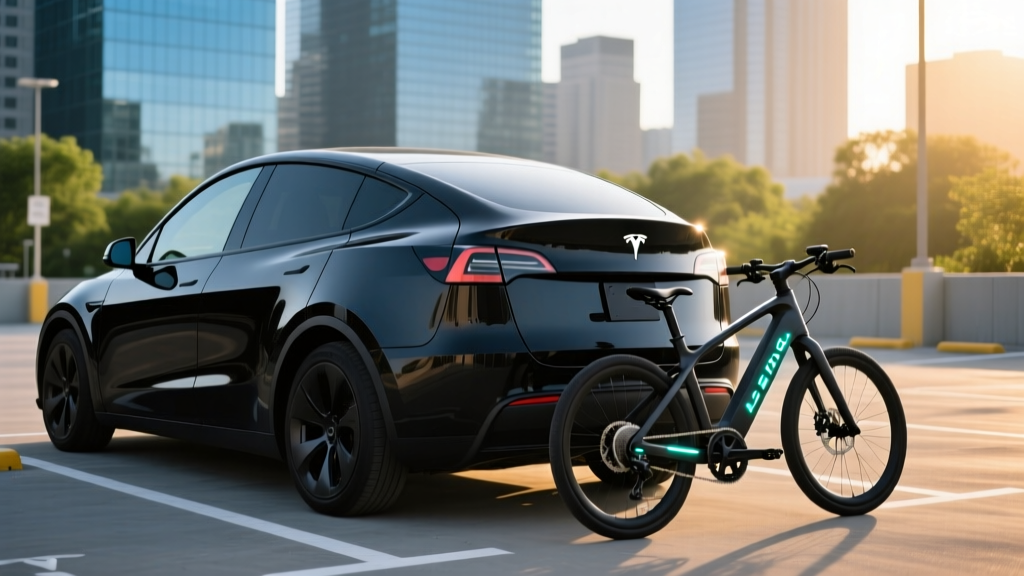
If you've been searching for Tesla bikes, you're not alone — the term draws steady curiosity. But here's the unambiguous truth: Tesla does not manufacture bicycles, e-bikes, or motorcycles. The company's product lineup consists exclusively of four-wheeled electric vehicles: the Model S, Model 3, Model X, Model Y, Cybertruck, and the Tesla Semi. Any "Tesla bike" you've seen online is either a third-party concept render, an aftermarket e-bike with no affiliation to Tesla, Inc., or a misidentified product.
What many searchers actually want is a practical, efficient, tech-forward Tesla that fits an urban lifestyle — something nimble enough to replace a second car or handle daily commuting without excess. That vehicle is the 2026 Tesla Model Y, the refreshed "Juniper" generation that launched in early 2025 and carries into the 2026 model year with meaningful upgrades in range, charging speed, cabin refinement, and driver-assist hardware.
This review covers the 2026 Model Y in full — specs, real-world range, charging, pricing after federal tax credits, and whether it's the right electrified purchase for your situation.
2026 Tesla Model Y: Full Specifications at a Glance
| Specification | Value |
|---|---|
| EPA Estimated Range | 320 miles |
| Battery Capacity (usable) | 78.1 kWh (NMC chemistry) |
| Drivetrain | Dual-motor AWD |
| Horsepower | 384 hp (combined) |
| 0–60 mph | 4.8 seconds |
| Peak DC Fast-Charge Rate | 250 kW |
| 10–80% DC Fast Charge | ~25 minutes |
| Level 2 Home Charging | 11.5 kW (~44 miles/hr) |
| Efficiency | 122 MPGe combined / 28 kWh/100mi |
| Cargo Volume (rear seats up) | 30.2 cu ft |
| Cargo Volume (rear seats folded) | 72.0 cu ft |
| Rear Legroom | 41.6 inches |
| Base MSRP (Long Range AWD) | $44,990 |
| Base MSRP (Performance AWD) | $51,490 |
| Battery & Drive Unit Warranty | 8 years / 120,000 miles |
| Basic Vehicle Warranty | 4 years / 50,000 miles |
Range & Efficiency: What the EPA Number Doesn't Tell You
The Juniper-refreshed Model Y benefits from improved aerodynamics (drag coefficient reduced to ~0.23 Cd) and a revised thermal management system with a standard heat pump. The heat pump is critical: it scavenges waste heat from the battery and motors to warm the cabin, cutting winter range loss from the ~30% seen in older resistive-heater EVs down to roughly 15–20% in moderate cold.
Efficiency lands at 122 MPGe combined per EPA fueleconomy.gov data, which translates to approximately 28 kWh consumed per 100 miles. That's competitive with the Hyundai Ioniq 5 (114 MPGe) and slightly behind the smaller Model 3 (132 MPGe), reflecting the Y's taller crossover profile.
Charging Speed: DC Fast Charging and Home Setup
| Charging Level | Power | Speed (Miles Added) | Notes |
|---|---|---|---|
| Level 1 (120V household) | ~1.4 kW | ~4 miles/hour | Emergency/trickle only |
| Level 2 (240V home Wall Connector) | 11.5 kW | ~44 miles/hour | Full charge in ~7 hours |
| Level 2 (public J1772 w/ adapter) | Up to 11.5 kW | ~44 miles/hour | Adapter included with vehicle |
| DC Fast (Tesla Supercharger V3) | Peak 250 kW | ~200 miles in 15 min | 10–80% in ~25 minutes |
| DC Fast (CCS station w/ adapter) | Up to 250 kW | Varies by station | Magic Dock / CCS adapter required |
The Model Y's NMC battery pack supports a peak DC charge rate of 250 kW on V3 Superchargers. However, as with all lithium-ion packs, that peak rate is sustained only in a narrow state-of-charge window (roughly 10–30% SoC). The charge curve tapers progressively: by 50% SoC you'll see ~150 kW, and above 80% the rate drops sharply to protect battery longevity. Plan road-trip stops around the 10–80% window for optimal time efficiency.
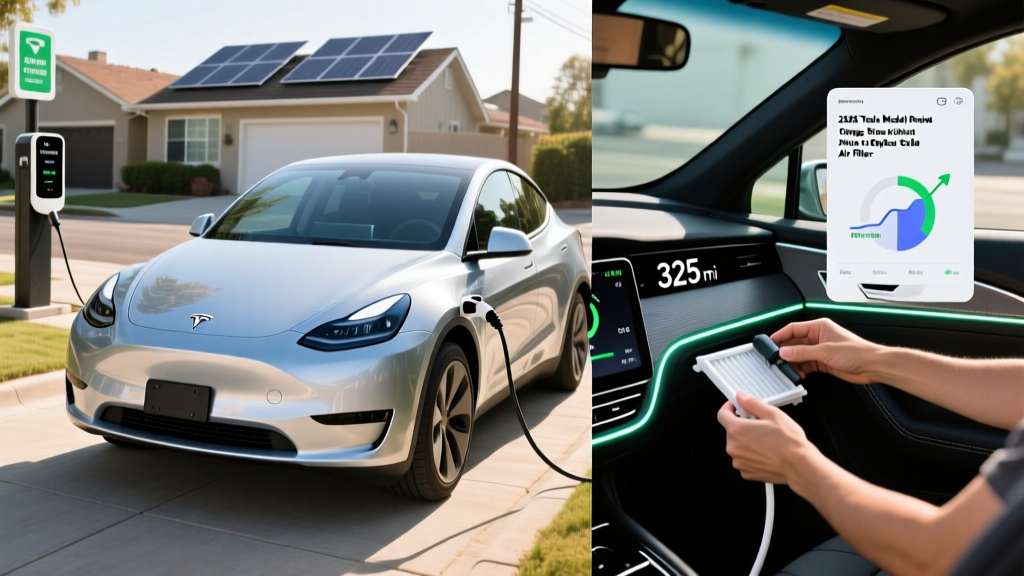
For home charging, the Tesla Wall Connector at 48 amps delivers 11.5 kW on a 60-amp circuit, adding roughly 44 miles of range per hour. A typical overnight session (8 hours) replenishes ~350 miles — more than a full battery. Installation costs range from $500–$1,500 if your electrical panel has capacity, or $2,000–$4,000 if a panel upgrade to 200A is needed. Always consult a licensed electrician for final specs.
The Model Y uses the NACS (North American Charging Standard) connector natively. Tesla's Supercharger network — now exceeding 6,500 U.S. stations — remains the most reliable public DC network by uptime metrics. A CCS adapter (sold separately, ~$175) unlocks Electrify America and other CCS networks as backup.
Performance, Ride, and the Juniper Cabin Refresh
The 2026 Model Y Long Range AWD pairs dual permanent-magnet motors for 384 combined horsepower and a 4.8-second 0–60 mph time. That's quick for a family crossover, and the instant torque delivery makes highway merging effortless. The Performance trim drops 0–60 to 3.5 seconds with 456 hp, though it sacrifices roughly 15 miles of EPA range.
The Juniper refresh brought tangible cabin improvements: ventilated front seats, a rear-seat touchscreen for climate and entertainment, ambient lighting, acoustic glass (reducing cabin noise by ~5 dB at highway speed), and a redesigned center console. The 15.4-inch front touchscreen runs Tesla's latest UI with native navigation, streaming apps, and a phone-as-key system.
Autopilot comes standard and includes adaptive cruise control, lane-keeping, and automatic emergency braking. Full Self-Driving (Supervised) is a $8,000 add-on (or $99/month subscription) that adds city-street navigation and traffic-light recognition. Important: FSD remains an SAE Level 2 driver-assist system. You must keep your hands on the wheel and eyes on the road at all times. It is not autonomous driving.
Pricing, Trims, and Federal Tax Credit Eligibility
| Trim | MSRP | Est. Price After §30D Credit* |
|---|---|---|
| Long Range AWD | $44,990 | $37,490 |
| Performance AWD | $51,490 | $43,990 |
*Federal tax credit estimates assume full eligibility. Actual credit depends on buyer income, battery sourcing, and MSRP caps per IRS §30D rules.
The Model Y qualifies for up to $7,500 in federal tax credits under the Inflation Reduction Act's §30D provision — but eligibility is not automatic. Here's what determines your actual credit:
- MSRP Cap: SUVs/crossovers must have an MSRP at or below $80,000. Both Model Y trims clear this.
- Buyer Income Cap: Modified adjusted gross income must not exceed $150,000 (single), $225,000 (head of household), or $300,000 (joint filers).
- Battery Sourcing: The $7,500 credit splits into two halves — $3,750 for critical-mineral sourcing and $3,750 for battery-component manufacturing. Tesla has progressively shifted sourcing to comply, but partial ($3,750) credit eligibility is possible depending on the production batch. Verify at purchase.
- Point-of-Sale Transfer: As of 2024, you can transfer the credit to the dealer at purchase, reducing your out-of-pocket cost immediately rather than waiting for a tax refund.
Always confirm current-year eligibility with your tax professional and the IRS Clean Vehicle Credits page, as sourcing requirements tighten annually.
Pros and Cons: An Honest Assessment
✓ Pros
- 320-mile EPA range covers most commutes and road trips without range stress
- Supercharger network remains the gold standard for reliability and coverage
- 44 mi/hr Level 2 charging is among the fastest in its class
- Juniper cabin refresh addresses prior noise and comfort complaints
- Over-the-air updates continuously add features post-purchase
- Strong resale value relative to most EV competitors
- 72 cu ft cargo space with seats folded rivals midsize SUVs
✗ Cons
- No physical instrument cluster or traditional stalks — all controls via touchscreen
- FSD (Supervised) at $8,000 remains Level 2, not autonomous
- Ride quality is firm; some buyers prefer the softer tuning of the Ioniq 5
- Insurance premiums run 15–25% higher than comparable gas crossovers
- No Apple CarPlay or Android Auto — Tesla's ecosystem only
- CCS adapter required for non-Tesla DC networks (sold separately)
- Tax credit sourcing rules may limit you to $3,750 instead of $7,500
Who Should Buy the 2026 Model Y — And Who Should Look Elsewhere
Buy the Model Y if: You want a single-vehicle solution for commuting, family duty, and road trips; you have access to home Level 2 charging; you value Supercharger network reliability; and you prefer a tech-centric, minimalist cabin.
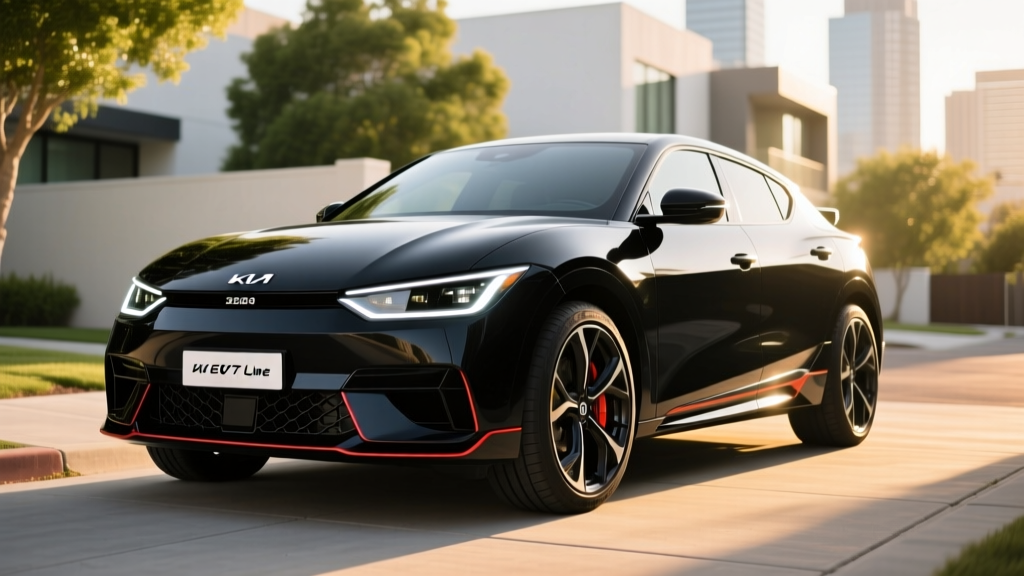
Look elsewhere if: You need three rows (consider the Kia EV9); you want physical buttons and Apple CarPlay (Hyundai Ioniq 5 or Ford Mustang Mach-E); you tow more than 3,500 lbs; or you lack reliable home charging access and depend entirely on public infrastructure.
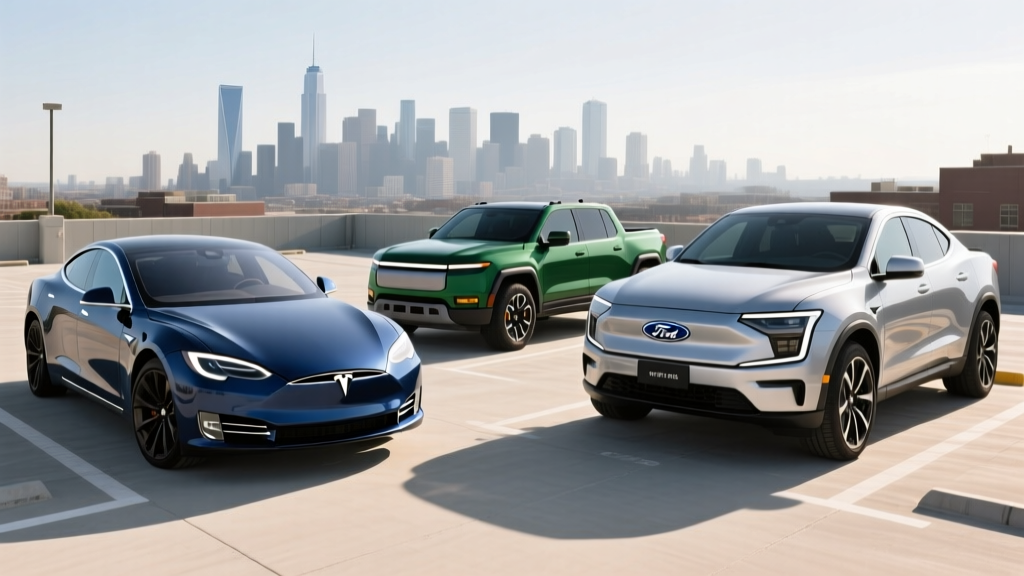
The Model Y remains the best-selling EV in the U.S. for good reason: it threads the needle between range, charging infrastructure, performance, and practicality. But it's not the only strong option in the $40K–$52K electric crossover segment. Cross-shop the Hyundai Ioniq 5 (310 miles, 350 kW charging, more spacious rear seat), the Ford Mustang Mach-E (320 miles Extended Range, traditional controls), and the Chevrolet Equinox EV (315 miles, lower starting price) before committing.
Frequently Asked Questions
Does Tesla make bikes or e-bikes?
No. Tesla, Inc. manufactures only four-wheeled electric vehicles. There are no official Tesla-branded bicycles, e-bikes, or motorcycles. Third-party renders and unrelated e-bike brands sometimes use the "Tesla" name informally, but they have no corporate connection.
What is the real-world range of the 2026 Model Y?
The EPA rates the Long Range AWD at 320 miles. Real-world highway driving at 70–75 mph typically yields 270–290 miles. In sub-freezing temperatures without preconditioning, expect 230–260 miles. Preconditioning the battery while navigating to a Supercharger recovers some of that loss.
How fast does the Model Y charge at home and on the road?
At home on a Tesla Wall Connector (Level 2, 11.5 kW), it adds ~44 miles per hour — a full charge in about 7 hours. On a V3 Supercharger (DC fast, 250 kW peak), 10–80% takes approximately 25 minutes, though the charge curve tapers significantly above 80%.
Does the 2026 Model Y qualify for the $7,500 federal EV tax credit?
It can, but eligibility depends on your income (≤$150K single / ≤$300K joint), the vehicle's MSRP (under $80K cap — both trims qualify), and battery-sourcing compliance. You may receive the full $7,500 or a partial $3,750 depending on the production batch. Verify at point of sale and consult a tax professional.
Is the Model Y worth buying over competitors in 2026?
If Supercharger access, software updates, and strong resale value are priorities, the Model Y leads the segment. If you prioritize ride comfort, physical controls, or CarPlay, the Hyundai Ioniq 5 or Ford Mach-E may suit you better. Test-drive both before deciding.
What's the battery warranty on the 2026 Model Y?
Tesla covers the battery and drive units for 8 years or 120,000 miles (whichever comes first), with a guaranteed minimum 70% capacity retention over that period. The basic vehicle warranty is 4 years / 50,000 miles.