When EV shoppers search for "Tesla beds," they're usually hunting for the sweet spot in Tesla's lineup — the models that offer the best blend of range, space, charging speed, and value. In 2026, that conversation centers squarely on the refreshed Tesla Model Y (the "Juniper" generation that launched in early 2025), along with the value-oriented Model 3 and the flagship Model X. This review dissects what Tesla's core lineup actually delivers in real-world driving, charging, and ownership — with exact numbers, not marketing gloss.
2026 Tesla Model Y: The Bedrock of Tesla's Lineup
The Model Y remains Tesla's volume leader and the best-selling EV globally. The Juniper refresh brought a redesigned interior, improved suspension tuning, a quieter cabin, and updated powertrain efficiency. For most buyers, this is the Tesla that earns the "bed" label — the foundation you build your EV ownership on.
| Spec | Long Range AWD | Performance |
|---|---|---|
| EPA Range | 320 miles | 295 miles |
| Battery (usable) | ~75 kWh (NMC) | ~75 kWh (NMC) |
| Drivetrain | Dual Motor AWD | Dual Motor AWD |
| Horsepower | 384 hp | 456 hp |
| 0-60 mph | 4.8 sec | 3.5 sec |
| Max DC Fast Charge | 250 kW | 250 kW |
| 10-80% DCFC Time | ~25 min | ~25 min |
| Level 2 Rate (11.5 kW) | ~44 mi/hr | ~44 mi/hr |
| Efficiency | 123 MPGe / 27 kWh/100mi | 115 MPGe / 29 kWh/100mi |
| Cargo (rear seats up) | 30.2 cu ft | 30.2 cu ft |
| Cargo (rear seats folded) | 72.1 cu ft | 72.1 cu ft |
| Base MSRP | $44,990 | $51,490 |
| Battery Warranty | 8 yr / 120,000 mi | 8 yr / 120,000 mi |
Real-World Range: What the EPA Sticker Doesn't Tell You
EPA estimate: 320 miles
Real-world highway (70-75 mph): ~265–285 miles
Real-world mixed city/highway: ~285–305 miles
Cold weather (below 32°F, highway): ~220–250 miles
Sources: fueleconomy.gov, owner-reported data, and independent EV testing.
The Model Y's 320-mile EPA figure is competitive, but real-world results depend heavily on speed, temperature, and terrain. At sustained highway speeds above 70 mph, aerodynamic drag cuts range by roughly 12–17%. In sub-freezing temperatures, the heat pump (standard on Juniper models) mitigates but doesn't eliminate losses — expect 20–30% range reduction in deep winter conditions. For daily commuting under 60 mph in moderate weather, owners routinely report matching or slightly exceeding the EPA number thanks to regenerative braking in stop-and-go traffic.
The Performance trim sacrifices 25 miles of EPA range for its stickier tires and sport-tuned suspension — a tradeoff that matters if you frequently road-trip but is negligible for commuters.
Charging Speed: Supercharger Network Advantage
Tesla's Supercharger network remains the most reliable public DC fast-charging ecosystem in the U.S., and the Model Y's charging hardware takes full advantage of it.
| Level | Power | Speed | Typical Use Case |
|---|---|---|---|
| Level 1 (120V) | ~1.4 kW | ~5 mi/hr | Emergency/trickle only |
| Level 2 (240V, 48A) | 11.5 kW | ~44 mi/hr | Home overnight charging |
| DC Fast (Supercharger V3/V4) | Up to 250 kW | 10-80% in ~25 min | Road trips, quick top-ups |
| DC Fast (CCS via adapter) | Up to 150 kW | 10-80% in ~35 min | Non-Tesla networks (EA, EVgo) |
A critical detail: the Model Y's charge curve peaks at 250 kW only between roughly 10–30% state of charge (SoC). From 30–60%, it sustains around 170–200 kW, and above 80% it tapers sharply to protect the NMC battery chemistry. This is why Tesla (and most EV makers) quote 10–80% times rather than 0–100%. Charging from 80–100% on DCFC can add another 20+ minutes for only ~60 miles of range — it's almost always faster to stop at 80% and drive.
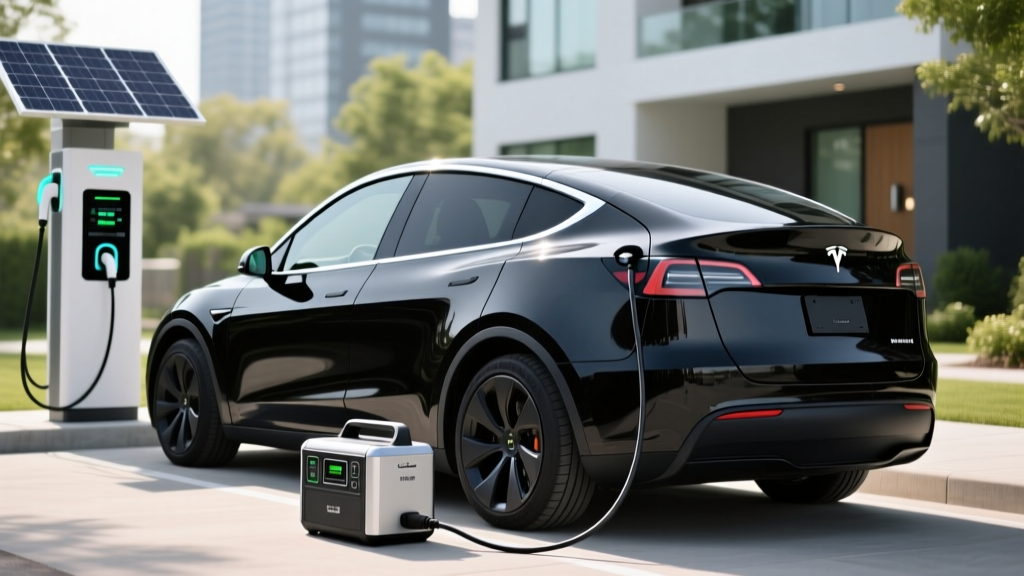
For home charging, a Level 2 wall connector on a 60-amp circuit delivers 11.5 kW, adding roughly 44 miles per hour. An overnight session (8 hours) replenishes about 350 miles — more than enough to refill the battery completely. Installation costs for a 240V/60A circuit typically run $800–$2,000 depending on panel proximity and local permitting. Always consult a licensed electrician for final specs.
Tax Credits, Pricing, and What You'll Actually Pay
| Model / Trim | Base MSRP | §30D Credit Eligible? | Effective Price (after credit) |
|---|---|---|---|
| Model 3 RWD | $38,990 | Yes (if income/sourcing met) | ~$31,490 |
| Model 3 Long Range AWD | $42,490 | Yes (if income/sourcing met) | ~$34,990 |
| Model Y Long Range AWD | $44,990 | Yes (if income/sourcing met) | ~$37,490 |
| Model Y Performance | $51,490 | Yes (if income/sourcing met) | ~$43,990 |
| Model X Long Range | $79,990 | No (exceeds $80K SUV cap) | $79,990 |
The federal §30D Clean Vehicle Credit offers up to $7,500, but eligibility is layered. Key requirements per the IRS:
- MSRP caps: Vans/SUVs/pickups must be ≤$80,000; sedans ≤$55,000. All current Model 3 and Model Y trims qualify; Model X does not.
- Buyer income limits: Modified AGI ≤$150K (single), ≤$225K (head of household), ≤$300K (joint).
- Battery sourcing: A percentage of critical minerals and battery components must be sourced from the U.S. or free-trade-agreement partners. Tesla has shifted significant supply chain to comply, but the exact credit amount ($3,750 vs. $7,500) can vary by production batch. Verify at purchase.
- Point-of-sale transfer: As of 2024+, buyers can transfer the credit to the dealer for an immediate price reduction — no need to wait for tax filing.
Tax rules change. Consult a tax professional and check the IRS's official seller reports before committing.
Interior, Tech, and the Tesla Difference
The Juniper Model Y interior is markedly improved over pre-2025 models. The cabin is quieter (acoustic glass all around), the rear seat is more comfortable with a slight recline, and the 15.4-inch center touchscreen handles everything — navigation, media, climate, and vehicle settings — with zero physical buttons. Love it or hate it, the minimalist approach is now executed with better materials and tighter build quality.
Standout tech:
- Autopilot (standard): SAE Level 2 adaptive cruise + lane centering. Requires hands on wheel and full driver attention.
- FSD (Supervised) ($8,000 option or $99/mo): Level 2 city-street navigation. Despite the name, this is not autonomous driving — you remain the driver at all times.
- Sentry Mode: 360° camera-based security recording while parked.
- Over-the-air updates: Continuous feature additions and refinements post-purchase.
- Heat pump: Standard, improving cold-weather range and cabin heating efficiency.
Autopilot and FSD (Supervised) are SAE Level 2 systems. They assist with steering, acceleration, and braking — but the driver must remain fully engaged, monitor the road, and be prepared to take over instantly. These are not self-driving systems. Only Level 4 robotaxi services (Waymo, Zoox) operate without a human driver in defined areas.
Notable drawbacks:
- No physical buttons for climate or volume — everything routes through the touchscreen or voice commands.
- Rear visibility is limited; the digital rearview mirror option ($500) is nearly essential.
- No Apple CarPlay or Android Auto — Tesla's native infotainment only.
- Service center wait times in high-density metro areas can stretch to 2–4 weeks for non-critical repairs.
How the Model Y Stacks Up Against Competitors
| Attribute | Tesla Model Y LR | Hyundai Ioniq 5 LR | Ford Mustang Mach-E ER |
|---|---|---|---|
| EPA Range | 320 mi | 305 mi | 312 mi |
| Battery | ~75 kWh NMC | 84 kWh NMC | 91 kWh NMC |
| Max DCFC | 250 kW | 240 kW | 150 kW |
| 10-80% Time | ~25 min | ~18 min | ~41 min |
| 0-60 mph | 4.8 sec | 5.1 sec | 5.6 sec |
| Cargo (seats up) | 30.2 cu ft | 27.2 cu ft | 29.7 cu ft |
| Base MSRP (AWD) | $44,990 | $47,400 | $45,995 |
| Charging Network | Supercharger (native) | NACS (SC access) | NACS (SC access) |
- Best-in-class Supercharger network reliability
- Lowest MSRP in the segment for AWD
- Strong efficiency (27 kWh/100mi)
- Largest cargo area among peers
- Proven OTA update track record
- No CarPlay/Android Auto
- Minimalist interior polarizes buyers
- Service center capacity lags demand
- Slower 10-80% charge vs Ioniq 5's 800V architecture
- Build quality improved but still inconsistent panel gaps reported
Who Should Buy the Tesla Model Y?
Choose the Model Y if:
- You road-trip frequently and value the Supercharger network's reliability and density.
- You want the most cargo space in a midsize electric SUV under $50K.
- You prefer a tech-forward, minimalist cabin and are comfortable with touchscreen-only controls.
- You qualify for the full §30D credit, bringing the effective price under $38K.
- You prioritize the fastest DC charging — Hyundai/Kia's 800V platform hits 10-80% in ~18 minutes.
- You need Apple CarPlay or physical buttons for climate and audio.
- You live far from a Tesla Service Center and need dealer-based maintenance convenience.
Model 3 and Model X: Where They Fit in Tesla's Beds
Model 3 (Highland/Juniper refresh): Starting at $38,990 for the RWD trim with 272 miles EPA range, the Model 3 is Tesla's entry point. The Long Range AWD ($42,490, 341 miles EPA) is arguably the best value sedan in the EV market. It's lower, lighter, and slightly more efficient than the Model Y — ideal for commuters and couples without large cargo needs. The same 250 kW DCFC and 11.5 kW Level 2 rates apply.
Model X: At $79,990 base, the Model X exceeds the §30D MSRP cap for SUVs ($80,000 limit — the Long Range just barely qualifies, but optioned models may not). Its 335-mile EPA range, falcon-wing doors, and optional third row make it a niche family hauler. However, the Rivian R1S and Kia EV9 offer three rows at significantly lower prices with full tax credit eligibility. The Model X's 250 kW charging and 348 hp (Long Range) are solid but not segment-leading at this price point.
Frequently Asked Questions
What is the real-world range of the Tesla Model Y?
The EPA rates the 2026 Model Y Long Range AWD at 320 miles. In real-world highway driving at 70-75 mph, expect 265–285 miles. In cold weather (below 32°F), range can drop to 220–250 miles even with the standard heat pump. City driving with regenerative braking can approach or slightly exceed the EPA estimate.
How fast does the Tesla Model Y charge?
On a Tesla Supercharger V3/V4, the Model Y peaks at 250 kW and charges from 10–80% in approximately 25 minutes. On a home Level 2 charger (11.5 kW / 48A), it adds about 44 miles per hour, fully recharging overnight. Using non-Tesla DCFC networks via the included NACS-to-CCS adapter caps at roughly 150 kW.
How much does a Tesla cost after the federal tax credit?
If you meet all §30D requirements (income ≤$300K joint, MSRP under cap, battery sourcing compliance), the Model Y Long Range drops from $44,990 to approximately $37,490 after the $7,500 credit. The Model 3 RWD can fall to ~$31,490. Credits can now be transferred at point of sale for an immediate discount. Always verify current eligibility with your tax professional and the IRS Clean Vehicle Credit page.
Is the Tesla Model Y worth buying vs. the Hyundai Ioniq 5 or Ford Mach-E?
The Model Y wins on price (lowest AWD MSRP), cargo space (30.2 cu ft), and charging network reliability. The Ioniq 5 charges faster (10-80% in ~18 min on 800V architecture) and offers CarPlay. The Mach-E provides a more traditional interior layout. For road-trippers prioritizing charging infrastructure, the Model Y's Supercharger advantage is significant. For city commuters who rarely use DCFC, the Ioniq 5 or Mach-E may offer better daily ergonomics.
Does the Tesla Model Y qualify for the federal EV tax credit?
Yes — as of 2026, the Model Y qualifies for up to $7,500 under §30D, provided the buyer meets income thresholds (≤$150K single / ≤$300K joint), the vehicle MSRP is under $80,000 (SUV cap), and battery critical-mineral/component sourcing requirements are met. Tesla's supply chain has largely adapted, but the exact credit split ($3,750 vs. $7,500) can vary. Confirm at point of purchase. The Model X may or may not qualify depending on final MSRP with options.
What is Tesla's battery warranty?
Tesla covers the Model Y and Model 3 Long Range battery and drive unit for 8 years or 120,000 miles (whichever comes first), with a minimum 70% capacity retention guarantee. The base Model 3 RWD (LFP battery) is covered for 8 years or 100,000 miles. If capacity drops below 70% within the warranty period, Tesla will repair or replace the battery to restore it above that threshold. Out-of-warranty battery replacement costs are estimated at $12,000–$16,000 depending on pack size and labor.
Sources: fueleconomy.gov (EPA range and efficiency data), irs.gov (§30D credit rules), Tesla.com official specifications.