The Short Answer: Tesla V2L Availability in 2026
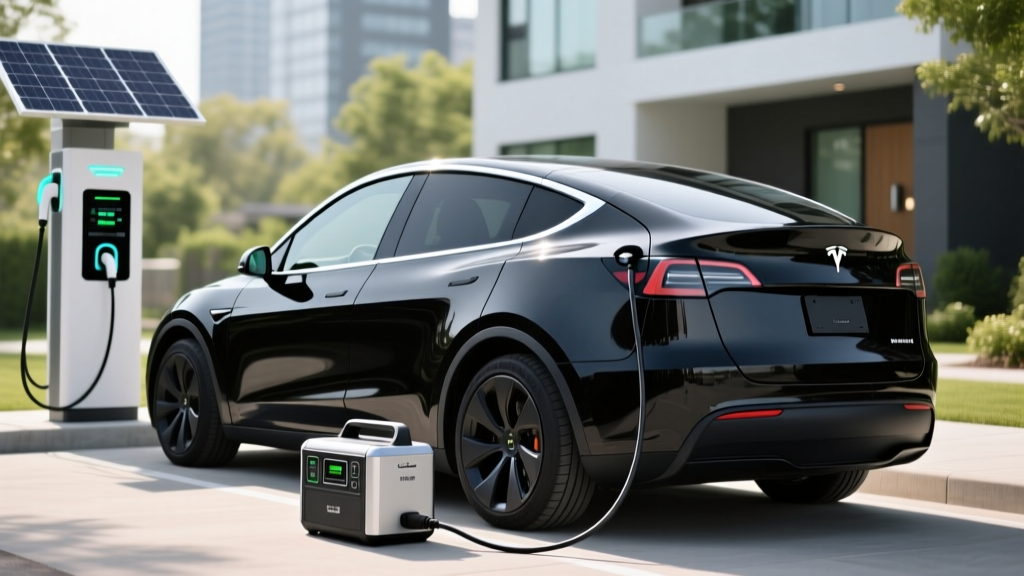
If you've been searching for "Tesla V2L" hoping to power your tailgate, run a jobsite, or keep the fridge running during an outage, here's where things stand for the 2026 model year: Tesla offers vehicle-to-load (V2L) capability exclusively on the Cybertruck, branded as Powershare. The Model 3, Model Y, Model S, and Model X do not have V2L, vehicle-to-home (V2H), or vehicle-to-grid (V2G) functionality as of early 2026.
This is a meaningful gap in Tesla's lineup. Competitors like the Hyundai Ioniq 5, Ford F-150 Lightning, and Chevrolet Silverado EV all offer V2L or bidirectional charging across multiple models. Tesla's approach has been cautious — Powershare launched with the Cybertruck in late 2023, and the company has been slow to expand the feature fleet-wide.
Below, we break down exactly what Tesla Powershare can do, the Cybertruck specs that matter for buyers considering it as a mobile power source, and how it stacks up against V2L-equipped competitors.
What Is Tesla Powershare (V2L)?
Tesla Powershare is the company's name for bidirectional power delivery. It comes in two flavors:
- Powershare Vehicle-to-Load (V2L): Standard on all Cybertruck trims. Provides up to 9.6 kW of continuous power through two 120V/20A outlets in the truck bed and one 240V/40A NEMA 14-50 outlet. You can plug in power tools, appliances, camping gear, or medical equipment directly.
- Powershare Vehicle-to-Home (V2H): Available as an add-on with the optional Wall Connector with Powershare (approximately $1,200 for the bidirectional wall unit, plus installation). This allows the Cybertruck to back up your home's electrical panel during an outage — up to 9.6 kW, enough to run essential circuits for days depending on battery state of charge.
For context, 9.6 kW is roughly equivalent to running a central air conditioner, a refrigerator, several lights, a microwave, and a TV simultaneously. It's comparable to a mid-range home standby generator but without the fuel cost, noise, or emissions at the point of use.
| Spec | Value |
|---|---|
| EPA Range | 340 miles (AWD, 35" tires) |
| Battery Capacity (usable) | ~123 kWh (estimated, NMC chemistry) |
| Max DC Fast Charge | 250 kW peak (V3 Supercharger) |
| 10–80% DC Fast Charge | ~28 minutes |
| Level 2 Charge Rate | 11.5 kW (44 mi/hr on Wall Connector) |
| 0–60 mph | 4.1 seconds (AWD) |
| Horsepower | 600 hp (AWD dual-motor) |
| Drivetrain | Dual-motor AWD |
| Towing Capacity | 11,000 lbs |
| V2L Output (Powershare) | 9.6 kW max (120V & 240V) |
| MPGe (combined) | 70 MPGe |
| Efficiency | 48 kWh/100 mi |
| Cargo Bed Volume | 74 cu ft (bed) + 7 cu ft (frunk) |
| Rear Legroom | 38.2 inches |
| Battery/Drive Unit Warranty | 8 years / 120,000 miles |
| Base MSRP (AWD) | $79,990 |
| Cyberbeast MSRP | $99,990 |
Cybertruck Range and Efficiency: Real-World Expectations
EPA Estimated Range: 340 miles (AWD, 35" all-terrain tires)
Real-World Highway (70 mph): ~265–285 miles
Real-World Cold Weather (30°F): ~230–260 miles
With Powershare V2L Active: Range decreases proportionally to power draw
The Cybertruck's stainless-steel exoskeleton and angular design create substantial aerodynamic drag, which hits efficiency hard at highway speeds. In real-world highway testing at 70 mph, expect roughly 265–285 miles before needing a charge — well below the 340-mile EPA sticker. The EPA cycle includes significant city and low-speed driving where regenerative braking recovers energy and aero drag is lower.
Cold weather compounds the loss. The Cybertruck's large battery (roughly 123 kWh usable) requires significant energy for thermal preconditioning, and cabin heating in an all-steel body without a heat pump (Tesla uses resistive heating in the Cybertruck) further reduces range. At 30°F on a mixed highway/city route, 230–260 miles is a realistic expectation.
Efficiency at 48 kWh/100 miles (70 MPGe combined, per fueleconomy.gov) makes the Cybertruck one of the least efficient EVs on the market. For comparison, the Rivian R1T achieves 73 MPGe combined and the Ford F-150 Lightning lands at 70 MPGe combined with the extended-range battery. This matters when you're paying for electricity at DC fast chargers — at $0.40/kWh, filling the Cybertruck's 123 kWh battery costs roughly $49.
Charging Speed: Supercharger Network Advantage
| Charging Level | Power (kW) | Miles Added per Hour | Notes |
|---|---|---|---|
| Level 1 (120V household) | 1.4 kW | ~3 mi/hr | Emergency/trickle only |
| Level 2 (240V Wall Connector) | 11.5 kW | ~44 mi/hr | Full overnight charge in ~11 hrs |
| DC Fast (V3 Supercharger) | 250 kW peak | ~180 mi in 15 min | Peak rate sustained to ~40% SoC |
| DC Fast (V4 Supercharger) | 250 kW (current) | ~180 mi in 15 min | Cable is lighter; same peak rate |
The Cybertruck charges at up to 250 kW on V3 and V4 Superchargers. In practice, the truck sustains peak charge rate from roughly 10% to 40% state of charge, then tapers progressively. A 10–80% session takes approximately 28 minutes, which is competitive for a truck with a 123 kWh battery but slower than lighter EVs with smaller packs.
The real advantage is network access. Tesla's Supercharger network — now the largest and most reliable in North America — gives Cybertruck owners a meaningful edge on road trips. With NACS as the de facto standard (and mandated for all new EVs by 2025+), the Cybertruck uses the native Tesla connector without adapters.
For home charging, the 11.5 kW Level 2 rate on a Tesla Wall Connector (48-amp circuit, requiring a 60-amp breaker) replenishes roughly 44 miles per hour. A full 0–100% charge takes about 11 hours. If your home electrical panel supports it, this is sufficient for daily use and overnight top-ups.
How Powershare V2L Actually Works in Practice
Powershare isn't just a marketing label — it's genuinely useful hardware. Here's what you can realistically do with 9.6 kW of V2L output:
Jobsite use: Run a table saw (1.8 kW), a reciprocating saw (1.2 kW), and work lights (0.5 kW) simultaneously — total draw ~3.5 kW. The Cybertruck's 123 kWh battery could sustain this for roughly 30+ hours before hitting a 20% reserve buffer.
Camping/tailgating: Power an electric grill (1.5 kW), a portable fridge (0.1 kW), LED lights, and a Bluetooth speaker for an entire weekend without meaningful range loss.
Home backup (V2H with Wall Connector): During a grid outage, the Cybertruck can power essential home circuits — refrigerator, lights, Wi-Fi router, a window AC unit, and phone chargers — at up to 9.6 kW. At a conservative 4 kW average draw, the battery provides roughly 25+ hours of backup before you'd need to drive to a Supercharger (which may or may not have grid power during a widespread outage).
Important limitation: Powershare does not currently support vehicle-to-grid (V2G) energy selling back to your utility for time-of-use arbitrage. This is a feature some utilities are piloting with Ford and GM vehicles, but Tesla has not announced V2G capability.
Pricing, Trims, and Federal Tax Credit Eligibility
| Trim | MSRP | Federal §30D Credit | Effective Price (if eligible) |
|---|---|---|---|
| AWD (Dual-Motor) | $79,990 | $0 — exceeds MSRP cap | $79,990 |
| Cyberbeast (Tri-Motor) | $99,990 | $0 — exceeds MSRP cap | $99,990 |
Here's the tax-credit reality check: the Cybertruck does not qualify for the $7,500 federal EV tax credit under IRS §30D. The law caps eligible trucks at an $80,000 MSRP (per IRS.gov). The AWD trim at $79,990 technically sits at the threshold, but destination charges and any options push it above the cap. The Cyberbeast at $99,990 is well over.
Even if the AWD trim's base MSRP were deemed eligible, buyers must also meet adjusted gross income limits ($150,000 single / $300,000 joint) and the vehicle must satisfy critical-mineral and battery-component sourcing requirements that have tightened significantly since 2024. As of 2026, very few vehicles above $60,000 clear all sourcing hurdles.
State incentives may still apply. States like California, Colorado, and New York offer their own EV rebates that may not have the same MSRP caps, but these vary by jurisdiction — check your state's energy office for current programs.
Cybertruck vs. V2L-Equipped Competitors
| Vehicle | V2L/V2H | Max Output | EPA Range | Base MSRP | §30D Eligible? |
|---|---|---|---|---|---|
| Tesla Cybertruck AWD | V2L + V2H (optional) | 9.6 kW | 340 mi | $79,990 | No (MSRP cap) |
| Ford F-150 Lightning (Ext. Range) | V2L + V2H (Pro Power Onboard + Home Integration) | 9.6 kW | 320 mi | $69,995 | Likely (under cap, sourcing varies) |
| Chevrolet Silverado EV 4WT | V2L (V2H announced) | 10.2 kW | 440 mi | $55,900 | Yes (under cap, sourcing confirmed) |
| Rivian R1T (Dual-Motor Max) | V2L (bed outlets only) | 3.5 kW | 352 mi | $87,000 | No (MSRP cap) |
| Hyundai Ioniq 5 (V2L adapter) | V2L only (no V2H) | 3.6 kW | 305 mi | $45,500 | Yes (under cap, sourcing varies) |
The Ford F-150 Lightning remains the strongest Cybertruck alternative for buyers who want V2L/V2H with tax-credit eligibility. Its Pro Power Onboard system delivers the same 9.6 kW, the Home Integration System enables whole-home backup, and the extended-range model undercuts the Cybertruck by roughly $10,000 while remaining under the §30D MSRP cap for trucks.
The Chevrolet Silverado EV offers the highest V2L output (10.2 kW) and the longest range (440 miles on the Max Range pack), and its work-truck trims are tax-credit eligible — though the interior and tech are less polished than the Cybertruck's.
If your primary goal is portable V2L for camping or light jobsite use and you don't need home backup, the Hyundai Ioniq 5's 3.6 kW V2L adapter (included with SEL trim and above) is the most affordable entry point at under $46,000 with likely tax-credit eligibility.
Cybertruck Powershare Pros
- Highest V2L output in the Tesla fleet (9.6 kW)
- V2H home backup capability with optional Wall Connector
- Massive 123 kWh battery sustains power delivery for days
- Supercharger network access for road-trip charging reliability
- Stainless-steel body is dent- and corrosion-resistant
- 11,000-lb towing capacity
- Distinctive design and strong resale demand
Cybertruck Powershare Cons
- No federal tax credit — exceeds $80K MSRP cap
- Poor highway efficiency (48 kWh/100 mi) means high charging costs
- Real-world range significantly below EPA 340 mi on highway
- No V2L on any other Tesla model (Model Y, 3, S, X)
- V2H requires $1,200+ bidirectional Wall Connector plus installation
- Polarizing design and panel-gap quality concerns
- No V2G capability for utility energy arbitrage
Who Should Buy the Cybertruck for V2L?
The Cybertruck with Powershare makes sense for a narrow but enthusiastic buyer profile:
Best fit: Truck owners who need both serious utility (towing, payload, jobsite power) and want a mobile power station. If you regularly work at sites without grid power, camp off-grid, or live in an area with frequent outages and want home backup without a gas generator, the Cybertruck's 9.6 kW / 123 kWh combination is genuinely compelling.
Also consider if: You're already deep in the Tesla ecosystem (Solar Roof, Powerwall, Wall Connector) and want Powershare V2H to integrate with your existing setup. Tesla's app-based control of energy flow is the most seamless in the industry.
Look elsewhere if: You primarily want V2L for occasional camping or tailgating. The Hyundai Ioniq 5 or Kia EV6 gives you 3.6 kW of portable power at half the price with tax-credit eligibility. If you need a full-size truck with V2L and want the $7,500 federal credit, the F-150 Lightning or Silverado EV are more practical financial choices.
Will Tesla Add V2L to Model Y or Model 3?
As of early 2026, Tesla has not announced V2L for any vehicle outside the Cybertruck. The refreshed Model 3 Highland and the Juniper-refreshed Model Y (introduced for the 2025 model year) both ship without bidirectional hardware. Industry analysts have speculated that the next-generation Tesla platform (the more affordable compact SUV expected in late 2026 or 2027) could include bidirectional capability, but nothing has been confirmed.
The hardware requirement is significant: bidirectional charging needs an onboard inverter capable of converting the battery's DC output to clean 120V/240V AC, plus safety interlocks and UL certification. Adding this to existing Model 3/Y architecture would require a platform revision, not a software update.
Frequently Asked Questions
Does the Tesla Model Y have V2L?
No. As of 2026, no Tesla Model Y trim — including the Juniper refresh — supports V2L, V2H, or V2G. Only the Cybertruck offers bidirectional power via Powershare.
Can I use Cybertruck Powershare while the truck is parked and off?
Yes. Powershare operates with the vehicle parked and does not require the truck to be "on" in the traditional sense. You activate it through the touchscreen or the Tesla app, and it delivers power until the battery reaches a user-set reserve threshold (default 20% SoC).
How long can the Cybertruck power my home during an outage?
At a moderate 4 kW average draw (refrigerator, lights, router, one window AC), the 123 kWh battery provides roughly 25 hours of backup before hitting the 20% reserve. At lighter loads (2 kW — essentials only), you could stretch to 45+ hours. Actual duration depends on which circuits you back up and seasonal loads.
Is Powershare included or is it a paid add-on?
V2L (the bed outlets) is standard on every Cybertruck. V2H requires purchasing the Wall Connector with Powershare (~$1,200) plus professional installation by a licensed electrician, which typically runs $500–$2,000 depending on your panel capacity and conduit run.
Does the Cybertruck qualify for any EV incentives in 2026?
It does not qualify for the $7,500 federal §30D credit due to the $80,000 MSRP cap for trucks. Some state incentives (California's Clean Fuel Reward, Colorado's EV tax credit) may still apply — check your state's current program rules, as these change frequently.
What's the real-world range when using Powershare heavily?
Every kWh you send to an appliance is a kWh you can't drive. Running a 2 kW load for 10 hours consumes 20 kWh — roughly 42 miles of range at the Cybertruck's 48 kWh/100 mi efficiency. For heavy jobsite use (5 kW for 8 hours = 40 kWh), you'd sacrifice about 83 miles of range.
Sources: EPA fueleconomy.gov, IRS §30D Clean Vehicle Credits, Tesla Cybertruck specifications.