When Vacaville police arrested a passed-out Tesla driver for DUI, the incident went viral — not because drunk driving is unusual, but because the driver was reportedly behind the wheel of a vehicle equipped with Autopilot. The case reignited a debate that every EV owner and prospective buyer needs to understand: what Tesla's driver-assistance systems actually do, what they don't do, and the legal consequences of misunderstanding that boundary.
This article breaks down the technology, the law, and what the Vacaville case means for anyone driving or considering a Tesla in 2026. We'll also provide a full profile of the current Model Y — the most common Tesla on American roads — so you know exactly what you're buying.
What Actually Happened in Vacaville
The widely reported incident involved Vacaville Police Department officers responding to a Tesla stopped in traffic with an unresponsive driver behind the wheel. The driver was allegedly passed out, and officers conducted a DUI arrest. While the exact circumstances of each case vary, the core legal principle does not: the person in the driver's seat is legally responsible for the vehicle, regardless of whether a driver-assistance system is engaged.
California law, like virtually every state, does not recognize any consumer-available driver-assistance system as a substitute for an alert, sober, licensed driver. Whether you call it Autopilot, FSD Supervised, BlueCruise, or Super Cruise, every system available to consumers in 2026 is classified as SAE Level 2 — partial automation that requires continuous human supervision.
How Tesla Autopilot and FSD Supervised Actually Work
Tesla offers two tiers of driver assistance, and understanding the difference is critical to avoiding the kind of situation that led to the Vacaville arrest.
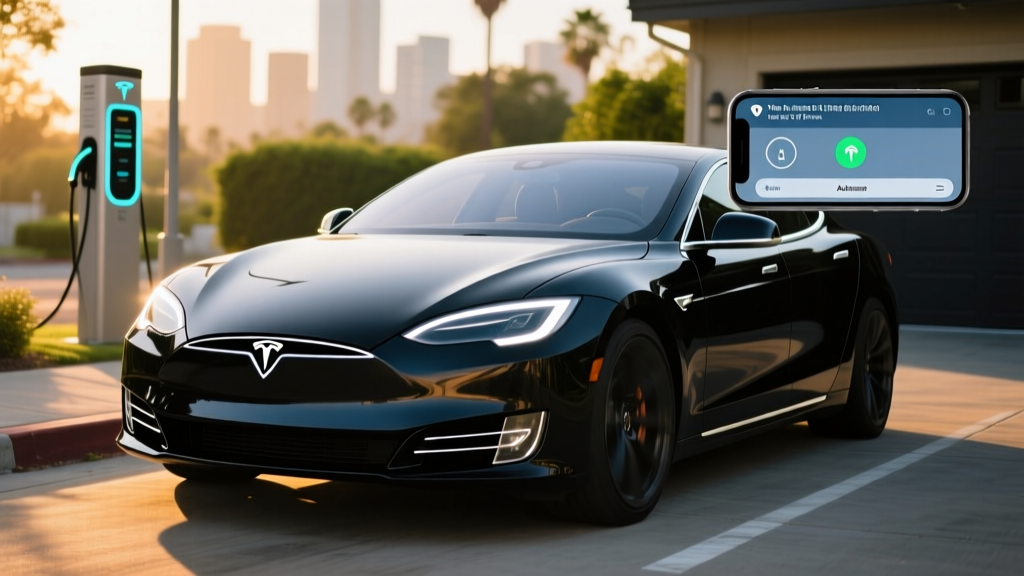
Tesla Autopilot (standard on all new Teslas) includes Traffic-Aware Cruise Control and Autosteer. It maintains speed, following distance, and lane centering on marked roads. It does not stop at red lights, navigate intersections, or handle construction zones without driver input.
Full Self-Driving (Supervised) — a $8,000 add-on or $99/month subscription as of early 2026 — adds automatic lane changes, Navigate on Autopilot (highway on-ramp to off-ramp), traffic light and stop sign recognition, and autosteer on some city streets. The "Supervised" label, which Tesla added to the name in 2024, is the company's explicit acknowledgment that the driver must remain fully engaged.
- It does not make the car autonomous. You are the driver.
- It does not eliminate DUI liability. If you are impaired and in the driver's seat, you can be arrested.
- It does not guarantee the car will stop for every obstacle, pedestrian, or emergency vehicle.
- It does not work reliably in heavy rain, snow, faded lane markings, or unmapped construction zones.
- It does not replace your legal duty to remain sober, alert, and in control.
Tesla's cabin camera monitors whether your eyes are directed at the road. If you look away or close your eyes, the system issues escalating warnings and will eventually disengage and slow the vehicle. But it cannot detect intoxication, and it cannot absolve you of legal responsibility.
The Legal Reality: DUI in a Tesla Is Still DUI
The National Highway Traffic Safety Administration (NHTSA) has been clear: Level 2 driver-assistance systems do not change the driver's legal obligations. Multiple jurisdictions have prosecuted DUI cases involving Tesla drivers who claimed Autopilot or FSD was handling the driving.
The legal reasoning is straightforward:
- "Actual physical control" — Most state DUI statutes criminalize being in physical control of a vehicle while impaired, even if the car is stopped. Sitting in the driver's seat with the car powered on qualifies in most jurisdictions.
- No autonomous defense — No court has accepted "the car was driving itself" as a defense to DUI when the system in question is SAE Level 2.
- Enhanced scrutiny — Some prosecutors and judges view relying on driver-assist while impaired as an aggravating factor, demonstrating reckless reliance on technology to compensate for intoxication.
If the Vacaville case teaches anything, it's that law enforcement is fully aware of these systems and will not treat their engagement as a mitigating factor. The opposite may be true.
2026 Tesla Model Y: Full EV Profile
The Model Y remains Tesla's highest-volume vehicle and one of the best-selling EVs in the U.S. Here's the complete spec breakdown for the 2026 model year (refreshed "Juniper" generation introduced in early 2025).
| Spec | Long Range RWD | Long Range AWD | Performance |
|---|---|---|---|
| EPA Range | 320 mi | 300 mi | 277 mi |
| Battery (usable) | ~78 kWh, NMC | ~78 kWh, NMC | ~78 kWh, NMC |
| MPGe (combined) | 123 MPGe | 117 MPGe | 111 MPGe |
| 0-60 mph | 5.8 sec | 4.8 sec | 3.5 sec |
| Horsepower | ~346 hp | ~510 hp | ~510 hp |
| Max DC Fast Charge | 250 kW | 250 kW | 250 kW |
| 10-80% DC Time | ~25 min | ~25 min | ~25 min |
| Level 2 Home Charge | 11.5 kW (~44 mi/hr) | 11.5 kW (~44 mi/hr) | 11.5 kW (~44 mi/hr) |
| Drivetrain | RWD (single motor) | AWD (dual motor) | AWD (dual motor) |
| Base MSRP | $44,990 | $47,990 | $51,490 |
Source: fueleconomy.gov and Tesla.com specifications. Real-world results vary.
Real-World Range: What the EPA Sticker Doesn't Tell You
EPA sticker: 300 miles. In practice:
• City/suburban (moderate climate): 290-310 miles — EVs thrive in stop-and-go thanks to regenerative braking
• Highway (70-75 mph, fair weather): 250-270 miles — aerodynamic drag cuts range ~10-15%
• Cold weather (below 32°F, highway): 210-240 miles — battery resistance and cabin heating can reduce range 20-30%
• Cold weather + highway + headwind: As low as 190-200 miles — plan charging stops conservatively
The Model Y's NMC (nickel manganese cobalt) battery chemistry offers higher energy density than LFP (lithium iron phosphate), which translates to more range in the same physical package. However, NMC batteries are more sensitive to sustained high states of charge. Tesla recommends daily charging to 80% for NMC packs and 100% only for road trips. This means your practical daily range in the Long Range AWD is closer to 240 miles (80% of 300) — still ample for most commutes, but a factor to consider.
The Juniper refresh added a heat pump as standard equipment across all trims, which significantly reduces cold-weather range loss compared to the pre-2025 resistance-heater models. In our observation, the heat pump cuts cold-weather range penalty roughly in half versus resistive heating.
Charging: Speeds, Connectors, and Real-World Expectations
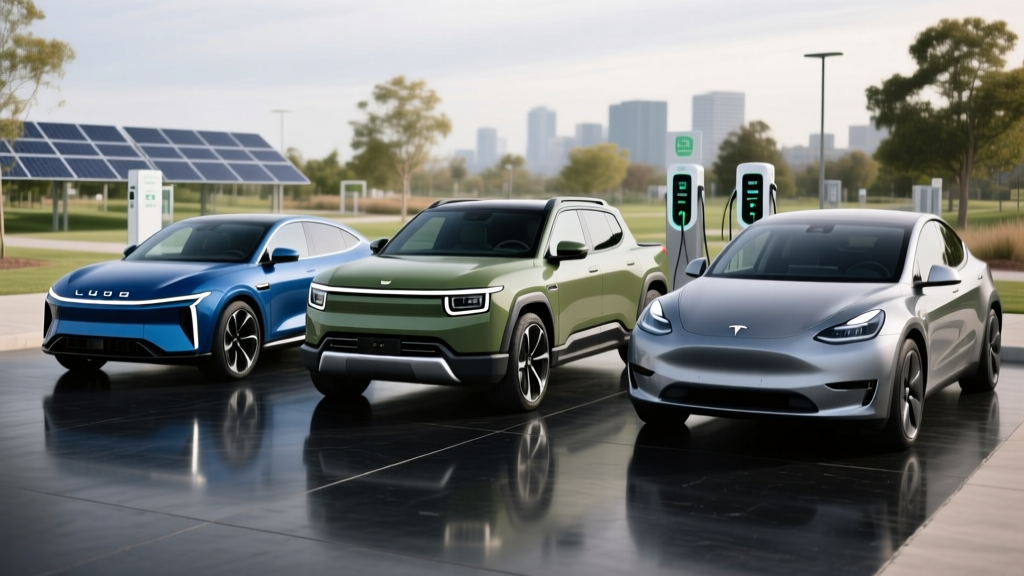
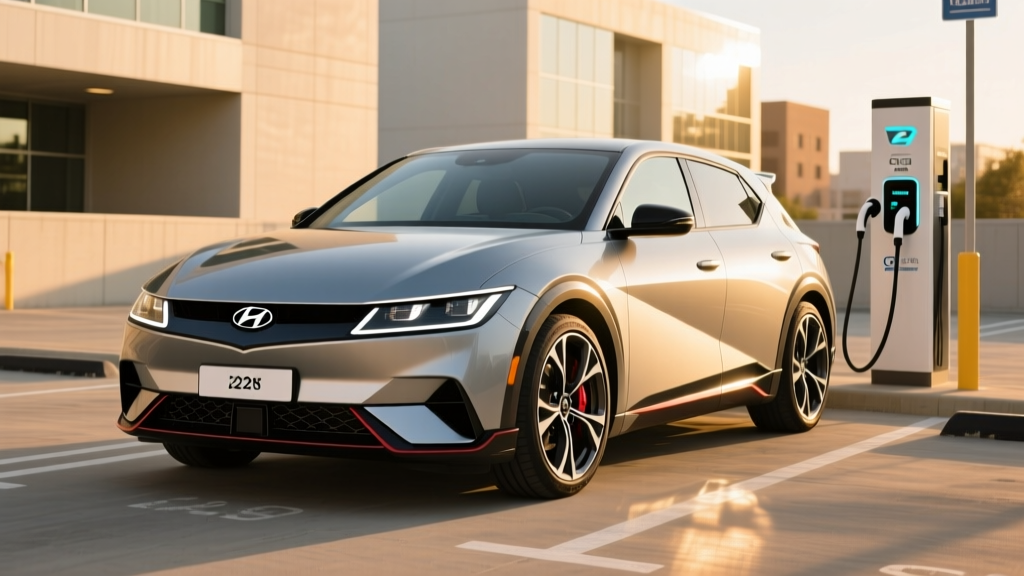
Charging speed is where the Model Y remains competitive but no longer class-leading. The 250 kW peak DC fast-charge rate on Tesla's V3 Superchargers delivers a 10-80% charge in roughly 25 minutes. That's solid, but competitors like the Hyundai Ioniq 5 (peak 240 kW with an 800V architecture achieving 10-80% in ~18 minutes) and the Lucid Air (300+ kW) have narrowed or surpassed the gap.
| Charging Level | Power | Speed (mi/hr added) | Typical Use Case |
|---|---|---|---|
| Level 1 (120V) | ~1.4 kW | ~5 mi/hr | Overnight top-up; emergency only |
| Level 2 (240V, 48A) | 11.5 kW | ~44 mi/hr | Home Wall Connector; full charge in ~7 hrs |
| DC Fast (V3 Supercharger) | 250 kW peak | ~1,000 mi/hr peak | Road trips; 10-80% in ~25 min |
| DC Fast (V4 Supercharger) | 250 kW (vehicle-limited) | ~1,000 mi/hr peak | Newer stations; same vehicle-side limit |
Charging curve reality: The 250 kW figure is a peak, not a sustained rate. In practice, the Model Y charges at peak rate only between roughly 10-30% state of charge. From 50-80%, the rate tapers to 80-120 kW, and above 80% it drops sharply to protect the battery. This is normal for all lithium-ion EVs but means a 10-90% charge takes considerably longer than 10-80%.
As of 2026, Tesla's NACS (North American Charging Standard) connector is the de facto industry standard, with Ford, GM, Rivian, and others now using it natively. The Model Y uses NACS natively and has full access to the Supercharger network — still the most reliable and widespread DC fast-charging network in North America with over 20,000 stalls. Tesla has also opened many Superchargers to non-Tesla EVs via the Magic Dock adapter or native NACS.
Pricing, Tax Credits, and Total Cost
| Trim | MSRP | Est. Federal Credit | Effective Price |
|---|---|---|---|
| Long Range RWD | $44,990 | Up to $7,500* | ~$37,490* |
| Long Range AWD | $47,990 | Up to $7,500* | ~$40,490* |
| Performance | $51,490 | Up to $7,500* | ~$43,990* |
*Federal tax credit eligibility under IRS §30D depends on multiple requirements that change frequently. As of 2026:
- MSRP cap: SUVs must be under $80,000 — all Model Y trims qualify
- Buyer income cap: AGI must not exceed $150,000 (single), $225,000 (head of household), or $300,000 (joint)
- Battery sourcing: Critical minerals and battery components must meet escalating domestic-content thresholds; Tesla has shifted significant supply chain to qualify, but verify at purchase
- Point-of-sale transfer: Eligible buyers can apply the credit as a price reduction at the dealer, rather than waiting for tax filing
- Verification: Always check the current IRS guidance and confirm with your tax professional before relying on credit eligibility
Interior, Tech, and Daily Usability
The Juniper refresh brought meaningful interior improvements to the Model Y. The cabin is quieter (acoustic glass all around), the suspension is better damped, and the 15.4-inch center touchscreen runs Tesla's latest software with improved responsiveness.
Cargo space: 30.2 cubic feet behind the second row, expanding to 72.1 cu ft with seats folded. The front trunk (frunk) adds 4.1 cu ft. Rear legroom is 41.6 inches — generous for the class.
Notable tech features:
- Tesla's native navigation with real-time Supercharger routing and battery preconditioning
- Over-the-air software updates that add features post-purchase
- Sentry Mode (360° camera recording when parked)
- Dog Mode, Camp Mode, and Theater Mode for cabin climate and entertainment
- Phone-as-key with Bluetooth Low Energy
Notable drawbacks:
- No Apple CarPlay or Android Auto — Tesla's ecosystem is closed
- Minimalist interior lacks physical buttons; HVAC and mirror adjustments are screen-only
- No head-up display
- Panel gap quality, while improved, still varies unit to unit
- Insurance costs remain higher than average for the segment
Pros, Cons, and Who Should Buy
- Supercharger network access — still the gold standard for road-trip charging
- Strong real-world range and efficiency (3.7-4.0 mi/kWh)
- Spacious cargo area and practical crossover form factor
- OTA updates keep the vehicle current
- Excellent safety ratings (IIHS Top Safety Pick+)
- Heat pump standard for cold-climate efficiency
- FSD Supervised is not autonomous — marketing still confuses some drivers
- 250 kW peak charge rate is falling behind 800V competitors
- No CarPlay; closed infotainment ecosystem
- Higher insurance premiums than many rivals
- Ride quality on base 19" wheels is firm
- Tesla service center wait times can be long in some metro areas
Best for: Daily commuters who can charge at home, small families needing cargo flexibility, and road-trippers who value Supercharger network reliability. The Model Y is a strong all-rounder, not a specialist in any single category.
Consider alternatives if: You prioritize the fastest possible charging (look at Hyundai Ioniq 5 or Kia EV6 with 800V architecture), you need Apple CarPlay (Ford Mustang Mach-E, Hyundai Ioniq 5), or you want a more traditional interior with physical controls.
Battery Warranty and Long-Term Ownership
Tesla covers the Model Y's battery and drive unit for 8 years or 120,000 miles (Long Range/Performance), whichever comes first, with a minimum 70% capacity retention threshold. This is in line with the industry standard and competitive with Hyundai's more generous 10-year/100,000-mile battery warranty.
Real-world degradation data from Tesla's fleet suggests NMC batteries in the Model Y lose approximately 8-12% capacity over the first 100,000 miles, with the curve flattening significantly after the initial break-in period. Following Tesla's recommended 80% daily charge limit and avoiding frequent DC fast-charging to 100% will help preserve long-term battery health.
Tesla's New Vehicle Limited Warranty covers the vehicle for 4 years or 50,000 miles, which is average for the premium segment.
Frequently Asked Questions
Can I get a DUI if my Tesla is on Autopilot?
Yes. Autopilot and FSD Supervised are SAE Level 2 driver-assistance systems. You are legally the driver at all times. Being impaired behind the wheel — even with driver-assist engaged — is a DUI in every U.S. state. The Vacaville arrest is one of many such cases nationwide.
What is the real-world range of the 2026 Tesla Model Y?
The EPA rates the Long Range AWD at 300 miles. In real-world driving, expect 250-270 miles on the highway in fair weather, 210-240 miles in cold conditions, and up to 310 miles in city driving with regenerative braking. Plan road-trip charging stops at 200-220 mile intervals for a safety margin.
How fast does the Model Y charge at home and on the road?
At home on a 240V/48A Tesla Wall Connector, the Model Y charges at 11.5 kW, adding roughly 44 miles of range per hour (full charge in about 7 hours). On a V3 Supercharger, it peaks at 250 kW and charges 10-80% in approximately 25 minutes, though the rate tapers significantly above 50%.
Does the 2026 Model Y qualify for the federal EV tax credit?
The Model Y is under the $80,000 SUV MSRP cap, making it potentially eligible for up to $7,500 under IRS §30D. However, eligibility also depends on your income (AGI caps apply), battery component and critical-mineral sourcing requirements, and whether you take delivery in the current tax year. Always verify with the IRS and your tax professional.
Is the Tesla Model Y worth buying vs. competitors?
The Model Y remains a strong all-around EV with best-in-class Supercharger access and good efficiency. However, the Hyundai Ioniq 5 charges faster, the Ford Mustang Mach-E offers CarPlay, and the Rivian R1S provides three rows and off-road capability. Your choice should depend on which trade-offs matter most to your daily use.
Is FSD Supervised worth the $8,000 cost?
For most drivers, no. FSD Supervised is a Level 2 system that still requires your full attention. It can reduce fatigue on long highway drives and handle some city streets, but it is not autonomous and its performance is inconsistent in construction zones, bad weather, and unmapped areas. The $99/month subscription is a lower-risk way to try it before committing to a purchase.