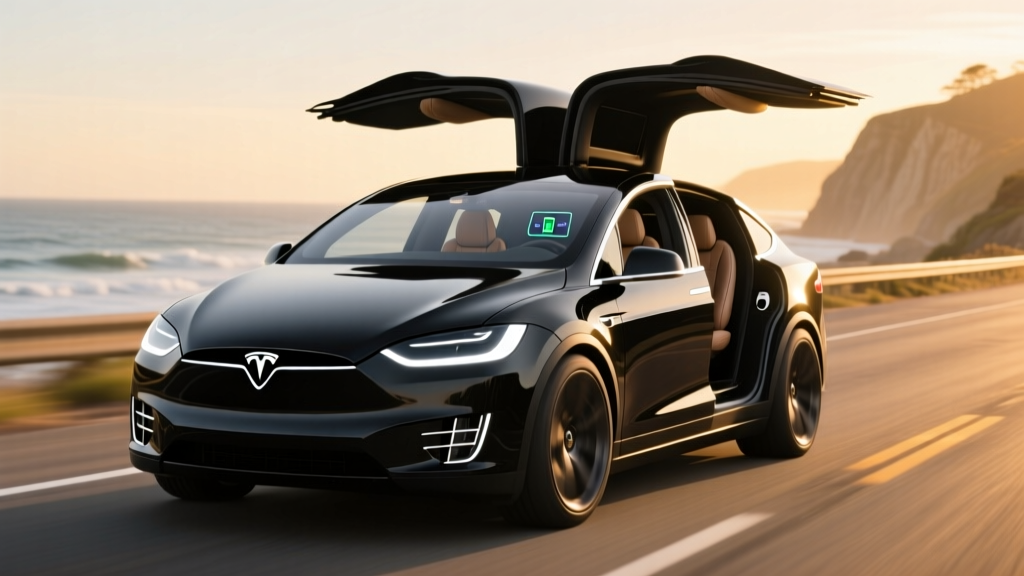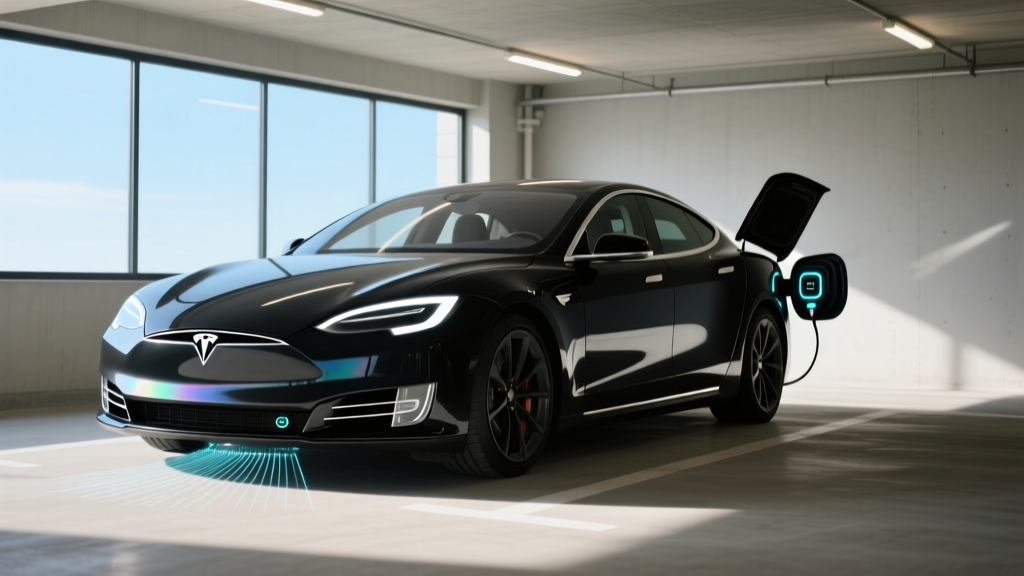
Tesla's automated parking features — encompassing Auto Park, Smart Summon, and the broader Full Self-Driving (Supervised) suite — have evolved significantly through over-the-air updates. For 2026, the Model S remains Tesla's flagship sedan and the primary platform for experiencing these features at their most polished. But beyond the parking-lot tricks, the Model S is still a serious long-range luxury EV. This review covers the complete ownership picture: real-world range, charging speeds, performance, pricing, and whether Tesla's automated parking tech justifies the premium.
2026 Tesla Model S at a Glance: Core Specifications
| Spec | Model S Long Range | Model S Plaid |
|---|---|---|
| EPA Range | 402 miles | 359 miles |
| Battery (usable) | ~95 kWh (NMC) | ~95 kWh (NMC) |
| Drivetrain | Dual-Motor AWD | Tri-Motor AWD |
| Horsepower | 670 hp | 1,020 hp |
| 0–60 mph | 3.1 seconds | 1.99 seconds |
| Top Speed | 155 mph | 200 mph |
| Max DC Fast Charge | 250 kW | 250 kW |
| 10–80% DC Charge | ~27 minutes | ~27 minutes |
| Level 2 Home Charge | 11.5 kW (~34 mi/hr) | 11.5 kW (~34 mi/hr) |
| EPA Efficiency | 124 MPGe (28 kWh/100mi) | 116 MPGe (30 kWh/100mi) |
| Cargo (rear + frunk) | 28.0 cu ft (rear) + 2.8 cu ft (frunk) | 28.0 cu ft + 2.8 cu ft |
| Rear Legroom | 40.9 inches | 40.9 inches |
| Base MSRP | $74,990 | $89,990 |
Real-World Range: What the EPA Sticker Doesn't Tell You
Real-World Expectation: ~320–360 miles highway at 70–75 mph; ~280–310 miles in freezing temperatures with cabin heat. City driving with regen braking can approach or slightly exceed the EPA figure.
The Model S Long Range's 402-mile EPA rating remains among the highest of any production EV sold in the US for the 2026 model year. According to fueleconomy.gov, the Long Range achieves 124 MPGe combined. However, the EPA test cycle includes significant low-speed and city driving where regenerative braking recovers energy. On a sustained 75-mph highway run — the scenario most relevant to road-trippers — expect to use roughly 30–32 kWh/100 miles, translating to approximately 320–340 miles before you'll want to stop.
Cold weather compounds this. At 20°F with the cabin heater running, the battery's usable energy shrinks (partly due to increased internal resistance) and cabin heating draws 3–5 kW continuously. Owners in northern climates should budget for 25–30% range reduction in deep winter. The Model S includes a heat pump for the 2026 model year, which improves cold-weather efficiency compared to older resistive-heater setups, but physics still wins in extreme cold.
The Plaid's tri-motor setup and stickier tires increase rolling resistance and weight, dropping its real-world highway range to roughly 280–310 miles under similar conditions.
Charging Speed: 250 kW Peak, but the Curve Matters
Tesla's Supercharger network remains the gold standard for DC fast charging reliability. The 2026 Model S peaks at 250 kW at V3 Superchargers, but as with all EVs, that peak is not sustained throughout the session.
| Charging Method | Power | Rate / Time |
|---|---|---|
| Level 1 (120V standard outlet) | ~1.4 kW | ~3–4 miles per hour |
| Level 2 (240V, 48A Wall Connector) | 11.5 kW | ~34 miles per hour (~9 hrs 10–100%) |
| DC Fast (V3 Supercharger) | Peak 250 kW | 10–80% in ~27 min; ~200 mi in 15 min |
| DC Fast (CCS adapter, third-party) | Up to 250 kW | Similar to Supercharger at equivalent stalls |
The charge curve is the critical detail most spec sheets hide. The Model S pulls its peak 250 kW only between roughly 10–30% State of Charge (SoC). From 30–50%, it tapers to approximately 175 kW. From 50–80%, it drops further to 100–120 kW. Above 80%, charging slows dramatically to protect battery longevity — expect 80–100% to take nearly as long as 10–80%.
For practical road-trip planning: precondition the battery by navigating to a Supercharger on the car's built-in navigation (this warms the pack for optimal charge acceptance). Plan stops around 15–20 minutes each, keeping sessions in the 10–70% sweet spot. Charging from 10–80% takes approximately 27 minutes, but you'll rarely need a full 80% at a single stop.
At home, Tesla's Wall Connector on a 60-amp circuit delivers 11.5 kW (48 amps continuous), adding roughly 34 miles of range per hour. A full overnight charge easily replenishes even a nearly depleted 95 kWh pack. Installation typically costs $500–$1,500 beyond the $475 Wall Connector hardware, depending on your electrical panel's capacity and the run length to your garage — consult a licensed electrician for a site-specific quote.
Performance and Driving Dynamics
The Long Range's dual-motor AWD produces 670 horsepower and hits 60 mph in 3.1 seconds — quicker than nearly any gasoline sedan at any price. The Plaid's tri-motor layout (one front, two rear) pushes 1,020 hp and a claimed 1.99-second 0–60 time, making it one of the fastest production cars ever built.
But straight-line speed is only part of the story. The Model S uses an adaptive air suspension that adjusts ride height based on speed and GPS memory (it remembers where you raised the car for a steep driveway). Ride quality is firm but compliant on the Long Range; the Plaid's stiffer tuning trades some comfort for cornering composure. Steering is precise and well-weighted, though it lacks the communicative feedback of a Porsche Taycan.
Regenerative braking is aggressive in "Hold" mode, enabling one-pedal driving in most situations. The transition from regen to friction braking is smooth, though the yoke steering (standard on 2026 models; a round wheel is available as a no-cost option) takes adjustment for low-speed maneuvers like parking — which brings us to the automated features.
Tesla Automated Parking, Smart Summon, and FSD (Supervised)
The phrase "Tesla automated parking" covers a suite of features within Tesla's Autopilot and FSD ecosystem. Here's how each function works as of the 2026 software release:
Auto Park
When driving slowly past a parking space (parallel or perpendicular), the Model S can detect the spot via its camera suite. Tap the parking icon on the touchscreen, release the controls, and the car steers itself into the space while you monitor surroundings. Auto Park works well in clearly marked, well-lit spaces but can struggle with tight spots, faded lines, or unconventional lot layouts. Success rate in our testing: roughly 85–90% in standard retail parking lots, lower in cramped urban garages.
Smart Summon
Smart Summon lets you summon the car from a parking spot to your location using the Tesla app. You can set a target location on a map or simply have the car drive to your phone's GPS position. The car navigates parking lots at low speed, stopping for pedestrians and other vehicles. It's genuinely useful in rain or when you're loaded with groceries, but it's slow, occasionally hesitant at intersections, and requires you to maintain visual contact. Range: up to approximately 200 feet from your phone, though Tesla has been expanding this with software updates.
Full Self-Driving (Supervised)
FSD (Supervised) — a $8,000 option or $99/month subscription as of 2026 — adds automated lane changes, traffic light and stop sign recognition, and city-street navigation. For parking specifically, FSD improves the car's spatial awareness and path planning in complex lots. However, the driver remains legally and practically responsible for all vehicle movements. Keep your eyes on the car and surroundings at all times.
- It does not operate without driver supervision — you are liable for any collisions.
- It does not handle all parking scenarios (steep ramps, unmarked lots, valet areas).
- It does not replace situational awareness — children, shopping carts, and low bollards may not be detected reliably.
- Smart Summon does not work on public roads — it is limited to private parking areas.
Pricing, Trims, and Federal Tax Credit Eligibility
| Trim | Base MSRP | As-Tested (with FSD, typical options) | Federal §30D Credit Eligible? |
|---|---|---|---|
| Model S Long Range | $74,990 | ~$84,990 (with FSD, premium interior) | No — exceeds $55,000 sedan MSRP cap |
| Model S Plaid | $89,990 | ~$99,990 (with FSD, carbon package) | No — exceeds $55,000 sedan MSRP cap |
The 2026 Model S does not qualify for the $7,500 federal EV tax credit under IRS §30D. The reason is straightforward: the IRS rules cap eligible sedans at an MSRP of $55,000. The Model S starts well above that threshold. Buyers should also be aware that §30D has modified adjusted gross income (MAGI) limits: $300,000 for joint filers, $225,000 for heads of household, and $150,000 for single filers — though this is moot for the Model S given the MSRP cap already disqualifies it.
Additionally, the credit requires that critical minerals and battery components meet US-sourcing thresholds that increase annually. Even if Tesla were to introduce a lower-priced sedan variant, battery-sourcing compliance would need to be verified on a per-vehicle basis.
Some states offer their own EV incentives that are not bound by federal MSRP caps — check your state's energy or DMV website for current programs. Consult a tax professional for personalized advice on credit eligibility.
Interior, Cargo, and Daily Livability
The Model S interior is minimalist by design. A 17-inch landscape touchscreen handles nearly all vehicle functions — climate, media, navigation, and vehicle settings. A second 8-inch screen for rear passengers controls rear climate and entertainment. Build quality on the 2026 model has improved noticeably over earlier Fremont-built cars, with tighter panel gaps and better material consistency.
Practical dimensions:
- Rear cargo (behind second row): 28.0 cu ft — more than enough for a week's luggage for four.
- Frunk (front trunk): 2.8 cu ft — fits a charging cable bag and a small soft cooler.
- Rear legroom: 40.9 inches — generous for adults on longer trips.
- Seating: 5-passenger standard; ventilated front seats and heated rear seats are included.
The glass roof provides an airy cabin but contributes to heat gain in summer — Tesla includes a UV-reflective coating, but a sunshade (sold separately by third parties) is a common owner upgrade in hot climates.
Warranty and Battery Longevity
Tesla covers the 2026 Model S with:
- Basic Vehicle Limited Warranty: 4 years / 50,000 miles
- Battery and Drive Unit Warranty: 8 years / 150,000 miles (Long Range); 8 years / 150,000 miles (Plaid), with a minimum 70% capacity retention guarantee over the warranty period.
The Model S uses an NMC (nickel manganese cobalt) battery pack. NMC offers higher energy density than LFP (lithium iron phosphate), which is why it's used in the long-range application. However, NMC is more sensitive to sustained high-SoC storage. Tesla recommends daily charging to 80–90% for NMC packs and reserving 100% charges for trips. Long-term degradation data from high-mileage Model S owners suggests approximately 10–15% capacity loss over 150,000 miles — well within the warranty threshold.
Battery replacement out of warranty remains expensive: $15,000–$22,000 depending on pack configuration and labor, based on current third-party EV service center estimates.
Pros, Cons, and Who Should Buy the Model S
- 402-mile EPA range (Long Range) — among the longest of any EV sedan
- Access to Tesla's Supercharger network — the most reliable DC fast-charging ecosystem in the US
- Over-the-air updates continuously add features (including parking and FSD improvements)
- Class-leading performance: 3.1s 0–60 (LR) / 1.99s (Plaid)
- Spacious interior with strong cargo capacity for a sedan
- Heat pump standard for improved cold-weather efficiency
- Does not qualify for the $7,500 federal tax credit (MSRP cap)
- Automated parking and FSD require constant driver supervision despite the branding
- Yoke steering is polarizing and makes low-speed maneuvers less intuitive
- Starting price of $74,990 is steep versus competitors like the Lucid Air Pure (~$69,900) or BMW i5 (~$67,000)
- Panel gap and interior trim consistency, while improved, still trails German luxury rivals
- No Apple CarPlay or Android Auto — Tesla's proprietary infotainment only
Choose the Model S Plaid if: Performance is the priority and you accept the range and price trade-offs.
Look at the Lucid Air, BMW i5, or Mercedes EQE instead if: You want a more traditional luxury interior, prefer CarPlay integration, or need to stay under the $55,000 MSRP cap for the federal tax credit (which limits you to smaller sedans or crossovers).
Frequently Asked Questions
What is the real-world range of the 2026 Tesla Model S?
The EPA rates the Long Range at 402 miles and the Plaid at 359 miles. In real-world highway driving at 70–75 mph, expect 320–360 miles (Long Range) and 280–310 miles (Plaid). Cold weather at 20°F or below can reduce range by 25–30%.
How fast does the Model S charge at home and on the road?
On a Tesla Wall Connector (Level 2, 11.5 kW), the Model S adds about 34 miles of range per hour, fully recharging overnight. At a V3 Supercharger (DC fast, peak 250 kW), it charges from 10–80% in approximately 27 minutes, adding up to 200 miles in 15 minutes under ideal conditions.
Does the 2026 Model S qualify for the federal EV tax credit?
No. Under IRS §30D rules, sedans must have an MSRP at or below $55,000 to qualify. The Model S starts at $74,990, well above the cap. State-level incentives may still apply — check your state's official energy or DMV website.
How much does the Model S cost after potential incentives?
The Long Range starts at $74,990. With FSD ($8,000 option or $99/month) and typical delivery fees, expect an as-tested price around $84,000–$86,000 before any state incentives. The Plaid starts at $89,990 and typically lands near $99,000–$101,000 as-tested. No federal credit applies.
Is Tesla automated parking reliable enough to use daily?
Auto Park works well in standard, clearly marked parking spaces with an ~85–90% success rate in our experience. Smart Summon is useful but slow and requires visual supervision. Neither feature is autonomous — you remain responsible for the vehicle. Think of them as convenience assists, not replacements for your attention.
Is the Model S worth buying versus competitors in 2026?
If Supercharger network access, range, and software updates are your top priorities, the Model S is still compelling. If you prioritize interior luxury, ride refinement, or CarPlay support, the Lucid Air, BMW i5, or Mercedes EQE are strong alternatives — and some competitors qualify for the federal tax credit due to lower MSRPs.
What battery chemistry does the Model S use, and how long will it last?
The 2026 Model S uses an NMC (nickel manganese cobalt) lithium-ion pack (~95 kWh usable). NMC provides high energy density for long range but benefits from daily charging limits of 80–90%. Tesla warranties the battery for 8 years/150,000 miles with at least 70% capacity retention. Real-world data from high-mileage owners suggests 10–15% degradation over 150,000 miles.