What Is Tesla Auto Shift and Why It Matters in 2026
If you've browsed Tesla's configurator or watched a delivery walkthrough recently, you've likely encountered the term Tesla Auto Shift. Introduced as a software feature on vehicles equipped with Hardware 4 (and carried forward into the current AI-driven architecture), Auto Shift allows the vehicle to predict whether you intend to drive forward or reverse based on context — obstacles, parking-space orientation, navigation route, and recent driving behavior — and pre-select the drive mode before you even touch the screen.
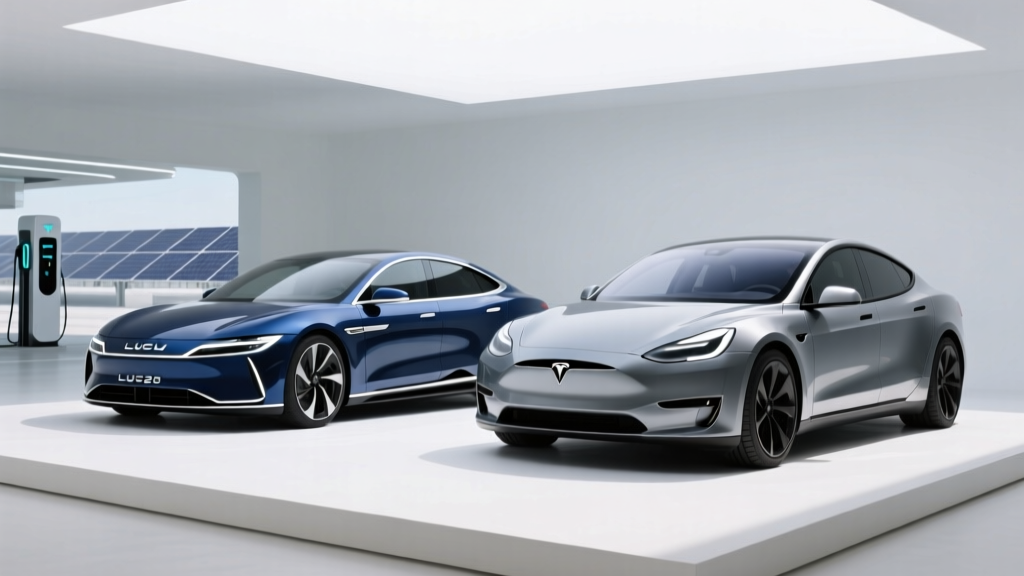
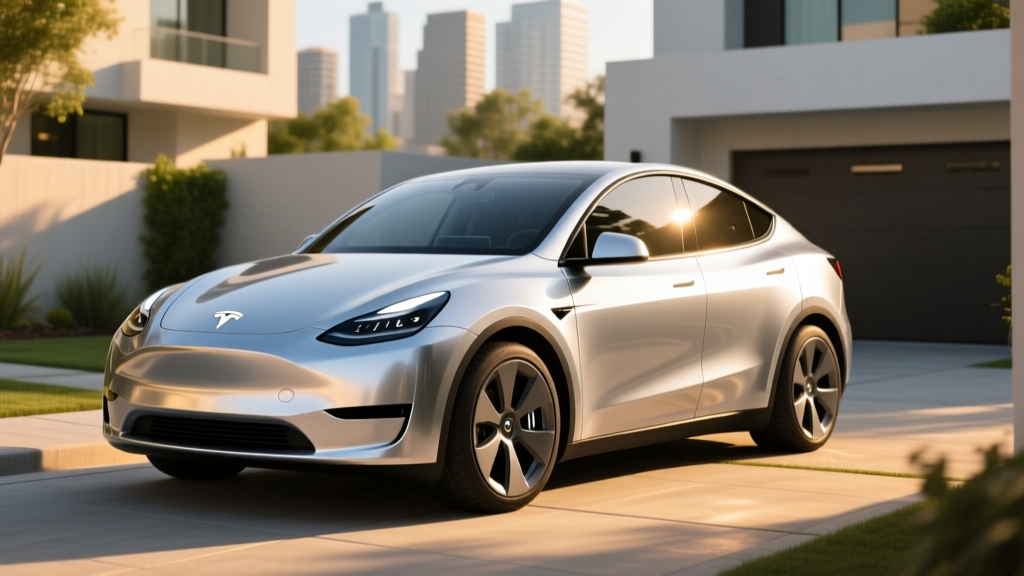
For 2026, Tesla Auto Shift is standard across the Model 3, Model Y, Model S, and Model X lineup. It represents a subtle but meaningful evolution in how drivers interact with EVs that lack a traditional gear lever. Below, we profile how this feature integrates into each current model, alongside the hard specs — range, charging, pricing, and tax-credit eligibility — that actually drive purchase decisions.
2026 Tesla Lineup: Spec Table at a Glance
| Spec | Model 3 Long Range | Model Y Long Range | Model S Long Range | Model X Long Range |
|---|---|---|---|---|
| EPA Range | 363 mi | 320 mi | 402 mi | 348 mi |
| Battery (usable) | ~75 kWh (NMC) | ~75 kWh (NMC) | ~95 kWh (NMC) | ~95 kWh (NMC) |
| Peak DC Charge | 250 kW | 250 kW | 250 kW | 250 kW |
| 10–80% DC Time | ~25 min | ~27 min | ~30 min | ~32 min |
| Level 2 Rate | 11.5 kW (~44 mi/hr) | 11.5 kW (~44 mi/hr) | 11.5 kW (~34 mi/hr) | 11.5 kW (~34 mi/hr) |
| 0–60 mph | 4.2 sec | 4.8 sec | 3.1 sec | 3.8 sec |
| Horsepower | ~346 hp | ~384 hp | ~670 hp | ~670 hp |
| Drivetrain | Dual-Motor AWD | Dual-Motor AWD | Dual-Motor AWD | Dual-Motor AWD |
| MPGe (combined) | 132 MPGe | 122 MPGe | 120 MPGe | 109 MPGe |
| Cargo (rear seats up) | 23 cu ft | 34 cu ft | 28 cu ft | 37 cu ft (5-seat) |
| Base MSRP | $47,740 | $48,990 | $79,990 | $84,990 |
| Battery Warranty | 8 yr / 120,000 mi | 8 yr / 120,000 mi | 8 yr / 150,000 mi | 8 yr / 150,000 mi |
Sources: fueleconomy.gov, Tesla.com configurator (2026 model year). Specs reflect Long Range AWD trims.
Real-World Range: What the EPA Sticker Doesn't Tell You
Tesla's trip planner in navigation is among the best in the industry for predicting actual energy consumption on a route, factoring elevation, wind, and temperature. If you're using Auto Shift in daily driving, you'll find the range prediction holds up well for commutes. On road trips through the Supercharger network, plan stops at roughly 200–220 mile intervals to stay above 10% State of Charge and avoid the steep charging-curve taper that occurs above 80% SoC.
Charging Speed: DC Fast, Level 2, and What to Expect
All 2026 Tesla models use the NACS (North American Charging Standard) connector natively — the same port now adopted by Ford, GM, Rivian, Hyundai, and most major automakers. This means full access to the Supercharger network without an adapter, which remains the most reliable DC fast-charging ecosystem in the US.
| Charging Level | Power / Rate | Miles Added per Hour | Typical Use Case |
|---|---|---|---|
| Level 1 (120V) | ~1.4 kW | ~4–5 mi/hr | Overnight trickle / emergency |
| Level 2 (240V, 48A) | 11.5 kW | ~34–44 mi/hr | Daily home charging |
| DC Fast (V3 Supercharger) | Up to 250 kW peak | ~1,000+ mi/hr (peak) | Road trips; 10–80% in ~25–32 min |
Charging-curve reality check: The 250 kW peak rate is not sustained. Tesla's NMC batteries typically hold peak power from roughly 10–30% SoC, then taper progressively. By 60% SoC, you're likely at ~120 kW; by 80%, around 50–60 kW. This is why the 10–80% metric matters far more than peak kW alone. Preconditioning the battery (automatic when navigating to a Supercharger) is essential — arriving at a fast charger with a cold battery can double your charge time.
For home Level 2 charging, Tesla's Wall Connector ($420) on a 60-amp circuit delivers the full 11.5 kW (48 amps continuous). A typical overnight session from 30% to 80% takes about 4–5 hours — more than adequate for daily driving. Professional installation of a 240V/60A circuit runs $800–$2,500 depending on panel proximity and whether your home's electrical panel needs an upgrade to 200A service.
Pricing, Trims, and Federal Tax Credit Eligibility
| Model / Trim | Base MSRP | Est. After §30D Credit | Eligible? |
|---|---|---|---|
| Model 3 RWD | $38,990 | ~$31,490 | Yes (partial/full*) |
| Model 3 Long Range AWD | $47,740 | ~$40,240 | Yes (partial/full*) |
| Model Y Long Range AWD | $48,990 | ~$41,490 | Yes (partial/full*) |
| Model S Long Range | $79,990 | $79,990 | No (exceeds MSRP cap) |
| Model X Long Range | $84,990 | $84,990 | No (exceeds MSRP cap) |
*§30D credit amount depends on battery critical-mineral and component sourcing requirements, which adjust annually. Credit may be $3,750 or $7,500 depending on current-year IRS sourcing thresholds. Point-of-sale transfer is available. See IRS §30D rules.
- MSRP Caps: Sedans (Model 3) must be ≤$55,000; SUVs/pickups/vans (Model Y) must be ≤$80,000. Model S and X exceed their respective caps.
- Buyer Income Limits: AGI ≤$150,000 (single), ≤$225,000 (head of household), ≤$300,000 (joint). Exceed these and you're ineligible regardless of vehicle.
- Battery Sourcing: The credit splits into two halves — $3,750 for critical-minerals sourcing and $3,750 for battery-component manufacturing. Rules tighten each year; consult a tax professional for your exact eligibility.
- Point-of-Sale Transfer: You can transfer the credit to the dealer at purchase, reducing your out-of-pocket cost immediately rather than waiting for tax filing.
Tech, Interior, and How Auto Shift Fits In
The 2026 Tesla interior remains minimalist: a single 15.4-inch center touchscreen (17-inch tilt display in Model S/X) handles navigation, media, climate, and vehicle controls. There is no instrument cluster — speed and drive-mode status appear in the upper-left corner of the main display.
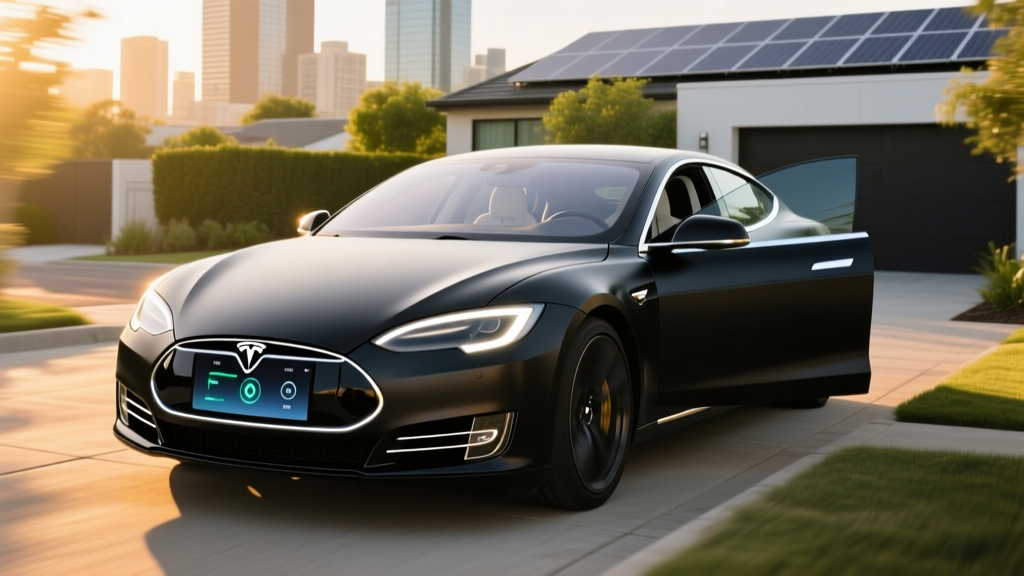
Tesla Auto Shift integrates into this workflow seamlessly. When you buckle in and press the brake, the vehicle's cameras and ultrasonic sensors assess your surroundings. If your driveway slopes toward the street and your navigation route is set, Auto Shift pre-selects Drive. If you're backed into a parking spot and the rear camera detects an open path, it selects Reverse. You confirm by pressing the right-side scroll wheel on the steering yoke or wheel — a deliberate step that prevents unintended movement.
Other standout tech includes:
- Autopilot (standard): Adaptive cruise + lane centering on highways. SAE Level 2 — hands on wheel, eyes on road.
- FSD (Supervised) ($8,000 option or $99/month): City-street navigation, traffic-light recognition, parking assist. Still Level 2 — not autonomous.
- Sentry Mode: 360° camera recording when parked, with smartphone alerts.
- Dog Mode / Camp Mode: Climate control presets for leaving pets or maintaining cabin temperature.
- Over-the-air updates: Feature additions and refinements delivered wirelessly, sometimes quarterly.
Notable drawbacks: The absence of physical buttons for climate and wiper controls remains polarizing. Turn signals on the yoke (standard on Model S/X, optional on 3/Y) are disliked by some drivers for roundabout and parking-lot use. Rear-seat comfort in the Model 3, while improved in the Highland refresh, still trails the Hyundai Ioniq 6 and BMW i4 for long-distance passengers. The Model Y Juniper refresh (2025+) improved ride quality and cabin noise substantially, closing the gap with the Ford Mustang Mach-E and Kia EV6.
Pros and Cons: The Honest Summary
✓ Pros
- Supercharger network access — the most reliable DC fast-charging ecosystem in North America
- Industry-leading efficiency (Model 3 at 132 MPGe combined)
- Auto Shift reduces friction in stop-and-go and parking scenarios
- OTA updates continuously add features post-purchase
- Strong resale value relative to EV segment average
- Excellent trip planner with real-time energy prediction
✗ Cons
- Minimalist interior lacks physical controls — learning curve for new EV adopters
- FSD (Supervised) is expensive ($8,000) and remains Level 2, not autonomous
- Model S and X do not qualify for §30D federal tax credit (MSRP cap)
- 250 kW peak DC charge rate is slower than Hyundai/Kia's 800V architecture (~350 kW capable)
- Insurance costs tend to run 15–30% higher than comparable non-Tesla EVs
- Yoke turn signals remain divisive in low-speed maneuvering
Who Should Buy a Tesla in 2026?
Choose Model 3 Long Range if: You commute 30–80 miles daily, want the best efficiency-per-dollar in the Tesla lineup, and your home has Level 2 access. The $47,740 MSRP (potentially ~$40,240 after credit) undercuts most luxury sedans while delivering 363 miles of EPA range.
Choose Model Y Long Range if: You need crossover cargo space (34 cu ft rear, 76 cu ft folded), have a family, and want Supercharger access for road trips. It's the best-selling vehicle in the US for good reason — practical, efficient, and credit-eligible.
Choose Model S/X if: You want flagship performance (670 hp, 3.1-sec 0–60 in the S), premium ride quality, and don't need the tax credit. These are low-volume, high-satisfaction vehicles for buyers who prioritize range and acceleration over value.
Look elsewhere if: You want physical controls, 800V ultra-fast charging (Hyundai Ioniq 5/6, Kia EV6), or a traditional dealership experience with in-person service. Tesla's mobile-ranger and service-center model works well in metro areas but can mean long waits in rural regions.
Frequently Asked Questions
What is the real-world range of the 2026 Tesla Model 3 Long Range?
The EPA rates it at 363 miles. In mixed real-world driving, expect 300–330 miles. Sustained highway speeds (75+ mph) drop this to roughly 290–310 miles, and cold weather (below freezing) can reduce it to 240–270 miles. Tesla's heat pump and battery preconditioning help mitigate losses.
How fast does a 2026 Tesla charge at home and on the road?
At home on a 240V Level 2 Wall Connector (11.5 kW), you'll add roughly 34–44 miles of range per hour — a full overnight charge is realistic. On a V3 Supercharger (250 kW peak DC), a 10–80% session takes approximately 25–32 minutes depending on the model and battery temperature. The charge curve tapers significantly above 60% SoC.
How much does a 2026 Tesla cost after federal tax credits?
The Model 3 RWD starts at $38,990 and can drop to roughly $31,490 if you qualify for the full $7,500 §30D credit. The Model 3 Long Range falls to ~$40,240; the Model Y Long Range to ~$41,490. Eligibility depends on your income (AGI caps), the vehicle's MSRP (sedans ≤$55K, SUVs ≤$80K), and current-year battery-sourcing rules. The Model S and X do not qualify due to MSRP caps. Always verify on IRS.gov and consult a tax professional.
Is Tesla Auto Shift the same as self-driving?
No. Auto Shift only pre-selects Drive or Reverse based on parking context and navigation. It does not steer, accelerate, or brake the vehicle. Tesla's Autopilot and FSD (Supervised) are SAE Level 2 driver-assistance systems that require continuous driver attention. True self-driving (Level 4) is currently only available via robotaxi services like Waymo in limited metro areas.
Is a 2026 Tesla worth buying vs. competitors?
For Supercharger network access, software integration, and efficiency, Tesla remains hard to beat. The Model Y competes closely with the Ford Mustang Mach-E, Hyundai Ioniq 5, and Kia EV6 — all of which now have NACS access to Superchargers (via adapter or native). If you prioritize ultra-fast 800V charging, the Ioniq 5/6 and EV6 can charge 10–80% in ~18 minutes on a 350 kW station. If you want the most proven charging ecosystem and best efficiency, Tesla still leads.
What is the battery warranty on a 2026 Tesla?
The Model 3 and Model Y carry an 8-year/120,000-mile battery and drive-unit warranty. The Model S and Model X extend to 8 years/150,000 miles. Tesla warrants that the battery will retain at least 70% of its original capacity during the warranty period. Real-world degradation data from fleet monitoring suggests most Tesla NMC batteries retain 85–90% capacity at 100,000 miles when owners avoid frequent 100% charges and excessive DC fast charging.